Tanzania Cyclohexane Market Size Growth Rate
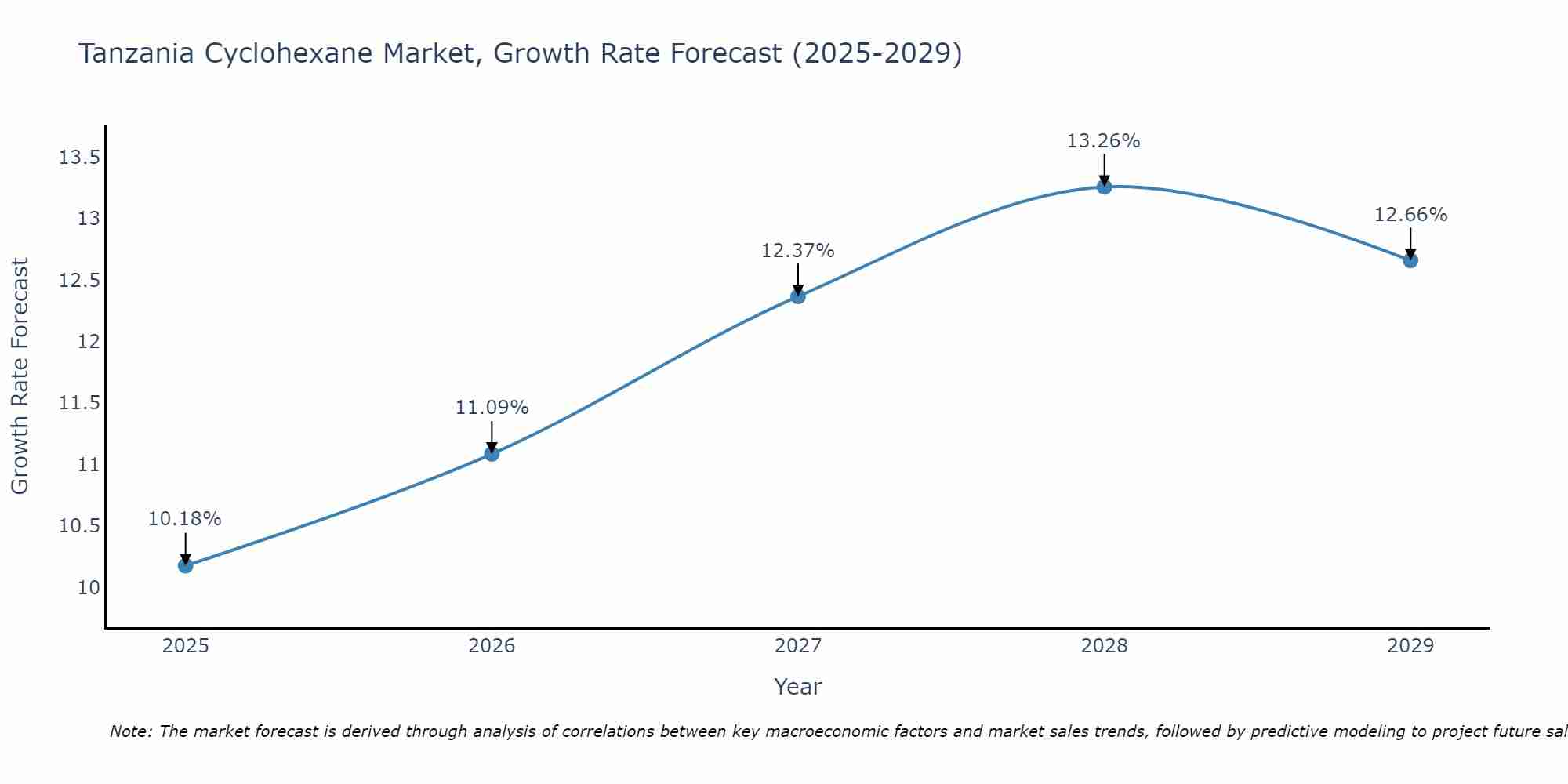
The Tanzania Cyclohexane Market is projected to witness mixed growth rate patterns during 2025 to 2029. The growth rate begins at 10.18% in 2025, climbs to a high of 13.26% in 2028, and moderates to 12.66% by 2029.
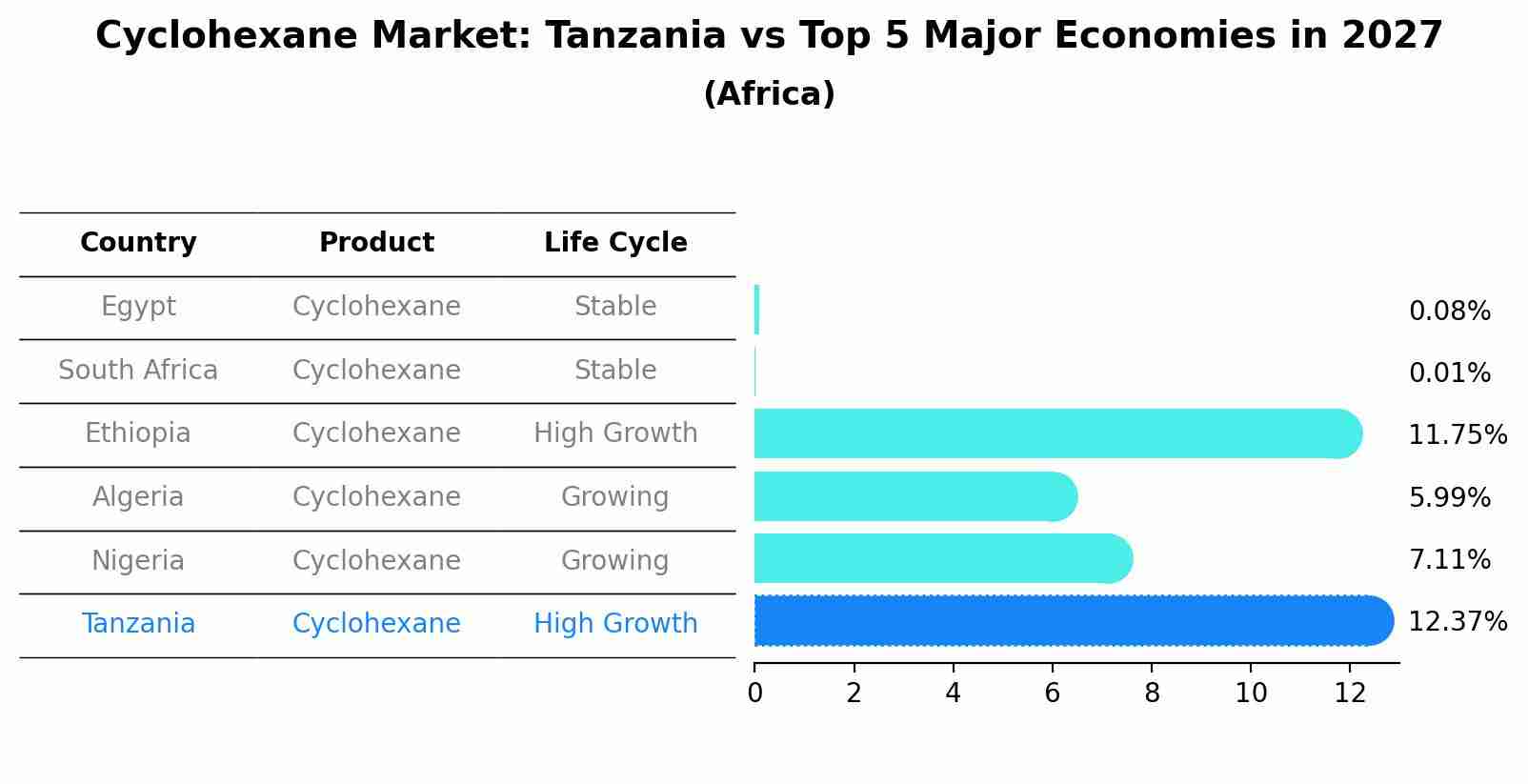
Cyclohexane Market: Tanzania vs Top 5 Major Economies in 2027 (Africa)
The Cyclohexane market in Tanzania is projected to grow at a high growth rate of 12.37% by 2027, within the Africa region led by Egypt, along with other countries like South Africa, Ethiopia, Algeria and Nigeria, collectively shaping a dynamic and evolving market environment driven by innovation and increasing adoption of emerging technologies.
Tanzania Cyclohexane Market Overview
Cyclohexane is a key raw material in the production of nylon and other synthetic fibers. The Tanzania Cyclohexane Market supports the textile and automotive industries, among others.
Drivers of the market
The Tanzania cyclohexane market is driven by its widespread use as a solvent in industrial applications, including adhesives, coatings, and pharmaceuticals. Growing demand from end-user industries, coupled with expansion in manufacturing activities, supports market growth. Additionally, advancements in production technologies and raw material availability further bolster the cyclohexane market in Tanzania.
Challenges of the market
Challenges in the Tanzania Cyclohexane market include price volatility of raw materials such as benzene, market dependence on global supply chains, and regulatory compliance in chemical handling and transportation. Economic factors influencing demand from end-user industries also impact market dynamics.
Government Policy of the market
The cyclohexane market in Tanzania benefits from government policies aimed at enhancing the petrochemical industry. The government provides tax incentives and infrastructure support to attract foreign investment and boost local production. Environmental regulations ensure that the production and use of cyclohexane comply with safety and sustainability standards. The government also encourages research and development activities to improve the efficiency of cyclohexane production and explore its potential applications in various industries.
Key Highlights of the Report:
- Tanzania Cyclohexane Market Outlook
- Market Size of Tanzania Cyclohexane Market, 2024
- Forecast of Tanzania Cyclohexane Market, 2031
- Historical Data and Forecast of Tanzania Cyclohexane Revenues & Volume for the Period 2021-2031
- Tanzania Cyclohexane Market Trend Evolution
- Tanzania Cyclohexane Market Drivers and Challenges
- Tanzania Cyclohexane Price Trends
- Tanzania Cyclohexane Porter`s Five Forces
- Tanzania Cyclohexane Industry Life Cycle
- Historical Data and Forecast of Tanzania Cyclohexane Market Revenues & Volume By Application for the Period 2021-2031
- Historical Data and Forecast of Tanzania Cyclohexane Market Revenues & Volume By Adipic acid for the Period 2021-2031
- Historical Data and Forecast of Tanzania Cyclohexane Market Revenues & Volume By Caprolactam for the Period 2021-2031
- Historical Data and Forecast of Tanzania Cyclohexane Market Revenues & Volume By Others for the Period 2021-2031
- Historical Data and Forecast of Tanzania Cyclohexane Market Revenues & Volume By End-use for the Period 2021-2031
- Historical Data and Forecast of Tanzania Cyclohexane Market Revenues & Volume By Nylon 6 for the Period 2021-2031
- Historical Data and Forecast of Tanzania Cyclohexane Market Revenues & Volume By Nylon 66 for the Period 2021-2031
- Historical Data and Forecast of Tanzania Cyclohexane Market Revenues & Volume By Others for the Period 2021-2031
- Tanzania Cyclohexane Import Export Trade Statistics
- Market Opportunity Assessment By Application
- Market Opportunity Assessment By End-use
- Tanzania Cyclohexane Top Companies Market Share
- Tanzania Cyclohexane Competitive Benchmarking By Technical and Operational Parameters
- Tanzania Cyclohexane Company Profiles
- Tanzania Cyclohexane Key Strategic Recommendations






































