Tanzania Pharmaceutical Packaging Market Summary
The tanzania pharmaceutical packaging market was estimated at USD 722 Million in 2025 and is projected to reach USD 1024 Million by 2032, growing at a CAGR of 6.1% from 2026 to 2032.
Tanzania Pharmaceutical Packaging Market Year-wise Growth Rate and Key Drivers
This graph highlights how the Tanzania Pharmaceutical Packaging Market has steadily grown over the past five years, supported by major growth factors.
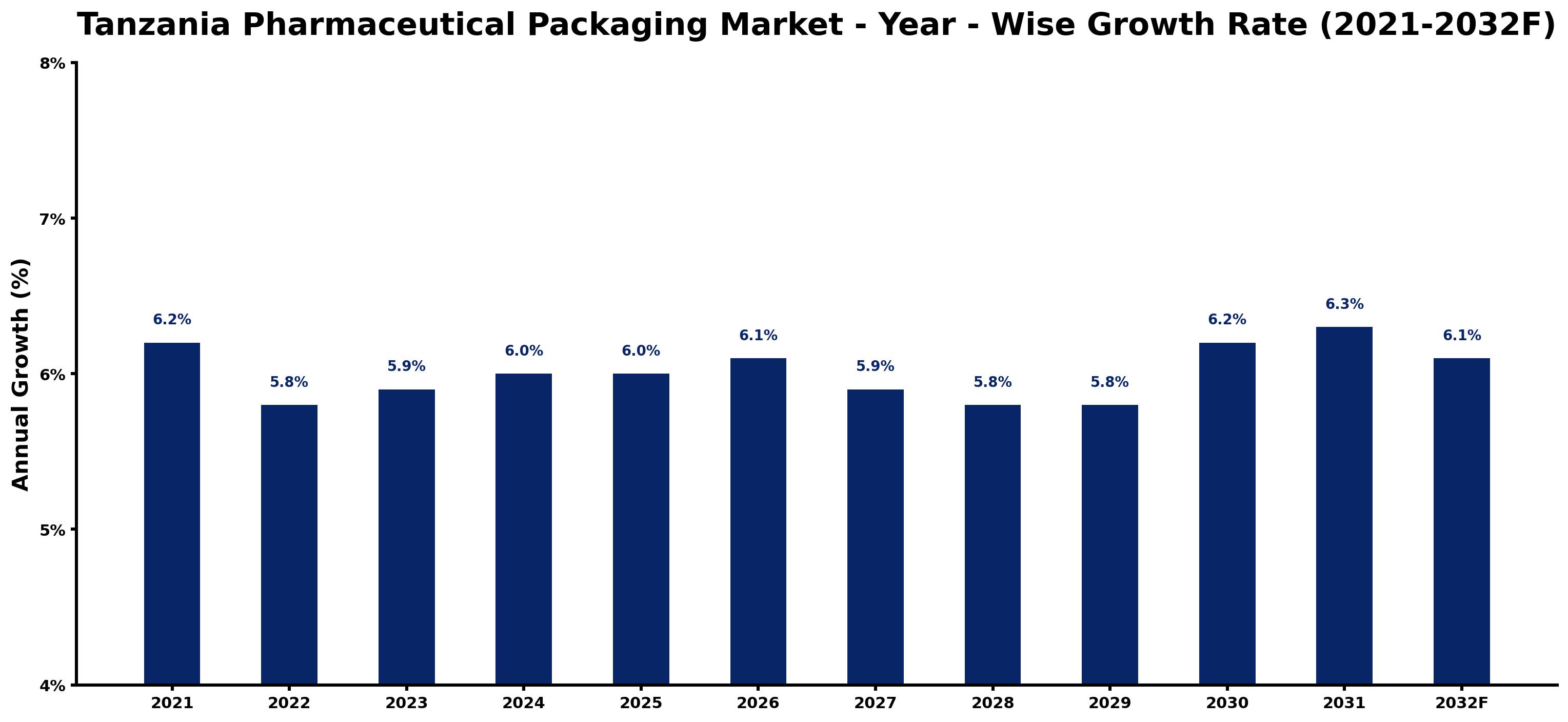
The table below presents the year wise growth rates along with the key drivers influencing the market
| Year | Growth Rate | Major Drivers |
| 2021 | 6.2% | Market stability emerges, as pharmaceutical production steadily resumes post-COVID-19 pandemic. |
| 2022 | 5.8% | Increased investment in healthcare infrastructure bolsters demand for effective packaging solutions. |
| 2023 | 5.9% | Local manufacturing capabilities expand, reducing reliance on imported packaging materials significantly. |
| 2024 | 6.0% | Rising consumer awareness about product safety encourages innovative packaging designs and features. |
| 2025 | 6.0% | Digital transformation in supply chains streamlines operations, enhancing efficiency in packaging logistics. |
| 2026 | 6.1% | Sustainability becomes central, pushing companies toward eco-friendly packaging alternatives in production. |
| 2027 | 5.9% | Partnerships between local firms and global players foster technology transfer and knowledge sharing. |
| 2028 | 5.8% | Regulatory changes prioritize quality standards, influencing packaging development across the sector. |
| 2029 | 5.8% | Growing pharmaceutical exports open new avenues for specialized packaging tailored to global markets. |
| 2030 | 6.2% | Emergence of biopharmaceuticals necessitates unique packaging solutions to ensure product integrity. |
| 2031 | 6.3% | Investment in research and development drives innovation in smart packaging technologies. |
| 2032 | 6.1% | Increased competition among packaging providers sparks creativity and enhances customer engagement. |
Note - Market size estimations and growth projections presented in this report are based on 6Wresearch's advanced forecasting approach, validated with industry datasets as of June 2026.
Tanzania Pharmaceutical Packaging Market Synopsis
The Tanzania Pharmaceutical Packaging Market is projected to reach 6.1% and witness significant growth during the forecast period (2026-2032). This growth is primarily fueled by increasing healthcare expenditure, heightened demand for pharmaceutical products, and proactive government initiatives aimed at enhancing healthcare infrastructure. The market is undergoing notable transformations, with a pronounced shift towards sustainable and eco-friendly packaging solutions, as well as heightened focus on product safety and tamper-evident features.
Tanzania Pharmaceutical Packaging Market Growth Drivers
Several factors are propelling the growth of the Tanzania Pharmaceutical Packaging Market. Firstly, the rising demand for pharmaceutical products is directly correlating with the increasing healthcare initiatives prioritized by the government. Secondly, as healthcare expenditure rises, pharmaceutical companies are compelled to innovate in packaging to enhance product differentiation.
- The expansion of the pharmaceutical industry in Tanzania is generating a heightened need for diverse packaging solutions, encouraging local manufacturers to invest in advanced technologies.
- Increased regulatory focus on drug safety and efficacy has led to a greater emphasis on compliant packaging solutions that adhere to both national and international standards.
- Consumer preferences are shifting towards more sustainable packaging options, prompting companies to adopt eco-friendly materials that minimize environmental impact.
- The prevalence of counterfeit drugs has heightened the demand for tamper-evident and secure packaging solutions that ensure product integrity and safety.
- Technological advancements such as serialization and smart packaging technologies are gradually being integrated into the market, further driving demand for innovative packaging applications.
Tanzania Pharmaceutical Packaging Market Trends and Opportunities
The Tanzania Pharmaceutical Packaging Market is characterized by several notable trends. A key trend is the escalation in demand for sustainable packaging solutions, a response to heightened environmental consciousness. Moreover, companies are increasingly focusing on adopting smart packaging technologies, including RFID tags and QR codes, to enhance supply chain transparency and mitigate counterfeit risks.
- Child-resistant packaging is gaining traction, particularly for pediatric medications, reflecting a growing public concern for safety.
- Manufacturers are investing in more user-friendly packaging designs that appeal to consumers while maintaining compliance with safety regulations.
- The emphasis on advanced packaging technologies, such as eco-friendly materials and recyclable options, is becoming more pronounced, aligning with global sustainability goals.
- Innovative packaging solutions are now prioritizing not only product protection but also marketing potential, enhancing brand visibility in a competitive landscape.
- As regulatory frameworks evolve, companies are actively developing packaging that addresses these changes, ensuring compliance while meeting market demands.
Tanzania Pharmaceutical Packaging Market Challenges and Restraints
Despite its growth potential, the Tanzania Pharmaceutical Packaging Market faces several significant challenges. Inadequate infrastructure for the production and distribution of packaging materials presents a considerable barrier to growth, limiting access to the most effective packaging technologies.
- The lack of standardization in packaging requirements across different regulations poses a challenge for manufacturers striving to maintain compliance.
- Addressing the threats posed by counterfeit drugs remains a major hurdle, as inadequate packaging can compromise product safety and efficacy.
- The high costs associated with quality packaging materials can deter investment, impacting overall market expansion.
- Limited awareness among pharmaceutical companies regarding the importance of robust packaging in maintaining product integrity hampers market development.
- Regulatory compliance challenges, including inconsistent enforcement of packaging regulations, pose risks to manufacturer operations and consumer safety.
Tanzania Pharmaceutical Packaging Market Investment Opportunities
The current landscape of the Tanzania Pharmaceutical Packaging Market is ripe with investment opportunities. An increasing population, along with rising healthcare awareness, is driving demand for high-quality, innovative packaging solutions.
- Investors can explore opportunities in the manufacturing and supply of various packaging materials, including blister packs, bottles, and labels that comply with regulatory standards.
- Investing in technologies that support track-and-trace systems and anti-counterfeiting measures presents a significant opportunity to address prevalent concerns in the market.
- Collaboration with pharmaceutical firms to provide customized packaging solutions that cater to specific product requirements is a promising avenue for growth.
- The trend towards sustainable packaging opens up avenues for investment in the development of eco-friendly materials and processes.
- As the market expands, there will be increased demand for packaging solutions that enhance user experience and compliance with increasingly stringent regulations.
Tanzania Pharmaceutical Packaging Market Government Investment and Initiatives
The Tanzanian government has enacted various policies to regulate the pharmaceutical packaging market effectively. The Tanzania Food, Drugs, and Cosmetics Act of 2003 establishes requirements for labeling, packaging materials, and the information provided on pharmaceutical products to ensure safety and quality.
The Tanzania Medicines and Medical Devices Authority (TMDA) plays a crucial role in overseeing the registration and monitoring of pharmaceutical packaging materials, ensuring compliance with national standards. Efforts to encourage local production of packaging materials are aimed at promoting self-sufficiency and reducing dependency on imports.
These initiatives not only aim to enhance public health but also to spur growth within the local pharmaceutical packaging industry, fostering innovation and improving product quality.
Tanzania Pharmaceutical Packaging Market Latest Developments (May 2025 - June 2026)
Recent developments in the Tanzania Pharmaceutical Packaging Market between May 2025 and June 2026 indicate a strong movement towards advanced packaging solutions. The integration of sustainable practices has gained momentum, with local manufacturers increasingly adopting recyclable materials in their offerings. There is also heightened interest in smart packaging technologies, which are beginning to be embraced by various stakeholders in the industry.
Additionally, recent government initiatives have focused on improving regulatory frameworks to facilitate better compliance among manufacturers. This period has also witnessed a push for greater awareness regarding the significance of robust packaging in safeguarding product integrity, especially against the backdrop of combating counterfeit drugs.
Tanzania Pharmaceutical Packaging Market - Key Attractiveness of the Report
- 10 Years of Market Numbers
- Historical Data Starting from 2022 to 2025
- Base Year: 2025
- Forecast Data until 2032
- Key Performance Indicators Impacting the Market
- Major Upcoming Developments and Projects
Key Highlights of the Report:
- Tanzania Pharmaceutical Packaging Market Outlook
- Market Size of Tanzania Pharmaceutical Packaging Market, 2025
- Forecast of Tanzania Pharmaceutical Packaging Market, 2032F
- Historical Data and Forecast of Tanzania Pharmaceutical Packaging Revenues & Volume for the Period 2022-2032F
- Tanzania Pharmaceutical Packaging Market Trend Evolution
- Tanzania Pharmaceutical Packaging Market Drivers and Challenges
- Tanzania Pharmaceutical Packaging Price Trends
- Tanzania Pharmaceutical Packaging Porter's Five Forces
- Tanzania Pharmaceutical Packaging Industry Life Cycle
- Historical Data and Forecast of Tanzania Pharmaceutical Packaging Market Revenues & Volume By Material Types for the Period 2022-2032F
- Historical Data and Forecast of Tanzania Pharmaceutical Packaging Market Revenues & Volume By Plastics & Polymers for the Period 2022-2032F
- Historical Data and Forecast of Tanzania Pharmaceutical Packaging Market Revenues & Volume By Paper & Paperboard for the Period 2022-2032F
- Historical Data and Forecast of Tanzania Pharmaceutical Packaging Market Revenues & Volume By Glass for the Period 2022-2032F
- Historical Data and Forecast of Tanzania Pharmaceutical Packaging Market Revenues & Volume By Aluminum Foil for the Period 2022-2032F
- Historical Data and Forecast of Tanzania Pharmaceutical Packaging Market Revenues & Volume By Others for the Period 2022-2032F
- Historical Data and Forecast of Tanzania Pharmaceutical Packaging Market Revenues & Volume By Product Types for the Period 2022-2032F
- Historical Data and Forecast of Tanzania Pharmaceutical Packaging Market Revenues & Volume By Primary Pharmaceutical Packaging for the Period 2022-2032F
- Historical Data and Forecast of Tanzania Pharmaceutical Packaging Market Revenues & Volume By Secondary Pharmaceutical Packaging for the Period 2022-2032F
- Historical Data and Forecast of Tanzania Pharmaceutical Packaging Market Revenues & Volume By Tertiary Pharmaceutical Packaging for the Period 2022-2032F
- Historical Data and Forecast of Tanzania Pharmaceutical Packaging Market Revenues & Volume By End-users for the Period 2022-2032F
- Historical Data and Forecast of Tanzania Pharmaceutical Packaging Market Revenues & Volume By Pharmaceutical Manufacturing for the Period 2022-2032F
- Historical Data and Forecast of Tanzania Pharmaceutical Packaging Market Revenues & Volume By Retail Pharmacy for the Period 2022-2032F
- Historical Data and Forecast of Tanzania Pharmaceutical Packaging Market Revenues & Volume By Contract Packaging for the Period 2022-2032F
- Historical Data and Forecast of Tanzania Pharmaceutical Packaging Market Revenues & Volume By Institutional Pharmacy for the Period 2022-2032F
- Historical Data and Forecast of Tanzania Pharmaceutical Packaging Market Revenues & Volume By Others for the Period 2022-2032F
- Tanzania Pharmaceutical Packaging Import Export Trade Statistics
- Market Opportunity Assessment By Material Types
- Market Opportunity Assessment By Product Types
- Market Opportunity Assessment By End-users
- Tanzania Pharmaceutical Packaging Top Companies Market Share
- Tanzania Pharmaceutical Packaging Competitive Benchmarking By Technical and Operational Parameters
- Tanzania Pharmaceutical Packaging Company Profiles
- Tanzania Pharmaceutical Packaging Key Strategic Recommendations






































