Thailand Automotive Coolant Market: Import Trend Analysis
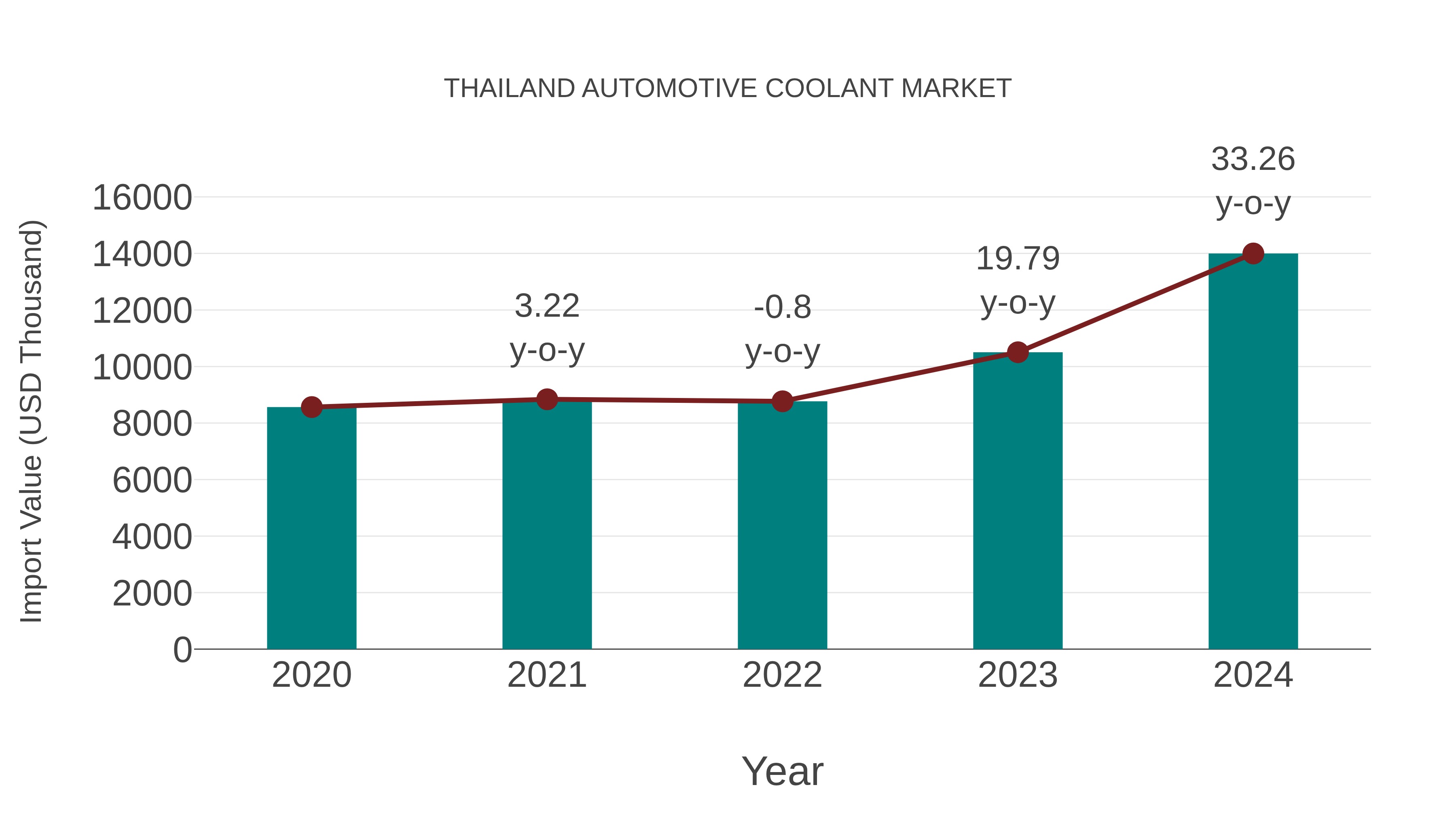
Thailand import trend in the automotive coolant market exhibited robust growth from 2023 to 2024, with a notable increase of 33.26%. The compound annual growth rate (CAGR) for the period between 2020 and 2024 stood at 13.07%. This surge in imports could be attributed to a shift in consumer demand towards more efficient cooling solutions in the automotive sector, reflecting evolving industry standards and technological advancements.
Key Highlights of the Report:
- Thailand Automotive Coolant Market Outlook
- Market Size of Thailand Automotive Coolant Market, 2025
- Forecast of Thailand Automotive Coolant Market, 2032
- Historical Data and Forecast of Thailand Automotive Coolant Revenues & Volume for the Period 2022-2032F
- Thailand Automotive Coolant Market Trend Evolution
- Thailand Automotive Coolant Market Drivers and Challenges
- Thailand Automotive Coolant Price Trends
- Thailand Automotive Coolant Porter's Five Forces
- Thailand Automotive Coolant Industry Life Cycle
- Historical Data and Forecast of Thailand Automotive Coolant Market Revenues & Volume By Type for the Period 2022-2032F
- Historical Data and Forecast of Thailand Automotive Coolant Market Revenues & Volume By Ethylene Glycol for the Period 2022-2032F
- Historical Data and Forecast of Thailand Automotive Coolant Market Revenues & Volume By Propylene Glycol for the Period 2022-2032F
- Historical Data and Forecast of Thailand Automotive Coolant Market Revenues & Volume By Organic Acid Technology for the Period 2022-2032F
- Historical Data and Forecast of Thailand Automotive Coolant Market Revenues & Volume By Hybrid Organic Acid Technology for the Period 2022-2032F
- Historical Data and Forecast of Thailand Automotive Coolant Market Revenues & Volume By Application for the Period 2022-2032F
- Historical Data and Forecast of Thailand Automotive Coolant Market Revenues & Volume By Engine Cooling for the Period 2022-2032F
- Historical Data and Forecast of Thailand Automotive Coolant Market Revenues & Volume By Hybrid Engines for the Period 2022-2032F
- Historical Data and Forecast of Thailand Automotive Coolant Market Revenues & Volume By Electric Vehicles for the Period 2022-2032F
- Historical Data and Forecast of Thailand Automotive Coolant Market Revenues & Volume By High-Performance Cars for the Period 2022-2032F
- Historical Data and Forecast of Thailand Automotive Coolant Market Revenues & Volume By Vehicle Type for the Period 2022-2032F
- Historical Data and Forecast of Thailand Automotive Coolant Market Revenues & Volume By Passenger Cars for the Period 2022-2032F
- Historical Data and Forecast of Thailand Automotive Coolant Market Revenues & Volume By Commercial Vehicles for the Period 2022-2032F
- Historical Data and Forecast of Thailand Automotive Coolant Market Revenues & Volume By Electric Vehicles for the Period 2022-2032F
- Historical Data and Forecast of Thailand Automotive Coolant Market Revenues & Volume By Luxury Vehicles for the Period 2022-2032F
- Thailand Automotive Coolant Import Export Trade Statistics
- Market Opportunity Assessment By Type
- Market Opportunity Assessment By Application
- Market Opportunity Assessment By Vehicle Type
- Thailand Automotive Coolant Top Companies Market Share
- Thailand Automotive Coolant Competitive Benchmarking By Technical and Operational Parameters
- Thailand Automotive Coolant Company Profiles
- Thailand Automotive Coolant Key Strategic Recommendations






































