Thailand Brewing Ingredients Market: Import Trend Analysis
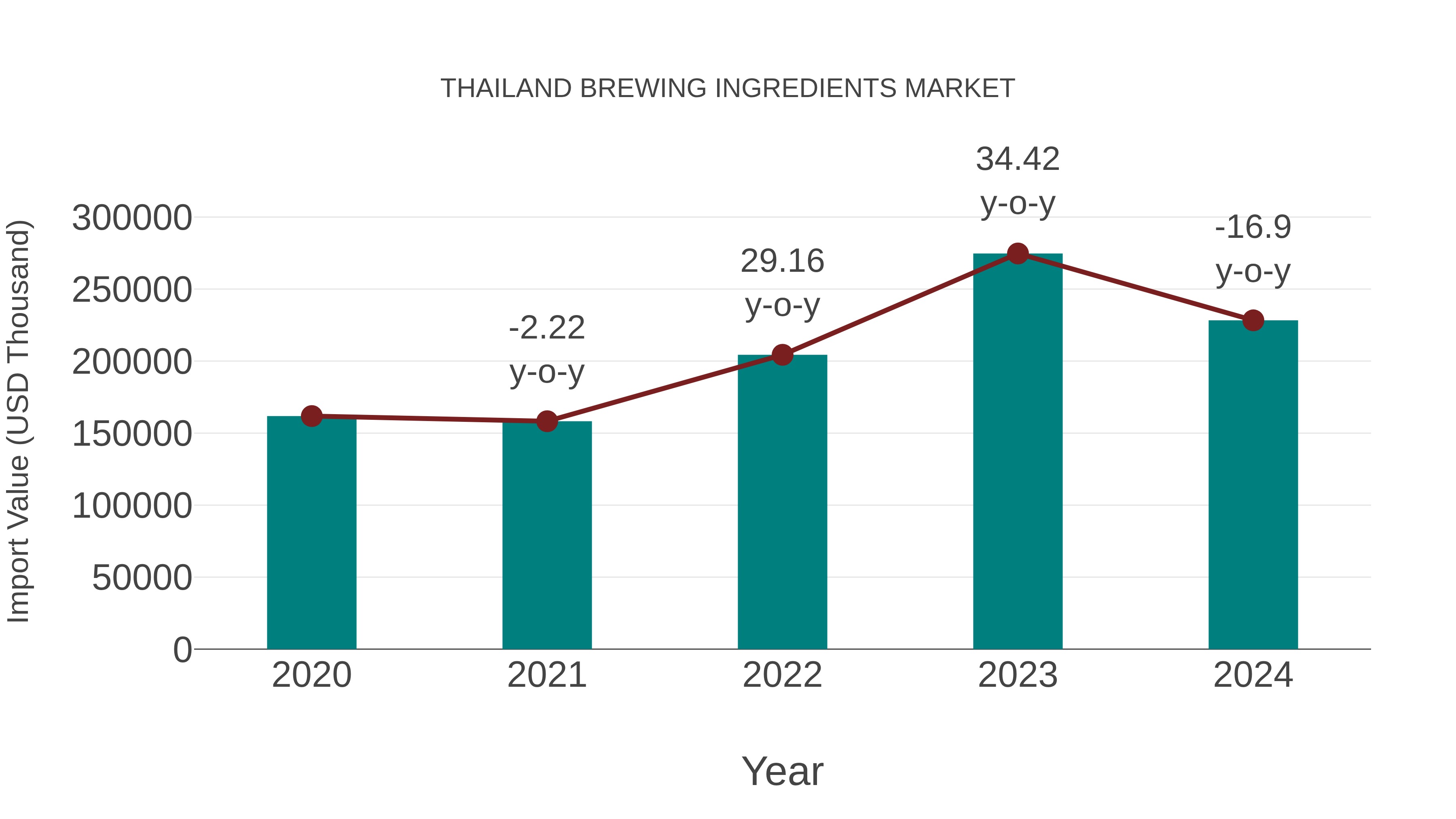
Thailand import trend for brewing ingredients saw a decline in growth from 2023 to 2024, with a rate of -16.9%. However, the compound annual growth rate (CAGR) from 2020 to 2024 stood at a healthy 8.98%. This shift in momentum could be attributed to changing consumer preferences or fluctuations in global supply chains impacting market stability.
Thailand Brewing Ingredients Market Synopsis
The Thailand Brewing Ingredients Market serves the brewing industry, providing ingredients like malt, hops, and yeast for beer production, meeting the demands of the growing craft beer sector.
Drivers of the Market
The Brewing Ingredients market in Thailand is witnessing dynamic growth, driven by the nation vibrant beer culture and the rising demand for craft and specialty beers. Brewing ingredients, including malt, hops, and yeast, play a crucial role in determining the flavor, aroma, and characteristics of beer. The market expansion is further fueled by Thailand growing craft beer movement, the interest in diverse beer styles, and the innovation in brewing techniques. As Thailand consumers explore a wider range of beer options, the demand for a variety of brewing ingredients is on the rise, marking a strategic shift towards creating unique and premium beer experiences.
Challenges of the Market
The brewing ingredients market encounters challenges related to the need for consistent quality and supply of brewing raw materials. Companies must establish robust supply chains and quality control measures to meet the demands of the brewing industry.
COVID-19 Impact on the Market
The Thailand Brewing Ingredients Market faced challenges during the COVID-19 pandemic, with disruptions in the beverage and brewing industry. The restrictions on movement and uncertainties in the market affected brewing operations and ingredient supply chains. However, post-pandemic, the market witnessed a resurgence as consumer demand for craft beer and unique flavors increased. The rising use of diverse brewing ingredients in craft and artisanal beverages contributed to the recovery of the Brewing Ingredients Market.
Key Players in the Market
Key contributors to the Thailand Brewing Ingredients Market include Castle Malting S.A., Weyermann Specialty Malts, and Barth-Haas Group. These companies provide brewing ingredients such as malts, hops, and yeast, supporting the craft beer and brewing industries in the country.
Key Highlights of the Report:
- Thailand Brewing Ingredients Market Outlook
- Market Size of Thailand Brewing Ingredients Market, 2025
- Forecast of Thailand Brewing Ingredients Market, 2032
- Historical Data and Forecast of Thailand Brewing Ingredients Revenues & Volume for the Period 2022-2032F
- Thailand Brewing Ingredients Market Trend Evolution
- Thailand Brewing Ingredients Market Drivers and Challenges
- Thailand Brewing Ingredients Price Trends
- Thailand Brewing Ingredients Porter's Five Forces
- Thailand Brewing Ingredients Industry Life Cycle
- Historical Data and Forecast of Thailand Brewing Ingredients Market Revenues & Volume By Source for the Period 2022-2032F
- Historical Data and Forecast of Thailand Brewing Ingredients Market Revenues & Volume By Malt Extract for the Period 2022-2032F
- Historical Data and Forecast of Thailand Brewing Ingredients Market Revenues & Volume By Adjuncts/Grains for the Period 2022-2032F
- Historical Data and Forecast of Thailand Brewing Ingredients Market Revenues & Volume By Hops for the Period 2022-2032F
- Historical Data and Forecast of Thailand Brewing Ingredients Market Revenues & Volume By Beer Yeast for the Period 2022-2032F
- Historical Data and Forecast of Thailand Brewing Ingredients Market Revenues & Volume By Beer Additives for the Period 2022-2032F
- Historical Data and Forecast of Thailand Brewing Ingredients Market Revenues & Volume By Brewery Size for the Period 2022-2032F
- Historical Data and Forecast of Thailand Brewing Ingredients Market Revenues & Volume By Macro Brewery for the Period 2022-2032F
- Historical Data and Forecast of Thailand Brewing Ingredients Market Revenues & Volume By Craft Brewery for the Period 2022-2032F
- Historical Data and Forecast of Thailand Brewing Ingredients Market Revenues & Volume By Form for the Period 2022-2032F
- Historical Data and Forecast of Thailand Brewing Ingredients Market Revenues & Volume By Dry for the Period 2022-2032F
- Historical Data and Forecast of Thailand Brewing Ingredients Market Revenues & Volume By Liquid for the Period 2022-2032F
- Thailand Brewing Ingredients Import Export Trade Statistics
- Market Opportunity Assessment By Source
- Market Opportunity Assessment By Brewery Size
- Market Opportunity Assessment By Form
- Thailand Brewing Ingredients Top Companies Market Share
- Thailand Brewing Ingredients Competitive Benchmarking By Technical and Operational Parameters
- Thailand Brewing Ingredients Company Profiles
- Thailand Brewing Ingredients Key Strategic Recommendations






































