Thailand Cat Food Market: Import Trend Analysis
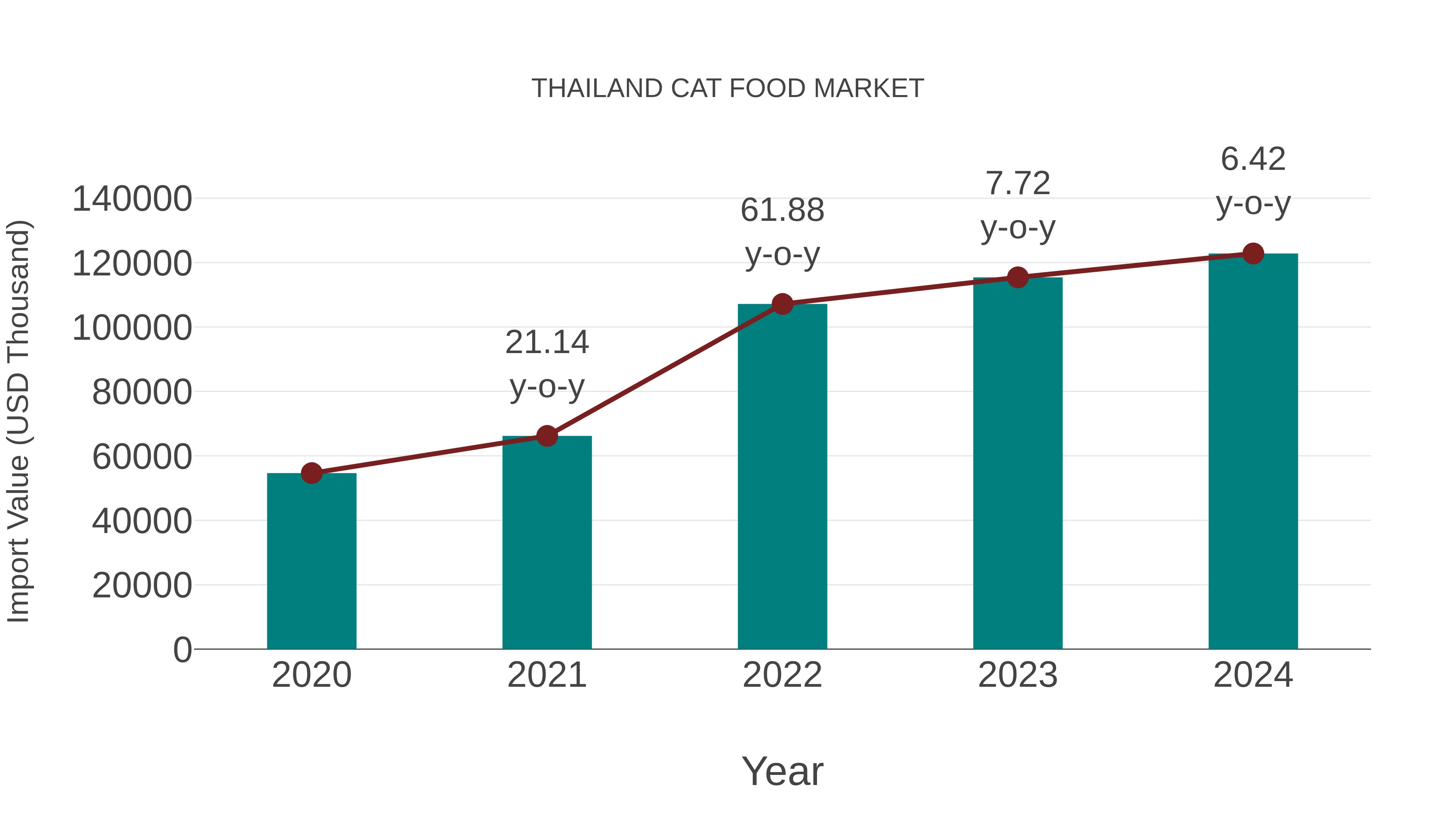
In the Thailand cat food market, imports experienced a notable growth trend from 2023 to 2024, with a growth rate of 6.42%. The compound annual growth rate (CAGR) for imports from 2020 to 2024 stood at 22.45%. This surge in imports can be attributed to a significant shift in consumer demand towards premium and specialized cat food products, reflecting evolving consumer preferences and increased market penetration by international brands.
Thailand Cat Food Market Synopsis
The Thailand cat food market is a growing segment within the pet care industry. As pet ownership continues to rise in Thailand, particularly for cats, the demand for high-quality cat food products has surged. Cat owners are increasingly concerned about the nutrition and well-being of their feline companions, leading to a diverse range of cat food options in the market. These products include dry kibble, wet food, treats, and specialized dietary formulas to address specific health concerns. The market also witnesses trends in organic and natural cat food offerings to cater to health-conscious consumers.
Drivers of the Market
The Thailand cat food market has witnessed significant growth due to several driving factors. The increasing pet ownership rate in the country, particularly the adoption of cats as pets, has boosted the demand for cat food products. Cat owners are becoming more conscious of their pets` nutritional needs, leading to a shift towards premium and specialized cat food options. The rising disposable income and changing lifestyles have also encouraged consumers to invest in high-quality cat food. Furthermore, the convenience of purchasing cat food through both brick-and-mortar pet stores and online platforms has further stimulated market growth.
Challenges of the Market
The cat food market in Thailand faces challenges related to pet owner awareness and preferences. Educating cat owners about the nutritional needs of their pets and promoting premium and specialized cat food products can be a struggle. Quality control and meeting regulatory standards in pet food production are also ongoing challenges in this market.
COVID-19 Impact on the Market
The Thailand cat food market saw resilient demand during the COVID-19 pandemic, primarily because pet ownership increased as people sought companionship during lockdowns. With more people adopting cats, there was a steady demand for cat food. However, supply chain issues and logistics disruptions affected the distribution of cat food products. E-commerce and home delivery became crucial channels for pet owners. Manufacturers adapted by prioritizing safety protocols and ramping up production to meet the heightened demand. The market continued to grow, driven by the enduring love for pets among Thai consumers.
Key Players in the Market
In the Thailand cat food market, leading companies include Mars Petcare (Thailand) Ltd., Royal Canin (Thailand) Ltd., and CP Group. These organizations manufacture and market a variety of cat food products to meet the dietary needs of feline companions.
Key Highlights of the Report:
- Thailand Cat Food Market Outlook
- Market Size of Thailand Cat Food Market, 2025
- Forecast of Thailand Cat Food Market, 2032
- Historical Data and Forecast of Thailand Cat Food Revenues & Volume for the Period 2022-2032F
- Thailand Cat Food Market Trend Evolution
- Thailand Cat Food Market Drivers and Challenges
- Thailand Cat Food Price Trends
- Thailand Cat Food Porter's Five Forces
- Thailand Cat Food Industry Life Cycle
- Historical Data and Forecast of Thailand Cat Food Market Revenues & Volume By Nature for the Period 2022-2032F
- Historical Data and Forecast of Thailand Cat Food Market Revenues & Volume By Organic for the Period 2022-2032F
- Historical Data and Forecast of Thailand Cat Food Market Revenues & Volume By Monoprotein for the Period 2022-2032F
- Historical Data and Forecast of Thailand Cat Food Market Revenues & Volume By Conventional for the Period 2022-2032F
- Historical Data and Forecast of Thailand Cat Food Market Revenues & Volume By Source for the Period 2022-2032F
- Historical Data and Forecast of Thailand Cat Food Market Revenues & Volume By Animal Derived for the Period 2022-2032F
- Historical Data and Forecast of Thailand Cat Food Market Revenues & Volume By Plant-derived for the Period 2022-2032F
- Historical Data and Forecast of Thailand Cat Food Market Revenues & Volume By Insect- Derived for the Period 2022-2032F
- Historical Data and Forecast of Thailand Cat Food Market Revenues & Volume By Product Type for the Period 2022-2032F
- Historical Data and Forecast of Thailand Cat Food Market Revenues & Volume By Kibble/dry for the Period 2022-2032F
- Historical Data and Forecast of Thailand Cat Food Market Revenues & Volume By Treats And Chews for the Period 2022-2032F
- Historical Data and Forecast of Thailand Cat Food Market Revenues & Volume By Dehydrated Food for the Period 2022-2032F
- Historical Data and Forecast of Thailand Cat Food Market Revenues & Volume By Freeze Dried Food for the Period 2022-2032F
- Historical Data and Forecast of Thailand Cat Food Market Revenues & Volume By Freeze-dried Raw for the Period 2022-2032F
- Historical Data and Forecast of Thailand Cat Food Market Revenues & Volume By Wet Food for the Period 2022-2032F
- Historical Data and Forecast of Thailand Cat Food Market Revenues & Volume By Frozen for the Period 2022-2032F
- Historical Data and Forecast of Thailand Cat Food Market Revenues & Volume By Powder for the Period 2022-2032F
- Historical Data and Forecast of Thailand Cat Food Market Revenues & Volume By Pet Type for the Period 2022-2032F
- Historical Data and Forecast of Thailand Cat Food Market Revenues & Volume By Kitten for the Period 2022-2032F
- Historical Data and Forecast of Thailand Cat Food Market Revenues & Volume By Senior for the Period 2022-2032F
- Historical Data and Forecast of Thailand Cat Food Market Revenues & Volume By Packaging Type for the Period 2022-2032F
- Historical Data and Forecast of Thailand Cat Food Market Revenues & Volume By Pouches for the Period 2022-2032F
- Historical Data and Forecast of Thailand Cat Food Market Revenues & Volume By Bags for the Period 2022-2032F
- Historical Data and Forecast of Thailand Cat Food Market Revenues & Volume By Folding Cartons for the Period 2022-2032F
- Historical Data and Forecast of Thailand Cat Food Market Revenues & Volume By Tubs & Cups for the Period 2022-2032F
- Historical Data and Forecast of Thailand Cat Food Market Revenues & Volume By Can for the Period 2022-2032F
- Historical Data and Forecast of Thailand Cat Food Market Revenues & Volume By Bottles & Jars for the Period 2022-2032F
- Historical Data and Forecast of Thailand Cat Food Market Revenues & Volume By Distribution Channel for the Period 2022-2032F
- Historical Data and Forecast of Thailand Cat Food Market Revenues & Volume By Store-based Retailing for the Period 2022-2032F
- Historical Data and Forecast of Thailand Cat Food Market Revenues & Volume By Online Retailers for the Period 2022-2032F
- Thailand Cat Food Import Export Trade Statistics
- Market Opportunity Assessment By Nature
- Market Opportunity Assessment By Source
- Market Opportunity Assessment By Product Type
- Market Opportunity Assessment By Pet Type
- Market Opportunity Assessment By Packaging Type
- Market Opportunity Assessment By Distribution Channel
- Thailand Cat Food Top Companies Market Share
- Thailand Cat Food Competitive Benchmarking By Technical and Operational Parameters
- Thailand Cat Food Company Profiles
- Thailand Cat Food Key Strategic Recommendations






































