Thailand Cider Market: Import Trend Analysis
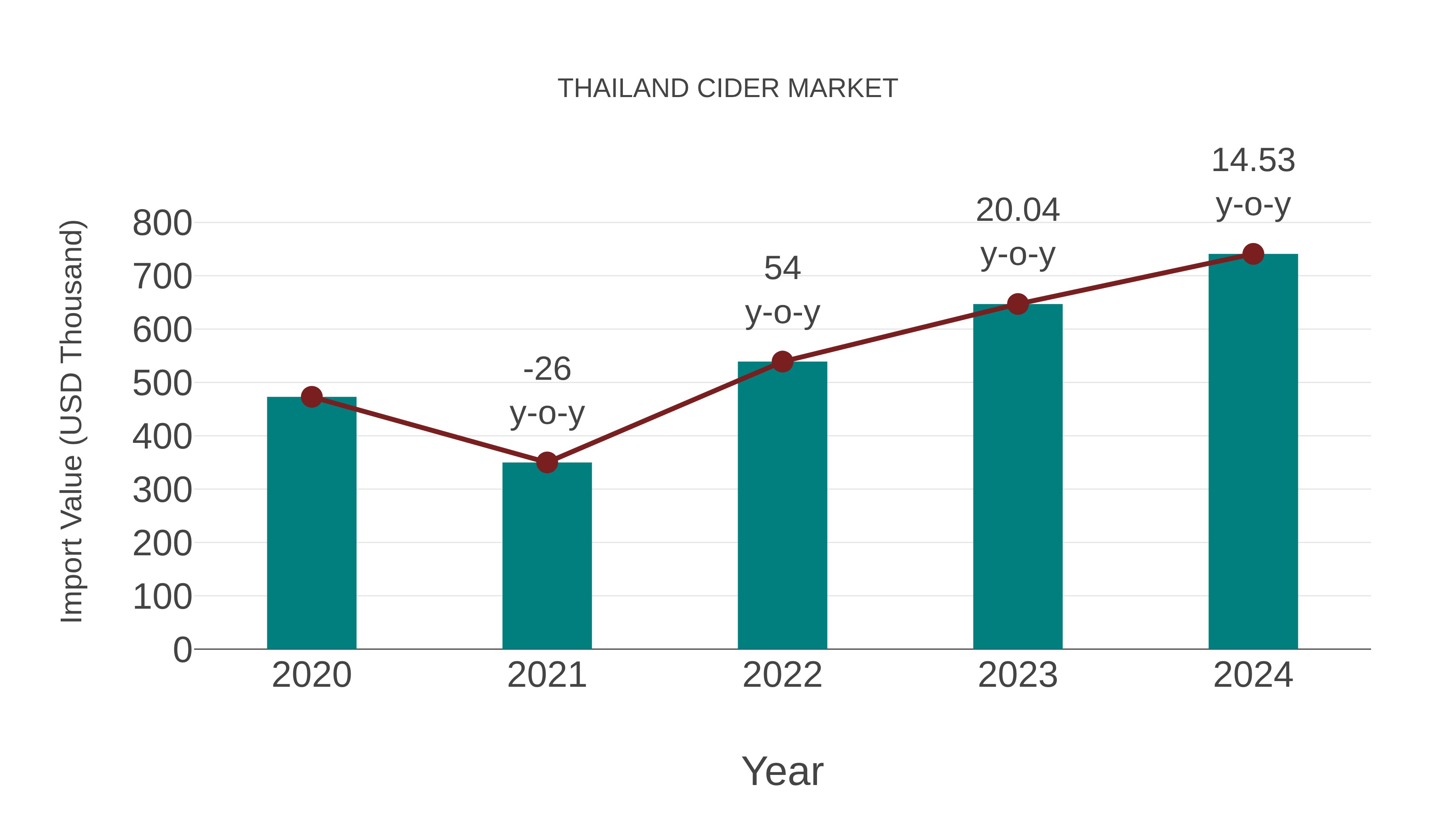
Thailand cider market witnessed a notable import trend from 2023 to 2024, with a growth rate of 14.53%. The compound annual growth rate (CAGR) for imports between 2020 and 2024 stood at 11.88%. This import momentum can be attributed to shifting consumer preferences towards premium cider products, indicating a growing demand for quality beverages in the Thai market.
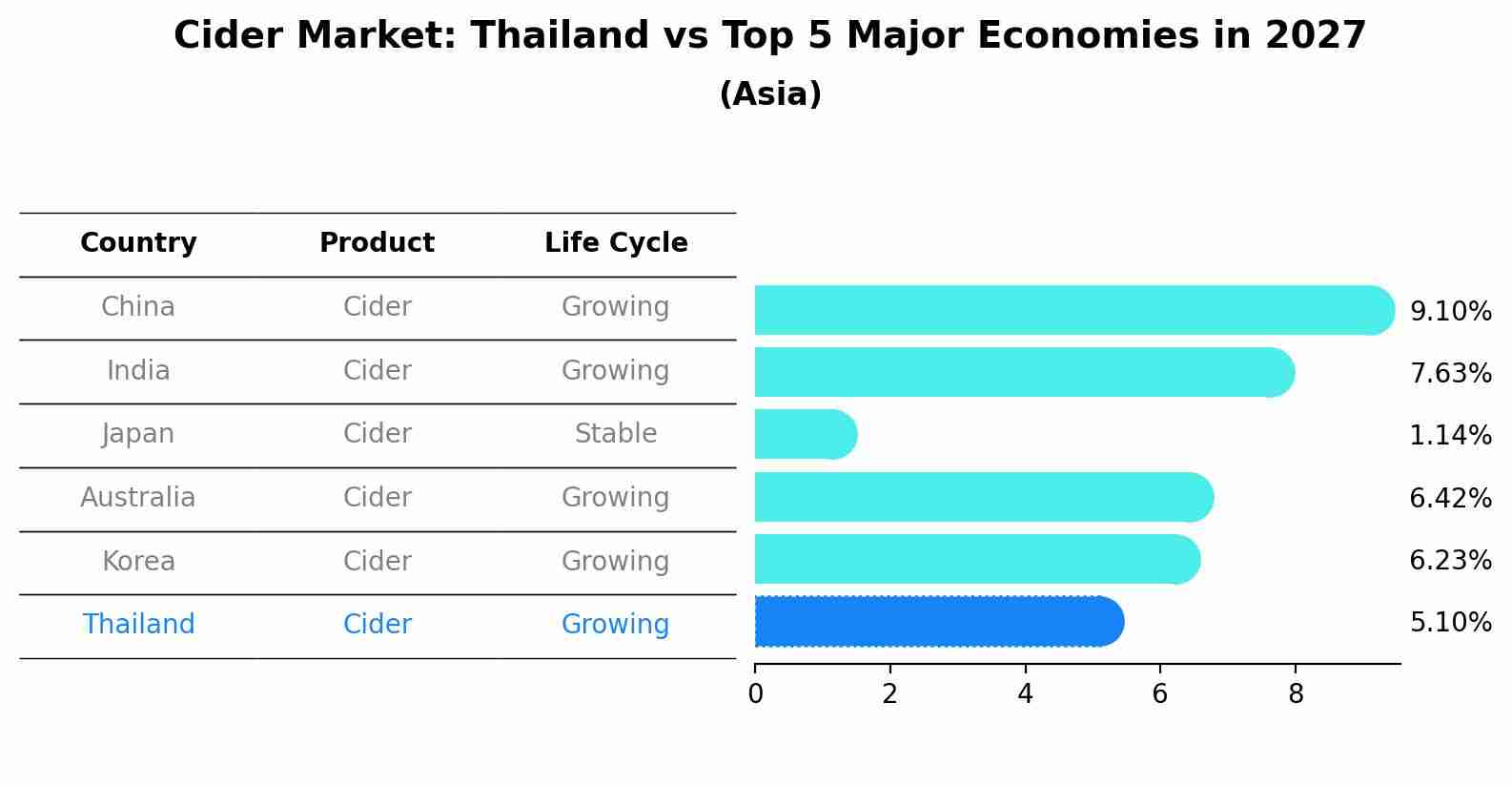
Cider Market: Thailand vs Top 5 Major Economies in 2027 (Asia)
The Cider market in Thailand is projected to grow at a growing growth rate of 5.10% by 2027, highlighting the country's increasing focus on advanced technologies within the Asia region, where China holds the dominant position, followed closely by India, Japan, Australia and South Korea, shaping overall regional demand.
Thailand Cider Market Synopsis
The Thailand cider market has experienced significant growth in recent years, with an increasing number of consumers embracing cider as a refreshing alcoholic beverage. Cider, traditionally popular in Western countries, has found its place in the Thailand market, driven by changing consumer preferences and the influence of international trends. The market is characterized by a diverse range of cider products, including traditional apple-based ciders, as well as innovative variants with unique flavors. Local and international players have entered the market, contributing to its expansion and competitive landscape.
Market Drivers
Several factors have fueled the growth of the cider market in Thailand. Firstly, a shift in consumer preferences towards lighter and fruit-based alcoholic beverages has driven the demand for cider. Additionally, the rise in disposable income among the middle-class population has increased the affordability of premium alcoholic beverages, including cider. The influence of western drinking culture and the popularity of cider among tourists have also played a role in boosting its consumption among Thailand locals. Furthermore, aggressive marketing and promotional activities by key players have effectively created awareness and stimulated interest in cider products.
Challenges of the Market
Despite the promising growth, the Thailand cider market faces certain challenges. One of the main hurdles is the dominance of other alcoholic beverages, such as beer and spirits, which have a well-established presence in the country. Convincing consumers to switch from their preferred beverages to cider remains a challenge for manufacturers and distributors. Additionally, high import taxes on cider and stringent regulations on alcohol distribution pose obstacles to market expansion. Moreover, the lack of awareness about cider and its varied flavors in some regions of Thailand hinders market penetration efforts.
Covid-19 Impact on the Market
The outbreak of the Covid-19 pandemic had a significant impact on the Thailand cider market. With lockdown measures and restrictions on social gatherings, the sales of alcoholic beverages, including cider, experienced a temporary decline. On-premise consumption in bars, restaurants, and entertainment venues was severely affected during the peak of the pandemic. However, the market showed resilience as off-premise sales through retail channels witnessed a surge. With the easing of restrictions and the gradual return to normalcy, the cider market is expected to rebound and regain its growth trajectory.
Key Highlights of the Report:
- Thailand Cider Market Outlook
- Market Size of Thailand Cider Market, 2025
- Forecast of Thailand Cider Market, 2032
- Historical Data and Forecast of Thailand Cider Revenues & Volume for the Period 2022-2032F
- Thailand Cider Market Trend Evolution
- Thailand Cider Market Drivers and Challenges
- Thailand Cider Price Trends
- Thailand Cider Porter's Five Forces
- Thailand Cider Industry Life Cycle
- Historical Data and Forecast of Thailand Cider Market Revenues & Volume By Type for the Period 2022-2032F
- Historical Data and Forecast of Thailand Cider Market Revenues & Volume By Flavored Cider for the Period 2022-2032F
- Historical Data and Forecast of Thailand Cider Market Revenues & Volume By Plain Cider for the Period 2022-2032F
- Historical Data and Forecast of Thailand Cider Market Revenues & Volume By Distribution Channel for the Period 2022-2032F
- Historical Data and Forecast of Thailand Cider Market Revenues & Volume By Speciality Stores for the Period 2022-2032F
- Historical Data and Forecast of Thailand Cider Market Revenues & Volume By Supermarket/Hypermarkets for the Period 2022-2032F
- Historical Data and Forecast of Thailand Cider Market Revenues & Volume By Online Retail Stores for the Period 2022-2032F
- Historical Data and Forecast of Thailand Cider Market Revenues & Volume By Other Channels for the Period 2022-2032F
- Thailand Cider Import Export Trade Statistics
- Market Opportunity Assessment By Type
- Market Opportunity Assessment By Distribution Channel
- Thailand Cider Top Companies Market Share
- Thailand Cider Competitive Benchmarking By Technical and Operational Parameters
- Thailand Cider Company Profiles
- Thailand Cider Key Strategic Recommendations






































