Thailand Dairy Cream Market: Import Trend Analysis
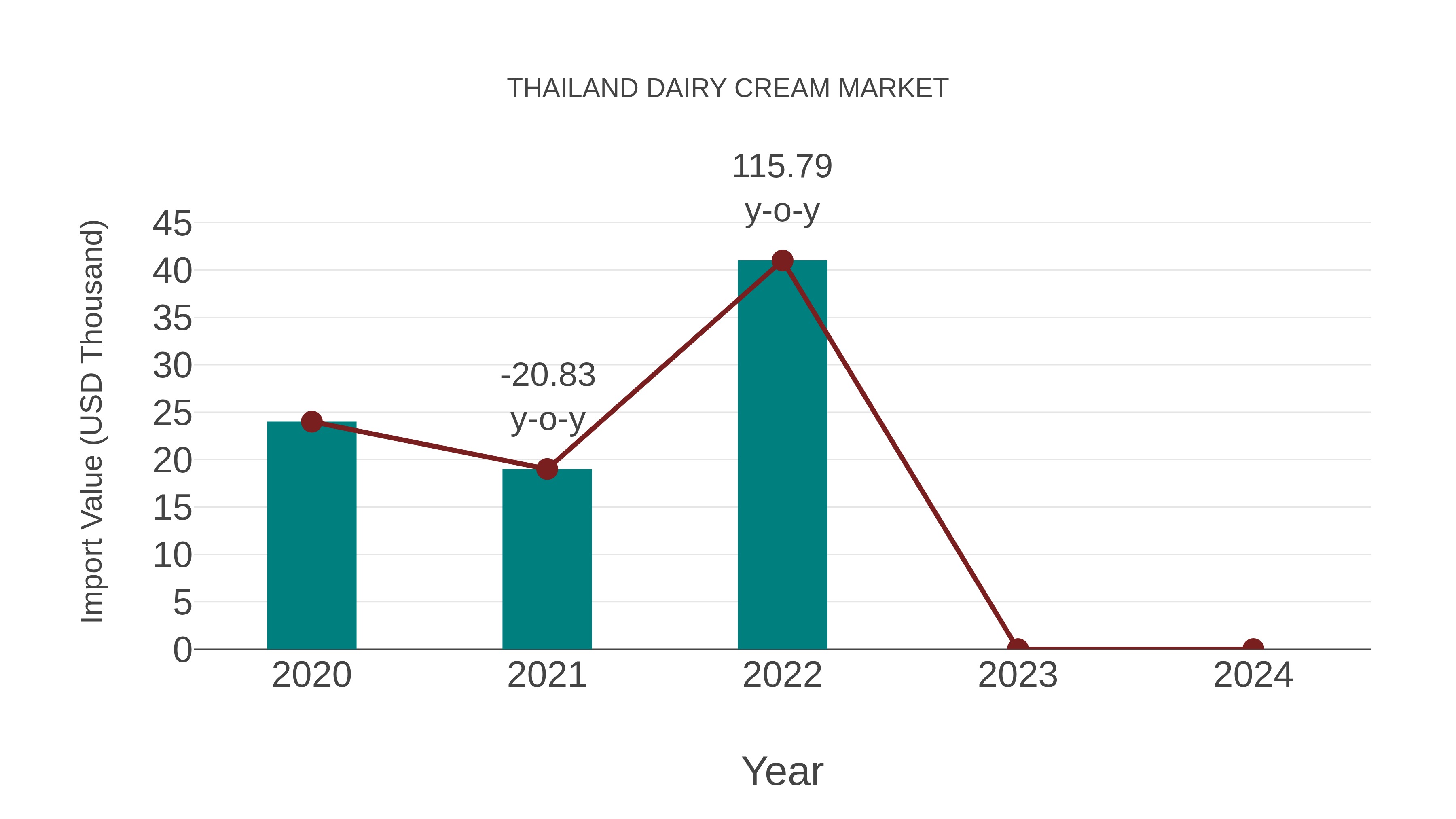
Thailand dairy cream market witnessed a significant import trend with a Compound Annual Growth Rate (CAGR) of 30.7% between 2020 and 2024. This import momentum indicates a strong demand shift towards foreign dairy cream products, showcasing a robust trade performance in the market.
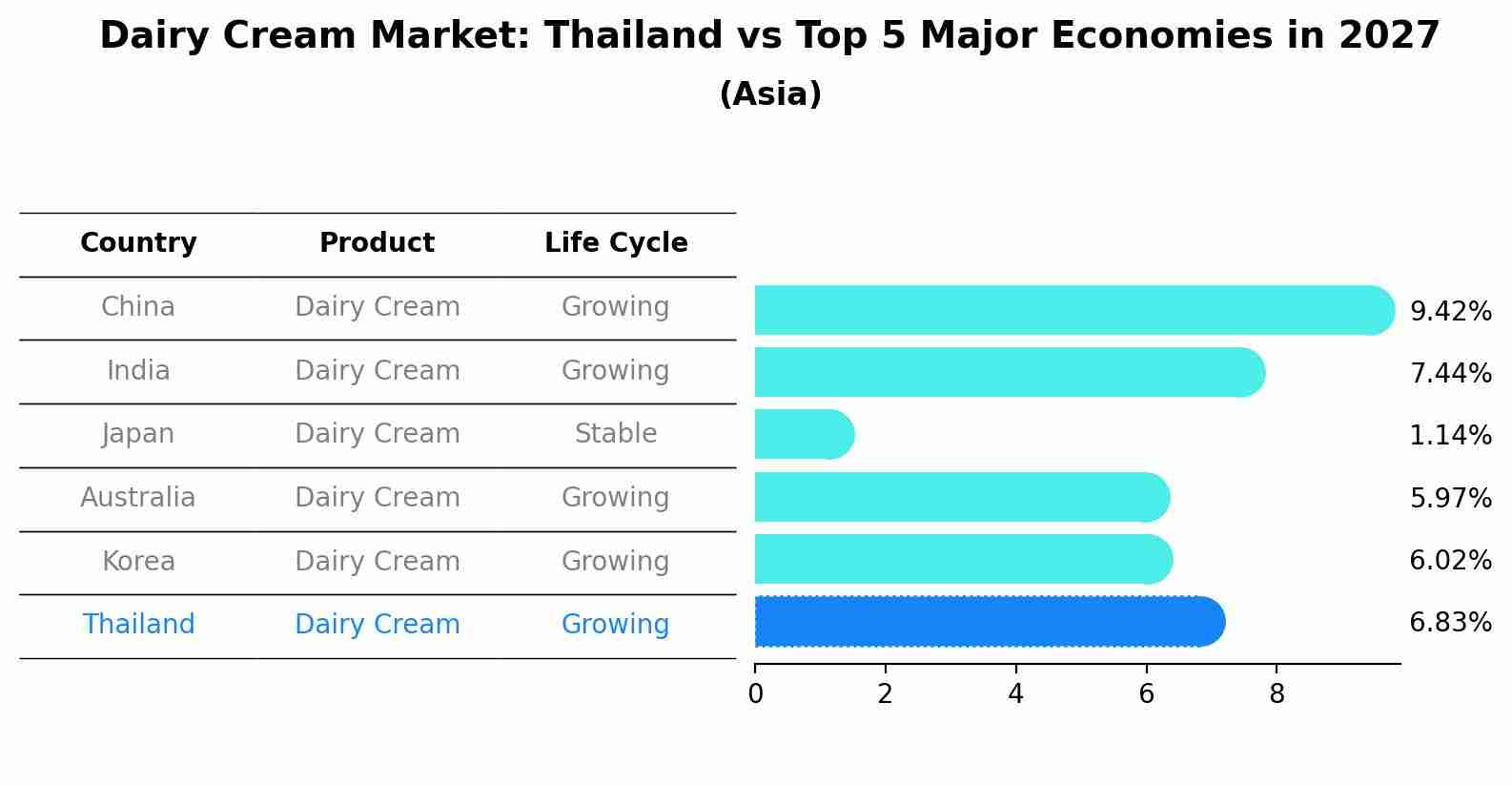
Dairy Cream Market: Thailand vs Top 5 Major Economies in 2027 (Asia)
By 2027, Thailand's Dairy Cream market is forecasted to achieve a growing growth rate of 6.83%, with China leading the Asia region, followed by India, Japan, Australia and South Korea.
Thailand Dairy Cream Market Synopsis
The Thailand dairy cream market is witnessing steady growth, driven by the country`s growing food and beverage industry. Dairy cream is a versatile ingredient used in various culinary applications, from desserts to savory dishes. With the rising popularity of coffee shops and bakeries, the demand for dairy cream as a topping and ingredient has increased. Additionally, the market has seen a surge in demand for non-dairy cream alternatives to cater to lactose-intolerant and vegan consumers, providing opportunities for both traditional and innovative products.
Drivers of the Market
The Thailand Dairy Cream Market is experiencing substantial growth, driven by multiple factors. One of the primary drivers is the increasing popularity of Western-style desserts and coffee culture in the country. Dairy cream is an essential ingredient in many desserts and coffee beverages, fueling its demand. Furthermore, the rising disposable income of consumers has led to a preference for premium and indulgent products, including high-fat dairy cream. The foodservice industry`s expansion, particularly in urban areas, has also contributed significantly to the market`s growth as cream is a staple ingredient in restaurant and bakery operations. Overall, these factors are propelling the Thailand Dairy Cream Market forward.
Challenges of the Market
The Thailand Dairy Cream Market faces various challenges, including changing consumer preferences and dietary trends. As more consumers are shifting towards plant-based and lactose-free alternatives, traditional dairy cream products face competition. Regulatory challenges related to labeling and health claims also impact this market. Furthermore, price fluctuations in dairy commodities can affect production costs, which may, in turn, influence pricing strategies and profitability for manufacturers in the dairy cream sector.
COVID-19 Impact on the Market
The Thailand Dairy Cream market faced significant disruptions during the COVID-19 pandemic. With the closure of restaurants and cafes, the demand for dairy cream, particularly in the foodservice sector, plummeted. Manufacturers had to adjust their production and distribution strategies to focus more on retail channels. Additionally, supply chain issues and labor shortages impacted production, causing fluctuations in the availability of dairy cream products.
Key Players in the Market
In the Thailand Dairy Cream market, several key players have made substantial contributions. Brands like Nestl?, Dutch Mill, and FrieslandCampina are among the frontrunners. Nestl?, a globally recognized name in the food industry, offers a range of dairy cream products under brands like Nestl? Cream and Carnation. Their reputation for quality and innovation has made them a preferred choice for consumers and culinary professionals alike. Dutch Mill, a local dairy company, has gained prominence by producing dairy cream options tailored to the Thai palate. Their emphasis on freshness and flavor has resonated with consumers seeking authentic dairy experiences. FrieslandCampina, a Dutch multinational, operates in Thailand with brands like Foremost. Their commitment to sustainability and ethical sourcing has not only contributed to their success but has also aligned with the evolving preferences of environmentally conscious consumers. These key players have played a vital role in shaping the Thailand Dairy Cream market by offering diverse choices and maintaining high-quality standards.
Key Highlights of the Report:
- Thailand Dairy Cream Market Outlook
- Market Size of Thailand Dairy Cream Market, 2025
- Forecast of Thailand Dairy Cream Market, 2032
- Historical Data and Forecast of Thailand Dairy Cream Revenues & Volume for the Period 2022-2032F
- Thailand Dairy Cream Market Trend Evolution
- Thailand Dairy Cream Market Drivers and Challenges
- Thailand Dairy Cream Price Trends
- Thailand Dairy Cream Porter's Five Forces
- Thailand Dairy Cream Industry Life Cycle
- Historical Data and Forecast of Thailand Dairy Cream Market Revenues & Volume By Type for the Period 2022-2032F
- Historical Data and Forecast of Thailand Dairy Cream Market Revenues & Volume By Fresh Cream for the Period 2022-2032F
- Historical Data and Forecast of Thailand Dairy Cream Market Revenues & Volume By Thickened Cream/Heavy Cream for the Period 2022-2032F
- Historical Data and Forecast of Thailand Dairy Cream Market Revenues & Volume By Whipping Cream for the Period 2022-2032F
- Historical Data and Forecast of Thailand Dairy Cream Market Revenues & Volume By Sour Cream for the Period 2022-2032F
- Historical Data and Forecast of Thailand Dairy Cream Market Revenues & Volume By Other Types for the Period 2022-2032F
- Historical Data and Forecast of Thailand Dairy Cream Market Revenues & Volume By Distribution Channel for the Period 2022-2032F
- Historical Data and Forecast of Thailand Dairy Cream Market Revenues & Volume By Supermarkets/ Hypermarkets for the Period 2022-2032F
- Historical Data and Forecast of Thailand Dairy Cream Market Revenues & Volume By Convenince Stores for the Period 2022-2032F
- Historical Data and Forecast of Thailand Dairy Cream Market Revenues & Volume By Online Retail Stores for the Period 2022-2032F
- Historical Data and Forecast of Thailand Dairy Cream Market Revenues & Volume By Other Distribution Channels for the Period 2022-2032F
- Thailand Dairy Cream Import Export Trade Statistics
- Market Opportunity Assessment By Type
- Market Opportunity Assessment By Distribution Channel
- Thailand Dairy Cream Top Companies Market Share
- Thailand Dairy Cream Competitive Benchmarking By Technical and Operational Parameters
- Thailand Dairy Cream Company Profiles
- Thailand Dairy Cream Key Strategic Recommendations






































