Thailand Electrolyte and Vitamin Water Market: Import Trend Analysis
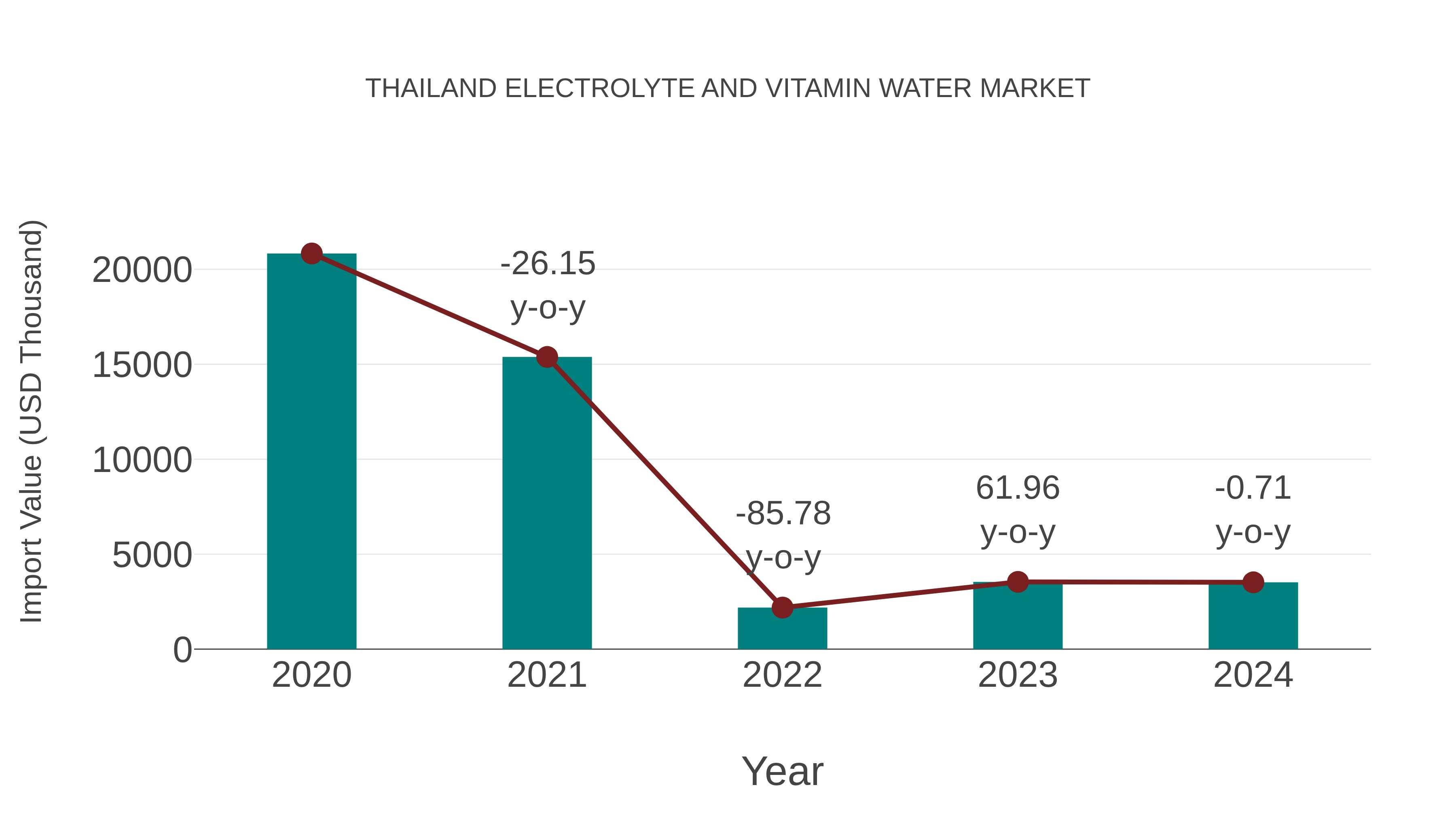
In the Thailand electrolyte and vitamin water market, the import trend experienced a decline from 2023 to 2024, with a negative growth rate of -0.71%. The compound annual growth rate (CAGR) for the period 2020-2024 was -35.9%. This trend may be attributed to shifting consumer preferences, evolving trade policies, or market saturation impacting import momentum.
Thailand Electrolyte and Vitamin Water Market Synopsis
The Thailand Electrolyte and Vitamin Water market is experiencing steady growth driven by increasing health consciousness among consumers. With a rise in demand for functional beverages, electrolyte and vitamin-enhanced waters have gained popularity for their hydration and nutritional benefits. Key players in the market are introducing innovative flavors, formulations, and packaging to attract a wider consumer base. The market is also witnessing a trend towards natural and organic ingredients, catering to the growing preference for clean label products. Urbanization, changing lifestyles, and a focus on fitness and wellness are further propelling the market forward. With a competitive landscape, companies are focusing on strategic marketing initiatives and partnerships to capitalize on the growing demand for electrolyte and vitamin water in Thailand.
Thailand Electrolyte and Vitamin Water Market Trends
The Thailand Electrolyte and Vitamin Water market is experiencing a surge in demand as consumers increasingly prioritize health and wellness. The growing awareness of the benefits of electrolytes and vitamins in hydration and overall well-being is driving the market growth. Key trends include the introduction of innovative flavors and formulations to cater to diverse consumer preferences, as well as the expansion of distribution channels to reach a wider audience. With the rising health-conscious population in Thailand, there are significant opportunities for market players to capitalize on this trend by developing targeted marketing strategies and product differentiation. Collaborations with fitness centers, health clubs, and online platforms can also help brands enhance their visibility and reach in this competitive market segment.
Thailand Electrolyte and Vitamin Water Market Challenges
The Thailand Electrolyte and Vitamin Water Market faces several challenges, including intense competition from established brands, a lack of consumer awareness about the benefits of electrolyte and vitamin-enhanced beverages, and limited distribution channels. Additionally, there is a growing concern among health-conscious consumers regarding the presence of artificial ingredients and added sugars in some electrolyte and vitamin water products. Furthermore, fluctuations in raw material prices and changing consumer preferences towards healthier and natural beverages present challenges for companies operating in this market. To succeed in this competitive landscape, companies need to invest in marketing strategies to educate consumers, develop innovative product formulations, expand distribution networks, and ensure transparency in labeling to build trust among health-conscious consumers.
Thailand Electrolyte and Vitamin Water Market Investment Opportunities
The Thailand Electrolyte and Vitamin Water Market is primarily driven by increasing health consciousness among consumers, fueled by growing awareness of the benefits of hydration and essential nutrients. The trend towards active lifestyles and fitness regimens has also contributed to the rising demand for electrolyte and vitamin-enriched beverages. Additionally, the convenience and portability of these products make them appealing to busy urban consumers looking for on-the-go hydration solutions. Marketing strategies emphasizing the unique formulations and functional benefits of electrolyte and vitamin water have further boosted market growth, along with the availability of a diverse range of flavors and packaging options to cater to different consumer preferences. Overall, the market is expected to continue expanding as consumers seek convenient and healthier beverage options to support their well-being.
Thailand Electrolyte and Vitamin Water Market Government Policie
The Thailand government has implemented various policies to regulate the electrolyte and vitamin water market, aiming to ensure product quality and consumer safety. These regulations include strict labeling requirements to provide accurate information about ingredients and nutritional content, as well as guidelines for marketing claims to prevent misleading advertisements. Additionally, the government has set standards for production facilities and processes to maintain hygiene and product safety standards. In order to promote innovation and competitiveness in the market, the government has also introduced policies to support research and development efforts by providing incentives and funding opportunities for companies in the electrolyte and vitamin water sector. Overall, these policies are designed to safeguard consumer interests and uphold industry standards in Thailand`s electrolyte and vitamin water market.
Thailand Electrolyte and Vitamin Water Market Future Outlook
The future outlook for the Thailand Electrolyte and Vitamin Water Market appears promising, with a projected growth driven by increasing health consciousness among consumers and a growing demand for functional beverages. The market is expected to benefit from the trend towards healthier lifestyle choices and a shift towards products that offer hydration, replenishment of electrolytes, and essential vitamins. Innovations in product formulations and packaging, as well as aggressive marketing strategies by key players, are likely to further propel market growth. Additionally, the convenience factor of on-the-go beverages and the rising popularity of fitness activities are anticipated to contribute to the market expansion. Overall, the Thailand Electrolyte and Vitamin Water Market is poised for significant growth opportunities in the coming years.
Key Highlights of the Report:
- Thailand Electrolyte and Vitamin Water Market Outlook
- Market Size of Thailand Electrolyte and Vitamin Water Market, 2025
- Forecast of Thailand Electrolyte and Vitamin Water Market, 2032
- Historical Data and Forecast of Thailand Electrolyte and Vitamin Water Revenues & Volume for the Period 2022 - 2032F
- Thailand Electrolyte and Vitamin Water Market Trend Evolution
- Thailand Electrolyte and Vitamin Water Market Drivers and Challenges
- Thailand Electrolyte and Vitamin Water Price Trends
- Thailand Electrolyte and Vitamin Water Porter's Five Forces
- Thailand Electrolyte and Vitamin Water Industry Life Cycle
- Historical Data and Forecast of Thailand Electrolyte and Vitamin Water Market Revenues & Volume By Fortification for the Period 2022 - 2032F
- Historical Data and Forecast of Thailand Electrolyte and Vitamin Water Market Revenues & Volume By Vitamin Only for the Period 2022 - 2032F
- Historical Data and Forecast of Thailand Electrolyte and Vitamin Water Market Revenues & Volume By Electrolyte Only for the Period 2022 - 2032F
- Historical Data and Forecast of Thailand Electrolyte and Vitamin Water Market Revenues & Volume By Electrolyte & Vitamin for the Period 2022 - 2032F
- Historical Data and Forecast of Thailand Electrolyte and Vitamin Water Market Revenues & Volume By Variants for the Period 2022 - 2032F
- Historical Data and Forecast of Thailand Electrolyte and Vitamin Water Market Revenues & Volume By Flavored for the Period 2022 - 2032F
- Historical Data and Forecast of Thailand Electrolyte and Vitamin Water Market Revenues & Volume By Non-flavored for the Period 2022 - 2032F
- Historical Data and Forecast of Thailand Electrolyte and Vitamin Water Market Revenues & Volume By Type for the Period 2022 - 2032F
- Historical Data and Forecast of Thailand Electrolyte and Vitamin Water Market Revenues & Volume By Sweetened for the Period 2022 - 2032F
- Historical Data and Forecast of Thailand Electrolyte and Vitamin Water Market Revenues & Volume By Non-sweetened for the Period 2022 - 2032F
- Historical Data and Forecast of Thailand Electrolyte and Vitamin Water Market Revenues & Volume By Packaging for the Period 2022 - 2032F
- Historical Data and Forecast of Thailand Electrolyte and Vitamin Water Market Revenues & Volume By PET for the Period 2022 - 2032F
- Historical Data and Forecast of Thailand Electrolyte and Vitamin Water Market Revenues & Volume By Glass for the Period 2022 - 2032F
- Historical Data and Forecast of Thailand Electrolyte and Vitamin Water Market Revenues & Volume By Aluminum for the Period 2022 - 2032F
- Historical Data and Forecast of Thailand Electrolyte and Vitamin Water Market Revenues & Volume By Distribution Channel for the Period 2022 - 2032F
- Historical Data and Forecast of Thailand Electrolyte and Vitamin Water Market Revenues & Volume By Supermarkets for the Period 2022 - 2032F
- Historical Data and Forecast of Thailand Electrolyte and Vitamin Water Market Revenues & Volume By Convenient Stores for the Period 2022 - 2032F
- Historical Data and Forecast of Thailand Electrolyte and Vitamin Water Market Revenues & Volume By Online Stores for the Period 2022 - 2032F
- Historical Data and Forecast of Thailand Electrolyte and Vitamin Water Market Revenues & Volume By Specialty Stores for the Period 2022 - 2032F
- Thailand Electrolyte and Vitamin Water Import Export Trade Statistics
- Market Opportunity Assessment By Fortification
- Market Opportunity Assessment By Variants
- Market Opportunity Assessment By Type
- Market Opportunity Assessment By Packaging
- Market Opportunity Assessment By Distribution Channel
- Thailand Electrolyte and Vitamin Water Top Companies Market Share
- Thailand Electrolyte and Vitamin Water Competitive Benchmarking By Technical and Operational Parameters
- Thailand Electrolyte and Vitamin Water Company Profiles
- Thailand Electrolyte and Vitamin Water Key Strategic Recommendations






































