Thailand Energy Bar Market: Import Trend Analysis
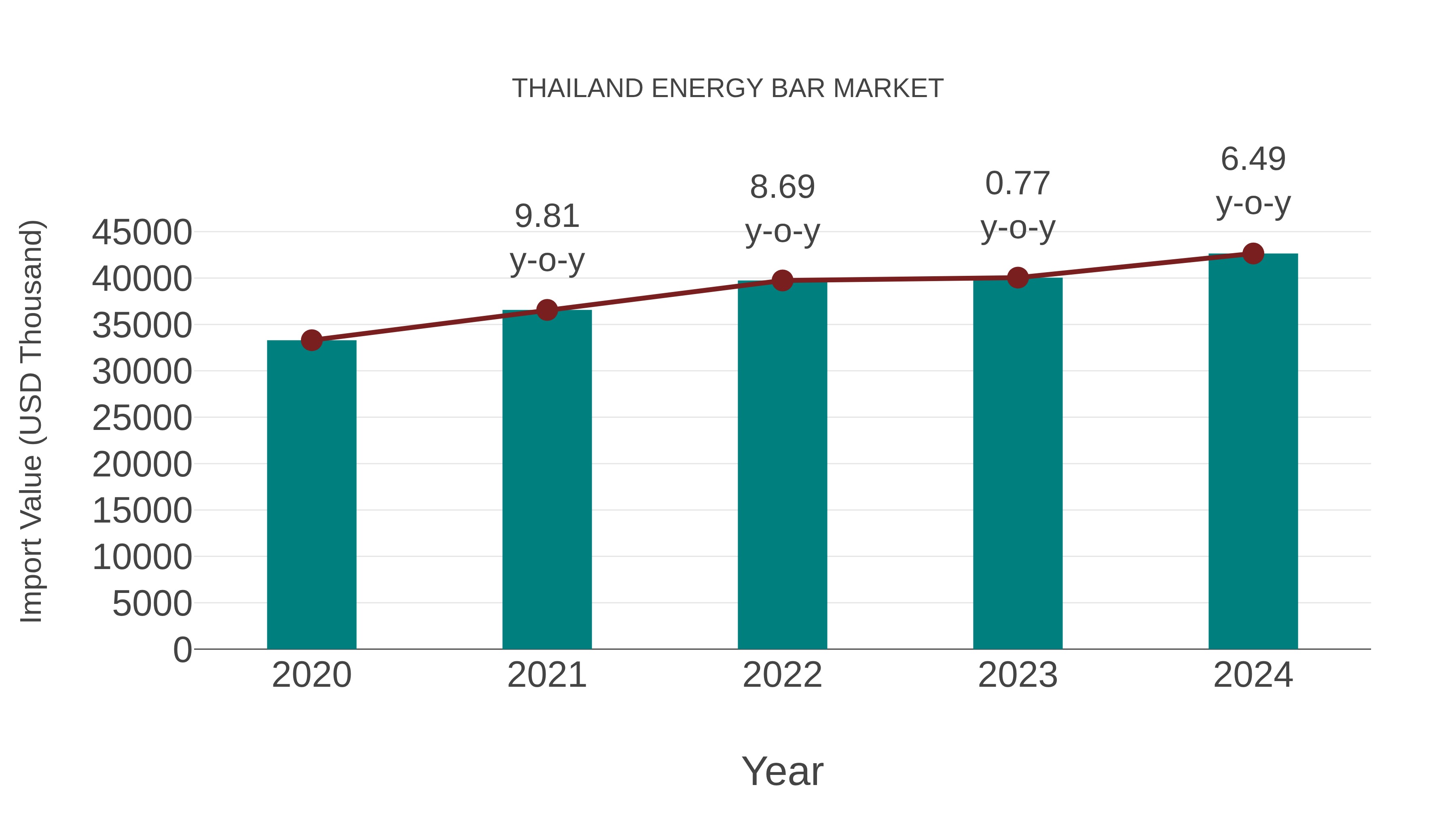
Thailand import trend in the energy bar market experienced a 6.49% growth rate from 2023 to 2024, with a compound annual growth rate (CAGR) of 6.38% for the period of 2020-2024. This indicates a steady import momentum driven by increasing consumer awareness of health and wellness products, contributing to market stability.
Thailand Energy Bar Market Overview
The Thailand energy bar market is experiencing steady growth driven by increasing health consciousness and demand for convenient, nutritious snacks. Consumers are seeking on-the-go options that provide sustained energy and satiety, making energy bars a popular choice. Key players in the market offer a variety of flavors, formulations, and packaging to cater to different consumer preferences. The market is also seeing a trend towards clean label and natural ingredients, with an emphasis on protein-rich and low-sugar options. Distribution channels include supermarkets, convenience stores, health food stores, and online retailers. As the market continues to evolve, there is a growing opportunity for new entrants to innovate and capture market share by offering unique and appealing products that meet the evolving needs of health-conscious consumers in Thailand.
Thailand Energy Bar Market Trends and Opportunities
The Thailand Energy Bar Market is experiencing significant growth driven by the increasing health consciousness among consumers and the growing demand for convenient, on-the-go snacks. Key trends in the market include the rising popularity of plant-based and natural ingredient energy bars, as well as the introduction of innovative flavors and functional ingredients such as superfoods and probiotics. Opportunities for growth lie in expanding distribution channels to reach a wider consumer base, leveraging online platforms for direct-to-consumer sales, and focusing on product differentiation through sustainable packaging and personalized nutrition options. With the rising interest in fitness and wellness in Thailand, the energy bar market is poised for further expansion, offering potential for new market entrants and existing players to capitalize on the growing demand for healthy and convenient snack options.
Thailand Energy Bar Market Challenges
In the Thailand Energy Bar Market, some key challenges include limited consumer awareness and understanding of the benefits of energy bars, competition from traditional snack options, and the relatively higher price point of energy bars compared to other snacks. Additionally, distribution and availability can be a challenge, as energy bars are often not widely stocked in convenience stores or supermarkets. Moreover, the lack of variety and innovation in flavors and ingredients may also hinder the growth of the market. To overcome these challenges, companies operating in the Thailand Energy Bar Market need to focus on educating consumers about the health benefits of energy bars, expanding distribution channels, and developing products that cater to local tastes and preferences.
Thailand Energy Bar Market Drivers
The Thailand Energy Bar Market is primarily driven by the increasing health consciousness among consumers, leading to a growing demand for convenient, nutritious snack options. With a rising awareness of the importance of maintaining a healthy lifestyle, consumers are seeking products that provide sustained energy and essential nutrients. Additionally, the busy lifestyles of urban populations in Thailand have contributed to the popularity of energy bars as a convenient on-the-go snack. Furthermore, the expanding fitness and sports industry in the country has also bolstered the demand for energy bars among athletes and fitness enthusiasts looking for quick and effective sources of energy. Overall, the market is expected to continue to grow as consumers increasingly prioritize health and wellness, driving the demand for functional and nutritious snack options like energy bars.
Thailand Energy Bar Market Government Policy
The Thailand Energy Bar market is influenced by various government policies aimed at promoting sustainable energy consumption and supporting the growth of the food and beverage industry. The government of Thailand has implemented measures such as tax incentives for companies producing healthy food products, including energy bars, to encourage innovation and expansion within the market. Additionally, there are regulations in place to ensure food safety standards are met, which helps build consumer trust in energy bar products. The government also promotes initiatives to increase awareness of the benefits of consuming energy bars as part of a healthy lifestyle, contributing to the overall growth and development of the market.
Thailand Energy Bar Market Future Outlook
The Thailand Energy Bar Market is poised for significant growth in the coming years. Factors such as increasing health awareness among consumers, rising demand for convenience foods, and a growing fitness trend are driving the market expansion. The market is expected to benefit from the rising disposable incomes in the region, leading to higher purchasing power for such products. Additionally, the shift towards healthier snacking options and the influence of Western dietary habits are further propelling the demand for energy bars in Thailand. Companies are likely to focus on product innovation, offering a wide range of flavors and formulations to cater to diverse consumer preferences. With an increasing emphasis on health and wellness, the Thailand Energy Bar Market is anticipated to experience robust growth in the foreseeable future.
Key Highlights of the Report:
- Thailand Energy Bar Market Outlook
- Market Size of Thailand Energy Bar Market, 2025
- Forecast of Thailand Energy Bar Market, 2032
- Historical Data and Forecast of Thailand Energy Bar Revenues & Volume for the Period 2022 - 2032F
- Thailand Energy Bar Market Trend Evolution
- Thailand Energy Bar Market Drivers and Challenges
- Thailand Energy Bar Price Trends
- Thailand Energy Bar Porter's Five Forces
- Thailand Energy Bar Industry Life Cycle
- Historical Data and Forecast of Thailand Energy Bar Market Revenues & Volume By Distribution Channel for the Period 2022 - 2032F
- Historical Data and Forecast of Thailand Energy Bar Market Revenues & Volume By Supermarkets/Hypermarkets for the Period 2022 - 2032F
- Historical Data and Forecast of Thailand Energy Bar Market Revenues & Volume By Convenience Stores for the Period 2022 - 2032F
- Historical Data and Forecast of Thailand Energy Bar Market Revenues & Volume By Specialty Stores for the Period 2022 - 2032F
- Historical Data and Forecast of Thailand Energy Bar Market Revenues & Volume By Online Retail Stores for the Period 2022 - 2032F
- Historical Data and Forecast of Thailand Energy Bar Market Revenues & Volume By Other for the Period 2022 - 2032F
- Thailand Energy Bar Import Export Trade Statistics
- Market Opportunity Assessment By Distribution Channel
- Thailand Energy Bar Top Companies Market Share
- Thailand Energy Bar Competitive Benchmarking By Technical and Operational Parameters
- Thailand Energy Bar Company Profiles
- Thailand Energy Bar Key Strategic Recommendations






































