Thailand Fish Farming Market: Import Trend Analysis
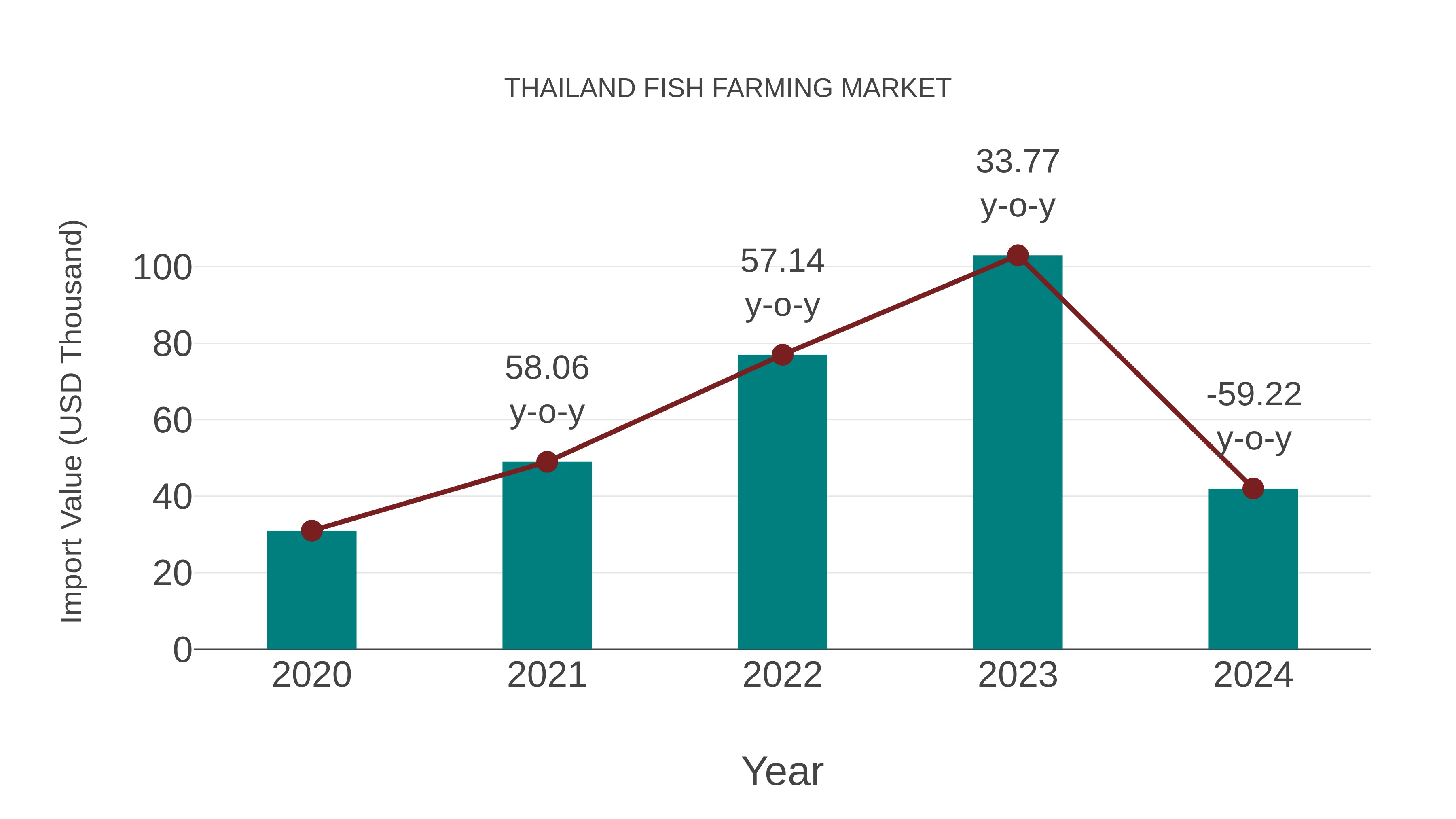
Thailand import trend for the fish farming market experienced a notable decline from 2023 to 2024, with a growth rate of -59.22%. However, the compound annual growth rate (CAGR) for 2020-2024 stood at 7.89%. This dip in import momentum could be attributed to factors such as changes in consumer preferences or shifts in trade policies impacting market stability.
Thailand Fish Farming Market Synopsis
Fish farming, or aquaculture, plays a crucial role in meeting the country`s demand for fish and seafood. Thailand has developed a well-established and technologically advanced fish farming sector. Tilapia, catfish, and various species of carp are commonly raised through aquaculture practices. This market is not only essential for domestic consumption but also contributes significantly to seafood exports.
Drivers of the Market
The Thailand fish farming market has expanded due to several factors. First, the global demand for seafood has led to an increase in aquaculture activities, with Thailand being a significant contributor to the industry. Government incentives and support for sustainable aquaculture practices have encouraged farmers to invest in fish farming. Additionally, the depletion of wild fish stocks has driven the need for alternative sources, making fish farming a vital driver in meeting seafood demand.
Challenges of the Market
The Thailand fish farming market faces challenges related to environmental sustainability and disease management. Overuse of antibiotics and overcrowding in fish farms can lead to antibiotic resistance and disease outbreaks, threatening the industry`s viability. Balancing the need for increased fish production with responsible aquaculture practices is a constant challenge. Additionally, ensuring the quality and safety of farmed fish products is vital, as issues related to contamination and antibiotic residues can tarnish the industry`s reputation.
COVID-19 Impact on the Market
The fish farming market in Thailand faced both challenges and opportunities during the pandemic. While there were disruptions in the supply chain and export-oriented businesses suffered, domestic consumption of farmed fish remained steady. Some fish farmers shifted their focus to supplying the local market and exploring online sales platforms. The pandemic also highlighted the importance of sustainable aquaculture practices.
Key Players in the Market
Charoen Pokphand Foods and Thai Union Group are key players in the fish farming market, with a focus on sustainable aquaculture practices.
Key Highlights of the Report:
- Thailand Fish Farming Market Outlook
- Market Size of Thailand Fish Farming Market, 2025
- Forecast of Thailand Fish Farming Market, 2032
- Historical Data and Forecast of Thailand Fish Farming Revenues & Volume for the Period 2022-2032F
- Thailand Fish Farming Market Trend Evolution
- Thailand Fish Farming Market Drivers and Challenges
- Thailand Fish Farming Price Trends
- Thailand Fish Farming Porter's Five Forces
- Thailand Fish Farming Industry Life Cycle
- Historical Data and Forecast of Thailand Fish Farming Market Revenues & Volume By Environment for the Period 2022-2032F
- Historical Data and Forecast of Thailand Fish Farming Market Revenues & Volume By Marine Water for the Period 2022-2032F
- Historical Data and Forecast of Thailand Fish Farming Market Revenues & Volume By Fresh Water for the Period 2022-2032F
- Historical Data and Forecast of Thailand Fish Farming Market Revenues & Volume By Brackish Water for the Period 2022-2032F
- Historical Data and Forecast of Thailand Fish Farming Market Revenues & Volume By Fish Type for the Period 2022-2032F
- Historical Data and Forecast of Thailand Fish Farming Market Revenues & Volume By Pompano for the Period 2022-2032F
- Historical Data and Forecast of Thailand Fish Farming Market Revenues & Volume By Snappers for the Period 2022-2032F
- Historical Data and Forecast of Thailand Fish Farming Market Revenues & Volume By Groupers for the Period 2022-2032F
- Historical Data and Forecast of Thailand Fish Farming Market Revenues & Volume By Salmon for the Period 2022-2032F
- Historical Data and Forecast of Thailand Fish Farming Market Revenues & Volume By Milkfish for the Period 2022-2032F
- Historical Data and Forecast of Thailand Fish Farming Market Revenues & Volume By Tuna for the Period 2022-2032F
- Historical Data and Forecast of Thailand Fish Farming Market Revenues & Volume By Tilapia for the Period 2022-2032F
- Historical Data and Forecast of Thailand Fish Farming Market Revenues & Volume By Others for the Period 2022-2032F
- Thailand Fish Farming Import Export Trade Statistics
- Market Opportunity Assessment By Environment
- Market Opportunity Assessment By Fish Type
- Thailand Fish Farming Top Companies Market Share
- Thailand Fish Farming Competitive Benchmarking By Technical and Operational Parameters
- Thailand Fish Farming Company Profiles
- Thailand Fish Farming Key Strategic Recommendations






































