Thailand Fitness Equipment Market: Import Trend Analysis
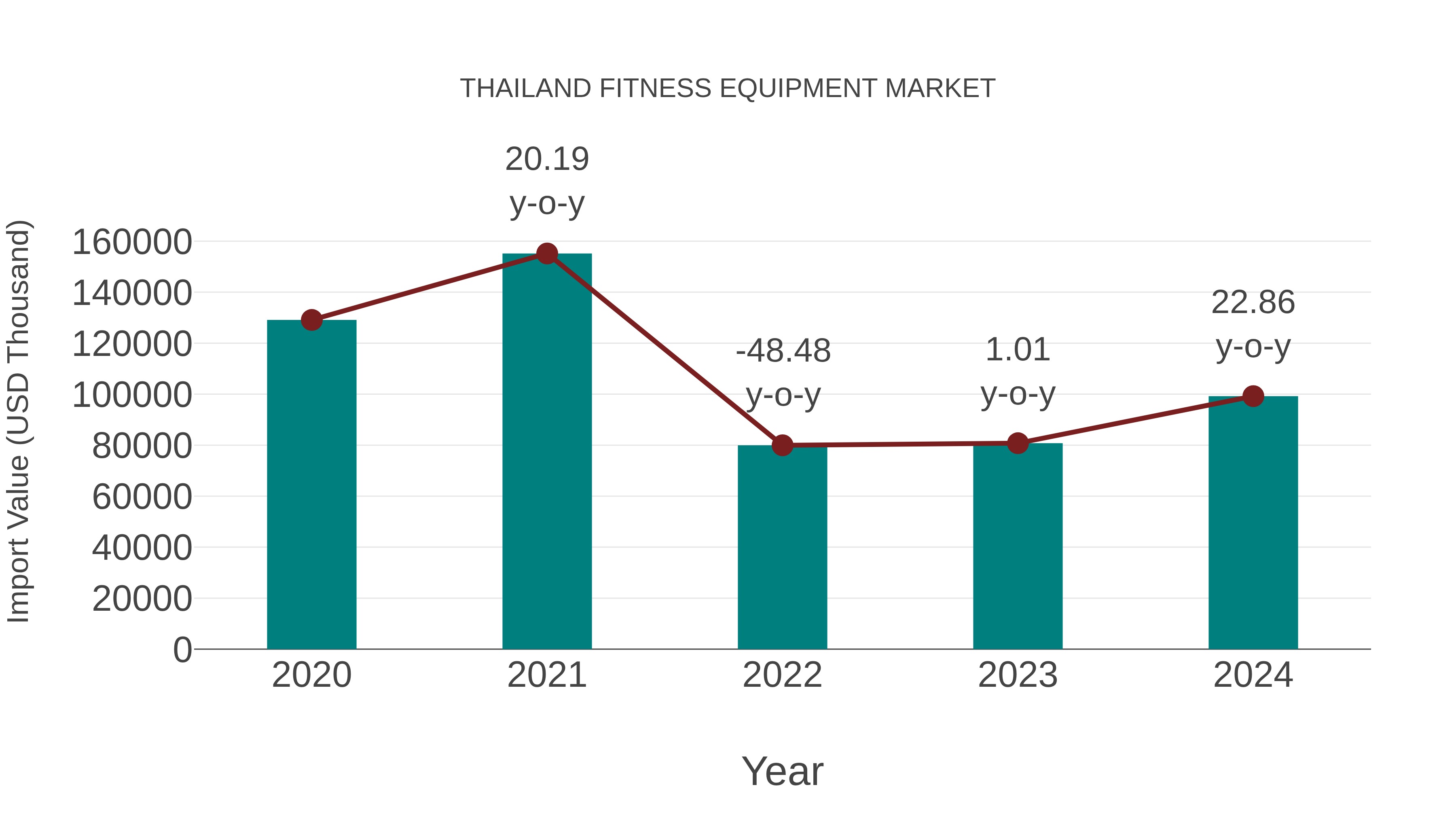
In the Thailand fitness equipment market, the import trend showed a notable growth rate of 22.86% from 2023 to 2024, contrasting with a -6.37% compound annual growth rate (CAGR) for 2020-2024. This shift may reflect a surge in demand for fitness equipment, potentially driven by increased health awareness or evolving consumer preferences in the market.
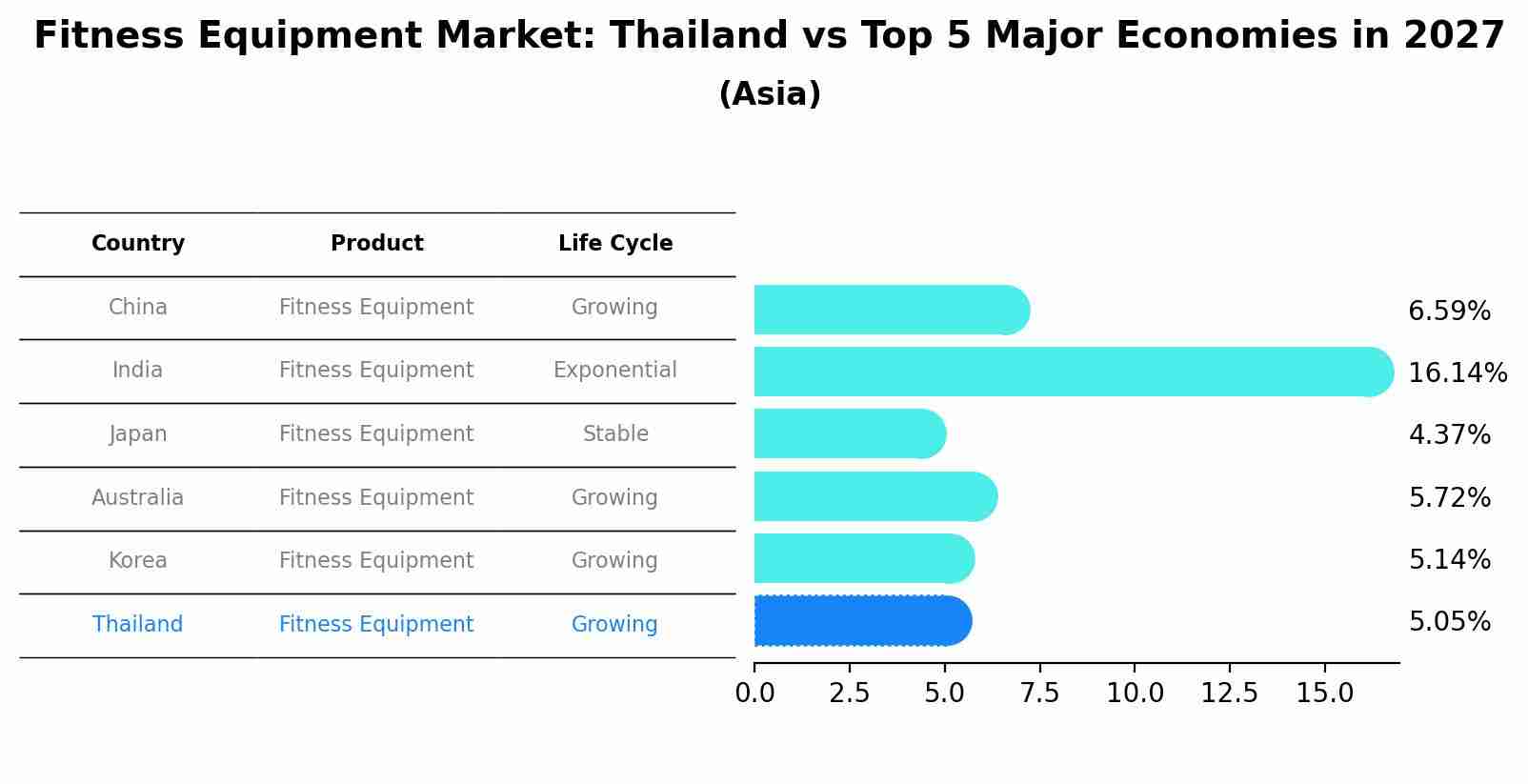
Fitness Equipment Market: Thailand vs Top 5 Major Economies in 2027 (Asia)
The Fitness Equipment market in Thailand is projected to grow at a growing growth rate of 5.05% by 2027, within the Asia region led by China, along with other countries like India, Japan, Australia and South Korea, collectively shaping a dynamic and evolving market environment driven by innovation and increasing adoption of emerging technologies.
Thailand Fitness Equipment Market Synopsis
The Thailand fitness equipment market is expected to grow at a CAGR of 7.1% during the forecast period (2020-2026). The rising number of health clubs and gyms, increasing awareness regarding physical fitness and growing demand for home-based exercise machines are some of the major factors driving the growth of this market in Thailand. Moreover, government initiatives such as gym subsidies and tax exemptions on importation of sports goods further support market growth. Additionally, technological advancements in cardio equipment with features like Bluetooth connectivity & touchscreen monitors offer enhanced user experience which has led to its increased adoption among consumers in recent years
Moreover, an increasing preference for smart technology enabled fitness solutions such as virtual/online training classes is also expected to boost product sales over the forecast period. Furthermore, manufacturers are focusing on offering innovative products with different pricing options that meet consumer needs without compromising quality along with providing various schemes & discounts to increase their customer base leading to higher demand for these products from both commercial as well domestic users in near future
Key Highlights of the Report:
- Thailand Fitness Equipment Market Outlook
- Market Size of Thailand Fitness Equipment Market, 2019
- Forecast of Thailand Fitness Equipment Market, 2026
- Historical Data and Forecast of Thailand Fitness Equipment Revenues & Volume for the Period 2016 - 2026
- Thailand Fitness Equipment Market Trend Evolution
- Thailand Fitness Equipment Market Drivers and Challenges
- Thailand Fitness Equipment Price Trends
- Thailand Fitness Equipment Porter's Five Forces
- Thailand Fitness Equipment Industry Life Cycle
- Historical Data and Forecast of Thailand Fitness Equipment Market Revenues & Volume By Type for the Period 2016 - 2026
- Historical Data and Forecast of Thailand Fitness Equipment Market Revenues & Volume By Cardiovascular Training Equipment for the Period 2016 - 2026
- Historical Data and Forecast of Thailand Fitness Equipment Market Revenues & Volume By Strength Training Equipment for the Period 2016 - 2026
- Historical Data and Forecast of Thailand Fitness Equipment Market Revenues & Volume By Other Equipment for the Period 2016 - 2026
- Historical Data and Forecast of Thailand Fitness Equipment Market Revenues & Volume By End-users for the Period 2016 - 2026
- Historical Data and Forecast of Thailand Fitness Equipment Market Revenues & Volume By Home consumer for the Period 2016 - 2026
- Historical Data and Forecast of Thailand Fitness Equipment Market Revenues & Volume By Health club/gym for the Period 2016 - 2026
- Historical Data and Forecast of Thailand Fitness Equipment Market Revenues & Volume By Other commercial user for the Period 2016 - 2026
- Thailand Fitness Equipment Import Export Trade Statistics
- Market Opportunity Assessment By Type
- Market Opportunity Assessment By End-users
- Thailand Fitness Equipment Top Companies Market Share
- Thailand Fitness Equipment Competitive Benchmarking By Technical and Operational Parameters
- Thailand Fitness Equipment Company Profiles
- Thailand Fitness Equipment Key Strategic Recommendations






































