Thailand Floor Covering Market: Import Trend Analysis
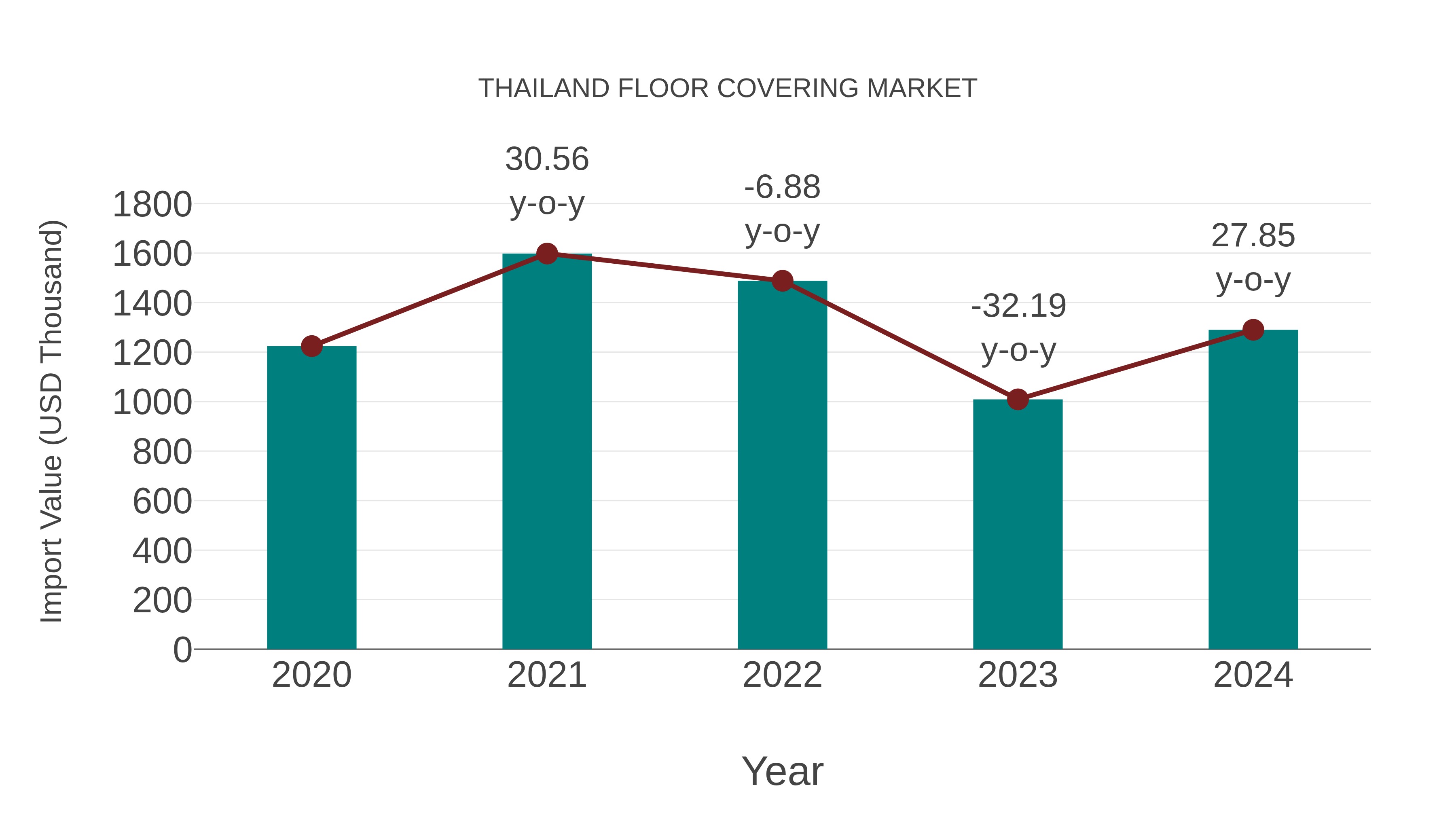
Thailand import trend in the floor covering market experienced notable growth from 2023 to 2024, with a 27.85% increase. The compound annual growth rate (CAGR) for the period from 2020 to 2024 stood at 1.32%. This surge in imports can be attributed to a combination of increased consumer demand, favorable trade policies, and market recovery efforts.
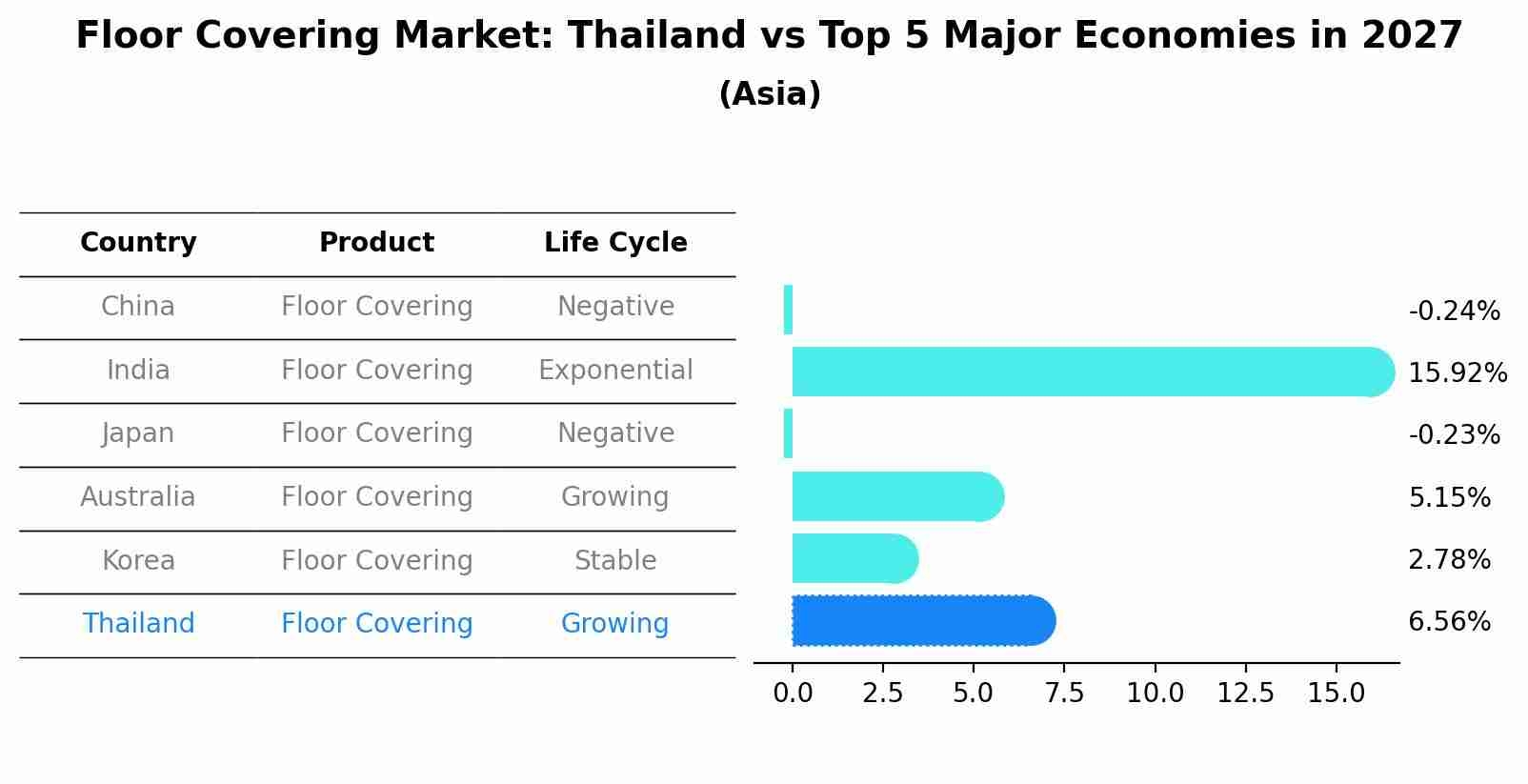
Floor Covering Market: Thailand vs Top 5 Major Economies in 2027 (Asia)
By 2027, Thailand's Floor Covering market is forecasted to achieve a growing growth rate of 6.56%, with China leading the Asia region, followed by India, Japan, Australia and South Korea.
Thailand Floor Covering Market Synopsis
The Thailand floor covering market offers a wide range of flooring materials, including tiles, carpets, vinyl, laminate, hardwood, and others. These materials are used to cover floors in homes, offices, retail spaces, hotels, healthcare facilities, and more.
Market Drivers
Thailand construction sector and infrastructure development projects drive the demand for floor covering materials. Construction activities, including residential and commercial projects, create opportunities for floor covering products. Changing lifestyles, interior design trends, and increasing disposable incomes influence consumer preferences for different types of floor coverings. The demand for aesthetically pleasing and durable flooring options drives market growth.
Challenges of the Market
Price sensitivity among consumers can be a challenge for the floor covering market. Price-conscious buyers may opt for lower-priced flooring materials or delay their purchases, impacting sales of premium or high-end products. Growing environmental concerns and the demand for sustainable building materials pose challenges to the floor covering market. Consumers increasingly prioritize eco-friendly options and materials with low VOC (volatile organic compounds) emissions.
Covid-19 Impact on the Market
The pandemic led to disruptions in construction activities due to lockdowns, labor shortages, and supply chain disruptions. These disruptions may have impacted the demand for floor covering materials. Changes in consumer behavior, including remote work arrangements and reduced foot traffic in commercial spaces, may have temporarily impacted the demand for floor coverings. Home renovations and improvements, however, may have shown resilience.
Key Players of the Market
Mohawk Industries, Inc., Tarkett Group, Interface, Inc., Shaw Industries Group, Inc., Armstrong World Industries, Inc., Forbo Flooring Systems, Gerflor Group, Nippon Sheet Glass Co., Ltd. (NSG Group). These companies are recognized global players in the floor covering market, offering a wide range of flooring materials and solutions. It`s important to conduct market research specific to the Thailand floor covering market to identify key players operating within the country.
Key Highlights of the Report:
- Thailand Floor Covering Market Outlook
- Market Size of Thailand Floor Covering Market, 2025
- Forecast of Thailand Floor Covering Market, 2032
- Historical Data and Forecast of Thailand Floor Covering Revenues & Volume for the Period 2022-2032F
- Thailand Floor Covering Market Trend Evolution
- Thailand Floor Covering Market Drivers and Challenges
- Thailand Floor Covering Price Trends
- Thailand Floor Covering Porter's Five Forces
- Thailand Floor Covering Industry Life Cycle
- Historical Data and Forecast of Thailand Floor Covering Market Revenues & Volume By Product for the Period 2022-2032F
- Historical Data and Forecast of Thailand Floor Covering Market Revenues & Volume By Carpet and Area Rugs for the Period 2022-2032F
- Historical Data and Forecast of Thailand Floor Covering Market Revenues & Volume By Wood Flooring for the Period 2022-2032F
- Historical Data and Forecast of Thailand Floor Covering Market Revenues & Volume By Ceramic Tiles Flooring for the Period 2022-2032F
- Historical Data and Forecast of Thailand Floor Covering Market Revenues & Volume By Laminate Flooring for the Period 2022-2032F
- Historical Data and Forecast of Thailand Floor Covering Market Revenues & Volume By Vinyl Flooring for the Period 2022-2032F
- Historical Data and Forecast of Thailand Floor Covering Market Revenues & Volume By Stone Flooring for the Period 2022-2032F
- Historical Data and Forecast of Thailand Floor Covering Market Revenues & Volume By Other Products for the Period 2022-2032F
- Historical Data and Forecast of Thailand Floor Covering Market Revenues & Volume By Distribution Channel for the Period 2022-2032F
- Historical Data and Forecast of Thailand Floor Covering Market Revenues & Volume By Home Centers for the Period 2022-2032F
- Historical Data and Forecast of Thailand Floor Covering Market Revenues & Volume By Flagship Stores for the Period 2022-2032F
- Historical Data and Forecast of Thailand Floor Covering Market Revenues & Volume By Specialty Stores for the Period 2022-2032F
- Historical Data and Forecast of Thailand Floor Covering Market Revenues & Volume By Online Stores for the Period 2022-2032F
- Historical Data and Forecast of Thailand Floor Covering Market Revenues & Volume By Other for the Period 2022-2032F
- Historical Data and Forecast of Thailand Floor Covering Market Revenues & Volume By End User for the Period 2022-2032F
- Historical Data and Forecast of Thailand Floor Covering Market Revenues & Volume By Commercial for the Period 2022-2032F
- Historical Data and Forecast of Thailand Floor Covering Market Revenues & Volume By Residential Replacement for the Period 2022-2032F
- Historical Data and Forecast of Thailand Floor Covering Market Revenues & Volume By Builder for the Period 2022-2032F
- Thailand Floor Covering Import Export Trade Statistics
- Market Opportunity Assessment By Product
- Market Opportunity Assessment By Distribution Channel
- Market Opportunity Assessment By End User
- Thailand Floor Covering Top Companies Market Share
- Thailand Floor Covering Competitive Benchmarking By Technical and Operational Parameters
- Thailand Floor Covering Company Profiles
- Thailand Floor Covering Key Strategic Recommendations






































