Thailand Food and Beverages Market: Import Trend Analysis
In the Thailand food and beverages market, imports showed a notable growth trend from 2023 to 2024, with a growth rate of 15.31%. However, the compound annual growth rate (CAGR) for the period 2020-2024 was -4.45%. This decline in the CAGR could be attributed to shifts in consumer preferences, changes in trade policies, or market recovery efforts influencing import momentum.
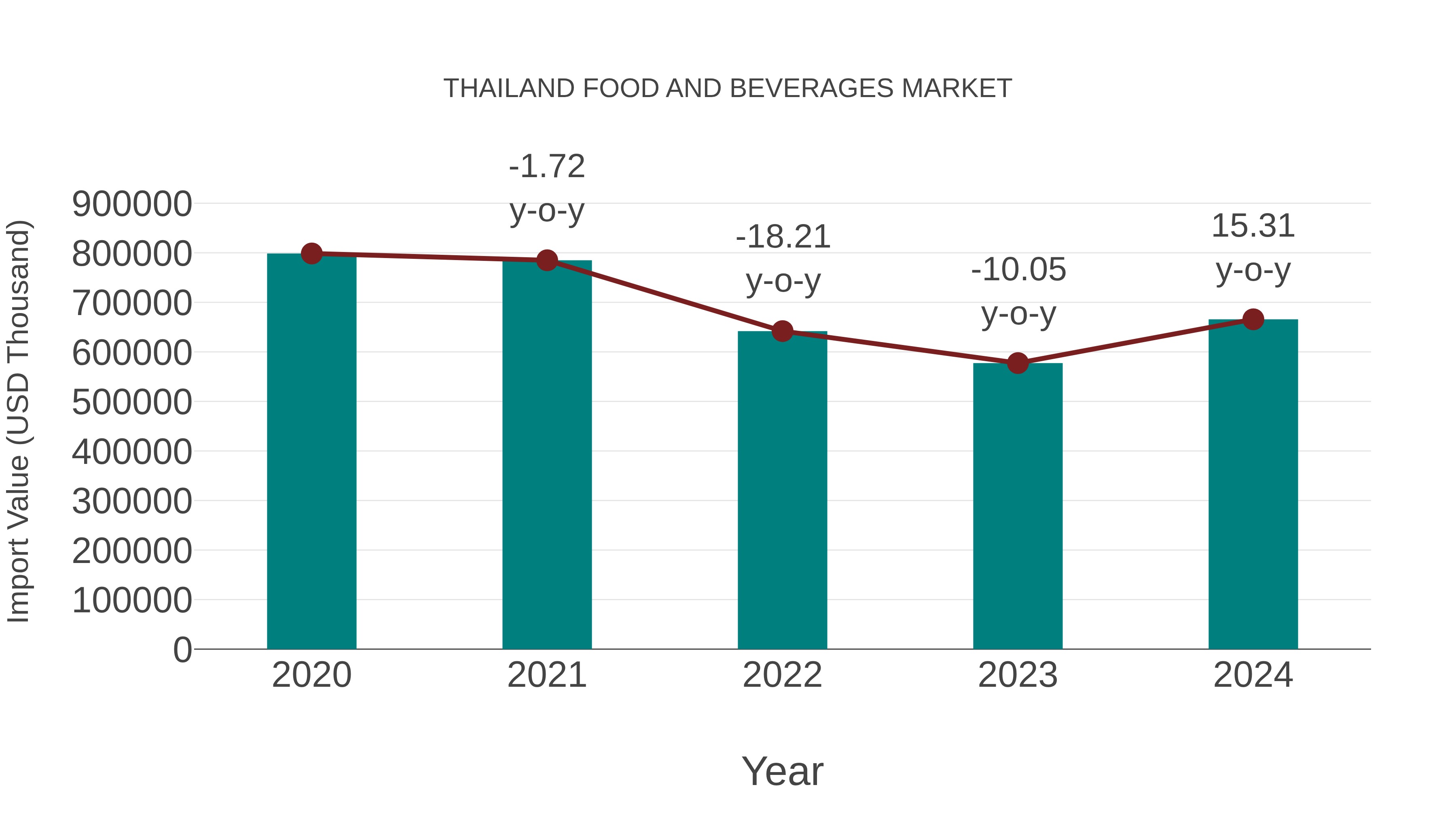
Thailand Food and Beverages Market Growth Rate
According to 6Wresearch internal database and industry insights, the Thailand Food and Beverages Market is projected to grow at a compound annual growth rate (CAGR) of 6% during the forecast period from 2026 to 2032.
Topics Covered in the Thailand Food and Beverages Market Report
The Thailand Food and Beverages Market report thoroughly covers the market by type, distribution channel, and nature, providing an unbiased and detailed analysis of ongoing market trends, opportunities, challenges, and market drivers, helping stakeholders align their strategies with current and future market dynamics.
Thailand Food and Beverages Market Highlights
| Report Name | Thailand Food and Beverages Market Highlights |
| Forecast Period | 2026–2032 |
| CAGR | 6% |
| Growing Sector | Food and Beverages |
Thailand Food and Beverages Market Synopsis
The Thailand Food and Beverages Market is expanding as consumers now prefer healthier food options that require less effort to prepare and which offer a wider range of choices. The market is experiencing growth as consumers now seek organic, functional and plant-based food items. The market is advancing as more people use e-commerce platforms to buy food and beverages combined with strong demand for Thai cuisine from both domestic and international markets. The market is expanding as more people prefer to buy convenience foods, premium food and beverage products.
Evaluation of Growth Drivers in the Thailand Food and Beverages Market
Below mentioned are some prominent drivers and their impact on the market dynamics:
| Drivers | Primary Segments Affected | Why It Matters (Evidence) |
| Health Consciousness | Non-Alcoholic Beverages, Bakery and Confectionary, Dairy Food | Consumers are increasingly opting for healthier and functional foods, including sugar-free beverages and low-fat dairy products. |
| Demand for Convenience | Bakery and Confectionary, Frozen, Canned, and Dried Food | Ready-to-eat meals and convenient food products are gaining popularity due to busy lifestyles. |
| Rise in E-Commerce | All Segments | The rise in food and beverage sales is expanding globally, with online platforms providing easier access, more variety, and improved pricing. |
| Popularity of Local and Ethnic Foods | Grain Products, Dairy Food, Meat | Thai cuisine has gained worldwide popularity, while local communities continue to enjoy its taste. |
| Increasing Interest in Plant-Based Foods | Non-Alcoholic Beverages, Dairy Food, Meat | The increased growth in the consumption of lesser animal-based dairy products with the convergence of health and sustainable lifestyle is of worldwide recognition and demand for plant-based substitutes. |
The Thailand Food and Beverages Market Size is projected to grow at a CAGR of 6% from 2026 to 2032. The Thailand Food and Beverages Market demonstrates ongoing growth as consumers increasingly demand healthy food options, convenience products and online shopping becomes more popular. The market experiences growth through increasing consumer demand for plant-based products and their strong preference for Thai cuisine which they want to eat both inside Thailand and outside its borders. The market experiences advantages from changing consumer behavior as customers now prefer products that offer better health benefits and greater convenience.
Evaluation of Restraints in the Thailand Food and Beverages Market
Below mentioned are some major restraints and their influence on the market dynamics:
| Restraints | Primary Segments Affected | What This Means (Evidence) |
| Price Sensitivity | All Segments | High prices for premium products and organic food can deter price-sensitive consumers, especially in rural regions. |
| Supply Chain Challenges | Dairy Food, Meat, Bakery and Confectionary | Supply chains are universally multi-tiered, so any entered disruption has the potential of triggering product shortages while driving costs. |
| Regulatory Constraints | All Segments | Stringent food safety regulations may increase production costs, particularly for small and medium-sized businesses. |
| Consumer Awareness | Frozen, Canned and Dried Food, Organic Products | The main consumer category avoids purchasing organic and functional foods due to their unawareness of their benefits. |
| Competition from Imported Products | All Segments | Growing competition from cheaper imported food products can reduce the market share of locally produced items. |
Thailand Food and Beverages Market Challenges
The Thailand Food and Beverages Industry faces challenges such as lower-income consumers show strong price sensitivity. The industry faces major obstacles from two factors which include supply chain disruptions and regulatory constraints. However, the absence of consumer knowledge about organic and functional food products creates a barrier that prevents their widespread acceptance. The existing challenges require better consumer education programs and improved supply chain management together with production cost reduction measures that enable all people to obtain nutritious high-quality food products.
Thailand Food and Beverages Market Trends
Here are some major trends changing the Thailand Food and Beverages Market Growth dynamics:
- Health and Wellness Focus: People who value their health need more organic products which contain low sugar content and plant-based ingredients.
- Rise of E-Commerce for Food Shopping: Online food retail platforms have become more popular which enables consumers to buy food products with greater convenience.
- Ethnic and Fusion Cuisine Popularity: Thai food is experiencing a surge in demand both domestically and internationally, with a rising interest in ethnic and fusion food combinations.
- Plant-Based Food Growth: The demand for plant-based alternatives in both the beverage and food sectors is increasing as more consumers shift toward sustainable diets.
Investment Opportunities in the Thailand Food and Beverages Market
The Thailand Food and Beverages Market presents several investment opportunities, including:
- Investing in Health-Conscious Products: Companies which develop low-calorie, sugar-free organic products will benefit from the growing demand for healthier food alternatives.
- Expansion in E-Commerce Platforms: Through extending the much-anticipated development of food and beverages online trade, including city dwellers.
- Developing Ethnic and Fusion Foods: Thai cuisine has become increasingly popular which creates an opportunity for businesses to develop ethnic and fusion food products for domestic and international markets.
- Innovation in Plant-Based Foods: Companies that develop plant-based alternatives to dairy and meat products will gain benefits from the rising consumer demand for environmentally friendly food choices.
Top 5 Leading Players in the Thailand Food and Beverages Market
Below is the list of prominent companies leading the Thailand Food and Beverages Market Share:
1. Thai Beverage Public Company Limited
| Company Name | Thai Beverage Public Company Limited |
|---|---|
| Established Year | 2003 |
| Headquarters | Bangkok, Thailand |
| Official Website | Click Here |
Thai Beverage is a leading manufacturer of alcoholic and non-alcoholic beverages in Thailand, including popular brands such as Chang Beer and Oishi Green Tea.
2. CP Group (Charoen Pokphand Group)
| Company Name | CP Group (Charoen Pokphand Group) |
|---|---|
| Established Year | 1921 |
| Headquarters | Bangkok, Thailand |
| Official Website | Click Here |
CP Group is a diversified conglomerate involved in food production, including frozen, canned, and ready-to-eat meals. It operates one of Thailand’s largest food retail chains.
3. Siam Food Products Public Co., Ltd.
| Company Name | Siam Food Products Public Co., Ltd. |
|---|---|
| Established Year | 1986 |
| Headquarters | Bangkok, Thailand |
| Official Website | Click Here |
Siam Food Products is a major player in the Thai food industry, specializing in canned and processed foods, including seafood, vegetables, and fruits.
4. Nestlé (Thailand)
| Company Name | Nestlé (Thailand) |
|---|---|
| Established Year | 1990 |
| Headquarters | Bangkok, Thailand |
| Official Website | Click Here |
Nestlé offers a range of food and beverages in Thailand, including dairy products, snacks, and beverages like Milo and Nescafé.
5. Betagro Public Company Limited
| Company Name | Betagro Public Company Limited |
|---|---|
| Established Year | 1967 |
| Headquarters | Nakhon Ratchasima, Thailand |
| Official Website | Click Here |
Betagro specializes in animal feed, meat, and processed food production, providing high-quality proteins for both domestic and international markets.
Government Regulations Introduced in the Thailand Food and Beverages Market
According to Thai Government data, the FDA enforces regulations that protect public health by ensuring the safety and quality of food and beverages sold nationwide. The regulations include mandatory product labeling requirements and established food safety standards and detailed rules concerning preservatives and food additives. The Thai FDA requires all dairy and meat products to meet specific hygiene and safety standards before they can enter the market. The Thai FDA requires all dairy and meat products to meet hygiene and safety standards before they can be sold to the public.
Future Insights of the Thailand Food and Beverages Market
The Thailand Food and Beverages Market shows positive prospects due to the rising demand for healthy and convenient food products, increased e-commerce shopping, and customer preference for Thai food flavors. However, the market expansion benefits from rising customer demand for plant-based food and drink options together with growing interest in wellness and sustainable products. The food and beverage industry in Thailand will experience continuous growth throughout the coming years due to ongoing changes in consumer behavior.
Market Segmentation Analysis
The report offers a comprehensive study of the following market segments and their leading categories:
By Type - Non-Alcoholic Beverages to Dominate the Market
According to Ritika Kalra, Senior Research Analyst, 6Wresearch, Non-alcoholic beverages are expected to dominate the market due to their widespread consumption, with products like bottled water, fruit juices, and tea gaining significant market share.
By Distribution Channel - Supermarkets/Hypermarkets to Dominate the Market
The primary distribution channel for food and beverage products in Thailand operates through supermarkets and hypermarkets, which provide customers with multiple product choices.
By Nature - Conventional Products to Dominate the Market
Conventionally farmed items are expected to overwhelm the market due to their cheap and ubiquitous non-organic varieties, although there is significant growth in organically grown food demand.
Key Attractiveness of the Report
- 10 Years of Market Numbers
- Historical Data Starting from 2022 to 2025
- Base Year: 2025
- Forecast Data until 2032
- Key Performance Indicators Impacting the Market
- Major Upcoming Developments and Projects
Key Highlights of the Report:
- Thailand Food And Beverages Market Outlook
- Market Size of Thailand Food And Beverages Market, 2025
- Forecast of Thailand Food And Beverages Market, 2032
- Historical Data and Forecast of Thailand Food And Beverages Revenues & Volume for the Period 2022-2032F
- Thailand Food And Beverages Market Trend Evolution
- Thailand Food And Beverages Market Drivers and Challenges
- Thailand Food And Beverages Price Trends
- Thailand Food And Beverages Porter's Five Forces
- Thailand Food And Beverages Industry Life Cycle
- Historical Data and Forecast of Thailand Food And Beverages Market Revenues & Volume By Type for the Period 2022-2032F
- Historical Data and Forecast of Thailand Food And Beverages Market Revenues & Volume By Alcoholic Beverages for the Period 2022-2032F
- Historical Data and Forecast of Thailand Food And Beverages Market Revenues & Volume By Non-Alcoholic Beverages for the Period 2022-2032F
- Historical Data and Forecast of Thailand Food And Beverages Market Revenues & Volume By Grain Products for the Period 2022-2032F
- Historical Data and Forecast of Thailand Food And Beverages Market Revenues & Volume By Bakery and Confectionary for the Period 2022-2032F
- Historical Data and Forecast of Thailand Food And Beverages Market Revenues & Volume By Frozen for the Period 2022-2032F
- Historical Data and Forecast of Thailand Food And Beverages Market Revenues & Volume By Canned and Dried Food for the Period 2022-2032F
- Historical Data and Forecast of Thailand Food And Beverages Market Revenues & Volume By Dairy Food for the Period 2022-2032F
- Historical Data and Forecast of Thailand Alcoholic Beverages Food And Beverages Market Revenues & Volume By Meat for the Period 2022-2032F
- Historical Data and Forecast of Thailand Food And Beverages Market Revenues & Volume By Distribution Channel for the Period 2022-2032F
- Historical Data and Forecast of Thailand Food And Beverages Market Revenues & Volume By Supermarkets/Hypermarkets for the Period 2022-2032F
- Historical Data and Forecast of Thailand Food And Beverages Market Revenues & Volume By Convenience Stores for the Period 2022-2032F
- Historical Data and Forecast of Thailand Food And Beverages Market Revenues & Volume By E-Commerce for the Period 2022-2032F
- Historical Data and Forecast of Thailand Food And Beverages Market Revenues & Volume By Others for the Period 2022-2032F
- Historical Data and Forecast of Thailand Food And Beverages Market Revenues & Volume By Nature for the Period 2022-2032F
- Historical Data and Forecast of Thailand Food And Beverages Market Revenues & Volume By Organic for the Period 2022-2032F
- Historical Data and Forecast of Thailand Food And Beverages Market Revenues & Volume By Conventional for the Period 2022-2032F
- Thailand Food And Beverages Import Export Trade Statistics
- Market Opportunity Assessment By Type
- Market Opportunity Assessment By Distribution Channel
- Market Opportunity Assessment By Nature
- Thailand Food And Beverages Top Companies Market Share
- Thailand Food And Beverages Competitive Benchmarking By Technical and Operational Parameters
- Thailand Food And Beverages Company Profiles
- Thailand Food And Beverages Key Strategic Recommendations






































