Thailand Glass Ceramics Market: Import Trend Analysis
In the Thailand glass ceramics market, import trends showed a growth rate of 6.51% from 2023 to 2024, with a compound annual growth rate (CAGR) of 8.13% from 2020 to 2024. This growth can be attributed to increased demand for quality glass ceramics products in the market, driving import momentum and indicating market stability.
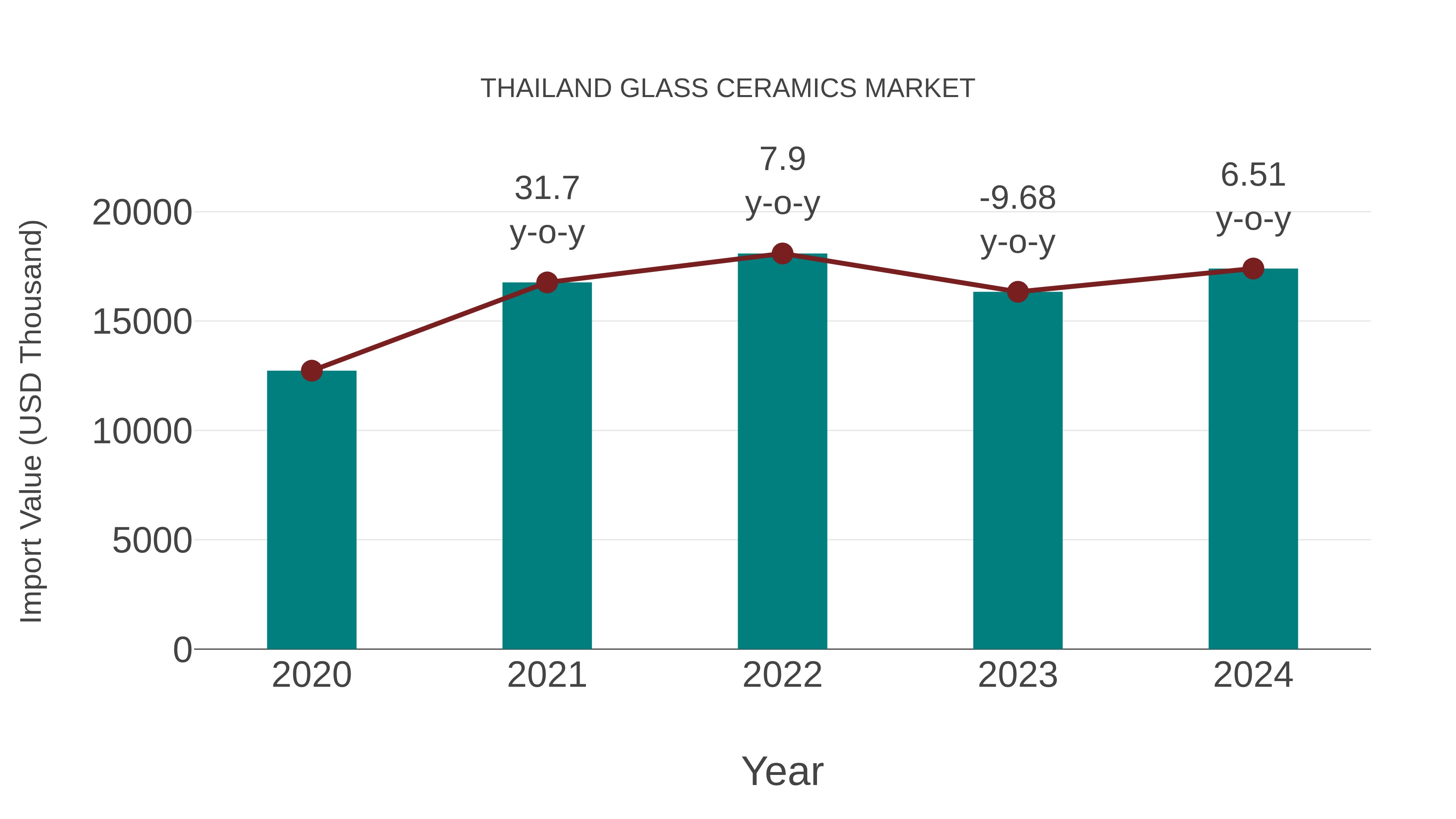
Thailand Glass Ceramics Market Synopsis
The Thailand glass ceramics market has evolved to meet various industrial and consumer needs. Glass ceramics, known for their heat resistance and durability, find applications in sectors such as electronics, cookware, and automotive components. As Thailand manufacturing sector continues to diversify, there is a consistent demand for advanced materials like glass ceramics. Local producers are investing in research and development to innovate and meet these demands. The market`s growth is closely tied to the overall industrial and technological development in the country.
Drivers of the Market
The Thailand glass ceramics market is expanding due to various factors. Firstly, glass ceramics find extensive applications in the construction and architectural sectors, where they are valued for their aesthetic appeal and durability. The growing real estate and construction industry in Thailand is driving the demand for innovative and versatile building materials, including glass ceramics. Furthermore, glass ceramics are used in cookware and kitchen appliances due to their ability to withstand high temperatures, making them a preferred choice in households and commercial kitchens. Additionally, advancements in glass ceramic technology have led to increased use in electronic and industrial applications, contributing to market growth.
Challenges of the Market
The Thailand glass ceramics market encounters several challenges that influence its growth and sustainability. One of the primary challenges is the cyclical nature of construction and interior design industries, which are significant consumers of glass ceramics. Economic downturns can lead to reduced demand for glass ceramics, impacting manufacturers and suppliers. Environmental concerns and regulations related to the use of certain materials in glass ceramics can also pose challenges in terms of product development and compliance. Furthermore, the industry faces competition from alternative materials such as porcelain and ceramic tiles, which can limit market share.
COVID-19 Impact on the Market
The Thailand glass ceramics market faced challenges during the pandemic as construction projects were delayed or scaled back due to economic uncertainties. The market`s resilience came from the demand for durable and aesthetically pleasing materials in home and interior design projects. As remote work and home renovations gained traction, the market saw a shift towards glass ceramics for countertops, tabletops, and wall cladding, with a focus on design versatility and hygiene.
Key Players in the Market
In the glass ceramics sector, Hoya Corporation stands out as a leading player. Hoya produces advanced glass ceramic materials used in a variety of applications, including cookware, lighting, and industrial equipment.
Key Highlights of the Report:
- Thailand Glass Ceramics Market Outlook
- Market Size of Thailand Glass Ceramics Market, 2025
- Forecast of Thailand Glass Ceramics Market, 2032
- Historical Data and Forecast of Thailand Glass Ceramics Revenues & Volume for the Period 2022-2032F
- Thailand Glass Ceramics Market Trend Evolution
- Thailand Glass Ceramics Market Drivers and Challenges
- Thailand Glass Ceramics Price Trends
- Thailand Glass Ceramics Porter's Five Forces
- Thailand Glass Ceramics Industry Life Cycle
- Historical Data and Forecast of Thailand Glass Ceramics Market Revenues & Volume By Material for the Period 2022-2032F
- Historical Data and Forecast of Thailand Glass Ceramics Market Revenues & Volume By Lithium for the Period 2022-2032F
- Historical Data and Forecast of Thailand Glass Ceramics Market Revenues & Volume By Mangnesium for the Period 2022-2032F
- Historical Data and Forecast of Thailand Glass Ceramics Market Revenues & Volume By Zinc for the Period 2022-2032F
- Historical Data and Forecast of Thailand Glass Ceramics Market Revenues & Volume By Application for the Period 2022-2032F
- Historical Data and Forecast of Thailand Glass Ceramics Market Revenues & Volume By Building and Construction for the Period 2022-2032F
- Historical Data and Forecast of Thailand Glass Ceramics Market Revenues & Volume By Electrical & Electronics for the Period 2022-2032F
- Historical Data and Forecast of Thailand Glass Ceramics Market Revenues & Volume By Healthcare for the Period 2022-2032F
- Historical Data and Forecast of Thailand Glass Ceramics Market Revenues & Volume By Aerospace for the Period 2022-2032F
- Historical Data and Forecast of Thailand Glass Ceramics Market Revenues & Volume By Optical for the Period 2022-2032F
- Thailand Glass Ceramics Import Export Trade Statistics
- Market Opportunity Assessment By Material
- Market Opportunity Assessment By Application
- Thailand Glass Ceramics Top Companies Market Share
- Thailand Glass Ceramics Competitive Benchmarking By Technical and Operational Parameters
- Thailand Glass Ceramics Company Profiles
- Thailand Glass Ceramics Key Strategic Recommendations






































