Thailand Hvac Market: Import Trend Analysis
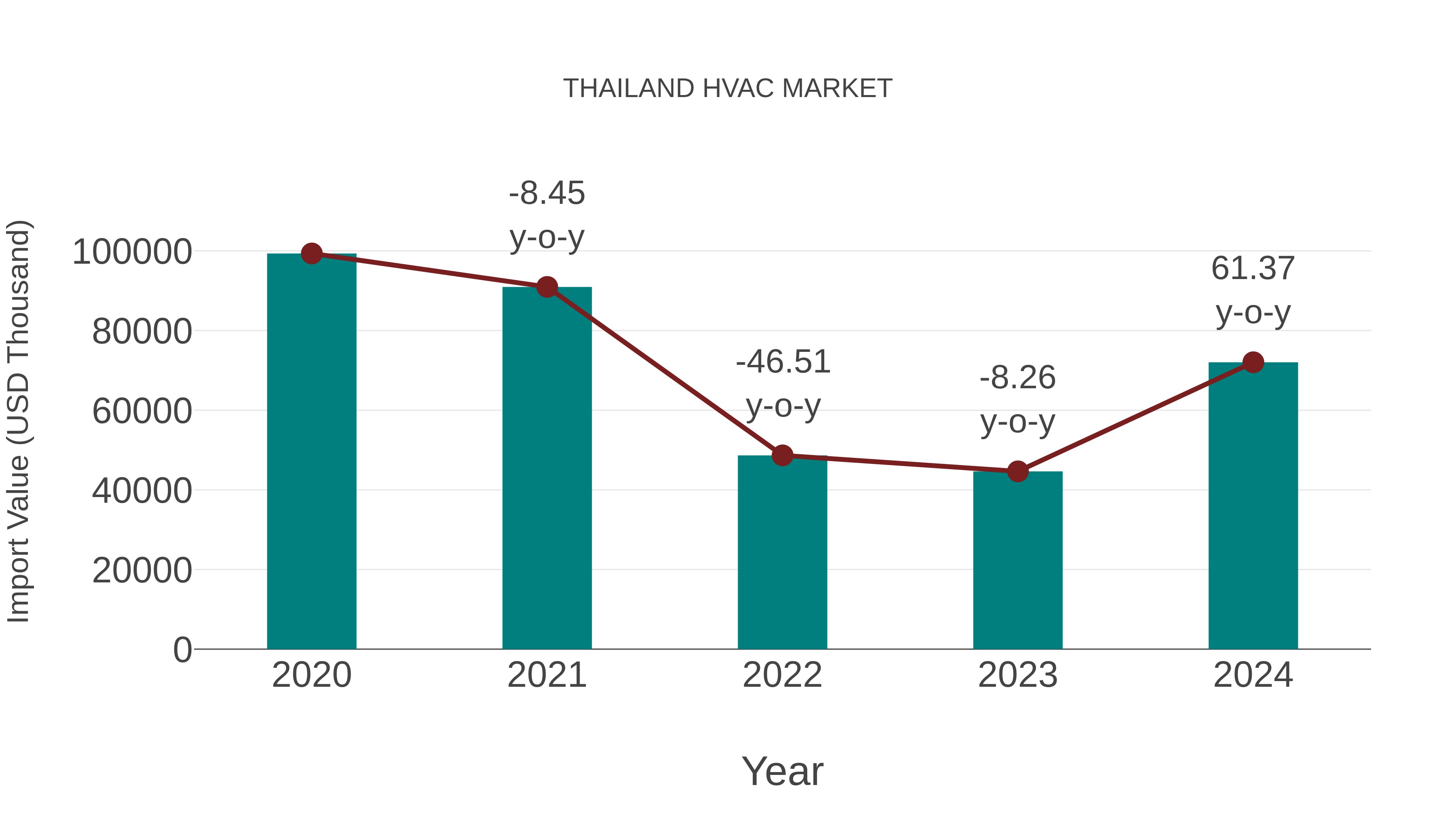
In the Thailand HVAC market, the import trend showed a notable growth rate of 61.37% from 2023 to 2024, contrasting with a CAGR of -7.72% from 2020 to 2024. This significant uptick in import momentum in 2024 could be attributed to a resurgence in domestic demand or a shift in trade policies that favored imports, potentially indicating a market recovery post-2020 challenges.
Topics Covered in Thailand HVAC Market Report
Thailand HVAC Market Report thoroughly covers the market by equipment type. Thailand HVAC Market Outlook report provides an unbiased and detailed analysis of the ongoing Thailand HVAC Market trends, opportunities/high growth areas, and market drivers. This would help stakeholders devise and align their market strategies according to the current and future market dynamics.
Thailand HVAC Market Synopsis
Thailand’s HVAC market recorded steady growth between 2022 and 2025, supported by improving consumer purchasing capacity and expansion across hospitality, manufacturing, and residential sectors. Household disposable income increased, strengthening spending on housing upgrades and climate control solutions. Simultaneously, Thailand’s hospitality sector witnessed strong recovery, with Bangkok hosting a high number of hotel rooms, adding many new rooms, and achieving high occupancy rates in 2024, while Phuket also added few new rooms driving demand for centralized and energy-efficient HVAC systems. In parallel, rising manufacturing activity and residential construction further accelerated installations of cooling and ventilation systems across industrial facilities and urban housing, reinforcing overall HVAC market expansion in Thailand.
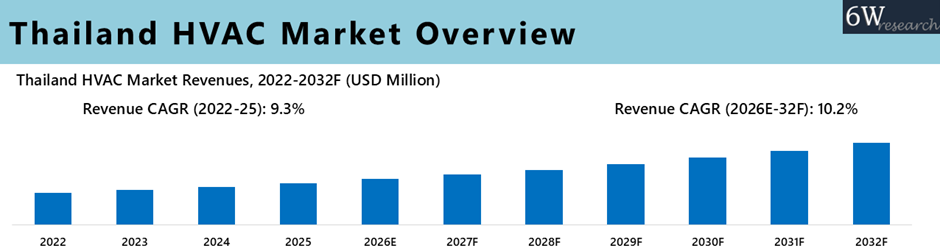
According to 6Wresearch, Thailand’s HVAC Market is projected to grow at a CAGR of 10.2% from 2026–2032F, driven by expansion in construction, urbanization, and hospitality infrastructure. The construction and real estate sector is expected to grow, reflecting rising residential and commercial developments that directly increase demand for cooling and ventilation systems. Urbanization is also accelerating, with the urban population proportion projected to rise by 2030, supporting higher adoption of HVAC systems in high-density housing, commercial buildings, and urban infrastructure. Additionally, upcoming luxury hospitality projects such as Kimpton Pattaya (2026) and InterContinental Bangkok Chinatown (2027) are expected to further drive demand for advanced and energy-efficient HVAC solutions, particularly in premium hotels and resorts.
Market Segmentation By Equipment Type
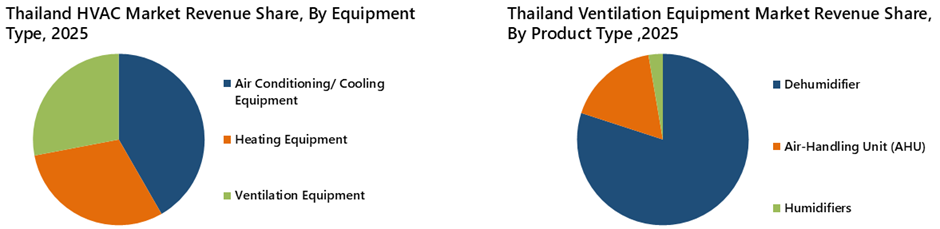
The heating equipment segment is expected to witness the highest growth in the Thailand HVAC market. This growth is driven by the expanding industrial sector, increasing demand for efficient heating in manufacturing and commercial buildings, and rising energy efficiency standards. The growing construction sector and urbanization are further fueling demand for sustainable heating solutions, positioning this segment as a key market driver.

Key Attractiveness of the Report
- 10 Years Market Numbers.
- Historical Data Starting from 2022 to 2025
- Base Year: 2025
- Forecast Data until 2032
- Key Performance Indicators Impacting the Market.
- Major Upcoming Developments and Projects.
Key Highlights of the Report:
- Historical data & Forecast of Thailand HVAC Market Revenues for the Period 2022-2032F
- Historical data & Forecast of Thailand HVAC Market Revenues, By Equipment Type, for the Period 2022-2032F
- Thailand HVAC Market Outlook on Drivers and Restraints
- Thailand HVAC Market Trends
- Thailand HVAC Opportunity Assessment
- Thailand HVAC Market Key Performance Indicators
- Thailand HVAC Market Ranking, By Company
- Thailand HVAC Market Overview on Competitive Benchmarking
- Company Profiles
- Key Strategic Recommendations
Market Scope and Segmentation
The report provides a detailed analysis of the following market segments:
By Equipment Type
- Air Conditioning/ Cooling Equipment
- Room Air Conditioner
- Unitary Air Conditioner
- Variable Refrigerant Flow System
- Chillers
- Heating Equipment
- Heat Pump
- Boiler
- Furnace
- Ventilation Equipment
- Air-Handling Unit (AHU)
- Dehumidifier
- Humidifiers






































