Thailand Linen Yarn Market: Import Trend Analysis
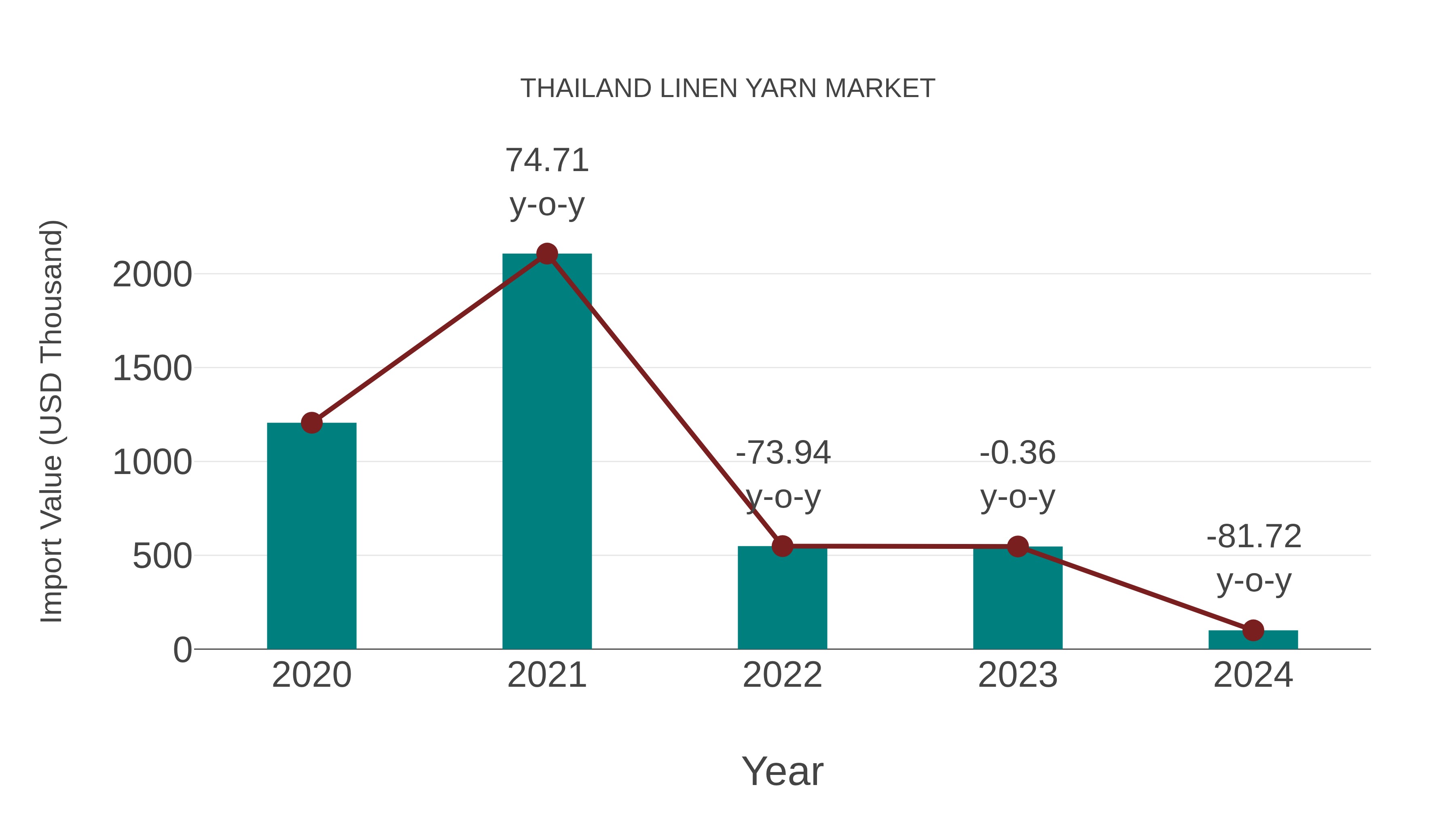
Thailand import trend for linen yarn in 2024 experienced a significant decline of -81.72% from the previous year, with a compound annual growth rate (CAGR) of -46.34% from 2020 to 2024. This sharp downturn in import momentum could be attributed to shifting market demands or changes in trade policies impacting the Thailand linen yarn market`s stability.
Thailand Linen Yarn Market Synopsis
The Thailand Linen Yarn Market is witnessing growth driven by the rising demand for natural and sustainable textiles. Linen yarn, made from flax fibers, is known for its breathability and moisture-wicking properties, making it suitable for clothing and home textiles. The market is also influenced by the increasing preference for organic and eco-friendly materials. Linen yarn is used in the production of various products, including clothing, beddings, and upholstery. With consumers becoming more conscious of their choices, the linen yarn market is expected to thrive.
Drivers of the Market
The Thailand Linen Yarn market is primarily driven by the growing interest in sustainable and natural textiles. Linen is known for its breathability and moisture-wicking properties, making it suitable for tropical climates like Thailand. Moreover, the fashion industry`s increasing focus on sustainable and eco-friendly materials has led to a rising demand for linen yarn. The tourism sector also plays a role, with tourists purchasing linen products as souvenirs.
Challenges of the Market
The Thailand Linen Yarn market grapples with challenges related to sourcing raw materials and market demand. Linen yarn production depends on flax cultivation, which may be influenced by climate conditions. Matching supply with fluctuating demand and consumer preferences can be challenging. Competing with other natural and synthetic yarns in the textile industry also poses a continuous challenge.
COVID-19 Impact on the Market
The Thailand Linen Yarn Market faced difficulties as the textile industry was hit hard by the pandemic. The closure of retail stores and reduced consumer spending led to a drop in demand for linen products. Linen yarn manufacturers had to adapt to reduced capacity utilization and workforce restrictions. However, as lockdowns eased and the focus on sustainable fashion increased, there was a gradual recovery in the market. Businesses turned to e-commerce to reach consumers directly, and innovative marketing strategies were employed to promote linen products.
Key Players in the Market
The Thailand Linen Yarn market is characterized by several key players. LinenCrafters Ltd. is a prominent name, known for its premium linen yarn products and craftsmanship. LinenWorld Co. has made a mark with its diverse linen yarn offerings and commitment to quality. Additionally, ThaiLinen Threads Inc. is a notable player, supplying linen yarn to both domestic and international markets while maintaining high standards of excellence.
Key Highlights of the Report:
- Thailand Linen Yarn Market Outlook
- Market Size of Thailand Linen Yarn Market, 2025
- Forecast of Thailand Linen Yarn Market, 2032
- Historical Data and Forecast of Thailand Linen Yarn Revenues & Volume for the Period 2022-2032F
- Thailand Linen Yarn Market Trend Evolution
- Thailand Linen Yarn Market Drivers and Challenges
- Thailand Linen Yarn Price Trends
- Thailand Linen Yarn Porter's Five Forces
- Thailand Linen Yarn Industry Life Cycle
- Historical Data and Forecast of Thailand Linen Yarn Market Revenues & Volume By Products for the Period 2022-2032F
- Historical Data and Forecast of Thailand Linen Yarn Market Revenues & Volume By Dry spun yarn for the Period 2022-2032F
- Historical Data and Forecast of Thailand Linen Yarn Market Revenues & Volume By Wet spun yarn for the Period 2022-2032F
- Historical Data and Forecast of Thailand Linen Yarn Market Revenues & Volume By Blended yarn for the Period 2022-2032F
- Historical Data and Forecast of Thailand Linen Yarn Market Revenues & Volume By Applications for the Period 2022-2032F
- Historical Data and Forecast of Thailand Linen Yarn Market Revenues & Volume By Clothings for the Period 2022-2032F
- Historical Data and Forecast of Thailand Linen Yarn Market Revenues & Volume By Beddings for the Period 2022-2032F
- Historical Data and Forecast of Thailand Linen Yarn Market Revenues & Volume By Others for the Period 2022-2032F
- Thailand Linen Yarn Import Export Trade Statistics
- Market Opportunity Assessment By Products
- Market Opportunity Assessment By Applications
- Thailand Linen Yarn Top Companies Market Share
- Thailand Linen Yarn Competitive Benchmarking By Technical and Operational Parameters
- Thailand Linen Yarn Company Profiles
- Thailand Linen Yarn Key Strategic Recommendations






































