Thailand Naphtha Market: Import Trend Analysis
Thailand naphtha market witnessed a notable import trend from 2023 to 2024, with a growth rate of 29.27%. The compound annual growth rate (CAGR) for imports between 2020 and 2024 stood at 15.8%. This surge in imports can be attributed to the increasing demand for naphtha in the region, driven by industrial expansion and energy needs.
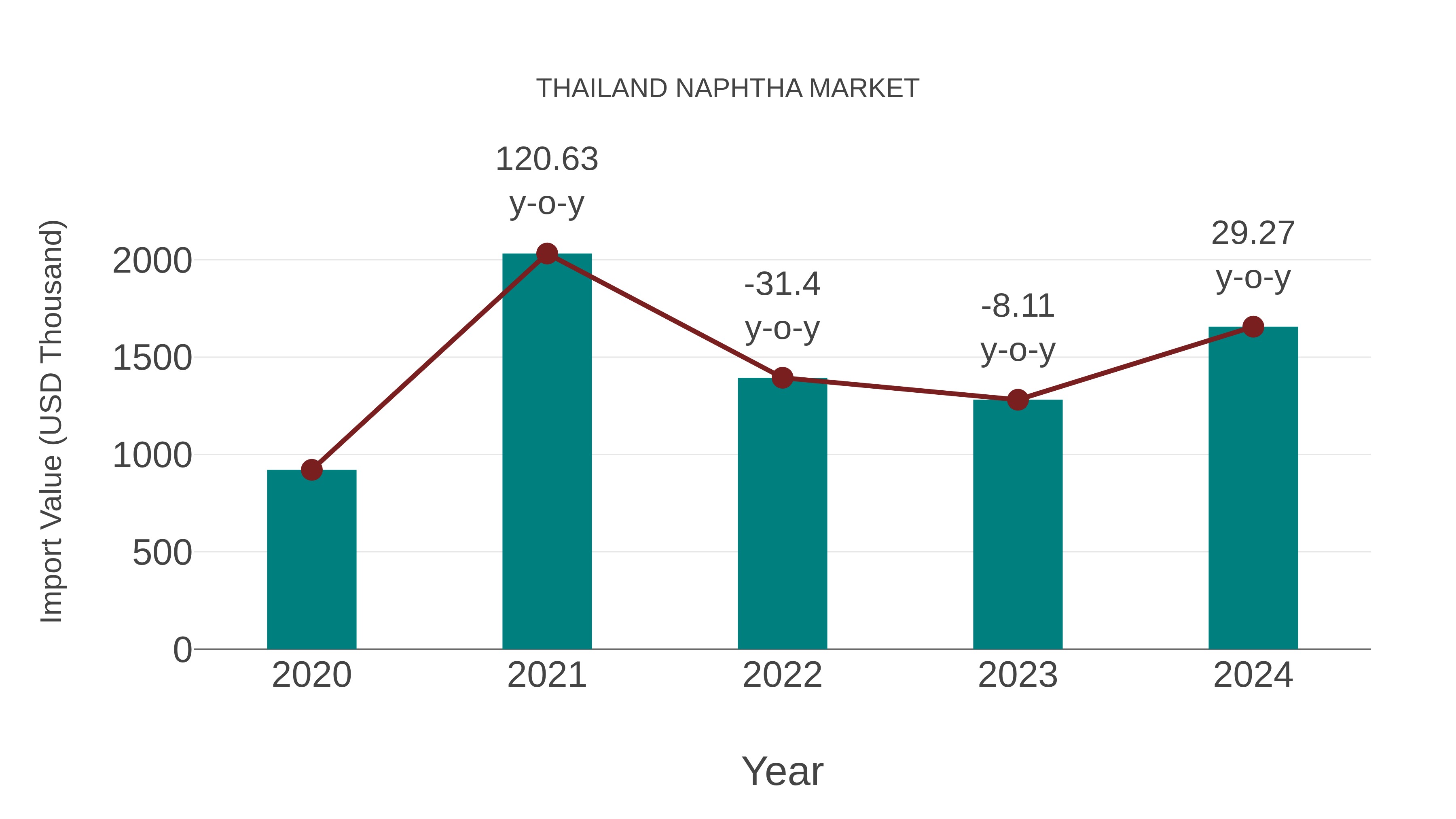
Thailand Naphtha Market Synopsis
The Thailand Naphtha market is a key sector in the country`s petrochemical industry, with naphtha being a crucial feedstock for various petrochemical products. The market is influenced by factors such as global crude oil prices, demand from end-user industries like plastics and chemicals, as well as government policies and regulations. Thailand imports a significant portion of its naphtha requirements due to limited domestic production capacity, making it susceptible to international market fluctuations. The market is characterized by competition among domestic and international suppliers, with a focus on product quality, pricing, and supply chain efficiency. Overall, the Thailand Naphtha market is expected to continue growing in line with the expansion of the petrochemical industry and increasing demand for downstream products both domestically and internationally.
Thailand Naphtha Market Trends
Currently, the Thailand Naphtha Market is experiencing steady growth due to the increasing demand for petrochemicals and plastics in the region. The development of new downstream industries such as automotive, electronics, and packaging is driving the demand for naphtha as a feedstock. One key trend in the market is the shift towards cleaner and more sustainable production processes, leading to the adoption of advanced refining technologies. Opportunities in the market include collaborations between naphtha producers and manufacturers to develop innovative products and solutions, as well as investments in upgrading existing naphtha facilities to increase efficiency and reduce environmental impact. Additionally, the growing focus on renewable energy sources presents opportunities for naphtha producers to explore sustainable alternatives and diversify their product offerings.
Thailand Naphtha Market Challenges
In the Thailand Naphtha Market, some of the key challenges faced include fluctuating crude oil prices, which directly impact naphtha prices and overall market stability. Additionally, competition from alternative feedstocks, such as natural gas and renewable sources, pose a threat to the demand for naphtha. Regulatory uncertainties and changing government policies regarding energy sources and environmental regulations can also create challenges for market players in terms of planning and investments. Furthermore, the global economic conditions and geopolitical factors can influence the demand and supply dynamics in the naphtha market, leading to uncertainties and volatility. Overall, navigating these challenges requires market participants to stay abreast of market trends, regulatory changes, and geopolitical developments to make informed decisions and remain competitive in the Thailand Naphtha Market.
Thailand Naphtha Market Investment Opportunities
The Thailand Naphtha market is primarily driven by factors such as the growing demand for petrochemical products, especially in industries like plastics, textiles, and chemicals. The country`s strong industrial base and increasing investments in infrastructure projects also contribute to the demand for naphtha as a feedstock. Additionally, the growth of the automotive sector in Thailand further boosts the market for naphtha, as it is a key component in the production of fuels and lubricants. Political stability and favorable government policies supporting the energy sector play a significant role in driving investments and growth in the Thailand Naphtha market, making it an attractive market for both domestic and international players.
Thailand Naphtha Market Government Polices
The Thailand government has implemented various policies to regulate the naphtha market in the country. These policies include setting import tariffs to protect local naphtha producers, implementing environmental regulations to control emissions from naphtha processing facilities, and promoting investment in the development of alternative energy sources to reduce reliance on naphtha. Additionally, the government has introduced measures to promote competition in the naphtha market and prevent monopolistic practices. Overall, the government aims to ensure sustainable growth and stability in the naphtha market while also addressing environmental concerns and promoting energy diversification in Thailand.
Thailand Naphtha Market Future Outlook
The future outlook for the Thailand Naphtha Market appears promising, driven by increasing demand from the petrochemical industry for the production of olefins and aromatics. The growing consumption of plastics, textiles, and other petrochemical products in Thailand and the broader Southeast Asia region is expected to sustain this demand for naphtha as a feedstock. Additionally, the country`s strategic location and well-established infrastructure for naphtha trade further bolster its position in the market. However, challenges such as fluctuating crude oil prices and environmental concerns regarding the use of fossil fuels may impact the market dynamics. Overall, the Thailand Naphtha Market is poised for growth, supported by the expanding petrochemical sector and favorable market conditions, but industry players should remain vigilant of external factors that could influence market trends.
Key Highlights of the Report:
- Thailand Naphtha Market Outlook
- Market Size of Thailand Naphtha Market, 2025
- Forecast of Thailand Naphtha Market, 2032
- Historical Data and Forecast of Thailand Naphtha Revenues & Volume for the Period 2022 - 2032F
- Thailand Naphtha Market Trend Evolution
- Thailand Naphtha Market Drivers and Challenges
- Thailand Naphtha Price Trends
- Thailand Naphtha Porter's Five Forces
- Thailand Naphtha Industry Life Cycle
- Historical Data and Forecast of Thailand Naphtha Market Revenues & Volume By Application for the Period 2022 - 2032F
- Historical Data and Forecast of Thailand Naphtha Market Revenues & Volume By Chemicals for the Period 2022 - 2032F
- Historical Data and Forecast of Thailand Naphtha Market Revenues & Volume By Energy/Fuel for the Period 2022 - 2032F
- Historical Data and Forecast of Thailand Naphtha Market Revenues & Volume By Others for the Period 2022 - 2032F
- Thailand Naphtha Import Export Trade Statistics
- Market Opportunity Assessment By Application
- Thailand Naphtha Top Companies Market Share
- Thailand Naphtha Competitive Benchmarking By Technical and Operational Parameters
- Thailand Naphtha Company Profiles
- Thailand Naphtha Key Strategic Recommendations






































