Thailand Narrow Woven Fabrics Market Summary
The thailand narrow woven fabrics market was estimated at USD 128 Million in 2025 and is projected to reach USD 147 Million by 2032, growing at a CAGR of 2.9% from 2026 to 2032.
Thailand Narrow Woven Fabrics Market Year-wise Growth Rate and Key Drivers
This graph highlights how the Thailand Narrow Woven Fabrics Market has steadily grown over the past five years, supported by major growth factors.
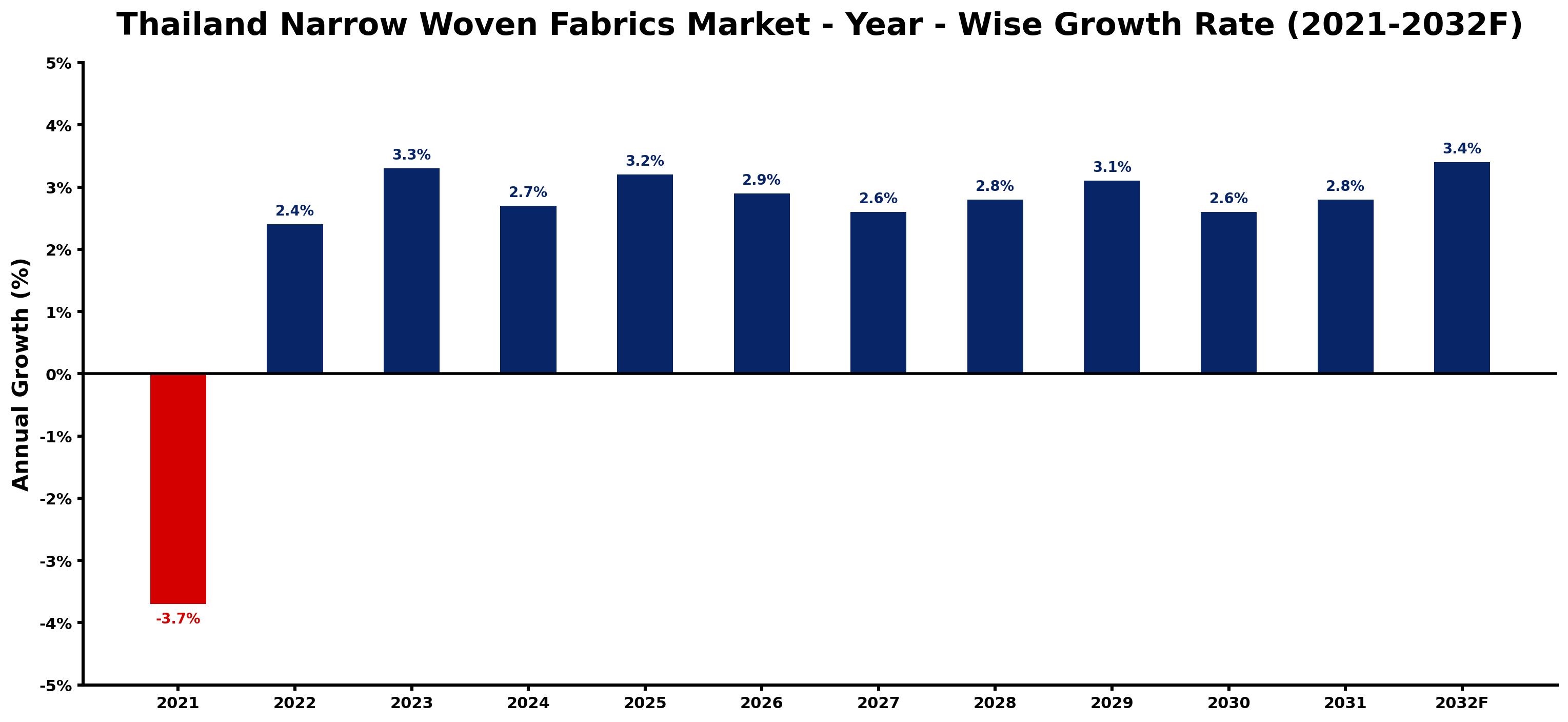
The table below presents the year wise growth rates along with the key drivers influencing the market
| Year | Growth Rate | Major Drivers |
| 2021 | -3.7% | Disruptions in supply chains due to global shipping delays hindered production and availability of narrow woven fabrics. |
| 2022 | 2.4% | Sustainability trends pushed manufacturers toward eco-friendly textile production methods. |
| 2023 | 3.3% | Local craftsmanship gained traction, enhancing the appeal of artisanal woven fabrics. |
| 2024 | 2.7% | Increased tourism fueled hospitality sector interest in traditional Thai textiles. |
| 2025 | 3.2% | Emerging e-commerce platforms expanded access to niche fabric markets across Thailand. |
| 2026 | 2.9% | Cultural festivals showcased traditional textiles, sparking renewed interest among local consumers. |
| 2027 | 2.6% | International partnerships opened pathways for exporting Thai woven fabrics to global markets. |
| 2028 | 2.8% | Urbanization shifts created demand for versatile fabrics for modern home decor. |
| 2029 | 3.1% | Technological innovations improved production efficiency, reducing costs for manufacturers. |
| 2030 | 2.6% | Collaborative design projects between artists and fabric producers gained popularity. |
| 2031 | 2.8% | Educational programs promoted textile arts, inspiring a new generation of weavers. |
| 2032 | 3.4% | Global fashion trends increasingly embraced unique, handcrafted textiles for luxury collections. |
Note - Market size estimations and growth projections presented in this report are based on 6Wresearch's advanced forecasting approach, validated with industry datasets as of June 2026.
Thailand Narrow Woven Fabrics Market Synopsis
The Thailand Narrow Woven Fabrics Market is projected to reach 2.9% and witness significant growth during the forecast period (2026-2032). Thailand stands as a prominent player in the Asian textile industry, contributing approximately 8% to the nation's GDP. The country has established itself as a leading producer and exporter of narrow woven fabrics, which encompass a diverse range of materials, including silk, cotton, polyester, rayon, and blended yarns. This market not only caters to international demand but also supports a robust domestic market through a multitude of small-scale weaving mills that produce high-quality textiles.
Thailand Narrow Woven Fabrics Market Growth Drivers
Several factors are influencing the growth trajectory of the Thailand Narrow Woven Fabrics Market. Key drivers include:
- Population Growth: The increasing population in Thailand is driving the demand for apparel, which subsequently boosts the need for narrow woven fabrics.
- Rising Disposable Income: As disposable incomes rise, consumers are more inclined to spend on quality textiles, enhancing the market's sales potential.
- Technological Advancements: Innovations in production technology are enabling manufacturers to develop unique textile designs, further stimulating demand for narrow woven fabrics.
- Focus on Eco-Friendly Practices: There is a growing emphasis on sustainable manufacturing processes, leading to the adoption of biodegradable raw materials, which align with the consumer demand for environmentally responsible products.
- Global Market Expansion: The continuous expansion into international markets is allowing Thai narrow woven fabric producers to diversify their customer base and reduce dependence on local markets.
Thailand Narrow Woven Fabrics Market Challenges and Restraints
Despite its promising landscape, the Thailand Narrow Woven Fabrics Market faces several challenges that could impede growth:
- Raw Material Price Volatility: Fluctuations in the cost of raw materials create challenges for manufacturers in maintaining stable pricing for finished goods.
- Processing Requirements: The necessity for specialized processing techniques for certain fibers can lead to increased production costs, which may affect pricing structures in the market.
- Competition from Low-Cost Imports: The presence of low-cost imported fabrics can put pressure on local manufacturers to compete, often impacting their profitability.
- Economic Uncertainty: Global economic fluctuations and the lingering effects of COVID-19 can dampen consumer confidence and spending, negatively affecting market growth.
- Environmental Regulations: Increasingly stringent environmental regulations may require manufacturers to adapt their processes, potentially leading to higher operational costs.
Thailand Narrow Woven Fabrics Market Covid-19 Impact Analysis
The COVID-19 pandemic significantly impacted the Thailand Narrow Woven Fabrics Market, leading to a temporary decline in consumer spending power and substantial sales volume reductions. The imposition of lockdowns and the temporary closure of non-essential services severely hampered operations across the textile sector. However, the post-lockdown period has shown signs of recovery, which, although not yet sufficient to reclaim pre-COVID levels, has provided a foundation for a positive market outlook moving forward.
Thailand Narrow Woven Fabrics Market Government Investment and Initiatives
The Thai government has been actively involved in promoting the textile industry, including the narrow woven fabrics segment. Various initiatives include:
- Investment in Infrastructure: The government is investing in infrastructure improvements to enhance supply chain efficiency, facilitating smoother operations for textile manufacturers.
- Financial Support Programs: Initiatives aimed at providing financial assistance to small and medium enterprises (SMEs) in the textile sector are being implemented to support growth and innovation.
- Export Promotion Strategies: Policies encouraging exports are being developed to strengthen Thailand's position in the global narrow woven fabrics market.
- Research and Development Funding: The government is allocating funds to support research and development initiatives within the textile industry, fostering innovation and product development.
- Environmental Sustainability Regulations: The introduction of incentives for eco-friendly production practices aligns with global sustainability goals, encouraging manufacturers to adopt greener methods.
Thailand Narrow Woven Fabrics Market Latest Developments (May 2025 - June 2026)
In the period between May 2025 and June 2026, the Thailand Narrow Woven Fabrics Market has witnessed several notable developments. Manufacturers have increasingly focused on product diversification and eco-friendly practices, responding to changing consumer preferences. The adoption of innovative materials and sustainable production techniques has been accelerated, as companies aim to align with global trends in environmental responsibility. Moreover, efforts to improve export capabilities and expand into new international markets have been emphasized, marking a strategic shift towards a more competitive positioning on the global stage for Thai narrow woven fabrics.
Thailand Narrow Woven Fabrics Market - Key Attractiveness of the Report
- 10 Years of Market Numbers
- Historical Data Starting from 2022 to 2025
- Base Year: 2025
- Forecast Data until 2032
- Key Performance Indicators Impacting the Market
- Major Upcoming Developments and Projects
Key Highlights of the Report:
- Thailand Narrow Woven Fabrics Market Outlook
- Market Size of Thailand Narrow Woven Fabrics Market, 2025
- Forecast of Thailand Narrow Woven Fabrics Market, 2032
- Historical Data and Forecast of Thailand Narrow Woven Fabrics Revenues & Volume for the Period 2022-2032F
- Thailand Narrow Woven Fabrics Market Trend Evolution
- Thailand Narrow Woven Fabrics Market Drivers and Challenges
- Thailand Narrow Woven Fabrics Price Trends
- Thailand Narrow Woven Fabrics Porter's Five Forces
- Thailand Narrow Woven Fabrics Industry Life Cycle
- Historical Data and Forecast of Thailand Narrow Woven Fabrics Market Revenues & Volume By Type for the Period 2022-2032F
- Historical Data and Forecast of Thailand Narrow Woven Fabrics Market Revenues & Volume By Polyester for the Period 2022-2032F
- Historical Data and Forecast of Thailand Narrow Woven Fabrics Market Revenues & Volume By Nylon for the Period 2022-2032F
- Historical Data and Forecast of Thailand Narrow Woven Fabrics Market Revenues & Volume By PP for the Period 2022-2032F
- Historical Data and Forecast of Thailand Narrow Woven Fabrics Market Revenues & Volume By Applications for the Period 2022-2032F
- Historical Data and Forecast of Thailand Narrow Woven Fabrics Market Revenues & Volume By Garments for the Period 2022-2032F
- Historical Data and Forecast of Thailand Narrow Woven Fabrics Market Revenues & Volume By Home Furnishing for the Period 2022-2032F
- Historical Data and Forecast of Thailand Narrow Woven Fabrics Market Revenues & Volume By Other for the Period 2022-2032F
- Thailand Narrow Woven Fabrics Import Export Trade Statistics
- Market Opportunity Assessment By Type
- Market Opportunity Assessment By Applications
- Thailand Narrow Woven Fabrics Top Companies Market Share
- Thailand Narrow Woven Fabrics Competitive Benchmarking By Technical and Operational Parameters
- Thailand Narrow Woven Fabrics Company Profiles
- Thailand Narrow Woven Fabrics Key Strategic Recommendations






































