Thailand Polypropylene Nonwoven Fabric Market: Import Trend Analysis
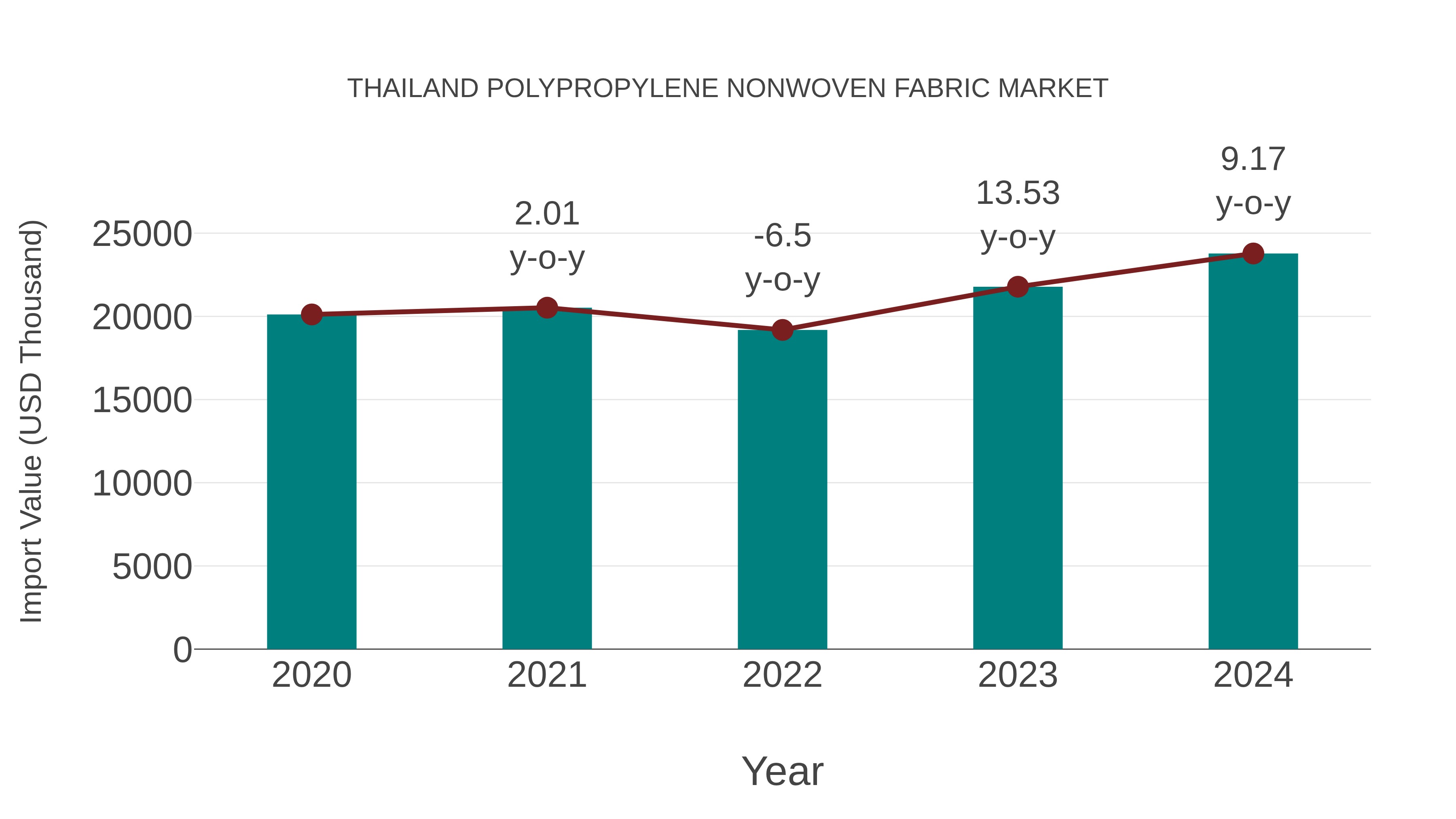
Thailand import trend for polypropylene nonwoven fabric showed a growth rate of 9.17% from 2023 to 2024, with a compound annual growth rate (CAGR) of 4.27% from 2020 to 2024. This positive import momentum can be attributed to the increasing demand for nonwoven fabric in various industries, indicating market stability and sustained growth potential.
Polypropylene Nonwoven Fabric Market: Thailand vs Top 5 Major Economies in 2027 (Asia)
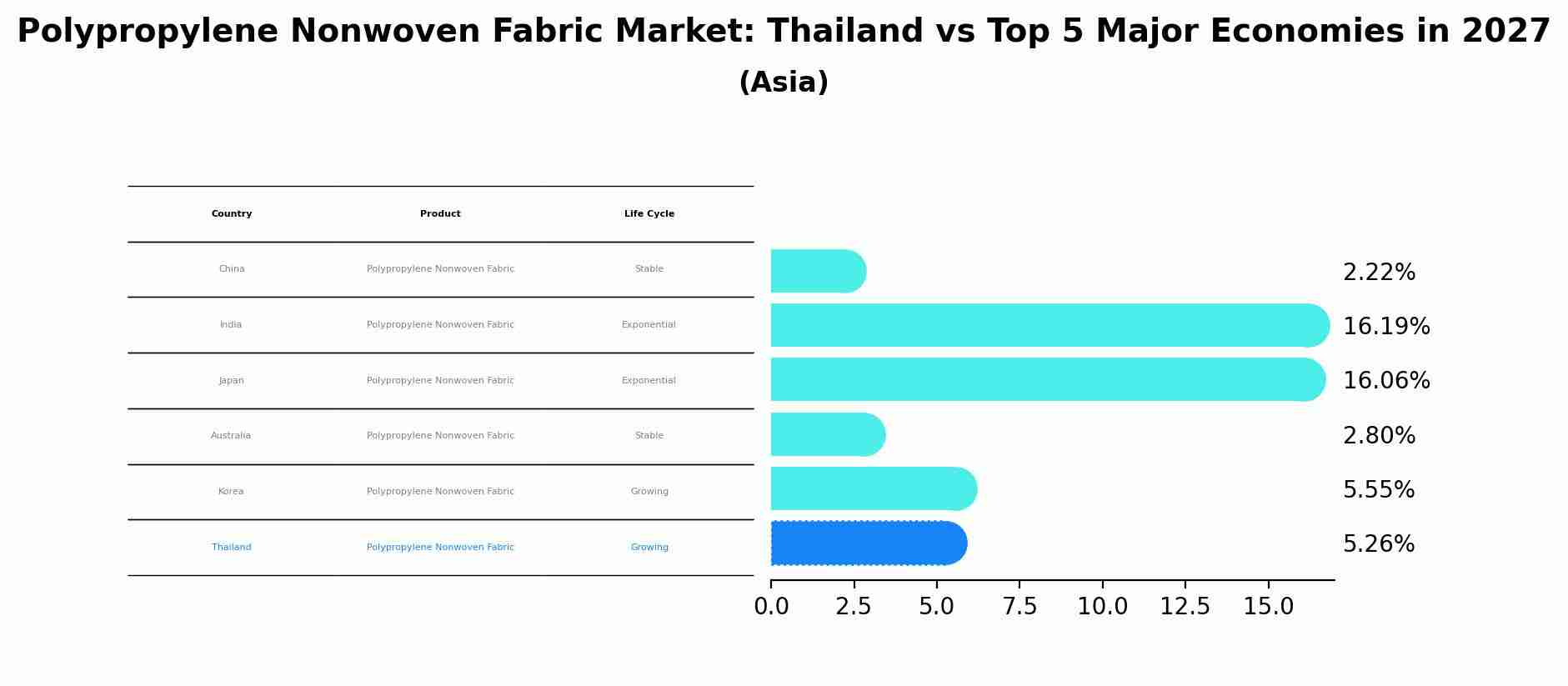
In the Asia region, the Polypropylene Nonwoven Fabric market in Thailand is projected to expand at a growing growth rate of 5.26% by 2027. The largest economy is China, followed by India, Japan, Australia and South Korea.
Thailand Polypropylene Nonwoven Fabric Market Synopsis
The Thailand Polypropylene Nonwoven Fabric Market is witnessing steady growth due to the increasing demand for nonwoven fabrics in various industries such as healthcare, hygiene, and automotive. The market is driven by the growing awareness of the benefits of nonwoven fabrics, such as their lightweight, cost-effectiveness, and recyclability. The healthcare sector is a major consumer of polypropylene nonwoven fabrics for products like surgical gowns, face masks, and diapers. Additionally, the automotive industry is also adopting nonwoven fabrics for applications like interior trim and insulation materials.
Drivers of the Market
The Thailand Polypropylene Nonwoven Fabric market is experiencing significant growth due to several factors. Nonwoven fabrics made from polypropylene have found extensive use in industries such as hygiene products, medical textiles, and agriculture. The COVID-19 pandemic has also increased the demand for nonwoven fabrics in personal protective equipment and healthcare applications. Additionally, government initiatives to promote the use of nonwoven fabrics in agriculture for crop protection and soil improvement have stimulated market growth. Thailand`s well-established textile industry, skilled labor force, and manufacturing infrastructure have further contributed to the expansion of the polypropylene nonwoven fabric market.
Challenges of the Market
Challenges in this market include the need for innovative manufacturing techniques, volatile raw material prices, and the growing demand for eco-friendly and biodegradable nonwoven fabrics. Meeting hygiene and performance standards in applications such as healthcare and personal care products is also essential.
COVID-19 Impact on the Market
The Thailand Polypropylene Nonwoven Fabric market encountered significant disruptions due to COVID-19. With the sudden drop in demand from sectors such as automotive and construction, many manufacturers faced overcapacity issues. On the other hand, the market experienced a surge in demand for nonwoven fabrics for use in face masks, medical gowns, and other PPE, leading to a rapid shift in production priorities. Manufacturers had to retool and adapt to meet this newfound demand while adhering to stringent quality and safety standards. Overall, the market demonstrated resilience by pivoting to meet the critical needs of healthcare and hygiene industries.
Key Players in the Market
Prominent players in the Thailand Polypropylene Nonwoven Fabric market include PTT Global Chemical Public Company Limited, SCG Chemicals Co., Ltd., and HMC Polymers Co., Ltd. These companies are leaders in the production of polypropylene nonwoven fabrics, serving applications in healthcare, hygiene, and industrial sectors. Their commitment to product quality and innovation has solidified their positions in this specialized market.
Key Highlights of the Report:
- Thailand Polypropylene Nonwoven Fabric Market Outlook
- Market Size of Thailand Polypropylene Nonwoven Fabric Market, 2025
- Forecast of Thailand Polypropylene Nonwoven Fabric Market, 2032
- Historical Data and Forecast of Thailand Polypropylene Nonwoven Fabric Revenues & Volume for the Period 2022-2032F
- Thailand Polypropylene Nonwoven Fabric Market Trend Evolution
- Thailand Polypropylene Nonwoven Fabric Market Drivers and Challenges
- Thailand Polypropylene Nonwoven Fabric Price Trends
- Thailand Polypropylene Nonwoven Fabric Porter's Five Forces
- Thailand Polypropylene Nonwoven Fabric Industry Life Cycle
- Historical Data and Forecast of Thailand Polypropylene Nonwoven Fabric Market Revenues & Volume By Product for the Period 2022-2032F
- Historical Data and Forecast of Thailand Polypropylene Nonwoven Fabric Market Revenues & Volume By Spunbonded for the Period 2022-2032F
- Historical Data and Forecast of Thailand Polypropylene Nonwoven Fabric Market Revenues & Volume By Staples for the Period 2022-2032F
- Historical Data and Forecast of Thailand Polypropylene Nonwoven Fabric Market Revenues & Volume By Meltblown for the Period 2022-2032F
- Historical Data and Forecast of Thailand Polypropylene Nonwoven Fabric Market Revenues & Volume By Composites for the Period 2022-2032F
- Historical Data and Forecast of Thailand Polypropylene Nonwoven Fabric Market Revenues & Volume By Application for the Period 2022-2032F
- Historical Data and Forecast of Thailand Polypropylene Nonwoven Fabric Market Revenues & Volume By Hygiene for the Period 2022-2032F
- Historical Data and Forecast of Thailand Polypropylene Nonwoven Fabric Market Revenues & Volume By Industrial for the Period 2022-2032F
- Historical Data and Forecast of Thailand Polypropylene Nonwoven Fabric Market Revenues & Volume By Medical for the Period 2022-2032F
- Historical Data and Forecast of Thailand Polypropylene Nonwoven Fabric Market Revenues & Volume By Geotextiles for the Period 2022-2032F
- Historical Data and Forecast of Thailand Polypropylene Nonwoven Fabric Market Revenues & Volume By Furnishings for the Period 2022-2032F
- Historical Data and Forecast of Thailand Polypropylene Nonwoven Fabric Market Revenues & Volume By Carpet for the Period 2022-2032F
- Historical Data and Forecast of Thailand Polypropylene Nonwoven Fabric Market Revenues & Volume By Agriculture for the Period 2022-2032F
- Thailand Polypropylene Nonwoven Fabric Import Export Trade Statistics
- Market Opportunity Assessment By Product
- Market Opportunity Assessment By Application
- Thailand Polypropylene Nonwoven Fabric Top Companies Market Share
- Thailand Polypropylene Nonwoven Fabric Competitive Benchmarking By Technical and Operational Parameters
- Thailand Polypropylene Nonwoven Fabric Company Profiles
- Thailand Polypropylene Nonwoven Fabric Key Strategic Recommendations






































