Thailand Silicon Alloys Market: Import Trend Analysis
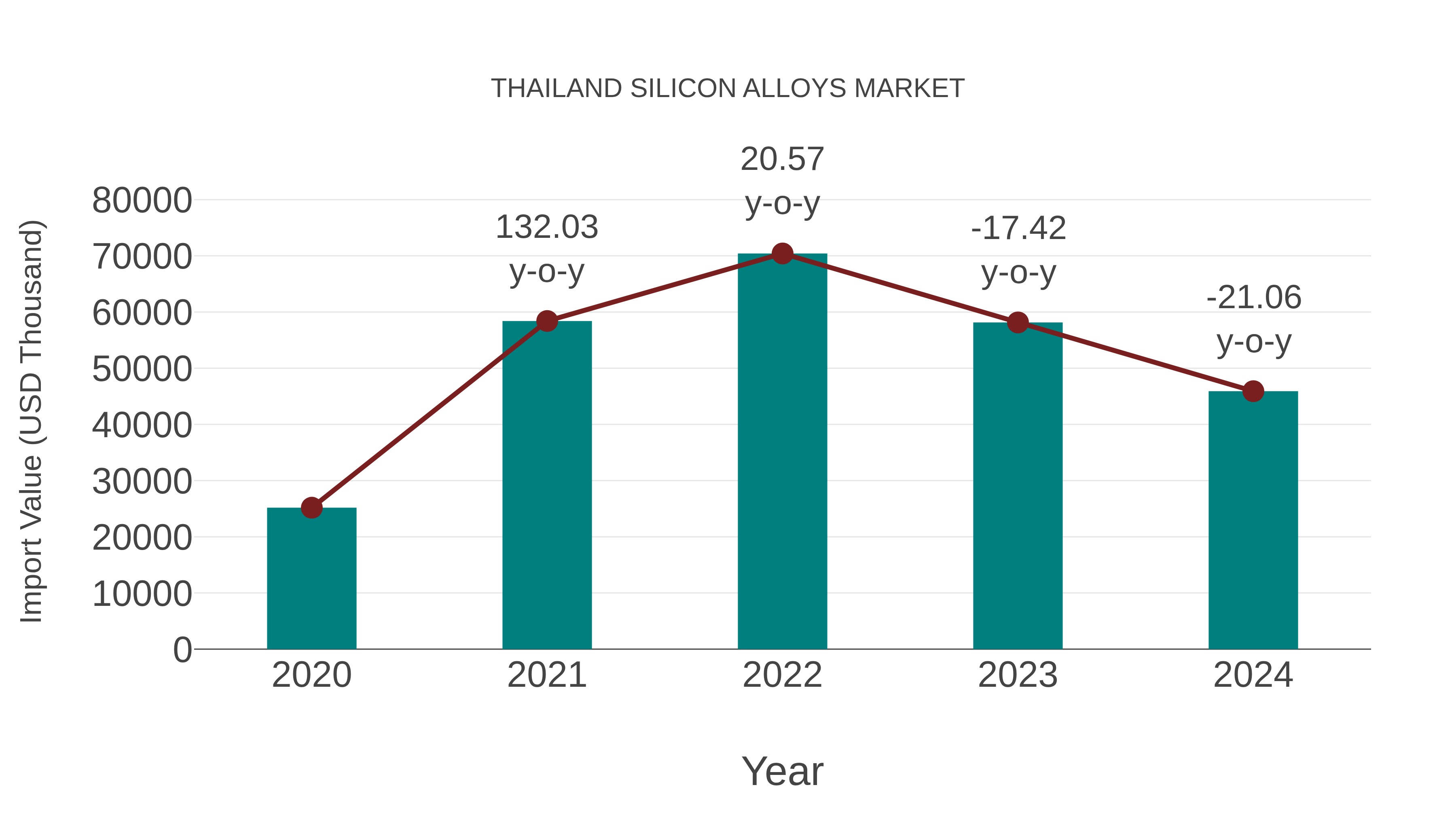
Thailand import trend in the silicon alloys market showed a notable decline from 2023 to 2024, with a growth rate of -21.06%. However, the compound annual growth rate (CAGR) for the period 2020-2024 stood at a positive 16.21%. This decline in 2024 could be attributed to shifts in demand dynamics or changes in trade policies affecting the market stability during that period.
Thailand Silicon Alloys Market Synopsis
The Thailand silicon alloys market size was valued at USD 2 billion in 2025 and is projected to register a CAGR of 3.7% over the forecast period. Growing automotive industry along with increasing infrastructure activities are some factors driving the demand for silicon alloys across different industries such as automotive, electrical & electronics, construction etc., thereby contributing towards its overall growth rate.
Drivers of the Market
Prominent drivers in the Thailand silicon alloys market include the growth of the automotive and electronics industries, where silicon alloys are used for various applications. Silicon alloys, such as ferrosilicon, are valued for their role in improving the properties of steel and as additives in aluminum alloys. The expansion of manufacturing sectors and the demand for lightweight and high-strength materials contribute to the growth of the silicon alloys market.
Challenges of the Market
In the Thailand silicon alloys market, challenges include raw material sourcing and market demand. Silicon alloys are used in metallurgical and industrial applications. Challenges arise from securing a consistent supply of silicon and other alloying elements, which can be subject to global market dynamics. Adapting to fluctuations in demand while maintaining competitive pricing and product quality poses challenges for manufacturers.
COVID-19 Impact on the Market
The COVID-19 pandemic impacted the Thailand silicon alloys market. Silicon alloys are used in metallurgy and manufacturing processes. The disruptions caused by lockdowns, reduced industrial activities, and supply chain challenges influenced the market`s dynamics. The recovery of the market is linked to the rebound of manufacturing sectors and the restoration of global trade flows.
Key Players in the Market
Key participants in the Thailand silicon alloys market consist of AlloyTech Industries, ThaiSilicon Alloys Ltd., and MaterialInnovations. These companies specialize in producing silicon alloys used in metallurgy, electronics, and manufacturing. Their expertise in alloy engineering and material properties establishes them as significant contributors to the market.
Key Highlights of the Report:
- Thailand Silicon Alloys Market Outlook
- Market Size of Thailand Silicon Alloys Market, 2025
- Forecast of Thailand Silicon Alloys Market, 2032
- Historical Data and Forecast of Thailand Silicon Alloys Revenues & Volume for the Period 2022-2032F
- Thailand Silicon Alloys Market Trend Evolution
- Thailand Silicon Alloys Market Drivers and Challenges
- Thailand Silicon Alloys Price Trends
- Thailand Silicon Alloys Porter's Five Forces
- Thailand Silicon Alloys Industry Life Cycle
- Historical Data and Forecast of Thailand Silicon Alloys Market Revenues & Volume By Type for the Period 2022-2032F
- Historical Data and Forecast of Thailand Silicon Alloys Market Revenues & Volume By Ferrosilicon for the Period 2022-2032F
- Historical Data and Forecast of Thailand Silicon Alloys Market Revenues & Volume By Deoxidizers for the Period 2022-2032F
- Historical Data and Forecast of Thailand Silicon Alloys Market Revenues & Volume By Inoculants for the Period 2022-2032F
- Historical Data and Forecast of Thailand Silicon Alloys Market Revenues & Volume By Others for the Period 2022-2032F
- Historical Data and Forecast of Thailand Silicon Alloys Market Revenues & Volume By Application for the Period 2022-2032F
- Historical Data and Forecast of Thailand Silicon Alloys Market Revenues & Volume By Carbon Steel & Other Alloy Steel for the Period 2022-2032F
- Historical Data and Forecast of Thailand Silicon Alloys Market Revenues & Volume By Stainless Steel for the Period 2022-2032F
- Historical Data and Forecast of Thailand Silicon Alloys Market Revenues & Volume By Electrical Steel for the Period 2022-2032F
- Historical Data and Forecast of Thailand Silicon Alloys Market Revenues & Volume By Cast Iron for the Period 2022-2032F
- Historical Data and Forecast of Thailand Silicon Alloys Market Revenues & Volume By Others for the Period 2022-2032F
- Thailand Silicon Alloys Import Export Trade Statistics
- Market Opportunity Assessment By Type
- Market Opportunity Assessment By Application
- Thailand Silicon Alloys Top Companies Market Share
- Thailand Silicon Alloys Competitive Benchmarking By Technical and Operational Parameters
- Thailand Silicon Alloys Company Profiles
- Thailand Silicon Alloys Key Strategic Recommendations






































