Thailand Sports Nutrition Market Size, Share & Growth Rate
The Thailand Sports Nutrition Market was estimated at USD 186 Million in 2025 and is projected to reach USD 214 Million by 2032, growing at a CAGR of 2.0% from 2026 to 2032. This growth trajectory is driven by a surge in health awareness and the increasing number of fitness enthusiasts engaging in structured training programs. As more individuals in Thailand adopt active lifestyles, the demand for specialized nutrition products, such as protein supplements and energy bars, is anticipated to expand significantly.
Thailand Sports Nutrition Market Year-wise Growth Rate and Key Drivers
This graph highlights how the Thailand Sports Nutrition Market has steadily grown over the years, supported by major growth factors.
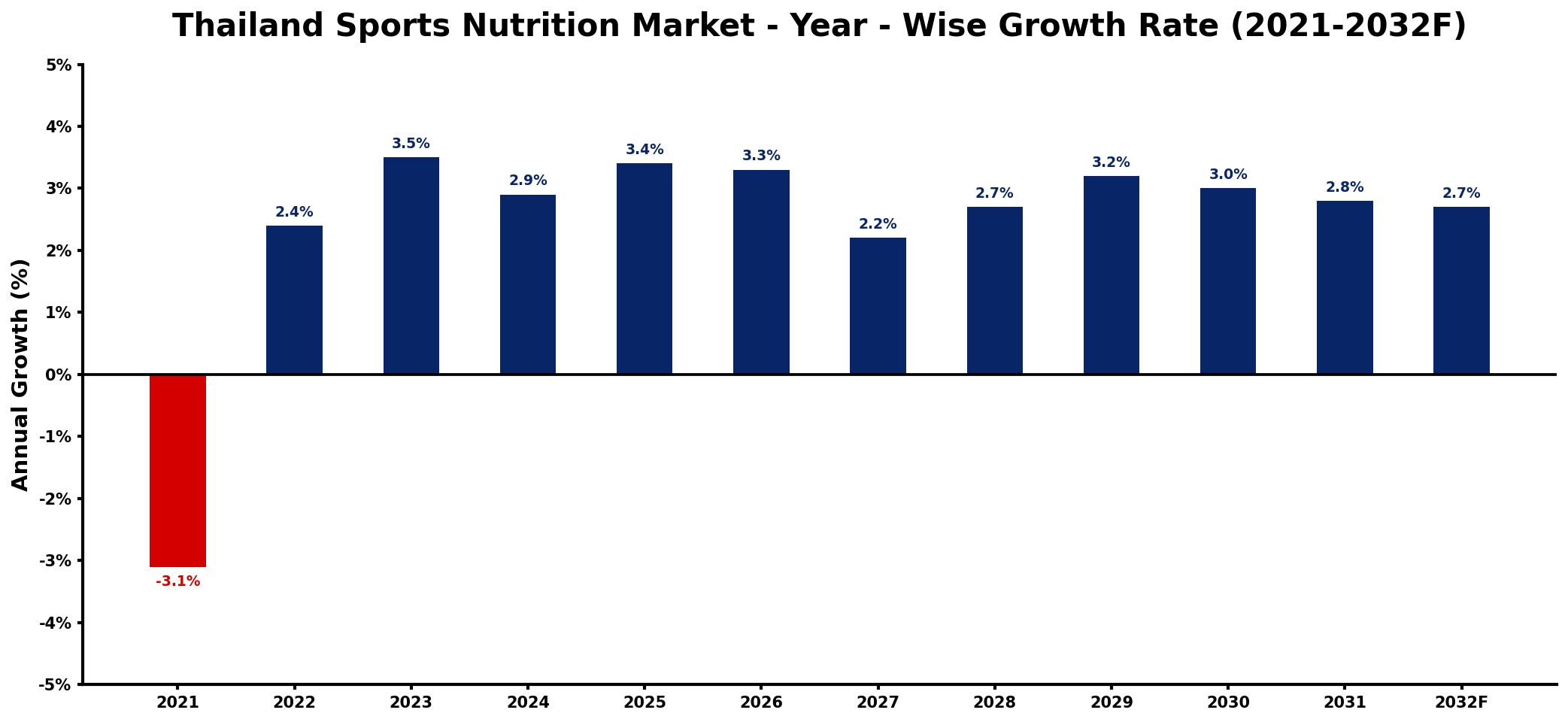
The table below presents the year‑wise growth rates along with the key drivers influencing the market
| Year | Growth Rate | Major Drivers |
| 2021 | -3.1% | decrease in consumer spending habits |
| 2022 | 2.4% | rise in fitness awareness campaigns |
| 2023 | 3.5% | increased online retail penetration |
| 2024 | 2.9% | growing demand for plant-based |
| 2025 | 3.4% | expansion of fitness facilities |
| 2026 | 3.3% | surge in health influencer marketing |
| 2027 | 2.2% | growing interest in wellness lifestyles |
| 2028 | 2.7% | increase in active lifestyle trends |
| 2029 | 3.2% | emergence of innovative product offerings |
| 2030 | 3.0% | rising participation in fitness events |
| 2031 | 2.8% | stronger focus on preventive health |
| 2032 | 2.7% | growing popularity of fitness apps |
Note: Market size estimations and growth projections presented in this report are based on 6Wresearch's proprietary forecasting methodology, utilizing the latest available industry data, government publications, and primary research inputs.
Thailand Sports Nutrition Market Synopsis
The Thai population's commitment to fitness is evident in the rapidly expanding network of gyms and fitness facilities across the country. This burgeoning infrastructure is not only making sports nutrition products more accessible but is also fostering a culture that prioritizes health and performance. A notable trend is the increasing consumption of plant-based protein options, catering to the diverse dietary preferences of Thai consumers.
Moreover, innovations in product offerings, including pre-workout supplements tailored for specific fitness goals, are enriching the marketplace. This shift reflects a broader trend of personalization in sports nutrition, which resonates with the discerning Thai consumer who seeks targeted solutions for their fitness journeys.
Thailand Sports Nutrition Market Key Takeaways
- The market is driven by rising health consciousness and active lifestyle adoption among the Thai population.
- Innovative products, particularly plant-based options and specialized supplements, are gaining traction.
- Growing numbers of fitness centers and online platforms are facilitating increased product availability.
- Social media trends significantly influence consumer choices and awareness of sports nutrition products.
- Consumer education and awareness campaigns are vital to overcoming existing misconceptions about sports nutrition.
Evaluation of Restraints in Thailand Sports Nutrition Market
While the Thailand sports nutrition market is on an upward trajectory, it faces notable restraints that could impact its full potential. A prevalent challenge is the perception among some segments of the population that sports nutrition products are either unnecessary or too expensive. This skepticism can hinder broader market penetration. Additionally, regulatory complexities related to product labeling and health claims may deter manufacturers from introducing new offerings, resulting in a limited product range. The presence of counterfeit or substandard products further complicates consumer trust, necessitating enhanced education efforts to demystify sports nutrition benefits and encourage informed purchasing decisions.
Thailand Sports Nutrition Market Trends
The Thailand sports nutrition market is currently characterized by several emerging trends. The growth of e-commerce has significantly altered how consumers access sports nutrition products, with a marked increase in online sales channels post-COVID-19. Furthermore, the rising interest in holistic health and wellness is driving demand for multi-functional supplements that support not only physical performance but also overall well-being. There is also an increasing inclination towards natural ingredients, reflecting a shift in consumer preferences towards cleaner labels and sustainable sourcing.
Thailand Sports Nutrition Market Opportunities
The Thai sports nutrition market presents a wealth of opportunities for both existing players and new entrants. With the growing trend of personalized nutrition, there is considerable scope for developing tailored products that meet the specific needs of various consumer segments. Additionally, as the fitness industry evolves, brands have the chance to collaborate with local gyms and health influencers to enhance product visibility and credibility. The demand for plant-based nutrition alternatives also paves the way for innovation in formulation and product lines, appealing to a broader audience seeking health-conscious options.
Government Initiatives in the Thailand Sports Nutrition Market
The Thai government has recognized the importance of health and nutrition, introducing initiatives aimed at promoting physical fitness and wellness among citizens. Policies encouraging the establishment of fitness centers and recreational facilities contribute to an environment conducive to sports nutrition growth. Moreover, public health campaigns focused on nutrition education play a crucial role in raising awareness and understanding of the benefits associated with sports nutrition products, which can enhance consumer engagement and market adoption.
Future Insights of the Thailand Sports Nutrition Market
Looking ahead, the Thailand sports nutrition market is well-positioned for sustained growth through 2032 and beyond. As health and fitness remain at the forefront of consumer priorities, the expansion of gyms and fitness communities will likely continue to fuel demand for sports nutrition products. The integration of technology in fitness and nutrition, such as wearables and mobile apps, will further inform consumer choices, enhancing personalization in the shopping experience. Ultimately, the market's future will be shaped by ongoing innovations and a commitment to meeting the evolving needs of health-conscious Thai consumers.
Thailand Sports Nutrition Market Latest Developments (2025 - 2026)
Recent developments in the Thailand sports nutrition market reflect a growing trend towards innovation and consumer engagement. New product launches featuring advanced formulations and sustainable ingredients have garnered attention among fitness enthusiasts. Additionally, partnerships between sports nutrition brands and local fitness influencers are increasing, promoting greater product awareness and educational content about the benefits of nutrition in athletic performance. These movements signal a vibrant market landscape as companies adapt to the changing preferences of Thai consumers.
Thailand Sports Nutrition Market - Key Attractiveness of the Report
- 10 Years of Market Numbers
- Historical Data Starting from 2022 to 2025
- Base Year: 2025
- Forecast Data until 2032
- Key Performance Indicators Impacting the Market
- Major Upcoming Developments and Projects
Key Highlights of the Report:
- Thailand Sports Nutrition Market Outlook
- Market Size of Thailand Sports Nutrition Market, 2025
- Forecast of Thailand Sports Nutrition Market, 2032
- Historical Data and Forecast of Thailand Sports Nutrition Revenues & Volume for the Period 2022-2032F
- Thailand Sports Nutrition Market Trend Evolution
- Thailand Sports Nutrition Market Drivers and Challenges
- Thailand Sports Nutrition Price Trends
- Thailand Sports Nutrition Porter's Five Forces
- Thailand Sports Nutrition Industry Life Cycle
- Historical Data and Forecast of Thailand Sports Nutrition Market Revenues & Volume By Type for the Period 2022-2032F
- Historical Data and Forecast of Thailand Sports Nutrition Market Revenues & Volume By Sports Food for the Period 2022-2032F
- Historical Data and Forecast of Thailand Sports Nutrition Market Revenues & Volume By Sports Drinks for the Period 2022-2032F
- Historical Data and Forecast of Thailand Sports Nutrition Market Revenues & Volume By Sports Supplements for the Period 2022-2032F
- Historical Data and Forecast of Thailand Sports Nutrition Market Revenues & Volume By Distribution Channel for the Period 2022-2032F
- Historical Data and Forecast of Thailand Sports Nutrition Market Revenues & Volume By Supermarkets/Hypermarkets for the Period 2022-2032F
- Historical Data and Forecast of Thailand Sports Nutrition Market Revenues & Volume By Specialty Stores for the Period 2022-2032F
- Historical Data and Forecast of Thailand Sports Nutrition Market Revenues & Volume By Convenience Stores for the Period 2022-2032F
- Historical Data and Forecast of Thailand Sports Nutrition Market Revenues & Volume By Online Stores for the Period 2022-2032F
- Historical Data and Forecast of Thailand Sports Nutrition Market Revenues & Volume By Other Distribution Channels for the Period 2022-2032F
- Thailand Sports Nutrition Import Export Trade Statistics
- Market Opportunity Assessment By Type
- Market Opportunity Assessment By Distribution Channel
- Thailand Sports Nutrition Top Companies Market Share
- Thailand Sports Nutrition Competitive Benchmarking By Technical and Operational Parameters
- Thailand Sports Nutrition Company Profiles
- Thailand Sports Nutrition Key Strategic Recommendations






































