Thailand Tinned Fish & Seafood Market: Import Trend Analysis
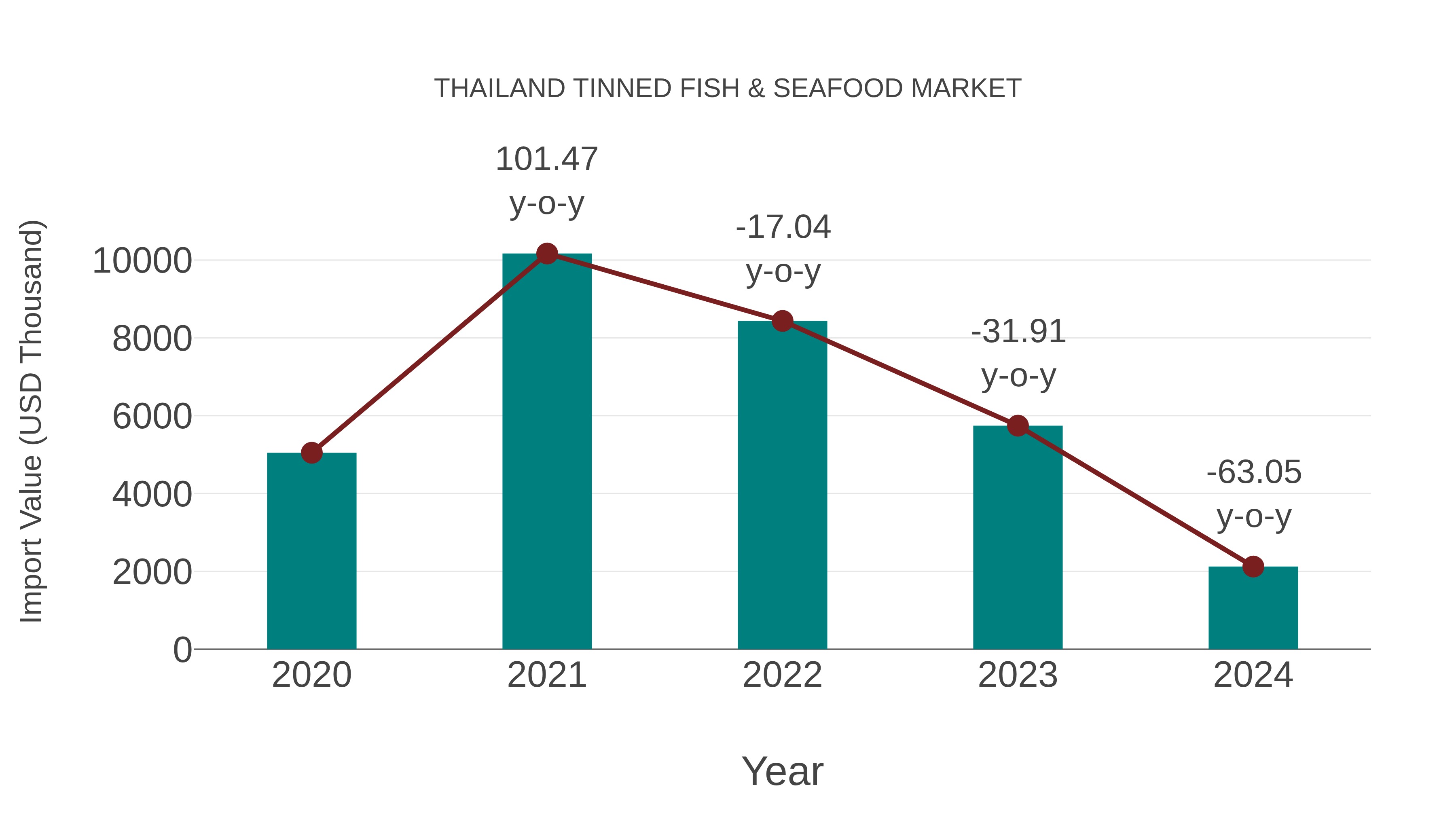
Thailand import trend for tinned fish & seafood in 2024 experienced a notable decline, with a growth rate of -63.05% compared to the previous year. The compound annual growth rate (CAGR) for the period 2020-2024 stood at -19.48%. This sharp decrease could be attributed to shifting consumer preferences, changes in trade policies, or market disruptions affecting import momentum in the industry.
Thailand Tinned Fish Seafood Market Synopsis
The tinned fish and seafood market in Thailand has witnessed steady growth in recent years. With its extensive coastline and a rich marine ecosystem, Thailand has become a significant player in the global seafood industry. The tinned fish segment, which includes popular products like canned tuna, sardines, and mackerel, has seen increasing demand both domestically and internationally. Thailand tinned fish products are known for their quality and affordability, making them a preferred choice for consumers. The market benefits from the country`s strong seafood processing industry, state-of-the-art canning facilities, and a well-established distribution network. Additionally, Thailand reputation for adhering to international food safety standards has further boosted its exports in this sector.
Drivers of the Market
The Thailand tinned fish seafood market has seen notable growth due to several key drivers. Tinned fish products, including canned tuna and sardines, offer convenience and a longer shelf life, making them a popular choice among consumers. One of the primary drivers of this market is the increasing demand for tinned fish products in both domestic and international markets. Thailand well-established seafood processing industry and adherence to stringent quality standards have made its tinned fish products highly sought after. Additionally, the country`s strategic location and efficient distribution networks have facilitated exports to various regions, including Europe, North America, and Asia. The Thai government`s emphasis on food safety and export promotion has further contributed to the growth of the tinned fish seafood market.
Challenges of the Market
Challenges in the Thailand tinned fish seafood market include the need to source high-quality raw materials and ensure proper canning processes to meet food safety and quality standards. Market volatility in raw material prices, such as fish and tin, can impact production costs and pricing. Competition with other canned seafood products and the need to differentiate in terms of product quality and packaging can be challenging. Additionally, access to export markets and compliance with import regulations in key markets are essential for market growth.
COVID-19 Impact on the Market
The tinned fish seafood market in Thailand experienced fluctuations in demand during the pandemic. Panic buying and stockpiling initially boosted sales, but as the economic impact of COVID-19 deepened, consumer spending on non-essential items like canned seafood decreased. Export-oriented tinned fish producers faced challenges due to disruptions in international trade. Companies in this market adapted by offering affordable options and promoting the shelf-stable nature of their products.
Key Players in the Market
In the Thailand tinned fish seafood market, a few key players have established themselves as industry leaders. OceanCanned Seafoods Co., Ltd. is one such company known for its tinned fish production and exports. Their commitment to quality and safety standards has made their products a trusted choice for consumers and businesses alike. Additionally, Thai Canning Enterprises Group specializes in tinned seafood products, offering a wide range of options to meet consumer preferences. These leading players contribute significantly to the Thailand tinned fish seafood market, providing convenient and nutritious seafood options.
Key Highlights of the Report:
- Thailand Tinned Fish & Seafood Market Outlook
- Market Size of Thailand Tinned Fish & Seafood Market, 2025
- Forecast of Thailand Tinned Fish & Seafood Market, 2032
- Historical Data and Forecast of Thailand Tinned Fish & Seafood Revenues & Volume for the Period 2022-2032F
- Thailand Tinned Fish & Seafood Market Trend Evolution
- Thailand Tinned Fish & Seafood Market Drivers and Challenges
- Thailand Tinned Fish & Seafood Price Trends
- Thailand Tinned Fish & Seafood Porter's Five Forces
- Thailand Tinned Fish & Seafood Industry Life Cycle
- Historical Data and Forecast of Thailand Tinned Fish & Seafood Market Revenues & Volume By Type for the Period 2022-2032F
- Historical Data and Forecast of Thailand Tinned Fish & Seafood Market Revenues & Volume By Tuna for the Period 2022-2032F
- Historical Data and Forecast of Thailand Tinned Fish & Seafood Market Revenues & Volume By Salmon for the Period 2022-2032F
- Historical Data and Forecast of Thailand Tinned Fish & Seafood Market Revenues & Volume By Sardines for the Period 2022-2032F
- Historical Data and Forecast of Thailand Tinned Fish & Seafood Market Revenues & Volume By Other fish for the Period 2022-2032F
- Historical Data and Forecast of Thailand Tinned Fish & Seafood Market Revenues & Volume By Prawns for the Period 2022-2032F
- Historical Data and Forecast of Thailand Tinned Fish & Seafood Market Revenues & Volume By Shrimps for the Period 2022-2032F
- Historical Data and Forecast of Thailand Tinned Fish & Seafood Market Revenues & Volume By Others for the Period 2022-2032F
- Historical Data and Forecast of Thailand Tinned Fish & Seafood Market Revenues & Volume By Application for the Period 2022-2032F
- Historical Data and Forecast of Thailand Tinned Fish & Seafood Market Revenues & Volume By Residential for the Period 2022-2032F
- Historical Data and Forecast of Thailand Tinned Fish & Seafood Market Revenues & Volume By Commercial for the Period 2022-2032F
- Historical Data and Forecast of Thailand Tinned Fish & Seafood Market Revenues & Volume By Others for the Period 2022-2032F
- Thailand Tinned Fish & Seafood Import Export Trade Statistics
- Market Opportunity Assessment By Type
- Market Opportunity Assessment By Application
- Thailand Tinned Fish & Seafood Top Companies Market Share
- Thailand Tinned Fish & Seafood Competitive Benchmarking By Technical and Operational Parameters
- Thailand Tinned Fish & Seafood Company Profiles
- Thailand Tinned Fish & Seafood Key Strategic Recommendations






































