Togo Cognac Market Growth Rate Analysis (2025 - 2031)
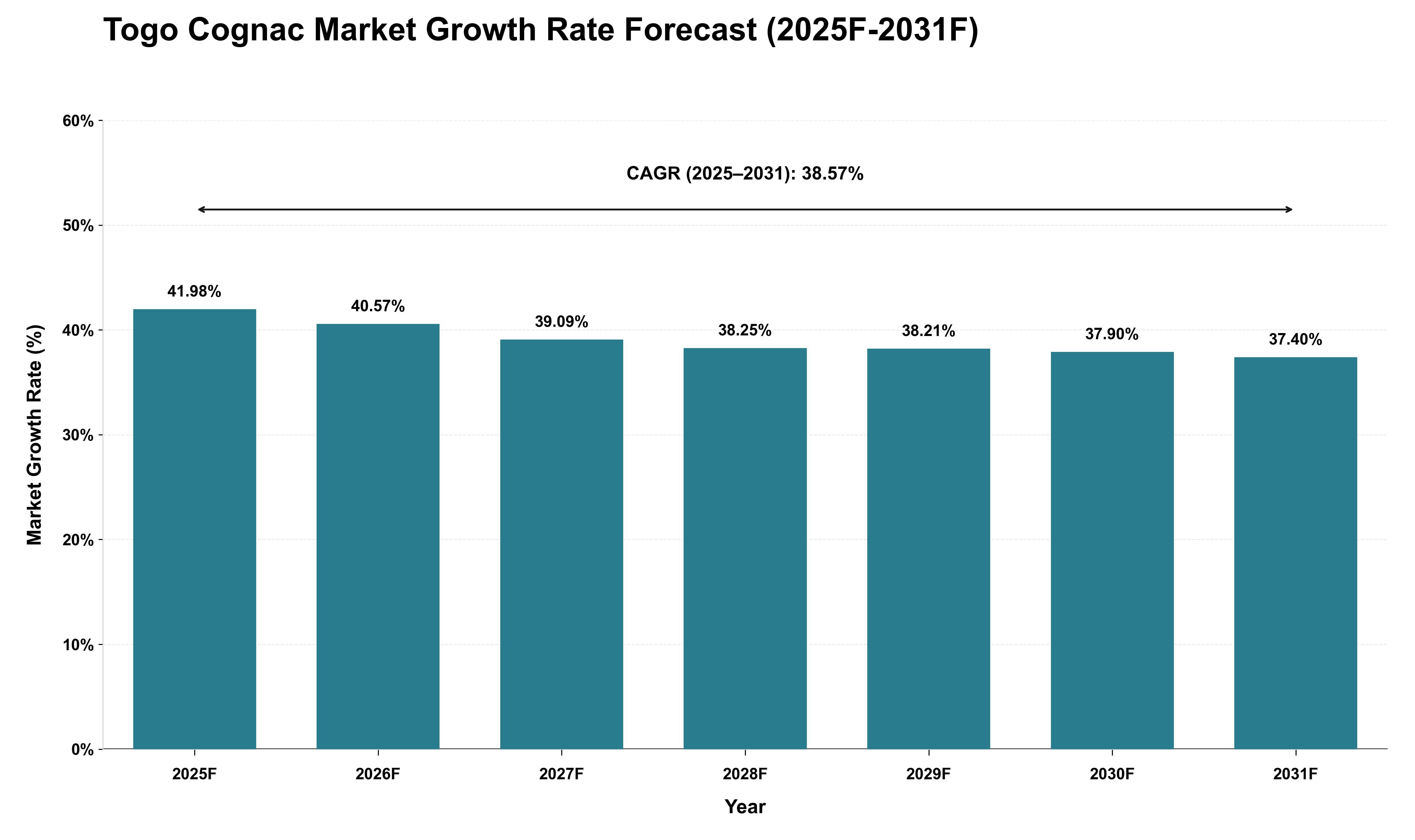
The Togo cognac market will experience robust growth driven by increasing consumer demand for premium spirits and evolving tastes favoring high-quality alcoholic beverages. The forecasted CAGR of 38.57% from 2025 to 2031 reflects a strong trajectory, with annual growth rates peaking at 41.98% in 2025 before gradually tapering. This trend will be influenced by the availability and pricing of raw materials, particularly grapes and oak barrels, which are essential for cognac production. As global supply chains adapt to meet rising demand, fluctuations in import dependencies may impact pricing structures, potentially leading to increased costs that could affect profit margins. Additionally, cyclical trends in consumer spending on luxury goods will likely bolster the market as disposable incomes rise in Togo, further enhancing the attractiveness of cognac as a premium choice among consumers during this period.
Key Highlights of the Report:
- Togo Cognac Market Outlook
- Market Size of Togo Cognac Market, 2024
- Forecast of Togo Cognac Market, 2031
- Historical Data and Forecast of Togo Cognac Revenues & Volume for the Period 2021- 2031
- Togo Cognac Market Trend Evolution
- Togo Cognac Market Drivers and Challenges
- Togo Cognac Price Trends
- Togo Cognac Porter's Five Forces
- Togo Cognac Industry Life Cycle
- Historical Data and Forecast of Togo Cognac Market Revenues & Volume By Grade for the Period 2021- 2031
- Historical Data and Forecast of Togo Cognac Market Revenues & Volume By V.S. for the Period 2021- 2031
- Historical Data and Forecast of Togo Cognac Market Revenues & Volume By V.S.O.P. for the Period 2021- 2031
- Historical Data and Forecast of Togo Cognac Market Revenues & Volume By Others for the Period 2021- 2031
- Historical Data and Forecast of Togo Cognac Market Revenues & Volume By Distribution Channel for the Period 2021- 2031
- Historical Data and Forecast of Togo Cognac Market Revenues & Volume By On-trade for the Period 2021- 2031
- Historical Data and Forecast of Togo Cognac Market Revenues & Volume By Off-trade for the Period 2021- 2031
- Togo Cognac Import Export Trade Statistics
- Market Opportunity Assessment By Grade
- Market Opportunity Assessment By Distribution Channel
- Togo Cognac Top Companies Market Share
- Togo Cognac Competitive Benchmarking By Technical and Operational Parameters
- Togo Cognac Company Profiles
- Togo Cognac Key Strategic Recommendations






































