Tunisia Bamboos Market Size Growth Rate
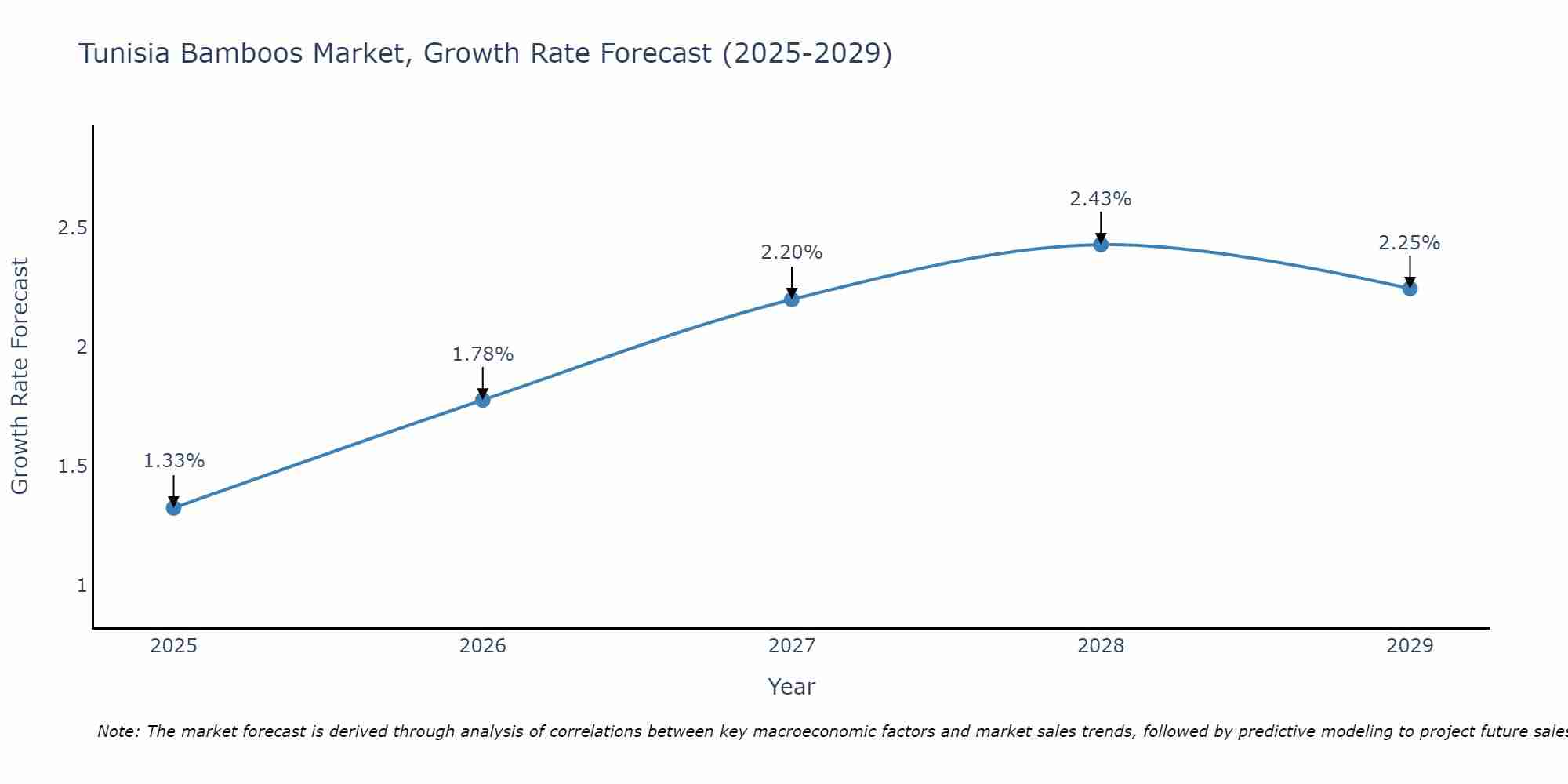
The Tunisia Bamboos Market is projected to witness mixed growth rate patterns during 2025 to 2029. The growth rate begins at 1.33% in 2025, climbs to a high of 2.43% in 2028, and moderates to 2.25% by 2029.
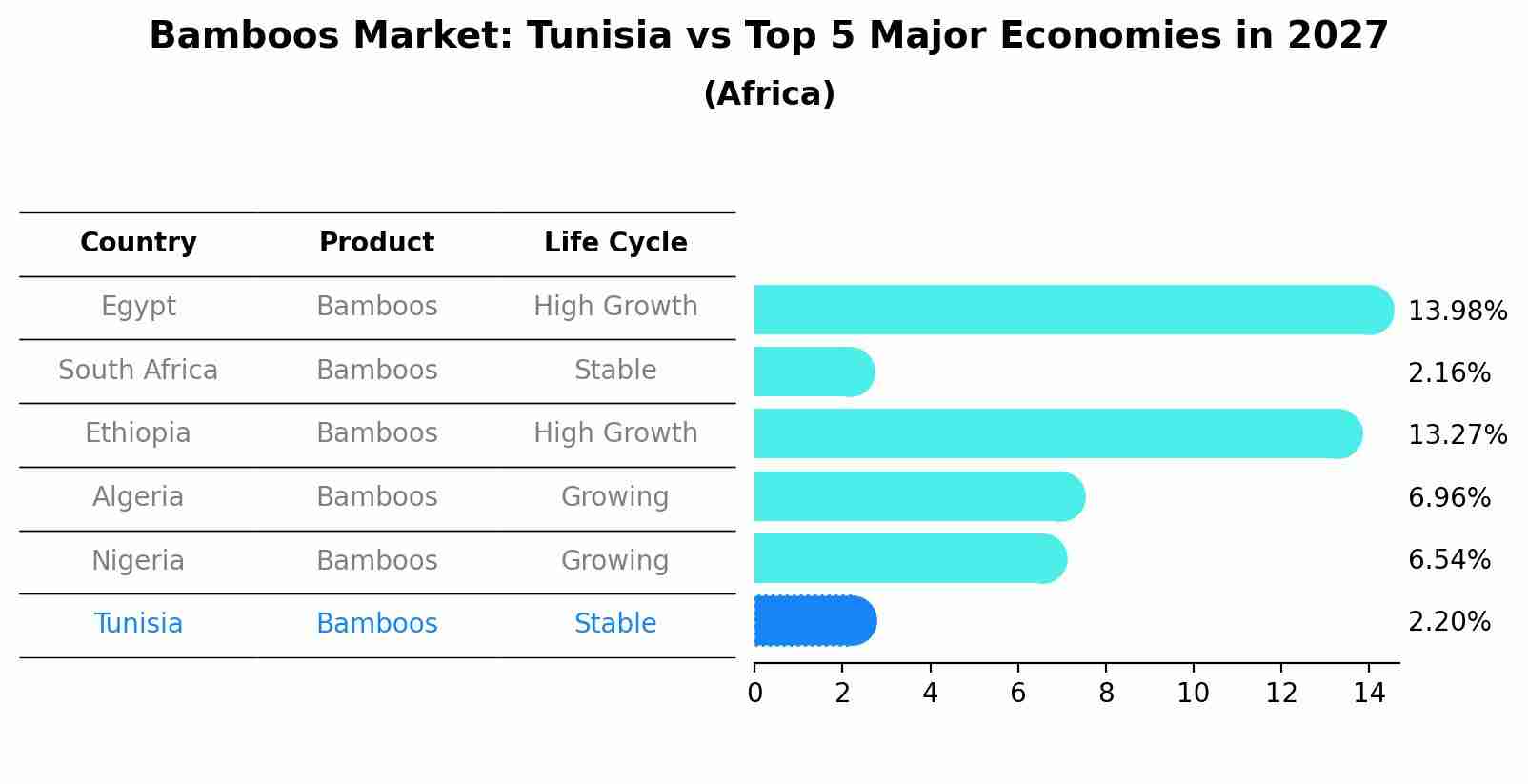
Bamboos Market: Tunisia vs Top 5 Major Economies in 2027 (Africa)
By 2027, Tunisia's Bamboos market is forecasted to achieve a stable growth rate of 2.20%, with Egypt leading the Africa region, followed by South Africa, Ethiopia, Algeria and Nigeria.
Tunisia Bamboos Market Overview
The Tunisia Bamboos Market is witnessing steady growth due to increasing awareness of the environmental benefits and versatility of bamboo products. Bamboo is being increasingly used in various industries such as construction, furniture, and textiles due to its sustainability and durability. The demand for bamboo products in Tunisia is driven by the growing preference for eco-friendly materials and the government`s initiatives to promote sustainable practices. The market is also benefiting from the rising trend of incorporating natural elements in interior design and home decor. With a focus on sustainability and innovation, the Tunisia Bamboos Market is expected to expand further in the coming years, presenting opportunities for businesses to capitalize on the growing demand for bamboo products.
Tunisia Bamboos Market Trends
The Tunisia Bamboos Market is currently experiencing a growing demand due to the increasing popularity of sustainable and eco-friendly products. Bamboo is being widely used in various industries such as construction, furniture, textiles, and even as a renewable energy source. Consumers are increasingly drawn to bamboo products for their durability, versatility, and environmental benefits. Additionally, the government`s initiatives to promote the use of bamboo for economic development and job creation are further driving the market growth. With more emphasis on sustainable practices and eco-conscious consumers, the Tunisia Bamboos Market is expected to continue its upward trend in the coming years.
Tunisia Bamboos Market Challenges
In the Tunisia bamboo market, some challenges faced include limited awareness and understanding of the potential uses and benefits of bamboo among consumers and businesses, leading to lower demand. Additionally, there may be issues related to the availability of high-quality bamboo products, as well as limited access to technology and machinery for bamboo processing. Lack of supportive government policies and incentives for bamboo cultivation and production can also hinder market growth. Furthermore, competition from other traditional building materials and lack of standardized grading systems for bamboo products may pose challenges in establishing a strong market presence for bamboo in Tunisia. Overcoming these challenges would require increased education and promotion efforts, investment in infrastructure and technology, as well as advocacy for policy support and industry standards.
Tunisia Bamboos Market Investment Opportunities
The Tunisia Bamboos Market presents promising investment opportunities due to the increasing demand for sustainable and eco-friendly construction materials. Bamboo is a fast-growing plant that can be harvested in 3-5 years, making it a renewable resource with significant potential in various industries such as construction, furniture, and textiles. Investing in bamboo plantations or processing facilities in Tunisia can provide attractive returns while promoting environmental sustainability. Additionally, the growing trend towards green building practices and the government`s initiatives to promote bamboo cultivation further enhance the market potential. Investors can capitalize on the rising demand for bamboo products both domestically and internationally, positioning themselves in a growing market with strong prospects for long-term growth and profitability.
Tunisia Bamboos Market Government Policy
Government policies related to the Tunisia Bamboos Market focus on promoting sustainable cultivation and management practices to ensure the long-term viability of the industry. The government has implemented regulations to control harvesting and protect natural bamboo habitats, encouraging farmers to adopt environmentally friendly production methods. Additionally, there are incentives and support programs in place to assist bamboo growers with access to resources, technology, and training to enhance productivity and product quality. The government also prioritizes research and development initiatives to drive innovation and improve the competitiveness of the Tunisia Bamboos Market both domestically and internationally. Overall, the government`s policies aim to foster a thriving and sustainable bamboo industry while safeguarding the environment and promoting economic growth.
Tunisia Bamboos Market Future Outlook
The future outlook for the Tunisia Bamboos Market appears promising as the demand for sustainable and eco-friendly materials continues to grow globally. With increasing awareness about the environmental benefits of bamboo, such as its fast growth rate, durability, and versatility, the market is expected to witness steady growth in the coming years. Additionally, the rising popularity of bamboo products in various industries, including construction, furniture, and textiles, is likely to drive further expansion of the market in Tunisia. However, challenges such as limited awareness among consumers and the need for infrastructure development may impact the market`s growth trajectory. Overall, the Tunisia Bamboos Market is poised for growth, driven by sustainability trends and increasing demand for environmentally friendly alternatives.
Key Highlights of the Report:
- Tunisia Bamboos Market Outlook
- Market Size of Tunisia Bamboos Market, 2024
- Forecast of Tunisia Bamboos Market, 2031
- Historical Data and Forecast of Tunisia Bamboos Revenues & Volume for the Period 2021 - 2031
- Tunisia Bamboos Market Trend Evolution
- Tunisia Bamboos Market Drivers and Challenges
- Tunisia Bamboos Price Trends
- Tunisia Bamboos Porter's Five Forces
- Tunisia Bamboos Industry Life Cycle
- Historical Data and Forecast of Tunisia Bamboos Market Revenues & Volume By Application for the Period 2021 - 2031
- Historical Data and Forecast of Tunisia Bamboos Market Revenues & Volume By Raw Materials for the Period 2021 - 2031
- Historical Data and Forecast of Tunisia Bamboos Market Revenues & Volume By Industrial Products for the Period 2021 - 2031
- Historical Data and Forecast of Tunisia Bamboos Market Revenues & Volume By Furniture for the Period 2021 - 2031
- Historical Data and Forecast of Tunisia Bamboos Market Revenues & Volume By Shoots for the Period 2021 - 2031
- Historical Data and Forecast of Tunisia Bamboos Market Revenues & Volume By Others for the Period 2021 - 2031
- Tunisia Bamboos Import Export Trade Statistics
- Market Opportunity Assessment By Application
- Tunisia Bamboos Top Companies Market Share
- Tunisia Bamboos Competitive Benchmarking By Technical and Operational Parameters
- Tunisia Bamboos Company Profiles
- Tunisia Bamboos Key Strategic Recommendations






































