Tunisia Canned Fruits Market Summary
The tunisia canned fruits market was estimated at USD 489 Million in 2025 and is projected to reach USD 677 Million by 2032, growing at a CAGR of 5.8% from 2026 to 2032.
Tunisia Canned Fruits Market Year-wise Growth Rate and Key Drivers
This graph highlights how the Tunisia Canned Fruits Market has steadily grown over the past five years, supported by major growth factors.
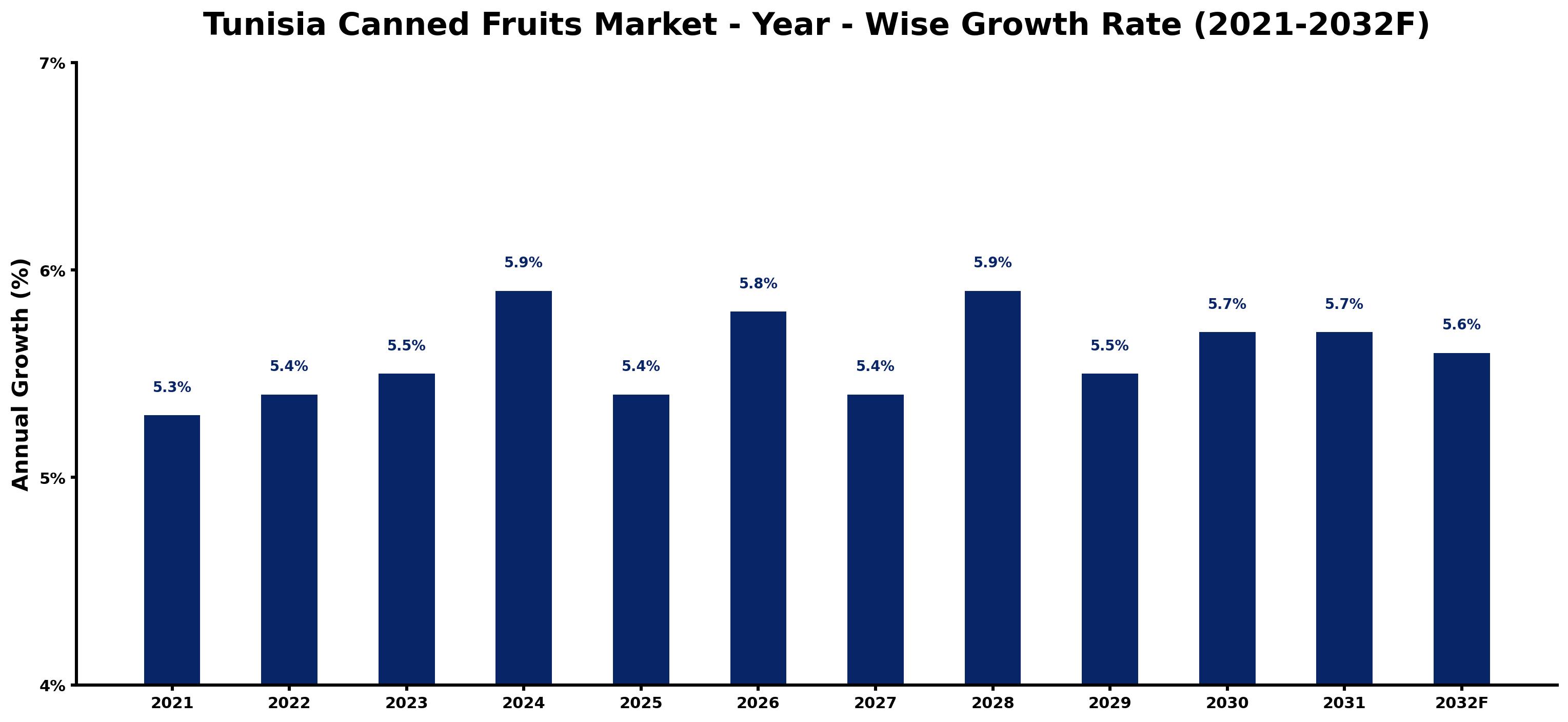
The table below presents the year wise growth rates along with the key drivers influencing the market
| Year | Growth Rate | Major Drivers |
| 2021 | 5.3% | Consumer awareness about health benefits of canned fruits led to increased purchases. |
| 2022 | 5.4% | Local producers embraced sustainable practices, attracting environmentally conscious customers. |
| 2023 | 5.5% | Supply chain improvements reduced costs, enhancing product availability in retail outlets. |
| 2024 | 5.9% | Innovative flavors and packaging designs captured younger demographic's attention rapidly. |
| 2025 | 5.4% | Emerging e-commerce platforms provided convenient shopping options for busy consumers. |
| 2026 | 5.8% | Increased tourism boosted demand for local canned fruits in hospitality sectors. |
| 2027 | 5.4% | Collaboration between manufacturers and retailers led to attractive promotional campaigns. |
| 2028 | 5.9% | Agricultural advancements improved fruit yields, ensuring higher quality for canning processes. |
| 2029 | 5.5% | Health-conscious consumers preferred canned fruits as convenient snack alternatives. |
| 2030 | 5.7% | Growing interest in Mediterranean diets drove sales of canned fruit products. |
| 2031 | 5.7% | Export opportunities expanded as regional markets recognized Tunisian canned fruit quality. |
| 2032 | 5.6% | Cultural festivals highlighting local produce increased visibility and consumer interest. |
Note - Market size estimations and growth projections presented in this report are based on 6Wresearch's advanced forecasting approach, validated with industry datasets as of June 2026.
Tunisia Canned Fruits Market Synopsis
The Tunisia Canned Fruits Market is projected to reach 5.8% and witness significant growth during the forecast period (2026-2032). This growth is influenced by the increasing consumer preference for convenient and nutritious food options, driven by urbanization and evolving lifestyle trends. The market encompasses a variety of canned fruits, including peaches, pears, pineapples, and mixed fruit cocktails, aligning with diverse dietary preferences and enhancing consumer accessibility.
Tunisia Canned Fruits Market Growth Drivers
Several key factors are driving the growth of the Tunisia canned fruits market. Firstly, the rising urbanization in Tunisia is leading to busier lifestyles, pushing consumers towards ready-to-eat food products that offer convenience without sacrificing nutrition. Secondly, there is a notable shift in consumer preferences towards health-focused snacking options, resulting in increased demand for canned fruits that are perceived as healthier alternatives to traditional snacks.
- The growing trend of health consciousness among consumers is prompting a preference for canned fruits that are free from added sugars and preservatives.
- Busy lifestyles are resulting in increased consumption of convenient food products, including ready-to-eat canned fruits.
- The expanding retail landscape and online grocery shopping are making canned fruits more accessible to a broader audience.
- Consumers are exploring new flavors, leading to a growing interest in exotic and unique fruit varieties available in canned form.
- With a focus on sustainability, there is an increasing demand for products that support ethical sourcing and minimal environmental impact.
Tunisia Canned Fruits Market Trends and Opportunities
The Tunisia canned fruits market is witnessing several noteworthy trends that present unique opportunities for growth. A significant trend is the growing consumer preference for natural and organic products, heavily influencing the types of canned fruits in demand. As consumers seek to incorporate healthier food choices into their diets, canned fruits that feature no artificial ingredients or preservatives are gaining popularity.
- Innovative product offerings, such as new flavor combinations and enhanced packaging, are capturing consumer interest and encouraging trial purchases.
- The trend towards plant-based diets is driving demand for canned fruits as a versatile ingredient in various recipes.
- A push for environmentally friendly packaging solutions is opening avenues for companies to invest in sustainable materials.
- Partnerships with local farmers to ensure a steady supply of high-quality fruits can enhance product authenticity and support local economies.
- Online retail channels are becoming increasingly important, with the potential for brands to engage with consumers directly and showcase product variety.
Tunisia Canned Fruits Market Challenges and Restraints
While the Tunisia canned fruits market holds significant promise, it also faces several challenges that could impact its growth trajectory. A primary concern arises from the competition with imported canned fruits, which often benefit from established international brands offering lower prices and a wider variety of products. Additionally, fluctuating raw material prices can affect profitability and require strategic pricing adjustments.
- Local producers face challenges in competing with imported products due to the established market presence of international brands.
- Fluctuations in raw material prices, particularly for fruits, can strain profit margins and complicate inventory management.
- Limited domestic production capacity may lead to supply chain disruptions, particularly during peak seasons when demand spikes.
- Investment in technology and modernization of processing facilities is essential to improve efficiency and reduce operational costs.
- Awareness and education around the benefits of locally sourced products are needed to cultivate brand loyalty among consumers.
Tunisia Canned Fruits Market Investment Opportunities
The investment landscape in the Tunisia canned fruits market is rich with opportunities for both domestic and international investors. A key area for investment is the modernization of production facilities that emphasize sustainability and efficiency. This can enhance product quality while reducing environmental impact and operational costs. Furthermore, innovation in product development, including unique flavor profiles and convenient packaging options, can attract a diverse consumer base.
- Investing in sustainable agricultural practices can secure a steady supply of quality fruits while promoting environmental stewardship.
- Modernizing production capabilities can lead to improved efficiencies and reduced waste, catering to the growing demand for eco-friendly products.
- Developing partnerships with local farmers can help ensure consistent quality while stimulating the local economy.
- Exploring export opportunities can expand market reach, leveraging Tunisia's geographical advantages.
- Utilizing digital marketing strategies to enhance brand visibility and engage directly with consumers can drive sales growth.
Tunisia Canned Fruits Market Government Investment and Initiatives
Government initiatives play a critical role in shaping the Tunisia canned fruits market. Policies aimed at promoting agricultural production are fundamental to enhancing the local supply of fruits suitable for canning. Various subsidies and incentives are provided to farmers to boost production levels and improve quality standards. Furthermore, the government enforces strict food safety regulations to ensure that products meet hygiene and quality benchmarks, which is vital for consumer trust.
Additionally, there are initiatives to support export activities within the canned fruits sector, facilitated by trade agreements aimed at improving market access for domestic products. These policies collectively aim to strengthen the agricultural sector, promote economic growth, and enhance Tunisia's export potential in the canned fruits market.
Tunisia Canned Fruits Market Latest Developments (May 2025 - June 2026)
In the period between May 2025 and June 2026, the Tunisia canned fruits market has experienced several pivotal developments. The trend towards health-oriented products has continued, with increasing emphasis on promoting canned fruits as nutritious and convenient food options. Many producers are focusing on innovation, introducing new flavors and formats to meet evolving consumer tastes.
Additionally, there has been a notable rise in online sales channels, which are becoming critical in reaching consumers who favor the convenience of online grocery shopping. The market has also seen a growing commitment to sustainability, with companies adopting eco-friendly practices in sourcing and packaging. This period has set the stage for continued growth, driven by consumer demand for high-quality and ethically sourced canned fruits.
Tunisia Canned Fruits Market - Key Attractiveness of the Report
- 10 Years of Market Numbers
- Historical Data Starting from 2022 to 2025
- Base Year: 2025
- Forecast Data until 2032
- Key Performance Indicators Impacting the Market
- Major Upcoming Developments and Projects
Key Highlights of the Report:
- Tunisia Canned Fruits Market Outlook
- Market Size of Tunisia Canned Fruits Market, 2025
- Forecast of Tunisia Canned Fruits Market, 2032F
- Historical Data and Forecast of Tunisia Canned Fruits Revenues & Volume for the Period 2022-2032F
- Tunisia Canned Fruits Market Trend Evolution
- Tunisia Canned Fruits Market Drivers and Challenges
- Tunisia Canned Fruits Price Trends
- Tunisia Canned Fruits Porter's Five Forces
- Tunisia Canned Fruits Industry Life Cycle
- Historical Data and Forecast of Tunisia Canned Fruits Market Revenues & Volume By Fruit Type for the Period 2022-2032F
- Historical Data and Forecast of Tunisia Canned Fruits Market Revenues & Volume By Peaches for the Period 2022-2032F
- Historical Data and Forecast of Tunisia Canned Fruits Market Revenues & Volume By Pineapple for the Period 2022-2032F
- Historical Data and Forecast of Tunisia Canned Fruits Market Revenues & Volume By Mandarin oranges for the Period 2022-2032F
- Historical Data and Forecast of Tunisia Canned Fruits Market Revenues & Volume By Pears for the Period 2022-2032F
- Historical Data and Forecast of Tunisia Canned Fruits Market Revenues & Volume By Others for the Period 2022-2032F
- Historical Data and Forecast of Tunisia Canned Fruits Market Revenues & Volume By Form for the Period 2022-2032F
- Historical Data and Forecast of Tunisia Canned Fruits Market Revenues & Volume By Whole fruits for the Period 2022-2032F
- Historical Data and Forecast of Tunisia Canned Fruits Market Revenues & Volume By Cut fruits for the Period 2022-2032F
- Historical Data and Forecast of Tunisia Canned Fruits Market Revenues & Volume By Distribution Channel for the Period 2022-2032F
- Historical Data and Forecast of Tunisia Canned Fruits Market Revenues & Volume By Supermarkets/Hypermarkets for the Period 2022-2032F
- Historical Data and Forecast of Tunisia Canned Fruits Market Revenues & Volume By Convenience Stores for the Period 2022-2032F
- Historical Data and Forecast of Tunisia Canned Fruits Market Revenues & Volume By Online Retail for the Period 2022-2032F
- Historical Data and Forecast of Tunisia Canned Fruits Market Revenues & Volume By Other for the Period 2022-2032F
- Tunisia Canned Fruits Import Export Trade Statistics
- Market Opportunity Assessment By Fruit Type
- Market Opportunity Assessment By Form
- Market Opportunity Assessment By Distribution Channel
- Tunisia Canned Fruits Top Companies Market Share
- Tunisia Canned Fruits Competitive Benchmarking By Technical and Operational Parameters
- Tunisia Canned Fruits Company Profiles
- Tunisia Canned Fruits Key Strategic Recommendations






































