Tunisia Peas Market Size, Share & Growth Rate
The Tunisia Peas Market was estimated at USD 445 Million in 2025 and is projected to reach USD 615 Million by 2032, growing at a CAGR of 4.7% from 2026 to 2032. This steady growth trajectory is primarily fueled by a surge in health-conscious consumer behaviors, as more individuals lean towards plant-based diets. The increasing adoption of organic and non-GMO products is also contributing significantly to this expansion, reflecting a notable shift in dietary preferences across the country.
Tunisia Peas Market Year-wise Growth Rate and Key Drivers
This graph highlights how the Tunisia Peas Market has steadily grown over the years, supported by major growth factors.
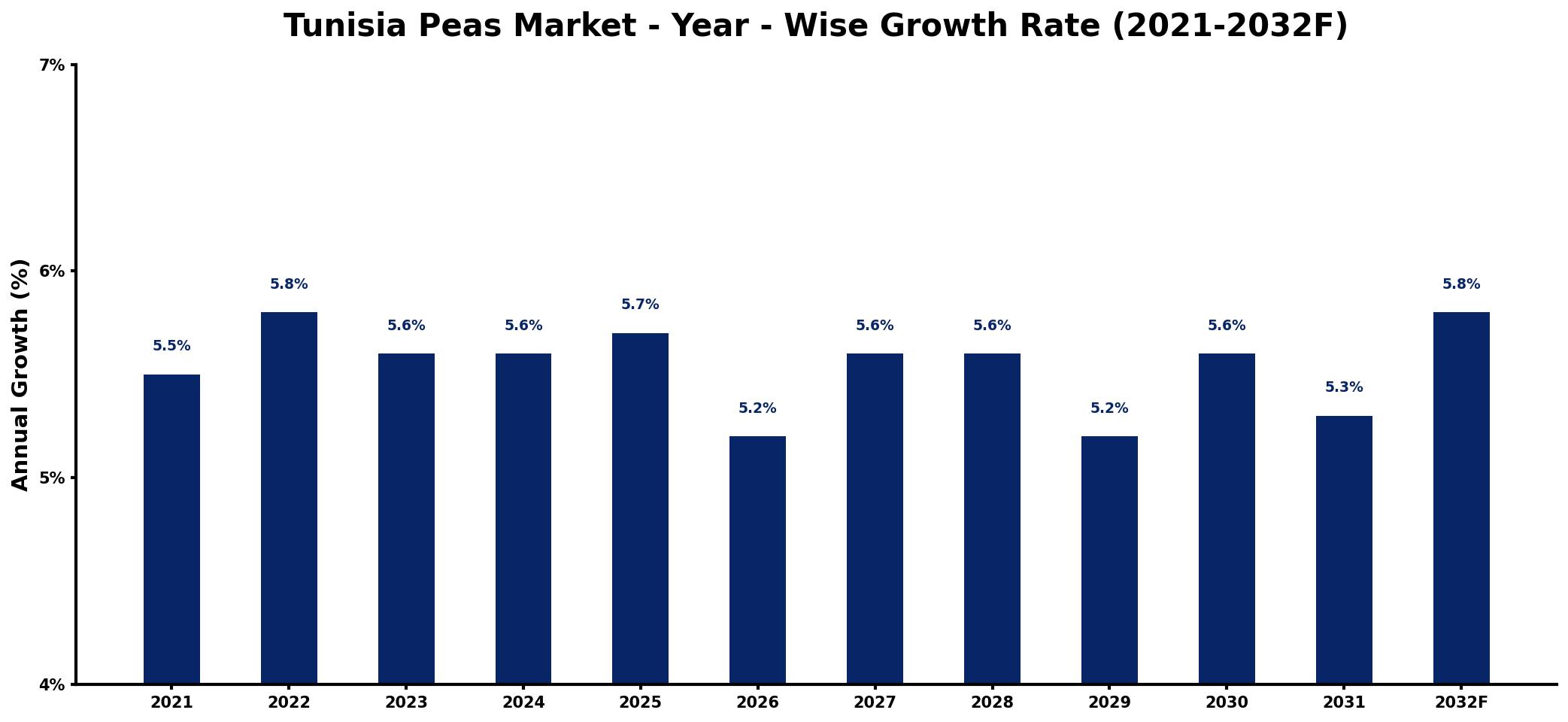
The table below presents the year‑wise growth rates along with the key drivers influencing the market
| Year | Growth Rate | Major Drivers |
| 2021 | 5.5% | Rising consumer health awareness |
| 2022 | 5.8% | Increased agricultural investment initiatives |
| 2023 | 5.6% | Growing preference for plant-based diets |
| 2024 | 5.6% | Expansion of organic farming practices |
| 2025 | 5.7% | Enhanced distribution network efficiency |
| 2026 | 5.2% | Emerging export market opportunities |
| 2027 | 5.6% | Technological advancements in agriculture |
| 2028 | 5.6% | Strengthened local farmer cooperatives |
| 2029 | 5.2% | Innovative product development strategies |
| 2030 | 5.6% | Growing urban population demand |
| 2031 | 5.3% | Increased focus on food security |
| 2032 | 5.8% | Rising interest in sustainable practices |
Note: Market size estimations and growth projections presented in this report are based on 6Wresearch's proprietary forecasting methodology, utilizing the latest available industry data, government publications, and primary research inputs.
Tunisia Peas Market Synopsis
In Tunisia, green peas dominate consumption patterns, with an observable rise in demand for fresh and processed varieties. Local agricultural practices are evolving, with an increased focus on sustainable farming methods to meet growing consumer preferences for nutritious food options.
The versatility of peas in various cuisines further enhances their appeal. From traditional dishes to modern recipes, the ability to incorporate peas seamlessly into meals resonates with both consumers and food processors alike, driving robust market growth.
Tunisia Peas Market Key Takeaways
- Growing consumer health consciousness is driving demand for high-protein, fiber-rich peas.
- The trend towards organic and non-GMO peas is reshaping production and marketing strategies.
- Weather fluctuations significantly impact crop yields and farmer profitability.
- Investment opportunities are emerging due to government initiatives aimed at improving agricultural infrastructure.
- The market is increasingly catering to the convenience of busy households through frozen and canned options.
Evaluation of Restraints in Tunisia Peas Market
Despite the overall positive outlook, the Tunisia peas market faces significant restraints. Fluctuating weather conditions pose a direct threat to crop yields and the quality of peas produced. Additionally, many farmers lack access to modern agricultural techniques, which limits their efficiency and productivity. Poor infrastructure for storage and transportation results in substantial post-harvest losses, while market volatility and price fluctuations hinder farmers' ability to plan effectively and invest in their future operations. Addressing these challenges is essential for the market's sustainable growth.
Tunisia Peas Market Trends
Currently, the Tunisia peas market is witnessing a marked increase in demand for both fresh and processed peas. This trend is largely influenced by the rising consumer interest in healthy eating and plant-based diets. Convenience products, including frozen and canned peas, are becoming particularly popular among busy families. Furthermore, the emphasis on locally sourced and organic produce continues to shape consumer preferences, pushing suppliers to adapt and innovate.
Tunisia Peas Market Opportunities
The potential for growth in the Tunisia peas market is considerable. As awareness of the health benefits associated with peas rises, particularly their nutritional value as a protein source, there exists a unique opportunity for investment. The local government's commitment to agricultural development is conducive to creating a favorable environment for producers and investors alike. This, coupled with global trends favoring plant-based diets, positions the market for significant expansion in both domestic and international spheres.
Government Initiatives in the Tunisia Peas Market
The Tunisian government plays a crucial role in fostering a conducive environment for the peas market. Through agricultural subsidy programs, financial assistance is provided to farmers for inputs like seeds and fertilizers. Additionally, price control measures are implemented to stabilize the market, ensuring fair pricing for producers and consumers. The government's commitment to promoting sustainable agricultural practices is evident through regulations aimed at reducing pesticide use and environmental impacts, thus supporting the long-term viability of the market.
Future Insights of the Tunisia Peas Market
Looking ahead to 2026-2032, the Tunisia peas market is poised for robust growth. The anticipated increase in consumer demand for plant-based proteins and the popularity of vegetarian and vegan diets will significantly influence market dynamics. Moreover, government initiatives aimed at bolstering agricultural exports are likely to enhance the production and international competitiveness of Tunisian peas. However, the market will need to navigate challenges such as climate change and global price volatility, necessitating adaptive strategies from industry players.
Tunisia Peas Market Latest Developments (2025 - 2026)
Recent trends indicate a concerted effort within the industry to enhance the efficiency of the supply chain for peas. Innovations in packaging technology and processing methods are being explored to increase the shelf life and convenience of pea products. Additionally, there is a growing focus on promoting locally sourced peas in retail channels, as consumer preference shifts toward sustainability and traceability. As these developments unfold, the market continues to adapt to both consumer demands and regulatory frameworks.
Tunisia Peas Market - Key Attractiveness of the Report
- 10 Years of Market Numbers
- Historical Data Starting from 2022 to 2025
- Base Year: 2025
- Forecast Data until 2032
- Key Performance Indicators Impacting the Market
- Major Upcoming Developments and Projects
Key Highlights of the Report:
- Tunisia Peas Market Outlook
- Market Size of Tunisia Peas Market, 2025
- Forecast of Tunisia Peas Market, 2032
- Historical Data and Forecast of Tunisia Peas Revenues & Volume for the Period 2022-2032F
- Tunisia Peas Market Trend Evolution
- Tunisia Peas Market Drivers and Challenges
- Tunisia Peas Price Trends
- Tunisia Peas Porter's Five Forces
- Tunisia Peas Industry Life Cycle
- Historical Data and Forecast of Tunisia Peas Market Revenues & Volume By Type for the Period 2022-2032F
- Historical Data and Forecast of Tunisia Peas Market Revenues & Volume By Field Peas for the Period 2022-2032F
- Historical Data and Forecast of Tunisia Peas Market Revenues & Volume By Garden Peas for the Period 2022-2032F
- Historical Data and Forecast of Tunisia Peas Market Revenues & Volume By Others for the Period 2022-2032F
- Historical Data and Forecast of Tunisia Peas Market Revenues & Volume By Application for the Period 2022-2032F
- Historical Data and Forecast of Tunisia Peas Market Revenues & Volume By Food for the Period 2022-2032F
- Historical Data and Forecast of Tunisia Peas Market Revenues & Volume By Others for the Period 2022-2032F
- Historical Data and Forecast of Tunisia Peas Market Revenues & Volume By Distribution Channel for the Period 2022-2032F
- Historical Data and Forecast of Tunisia Peas Market Revenues & Volume By Online for the Period 2022-2032F
- Historical Data and Forecast of Tunisia Peas Market Revenues & Volume By Offline for the Period 2022-2032F
- Historical Data and Forecast of Tunisia Peas Market Revenues & Volume By Others for the Period 2022-2032F
- Tunisia Peas Import Export Trade Statistics
- Market Opportunity Assessment By Type
- Market Opportunity Assessment By Application
- Market Opportunity Assessment By Distribution Channel
- Tunisia Peas Top Companies Market Share
- Tunisia Peas Competitive Benchmarking By Technical and Operational Parameters
- Tunisia Peas Company Profiles
- Tunisia Peas Key Strategic Recommendations






































