Tunisia Soybean Meal Market Size Growth Rate
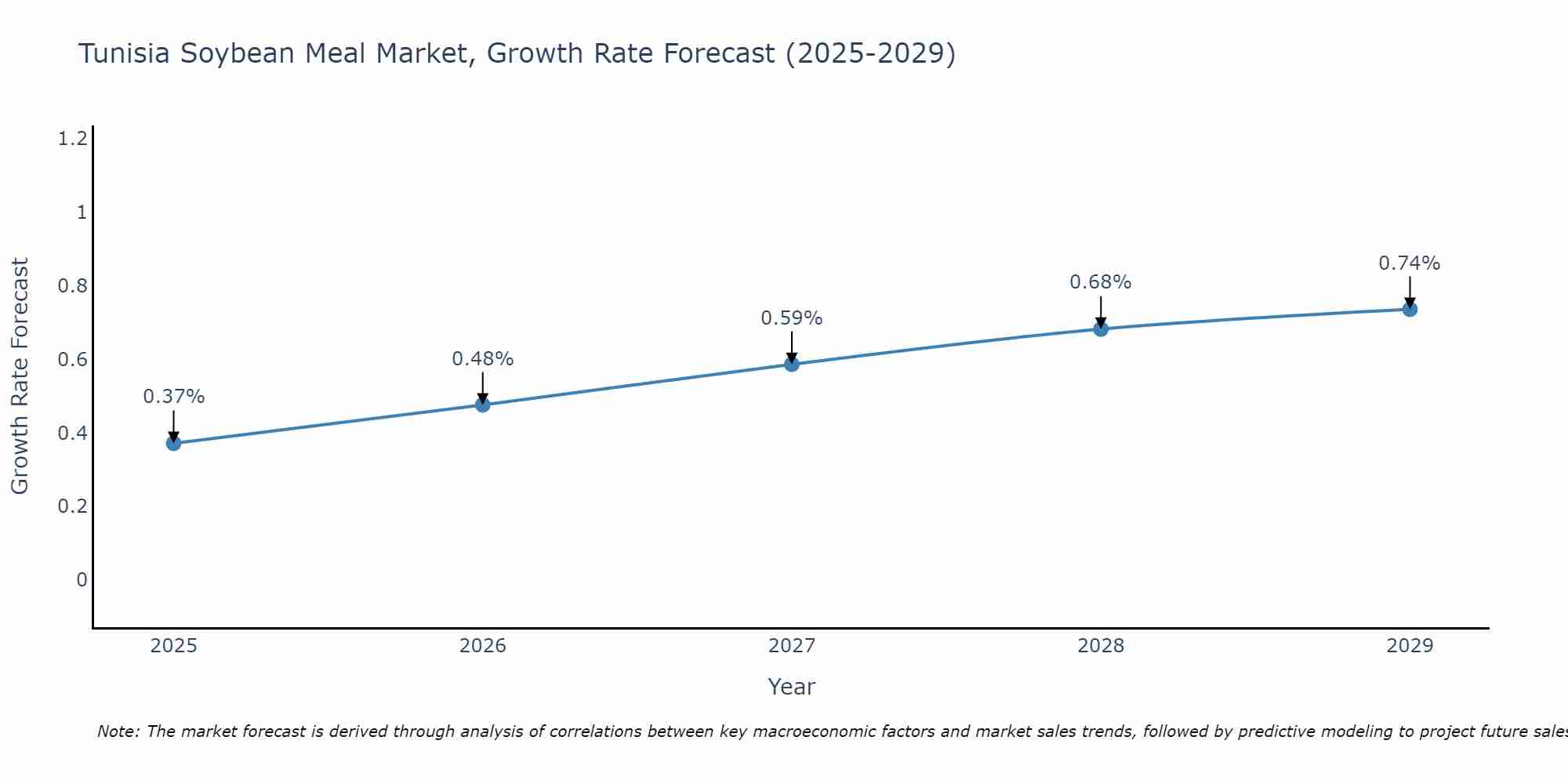
The Tunisia Soybean Meal Market is likely to experience consistent growth rate gains over the period 2025 to 2029. Commencing at 0.37% in 2025, growth builds up to 0.74% by 2029.
Soybean Meal Market: Tunisia vs Top 5 Major Economies in 2027 (Africa)
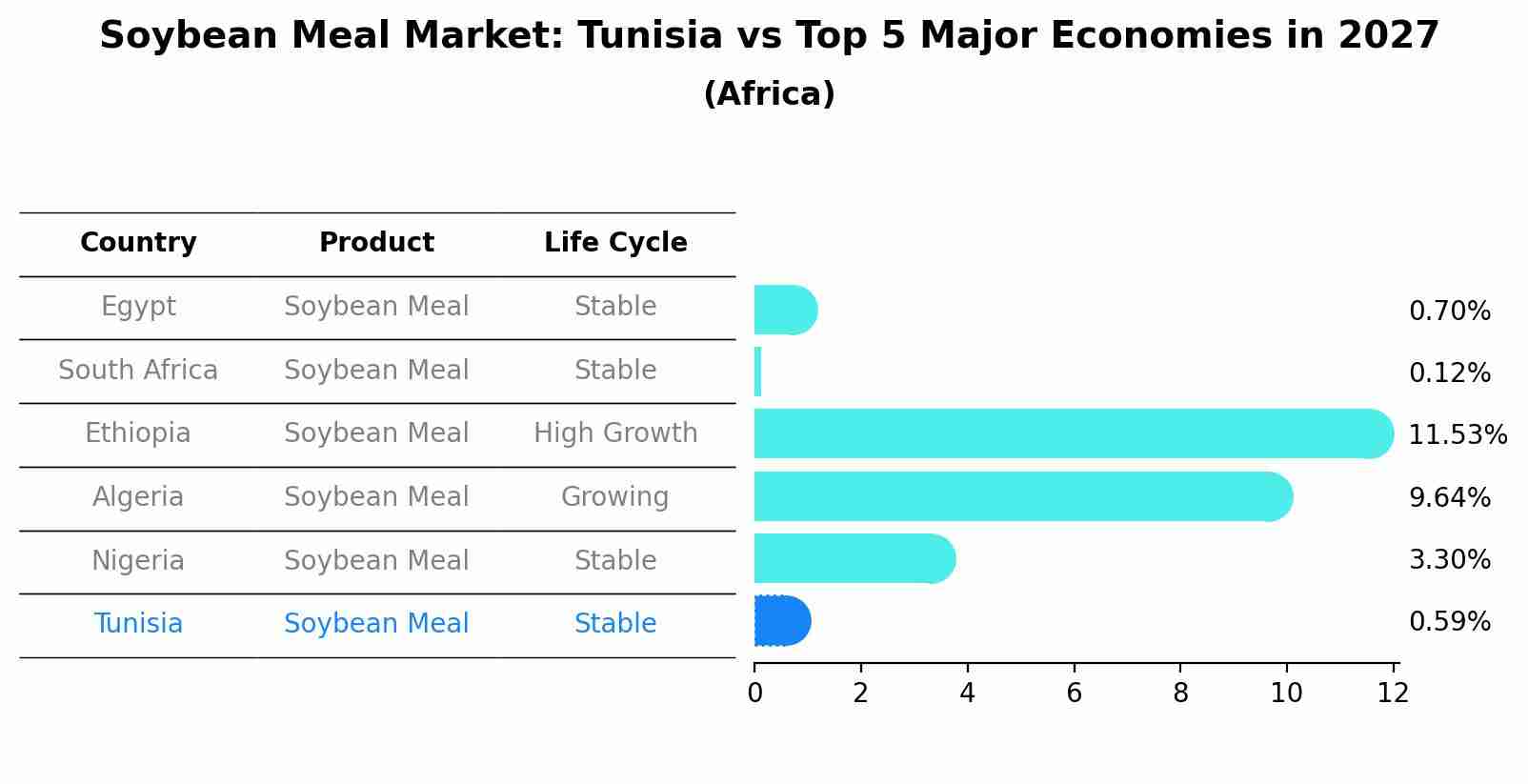
In the Africa region, the Soybean Meal market in Tunisia is projected to expand at a stable growth rate of 0.59% by 2027. The largest economy is Egypt, followed by South Africa, Ethiopia, Algeria and Nigeria.
Tunisia Soybean Meal Market Synopsis
The Tunisia Soybean Meal Market is experiencing steady growth driven by increasing demand in the animal feed industry. The country relies heavily on imported soybean meal for livestock feed due to limited domestic production. Factors such as the growing livestock sector, rising consumer awareness about the benefits of soybean meal in animal nutrition, and the expansion of feed mills are contributing to the market`s growth. Additionally, soybean meal is favored for its high protein content and essential amino acids, making it a popular choice among livestock farmers. However, challenges such as price fluctuations in the global market and currency exchange rates could impact the market`s growth trajectory in Tunisia. Overall, the Tunisia Soybean Meal Market presents opportunities for suppliers and investors looking to capitalize on the country`s growing demand for quality animal feed ingredients.
Tunisia Soybean Meal Market Trends
Currently, the Tunisia Soybean Meal Market is experiencing a growing demand due to the expanding livestock industry and increasing awareness about the benefits of soybean meal as a protein source for animal feed. The market is also witnessing a shift towards more sustainable and environmentally friendly practices, leading to an increased preference for soybean meal over other protein sources. Importantly, the rising consumer focus on the quality of animal products has further boosted the demand for high-quality soybean meal in the market. Additionally, the market is seeing a trend towards value-added soybean meal products, such as organic and non-GMO varieties, catering to the evolving preferences of consumers. Overall, these trends are expected to drive further growth and opportunities in the Tunisia Soybean Meal Market in the coming years.
Tunisia Soybean Meal Market Challenges
In the Tunisia Soybean Meal Market, key challenges include fluctuating global soybean prices impacting local production costs and profitability, dependence on imports due to limited domestic soybean cultivation, potential quality issues with imported soybean meal affecting feed formulation consistency, and competition from alternative protein sources. Additionally, regulatory constraints, such as import tariffs and phytosanitary regulations, can hinder market growth and increase operational costs for industry players. Market participants must navigate these challenges by implementing cost-effective sourcing strategies, enhancing quality control measures, and diversifying their product offerings to remain competitive in the market.
Tunisia Soybean Meal Market Investment Opportunities
In the Tunisia Soybean Meal Market, there are promising investment opportunities due to the growing demand for soybean meal as a key ingredient in animal feed production. With the increasing focus on livestock farming and poultry production in Tunisia, the demand for high-quality protein sources like soybean meal is expected to rise. Investing in soybean meal production or trading can be lucrative, considering the country`s reliance on imports to meet the demand. Additionally, expanding into value-added products such as fortified soybean meal or organic variants can further capitalize on the market potential. However, investors should carefully assess market dynamics, competition, and regulatory factors to make informed investment decisions in the Tunisia Soybean Meal Market.
Jordan Agar Market Government Policies
The Tunisian government has implemented various policies related to the soybean meal market to support local production and reduce dependency on imports. These policies include subsidies for soybean farmers to increase domestic cultivation and reduce the country`s reliance on imported soybean meal. Additionally, the government has implemented regulations to ensure the quality and safety of soybean meal products in the market, thereby protecting consumers and supporting the growth of the industry. Furthermore, there are initiatives in place to promote research and development in the soybean sector to enhance productivity and competitiveness. Overall, these policies aim to strengthen the Tunisian soybean meal market, improve food security, and boost the agricultural sector`s contribution to the economy.
Tunisia Soybean Meal Market Future Outlook
The future outlook for the Tunisia Soybean Meal Market appears promising as the demand for soybean meal is expected to increase due to its versatile applications in animal feed production. With a growing livestock industry in Tunisia and a shift towards more sustainable and nutritious animal feed options, soybean meal is likely to be a preferred choice among farmers. Additionally, the increasing awareness about the benefits of soybean meal in promoting animal health and growth is anticipated to drive market growth. However, challenges such as fluctuating soybean prices and competition from alternative protein sources may impact market dynamics. Overall, the Tunisia Soybean Meal Market is projected to experience steady growth in the coming years, driven by rising demand from the livestock sector and evolving consumer preferences.
Key Highlights of the Report:
- Tunisia Soybean Meal Market Outlook
- Market Size of Tunisia Soybean Meal Market, 2021
- Forecast of Tunisia Soybean Meal Market, 2031
- Historical Data and Forecast of Tunisia Soybean Meal Revenues & Volume for the Period 2018 - 2031
- Tunisia Soybean Meal Market Trend Evolution
- Tunisia Soybean Meal Market Drivers and Challenges
- Tunisia Soybean Meal Price Trends
- Tunisia Soybean Meal Porter's Five Forces
- Tunisia Soybean Meal Industry Life Cycle
- Historical Data and Forecast of Tunisia Soybean Meal Market Revenues & Volume By Application for the Period 2018 - 2031
- Historical Data and Forecast of Tunisia Soybean Meal Market Revenues & Volume By Animal Feed for the Period 2018 - 2031
- Historical Data and Forecast of Tunisia Soybean Meal Market Revenues & Volume By Food Industry for the Period 2018 - 2031
- Historical Data and Forecast of Tunisia Soybean Meal Market Revenues & Volume By Beverage for the Period 2018 - 2031
- Historical Data and Forecast of Tunisia Soybean Meal Market Revenues & Volume By Healthcare Products for the Period 2018 - 2031
- Tunisia Soybean Meal Import Export Trade Statistics
- Market Opportunity Assessment By Application
- Tunisia Soybean Meal Top Companies Market Share
- Tunisia Soybean Meal Competitive Benchmarking By Technical and Operational Parameters
- Tunisia Soybean Meal Company Profiles
- Tunisia Soybean Meal Key Strategic Recommendations






































