Tunisia Sports Nutrition Market Size, Share & Growth Rate
The Tunisia Sports Nutrition Market was estimated at USD 464 Million in 2025 and is projected to reach USD 665 Million by 2032, growing at a CAGR of 5.3% from 2026 to 2032. This growth trajectory is fueled by a notable increase in health consciousness among the population, alongside a burgeoning community of fitness enthusiasts and athletes actively seeking specialized nutrition products. Additionally, the rising preference for natural and organic ingredients is driving consumers to pursue cleaner label options, further stimulating market expansion.
Tunisia Sports Nutrition Market Year-wise Growth Rate and Key Drivers
This graph highlights how the Tunisia Sports Nutrition Market has steadily grown over the years, supported by major growth factors.
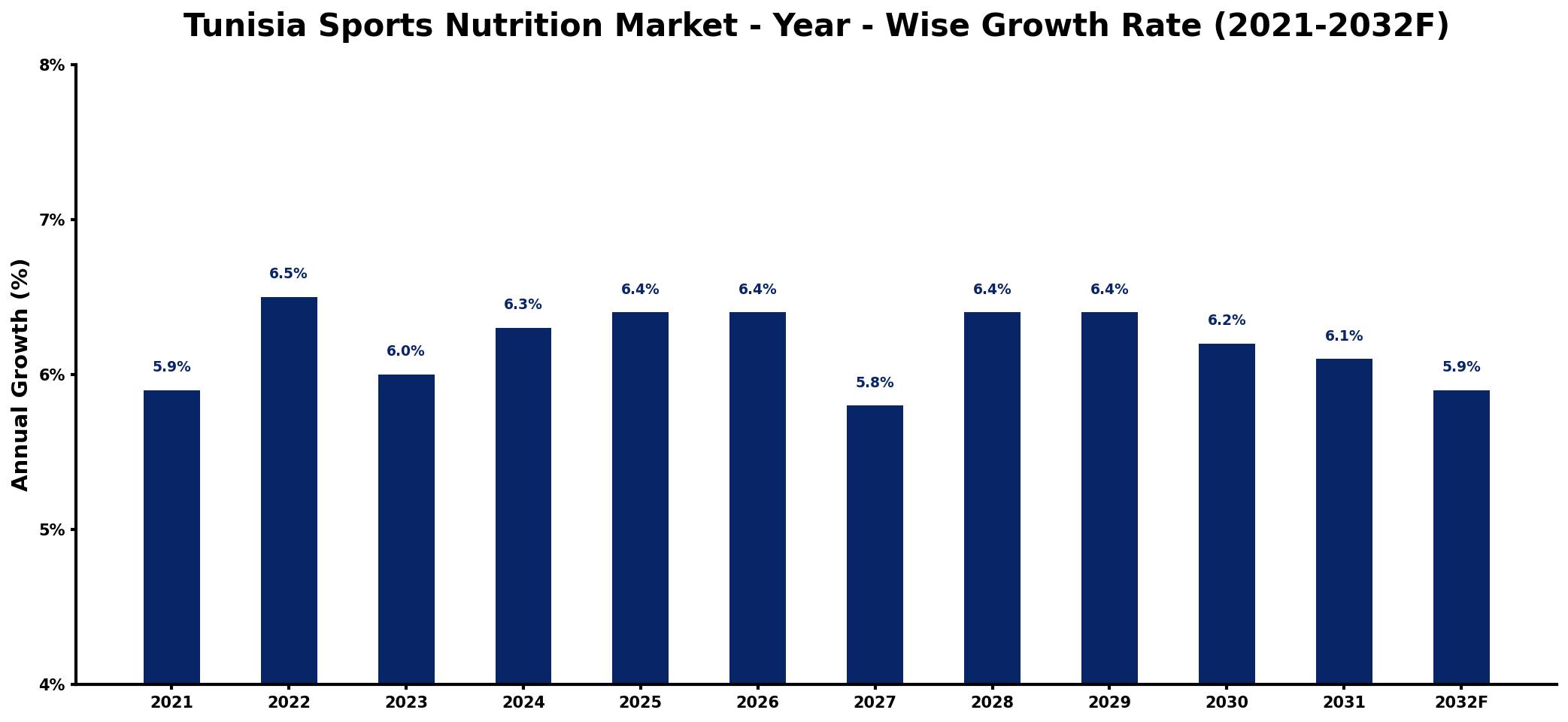
The table below presents the year‑wise growth rates along with the key drivers influencing the market
| Year | Growth Rate | Major Drivers |
| 2021 | 5.9% | Rising health consciousness among consumers |
| 2022 | 6.5% | Increase in fitness facility memberships |
| 2023 | 6.0% | Growing popularity of outdoor activities |
| 2024 | 6.3% | Expansion of e-commerce platforms |
| 2025 | 6.4% | Surge in social media influencers |
| 2026 | 6.4% | rising infrastructure development spending |
| 2027 | 5.8% | Higher demand for convenience products |
| 2028 | 6.4% | Growth in fitness event participation |
| 2029 | 6.4% | Rise in online fitness coaching |
| 2030 | 6.2% | Increased focus on preventive health |
| 2031 | 6.1% | enhanced product quality standards |
| 2032 | 5.9% | increased overall sector activity |
Note: Market size estimations and growth projections presented in this report are based on 6Wresearch's proprietary forecasting methodology, utilizing the latest available industry data, government publications, and primary research inputs.
Tunisia Sports Nutrition Market Synopsis
The Tunisia Sports Nutrition Market has seen a remarkable surge in interest as more individuals embrace the importance of fitness and health. Currently, this momentum indicates a strong trajectory towards sustained growth, with consumers eager for products that can enhance their performance and recovery. As awareness of the benefits of sports nutrition grows, the market is positioned to evolve rapidly, meeting a range of consumer demands.
Looking ahead, the market is poised for diversification, with offerings expanding beyond traditional protein powders and energy drinks. A pronounced shift towards personalized nutrition and dietary-specific products, such as vegan and gluten-free options, is expected to redefine consumer choices and drive further growth in the sports nutrition sector. This forward-thinking approach aligns with a comprehensive health and wellness agenda among Tunisians.
Tunisia Sports Nutrition Market Key Takeaways
- Growing awareness of health and fitness is driving demand for sports nutrition products in Tunisia.
- Consumers are increasingly prioritizing natural and organic ingredients in their nutrition choices.
- The market is seeing a rise in personalized nutrition solutions tailored to individual fitness goals.
- E-commerce is expanding the accessibility and convenience of purchasing sports nutrition products.
- Investment opportunities are emerging through local production facilities and partnerships with fitness entities.
Evaluation of Restraints in Tunisia Sports Nutrition Market
Despite the promising growth outlook, the Tunisia Sports Nutrition Market faces significant constraints. Limited consumer education regarding the benefits of sports nutrition hampers widespread adoption. Furthermore, a scarcity of specialized products in retail locations restricts access for potential users. Coupled with the general public's low purchasing power and a less-developed distribution network, these factors create hurdles for both local and international companies looking to penetrate the market effectively.
Tunisia Sports Nutrition Market Trends
The evolving dynamics of the Tunisia Sports Nutrition Market reflect several key trends. There is a marked shift towards products that not only assist in recovery but also enhance energy levels, mental clarity, and overall wellness. The emphasis on clean labels—products made from transparent ingredient sources and minimal additives—is becoming a primary consumer demand. Additionally, the trend towards functional foods and beverages, tailored to meet specific dietary needs, is gaining traction among health-focused consumers.
Tunisia Sports Nutrition Market Opportunities
As health and fitness consciousness continues to rise in Tunisia, myriad investment opportunities are unfolding. Establishing local production facilities can capitalize on the burgeoning demand while reducing reliance on imports. Collaborating with local gyms, sports clubs, and influencers presents a powerful avenue for brand promotion. Furthermore, the integration of personalized nutrition solutions in product offerings can meet the diverse needs of consumers, positioning businesses favorably in a competitive landscape.
Government Initiatives in the Tunisia Sports Nutrition Market
The Tunisian government has enacted policies aimed at ensuring a safe and reliable sports nutrition market. Regulations surrounding labeling and product quality are in place to protect consumers from misleading claims and inferior products. Additionally, there are guidelines that promote transparency in ingredient sourcing, which supports a growing demand for trustworthy and high-quality sports nutrition options.
Future Insights of the Tunisia Sports Nutrition Market
The future of the Tunisia Sports Nutrition Market appears promising as health and wellness trends gain further traction. Factors such as rising disposable incomes and an increasing interest in active lifestyles will contribute to robust market growth. The influence of social media in promoting healthy living will continue to shape consumer preferences, fostering innovation and a diverse range of products. Overall, the market's trajectory indicates a ripe environment for both growth and diversification.
Tunisia Sports Nutrition Market Latest Developments (2025 - 2026)
Recently, the industry has witnessed a surge in product launches focused on functional benefits beyond traditional offerings. The popularity of fitness apps and online training platforms is encouraging consumers to explore nutrition products that complement their training regimens. Additionally, local brands are increasingly embracing e-commerce channels to reach a broader audience, reflecting a shift in purchasing behavior towards online shopping.
Tunisia Sports Nutrition Market - Key Attractiveness of the Report
- 10 Years of Market Numbers
- Historical Data Starting from 2022 to 2025
- Base Year: 2025
- Forecast Data until 2032
- Key Performance Indicators Impacting the Market
- Major Upcoming Developments and Projects
Key Highlights of the Report:
- Tunisia Sports Nutrition Market Outlook
- Market Size of Tunisia Sports Nutrition Market, 2025
- Forecast of Tunisia Sports Nutrition Market, 2032
- Historical Data and Forecast of Tunisia Sports Nutrition Revenues & Volume for the Period 2022-2032F
- Tunisia Sports Nutrition Market Trend Evolution
- Tunisia Sports Nutrition Market Drivers and Challenges
- Tunisia Sports Nutrition Price Trends
- Tunisia Sports Nutrition Porter's Five Forces
- Tunisia Sports Nutrition Industry Life Cycle
- Historical Data and Forecast of Tunisia Sports Nutrition Market Revenues & Volume By Type for the Period 2022-2032F
- Historical Data and Forecast of Tunisia Sports Nutrition Market Revenues & Volume By Sports Food for the Period 2022-2032F
- Historical Data and Forecast of Tunisia Sports Nutrition Market Revenues & Volume By Sports Drinks for the Period 2022-2032F
- Historical Data and Forecast of Tunisia Sports Nutrition Market Revenues & Volume By Sports Supplements for the Period 2022-2032F
- Historical Data and Forecast of Tunisia Sports Nutrition Market Revenues & Volume By Distribution Channel for the Period 2022-2032F
- Historical Data and Forecast of Tunisia Sports Nutrition Market Revenues & Volume By Supermarkets/Hypermarkets for the Period 2022-2032F
- Historical Data and Forecast of Tunisia Sports Nutrition Market Revenues & Volume By Specialty Stores for the Period 2022-2032F
- Historical Data and Forecast of Tunisia Sports Nutrition Market Revenues & Volume By Convenience Stores for the Period 2022-2032F
- Historical Data and Forecast of Tunisia Sports Nutrition Market Revenues & Volume By Online Stores for the Period 2022-2032F
- Historical Data and Forecast of Tunisia Sports Nutrition Market Revenues & Volume By Other Distribution Channels for the Period 2022-2032F
- Tunisia Sports Nutrition Import Export Trade Statistics
- Market Opportunity Assessment By Type
- Market Opportunity Assessment By Distribution Channel
- Tunisia Sports Nutrition Top Companies Market Share
- Tunisia Sports Nutrition Competitive Benchmarking By Technical and Operational Parameters
- Tunisia Sports Nutrition Company Profiles
- Tunisia Sports Nutrition Key Strategic Recommendations






































