Turkey Advertising Market Size, Share & Growth Rate
The Turkey Advertising Market was estimated at USD 217 Million in 2025 and is projected to reach USD 284 Million by 2032, growing at a CAGR of 3.9% from 2026 to 2032. This growth trajectory is fueled by the rapid digitization of marketing strategies and an uptick in consumer engagement on digital platforms. As Turkish brands increasingly turn to data-driven approaches, the advertising landscape is shifting to meet the evolving preferences of a tech-savvy population.
Turkey Advertising Market Year-wise Growth Rate and Key Drivers
This graph highlights how the Turkey Advertising Market has steadily grown over the years, supported by major growth factors.
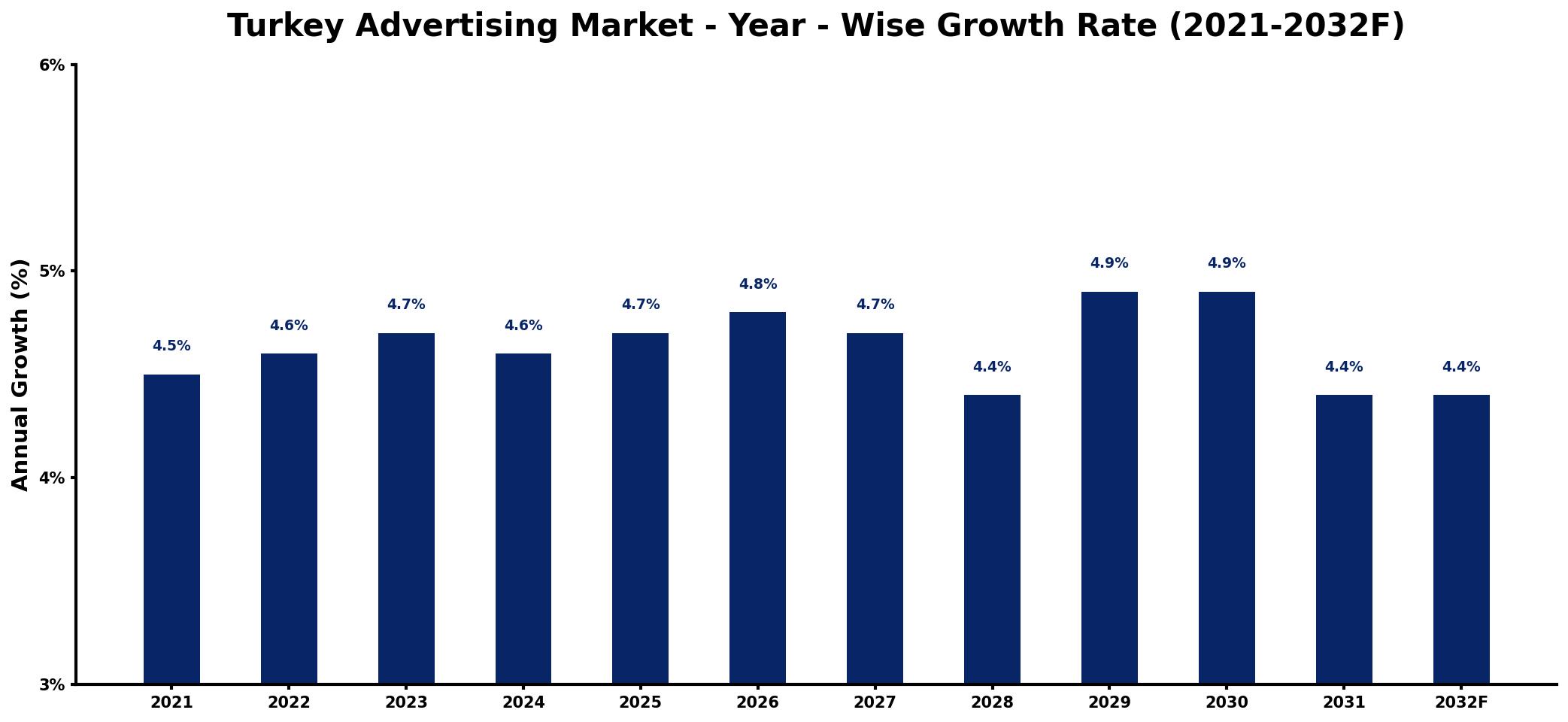
The table below presents the year‑wise growth rates along with the key drivers influencing the market
| Year | Growth Rate | Major Drivers |
| 2021 | 4.5% | Rising digital media consumption rates |
| 2022 | 4.6% | Increased e-commerce platform investments |
| 2023 | 4.7% | Expansion of mobile marketing strategies |
| 2024 | 4.6% | Growth in social media engagement |
| 2025 | 4.7% | Higher demand for influencer partnerships |
| 2026 | 4.8% | Advancements in programmatic technology |
| 2027 | 4.7% | Emergence of new content formats |
| 2028 | 4.4% | Shifts towards personalized marketing tactics |
| 2029 | 4.9% | Surge in video content production |
| 2030 | 4.9% | Boost in data analytics capabilities |
| 2031 | 4.4% | Growing importance of brand storytelling |
| 2032 | 4.4% | improved raw material availability |
Note: Market size estimations and growth projections presented in this report are based on 6Wresearch's proprietary forecasting methodology, utilizing the latest available industry data, government publications, and primary research inputs.
Turkey Advertising Market Synopsis
The Turkey advertising market is currently experiencing a transformative phase, as digital channels take center stage. While traditional platforms like television and print continue to hold their ground, the rapid evolution toward digital media reflects a shift in consumer behavior and marketing effectiveness.
As businesses adapt to these changes, they are increasingly allocating budgets towards innovative strategies like influencer marketing and targeted advertising. This adaptation showcases the market's resilience and its ability to meet the demands of a diverse consumer base, ultimately paving the way for growth.
Turkey Advertising Market Key Takeaways
- The Turkey advertising market is poised for significant growth, with increasing digitalization driving demand.
- Advertisers are shifting focus toward data-driven, personalized campaigns to enhance consumer engagement.
- Influencer marketing and native advertising are becoming pivotal strategies for brands seeking authenticity.
- The market is adapting to regulatory frameworks that ensure ethical advertising practices.
- Investment opportunities exist across digital platforms, out-of-home advertising, and traditional media channels.
Evaluation of Restraints in Turkey Advertising Market
Several external factors impact the Turkey advertising market's growth, most notably economic instability and political uncertainties. These issues can constrain advertising budgets and influence strategic planning for companies aiming to penetrate the Turkish market. Additionally, increased competition has led to price pressures, necessitating a focus on efficiency and innovation among advertising agencies. Cultural and regional differences add complexity, requiring tailored messaging to resonate across Turkey's diverse demographics. As the digital landscape evolves, traditional agencies face the urgent need to enhance their digital capabilities to remain relevant.
Turkey Advertising Market Trends
The primary trend shaping the Turkey advertising market is the increasing investment in digital channels, fueled by soaring smartphone and internet penetration rates. Social media platforms have gained immense popularity, prompting brands to explore more personalized and engaging advertising strategies. There's also a noticeable rise in influencer marketing, as businesses seek more authentic connections with their audiences. Furthermore, the adaptation of advanced technologies, such as programmatic advertising, is streamlining ad placements and enhancing targeting capabilities, ultimately transforming the marketing landscape.
Turkey Advertising Market Opportunities
There are numerous investment opportunities across various advertising segments in Turkey. Digital advertising platforms—especially social media and programmatic channels—are particularly promising, reflecting a broader consumer shift towards online engagement. The out-of-home advertising sector is thriving, presenting avenues in billboards and digital signage. Despite the digital surge, print media maintains a considerable market share, particularly in regional areas, ensuring that traditional media also offers potential for advertisers. Overall, these dynamics create a fertile landscape for growth and innovation.
Government Initiatives in the Turkey Advertising Market
The Turkish government has established regulations aimed at fostering fair competition and protecting consumers in the advertising sector. The Advertising Standards Board plays a crucial role in monitoring advertising practices, ensuring compliance with standards of truthfulness and decency. Additionally, the Law on the Regulation of Electronic Commerce provides guidelines for online advertising, enhancing transparency in digital communications. This regulatory framework also addresses specific sectors, like tobacco and alcohol, restricting advertising to safeguard public health, ultimately encouraging ethical advertising practices across the board.
Future Insights of the Turkey Advertising Market
Looking ahead to 2026-2032, the Turkey advertising market is set for continued expansion. The confluence of increasing digitalization, rising internet usage, and the burgeoning e-commerce sector will create a heightened demand for innovative advertising solutions. Advances in technology will further optimize advertising strategies, enabling brands to connect with their audiences more effectively. As local and international businesses increasingly recognize the significance of a digital-first approach, we anticipate robust growth driven by evolving consumer behaviors and preferences.
Turkey Advertising Market Latest Developments (2025 - 2026)
Recent developments in the Turkey advertising market indicate a stronger emphasis on digital transformation. Many companies are investing heavily in advanced analytics and AI-driven advertising tools to enhance their campaign effectiveness. Additionally, there has been a noticeable increase in partnerships with local influencers, reflecting a shift towards more relatable and genuine advertising techniques. Regulatory bodies continue to update guidelines to align with evolving digital trends, ensuring that the market remains competitive and ethically sound.
Turkey Advertising Market - Key Attractiveness of the Report
- 10 Years of Market Numbers
- Historical Data Starting from 2022 to 2025
- Base Year: 2025
- Forecast Data until 2032
- Key Performance Indicators Impacting the Market
- Major Upcoming Developments and Projects
Key Highlights of the Report:
- Turkey Advertising Market Outlook
- Market Size of Turkey Advertising Market, 2025
- Forecast of Turkey Advertising Market, 2032
- Historical Data and Forecast of Turkey Advertising Revenues & Volume for the Period 2022-2032F
- Turkey Advertising Market Trend Evolution
- Turkey Advertising Market Drivers and Challenges
- Turkey Advertising Price Trends
- Turkey Advertising Porter's Five Forces
- Turkey Advertising Industry Life Cycle
- Historical Data and Forecast of Turkey Advertising Market Revenues & Volume By Type for the Period 2022-2032F
- Historical Data and Forecast of Turkey Advertising Market Revenues & Volume By Television for the Period 2022-2032F
- Historical Data and Forecast of Turkey Advertising Market Revenues & Volume By Print (Newspaper and Magazine) for the Period 2022-2032F
- Historical Data and Forecast of Turkey Advertising Market Revenues & Volume By Radio for the Period 2022-2032F
- Historical Data and Forecast of Turkey Advertising Market Revenues & Volume By Outdoor for the Period 2022-2032F
- Historical Data and Forecast of Turkey Advertising Market Revenues & Volume By Internet (Search, Display, Classified, Video) for the Period 2022-2032F
- Historical Data and Forecast of Turkey Advertising Market Revenues & Volume By Mobile for the Period 2022-2032F
- Historical Data and Forecast of Turkey Advertising Market Revenues & Volume By Cinema for the Period 2022-2032F
- Turkey Advertising Import Export Trade Statistics
- Market Opportunity Assessment By Type
- Turkey Advertising Top Companies Market Share
- Turkey Advertising Competitive Benchmarking By Technical and Operational Parameters
- Turkey Advertising Company Profiles
- Turkey Advertising Key Strategic Recommendations






































