Turkey Donkey Milk Market Size, Share & Growth Rate
The Turkey Donkey Milk Market was estimated at USD 336 Million in 2025 and is projected to reach USD 442 Million by 2032, growing at a CAGR of 4.0% from 2026 to 2032. This growth trajectory is largely attributed to the rising consumer preference for alternative dairy products rich in nutritional value, as well as the growing awareness of donkey milk's unique health benefits. Additionally, the expansion of donkey milk-based products in sectors like skincare is further fueling market growth.
Turkey Donkey Milk Market Year-wise Growth Rate and Key Drivers
This graph highlights how the Turkey Donkey Milk Market has steadily grown over the years, supported by major growth factors.
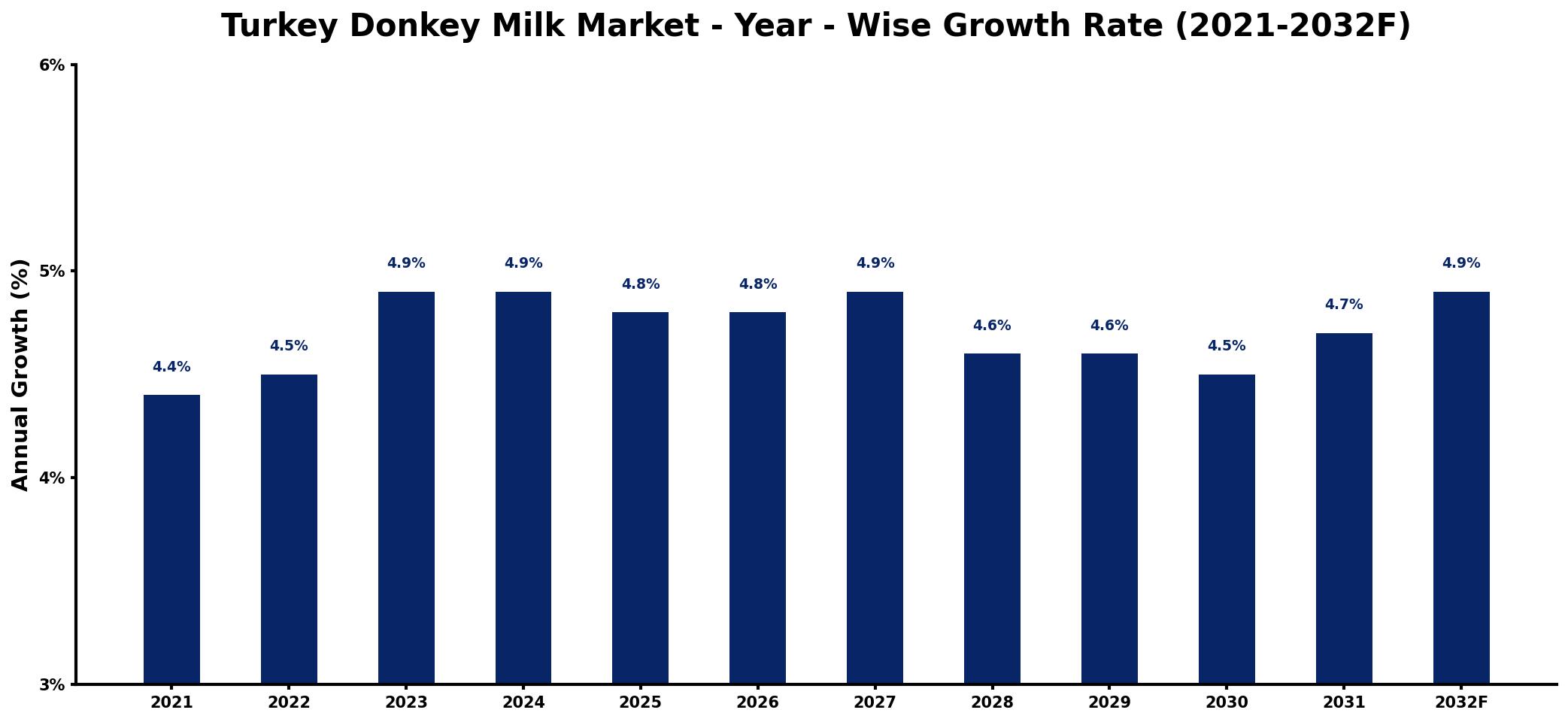
The table below presents the year‑wise growth rates along with the key drivers influencing the market
| Year | Growth Rate | Major Drivers |
| 2021 | 4.4% | Rising consumer health consciousness |
| 2022 | 4.5% | Increased interest in alternatives |
| 2023 | 4.9% | Growing demand for natural products |
| 2024 | 4.9% | Expansion of wellness trends |
| 2025 | 4.8% | Investment in organic farming |
| 2026 | 4.8% | Surge in e-commerce platforms |
| 2027 | 4.9% | Strengthening local supply chains |
| 2028 | 4.6% | Emergence of new market players |
| 2029 | 4.6% | Expansion into international markets |
| 2030 | 4.5% | Increased focus on sustainability |
| 2031 | 4.7% | Growth in nutritional awareness |
| 2032 | 4.9% | Rising popularity of functional foods |
Note: Market size estimations and growth projections presented in this report are based on 6Wresearch's proprietary forecasting methodology, utilizing the latest available industry data, government publications, and primary research inputs.
Turkey Donkey Milk Market Synopsis
In Turkey, donkey milk is valued not only for its nutritional properties but also for its historical significance in the region. With a legacy of donkey farming, the market is experiencing an increasing demand for premium donkey milk products, including cheese, soaps, and cosmetics, as consumers lean towards natural alternatives. The unique composition of donkey milk, similar to human breast milk, enhances its appeal among health-conscious buyers.
Furthermore, the push for sustainable and organic product offerings is leading many producers to innovate and diversify their product lines. As donkey milk products gain traction across various industries, the market presents ample opportunities for those willing to invest in this burgeoning sector.
Turkey Donkey Milk Market Key Takeaways
- The Turkey Donkey Milk Market is experiencing strong growth driven by increasing health consciousness among consumers.
- Investment in donkey farming and production facilities is becoming increasingly attractive due to rising demand.
- Donkey milk's use in skincare products is expanding, capitalizing on its moisturizing and anti-aging properties.
- Government initiatives aim to support local producers and enhance product quality standards.
- Awareness campaigns can help mitigate the challenges of limited consumer acceptance of donkey milk as a dairy alternative.
Evaluation of Restraints in Turkey Donkey Milk Market
Despite its potential, the Turkey Donkey Milk Market faces significant challenges. The limited availability of donkey milk, attributed to the low milk production capacity of donkeys, constrains supply and leads to elevated prices. This scarcity may deter price-sensitive consumers from opting for donkey milk products. Additionally, a general lack of awareness regarding donkey milks health benefits can hinder broader market acceptance. Regulatory barriers related to product labeling and marketing further complicate the landscape, necessitating targeted strategies to overcome these hurdles and tap into the full potential of the market.
Turkey Donkey Milk Market Trends
The Turkey Donkey Milk Market is witnessing a dynamic shift towards natural and organic products, with consumers increasingly valuing authenticity in their dietary choices. Trends indicate a burgeoning interest in donkey milk for skincare applications, as the ingredient is associated with numerous benefits, including anti-aging and skin-soothing properties. Moreover, innovative product launches across various categories—from gourmet cheese to beauty serums—are enhancing the markets appeal, aligning with consumer desires for premium, health-oriented options.
Turkey Donkey Milk Market Opportunities
Investment opportunities abound in the Turkey Donkey Milk Market as consumers actively seek out premium, sustainable, and natural products. The rising trend of cruelty-free beauty and skincare solutions amplifies the appeal of donkey milk in cosmetics, positioning it as a valuable ingredient. Collaborations with local farmers and the establishment of donkey milk processing facilities can lead to innovative product developments that cater to an increasingly health-conscious demographic. Entering this niche market at its growth phase represents a promising avenue for potential investors.
Government Initiatives in the Turkey Donkey Milk Market
The Turkish government has recognized the potential of the donkey milk market and is implementing various initiatives to support its growth. This includes financial incentives for producers to enhance milk quality and production. Regulations have been introduced to ensure safety and quality standards in donkey milk products, thereby protecting consumer interests while promoting local agriculture. Additionally, government efforts are geared towards fostering awareness of donkey milks benefits, encouraging its use across industries, including cosmetics and healthcare.
Future Insights of the Turkey Donkey Milk Market
Looking ahead to 2026-2032, the Turkey Donkey Milk Market is poised for continued growth. Increasing awareness of its health benefits combined with rising demand for alternative dairy products positions donkey milk as a viable option for consumers. Enhanced production techniques and innovations in product development will likely improve both availability and affordability, making it more accessible to the average consumer. As market dynamics evolve, those investing in donkey milk products can expect to see promising returns.
Turkey Donkey Milk Market Latest Developments (2025 - 2026)
Recent trends in the Turkey Donkey Milk Market indicate an uptick in new product launches, particularly within the cosmetics sector, as brands seek to leverage the unique properties of donkey milk. Additionally, there has been a notable increase in small-scale producers focusing on organic certifications, catering to the growing segment of health-conscious consumers. The overall sentiment in the industry reflects a commitment to sustainability and quality, paving the way for innovative approaches to donkey milk production and marketing.
Turkey Donkey Milk Market - Key Attractiveness of the Report
- 10 Years of Market Numbers
- Historical Data Starting from 2022 to 2025
- Base Year: 2025
- Forecast Data until 2032
- Key Performance Indicators Impacting the Market
- Major Upcoming Developments and Projects
Key Highlights of the Report:
- Turkey Donkey Milk Market Outlook
- Market Size of Turkey Donkey Milk Market, 2025
- Forecast of Turkey Donkey Milk Market, 2032
- Historical Data and Forecast of Turkey Donkey Milk Revenues & Volume for the Period 2022-2032F
- Turkey Donkey Milk Market Trend Evolution
- Turkey Donkey Milk Market Drivers and Challenges
- Turkey Donkey Milk Price Trends
- Turkey Donkey Milk Porter's Five Forces
- Turkey Donkey Milk Industry Life Cycle
- Historical Data and Forecast of Turkey Donkey Milk Market Revenues & Volume By Application for the Period 2022-2032F
- Historical Data and Forecast of Turkey Donkey Milk Market Revenues & Volume By Cosmetics and Personal Care for the Period 2022-2032F
- Historical Data and Forecast of Turkey Donkey Milk Market Revenues & Volume By Food & Beverages for the Period 2022-2032F
- Historical Data and Forecast of Turkey Donkey Milk Market Revenues & Volume By Form for the Period 2022-2032F
- Historical Data and Forecast of Turkey Donkey Milk Market Revenues & Volume By Liquid for the Period 2022-2032F
- Historical Data and Forecast of Turkey Donkey Milk Market Revenues & Volume By Powder for the Period 2022-2032F
- Turkey Donkey Milk Import Export Trade Statistics
- Market Opportunity Assessment By Application
- Market Opportunity Assessment By Form
- Turkey Donkey Milk Top Companies Market Share
- Turkey Donkey Milk Competitive Benchmarking By Technical and Operational Parameters
- Turkey Donkey Milk Company Profiles
- Turkey Donkey Milk Key Strategic Recommendations






































