Turkey Electrical Equipment Market Summary
The turkey electrical equipment market was estimated at USD 316 Million in 2025 and is projected to reach USD 433 Million by 2032, growing at a CAGR of 5.4% from 2026 to 2032.
Turkey Electrical Equipment Market Year-wise Growth Rate and Key Drivers
This graph highlights how the Turkey Electrical Equipment Market has steadily grown over the past five years, supported by major growth factors.
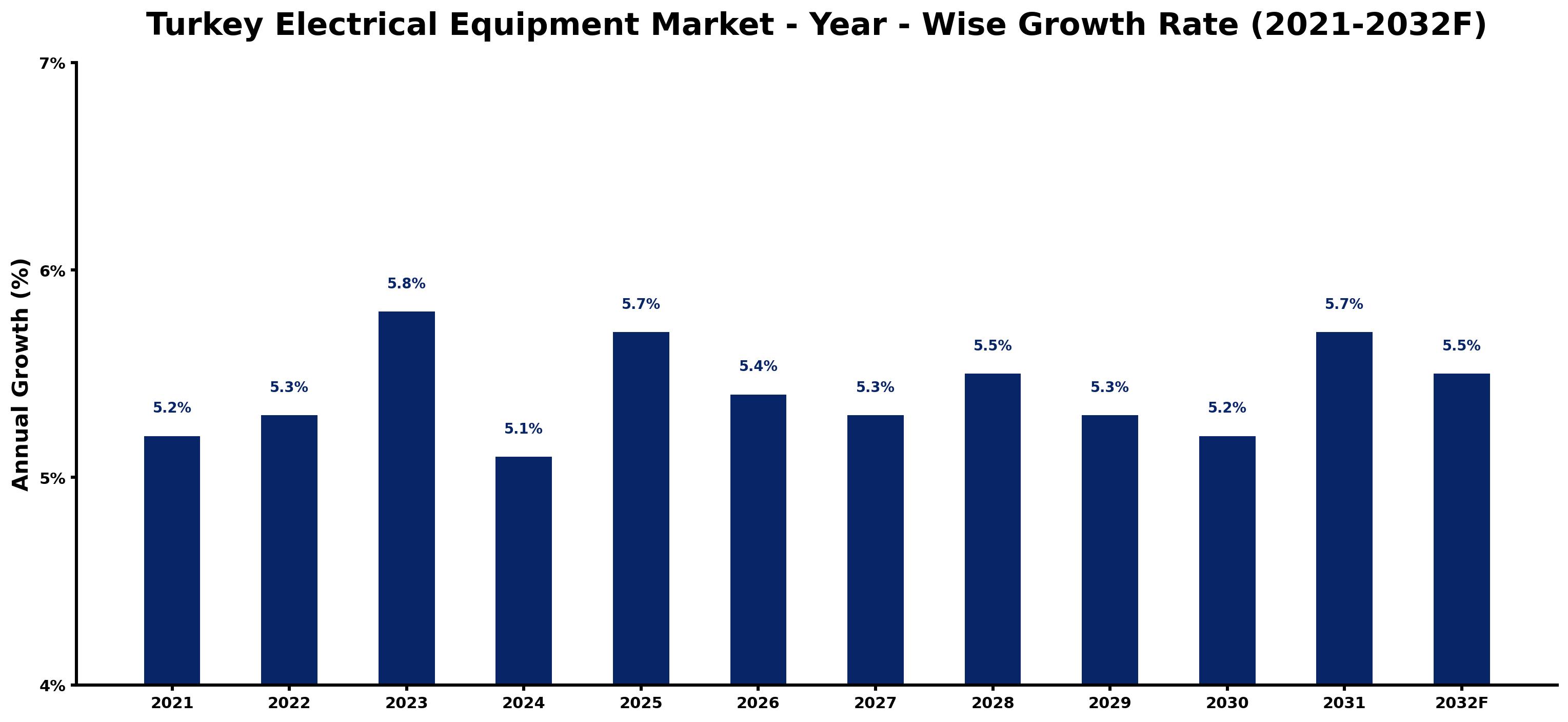
The table below presents the year wise growth rates along with the key drivers influencing the market
| Year | Growth Rate | Major Drivers |
| 2021 | 5.2% | Turkey's construction rebound fueled investments in electrical infrastructure upgrades across urban areas. |
| 2022 | 5.3% | Manufacturers started emphasizing energy-efficient technologies to meet competitive market demands effectively. |
| 2023 | 5.8% | Local producers focused on enhancing production capabilities through automation and smart manufacturing techniques. |
| 2024 | 5.1% | Emerging smart city projects in Turkey required advanced electrical equipment solutions and connectivity. |
| 2025 | 5.7% | The growing renewable energy sector stimulated demand for modern electrical distribution systems nationwide. |
| 2026 | 5.4% | Increased urbanization placed pressure on existing electrical grids, necessitating substantial upgrades and expansions. |
| 2027 | 5.3% | Energy storage technologies gained traction, driven by the expansion of solar and wind energy installations. |
| 2028 | 5.5% | As electric vehicles gained mainstream popularity, charging infrastructure development became significantly prioritized. |
| 2029 | 5.3% | Rural electrification programs revitalized underserved areas, leading to increased demand for affordable electrical solutions. |
| 2030 | 5.2% | The focus on sustainable practices pushed companies to innovate in energy-efficient electrical systems. |
| 2031 | 5.7% | Partnerships between public and private sectors enhanced investments in smart grid technologies across Turkey. |
| 2032 | 5.5% | Ongoing advancements in IoT and AI opened new avenues for innovative electrical equipment applications. |
Note - Market size estimations and growth projections presented in this report are based on 6Wresearch's advanced forecasting approach, validated with industry datasets as of June 2026.
Turkey Electrical Equipment Market Synopsis
The Turkey Electrical Equipment Market is projected to reach 5.4% and witness significant growth during the forecast period (2026-2032). This market is characterized by a broad spectrum of electrical products, including power generation systems, transformers, cables, lighting fixtures, and industrial automation technologies. The growth trajectory of the Turkey Electrical Equipment Market can be attributed to a combination of factors including ongoing urbanization, robust industrialization, and extensive infrastructure development initiatives across the country.
Turkey Electrical Equipment Market Growth Drivers
The Turkey Electrical Equipment Market is strongly influenced by several growth drivers. Firstly, rapid urbanization in Turkey is leading to heightened demand for efficient electrical systems and infrastructure. As cities expand, the need for reliable power generation and distribution equipment is increasing significantly. Secondly, the country's industrial sector is expanding, with new manufacturing facilities and industrial zones contributing to the demand for electrical equipment. Thirdly, government emphasis on upgrading infrastructure supports investments in modern electrical solutions. Fourthly, the shift towards renewable energy sources is a significant driver, as it necessitates advanced electrical products to integrate solar, wind, and other sustainable technologies into the grid. Lastly, the rising awareness of energy efficiency among consumers and businesses is propelling the adoption of smart technologies that enhance energy savings in both residential and industrial settings.
Turkey Electrical Equipment Market Trends and Opportunities
Current trends in the Turkey Electrical Equipment Market point towards an increasing emphasis on smart and energy-efficient products. As sustainability becomes a focal point for both consumers and businesses, there is growing interest in technological innovations aimed at reducing energy consumption. The adoption of smart grid technology is expanding, facilitating more efficient management of electricity use and distribution. Additionally, the market is witnessing a notable rise in the implementation of automation systems, both in domestic environments and industrial applications. This trend is driven by the need for operational efficiency, leading to increased demand for smart home devices and advanced industrial control systems. Moreover, the integration of renewable energy systems is prompting the growth of solar panels, wind turbines, and related equipment, signaling a shift towards more sustainable energy practices.
Turkey Electrical Equipment Market Challenges and Restraints
Despite the positive growth outlook, the Turkey Electrical Equipment Market faces several challenges. The first challenge stems from intense competition among both domestic and international manufacturers, leading to price pressures and the necessity for continuous product innovation. Secondly, fluctuating raw material prices can significantly impact production costs, compelling manufacturers to optimize their supply chains. Thirdly, the market must contend with regulatory changes that necessitate compliance, which can be burdensome for companies seeking to maintain a competitive edge. Fourthly, economic instability and currency fluctuations in Turkey can affect consumer purchasing power, potentially influencing overall market demand. Lastly, the rapid pace of technological advancement requires ongoing investment in research and development to keep up with market expectations and consumer needs.
Turkey Electrical Equipment Market Investment Opportunities
The Turkey Electrical Equipment Market presents attractive investment opportunities driven by a combination of economic factors and market dynamics. The ongoing urbanization and industrial growth create a fertile ground for investments in modern electrical infrastructure and technologies. Smart grid solutions and renewable energy projects are particularly appealing to investors, reflecting the global shift towards sustainability. Further, as automation becomes a focal point across various sectors, there is increasing demand for sophisticated electrical equipment solutions. The Turkish government's initiatives to modernize infrastructure and promote sustainable practices also enhance the investment landscape, encouraging capital flow towards innovative technologies and energy-efficient products. As the market evolves, stakeholders who focus on environmentally friendly and technologically advanced solutions are positioned to capitalize on the opportunities presented in this dynamic sector.
Turkey Electrical Equipment Market Government Investment and Initiatives
The Turkish government is actively supporting the electrical equipment market through a range of policies designed to bolster domestic production and enhance energy efficiency. Key initiatives include the promotion of renewable energy technologies, supported by a framework of incentives and subsidies that boost demand for solar panels, wind turbines, and related electrical products. Regulatory frameworks ensure product safety and quality, mandating certification and periodic inspections to uphold standards. Furthermore, the government encourages research and development in the electrical sector through funding programs and tax incentives, fostering innovation that aligns with international best practices. These policies not only aim to strengthen local manufacturing capabilities but also focus on sustainable practices that are critical for long-term growth in the Turkey Electrical Equipment Market.
Turkey Electrical Equipment Market Latest Developments (May 2025 - June 2026)
In recent months, the Turkey Electrical Equipment Market has seen a series of significant developments indicating a positive industry trajectory. A marked increase in government-funded infrastructure projects has led to enhanced demand for electrical systems, especially in urban areas. As organizations grow increasingly focused on sustainability, investments in renewable energy sources and smart technologies have surged. The trend toward automation is becoming more pronounced, with various sectors adopting advanced electrical equipment to improve efficiency. Additionally, ongoing efforts to harmonize local industry standards with international practices have been observed, positioning domestic manufacturers for greater competitiveness. Overall, this period is characterized by a strong commitment to modernization and sustainable practices, which are shaping the future of the Turkey Electrical Equipment Market.
Turkey Electrical Equipment Market - Key Attractiveness of the Report
- 10 Years of Market Numbers
- Historical Data Starting from 2022 to 2025
- Base Year: 2025
- Forecast Data until 2032
- Key Performance Indicators Impacting the Market
- Major Upcoming Developments and Projects
Key Highlights of the Report:
- Turkey Electrical Equipment Market Outlook
- Market Size of Turkey Electrical Equipment Market, 2025
- Forecast of Turkey Electrical Equipment Market, 2032F
- Historical Data and Forecast of Turkey Electrical Equipment Revenues & Volume for the Period 2022-2032F
- Turkey Electrical Equipment Market Trend Evolution
- Turkey Electrical Equipment Market Drivers and Challenges
- Turkey Electrical Equipment Price Trends
- Turkey Electrical Equipment Porter's Five Forces
- Turkey Electrical Equipment Industry Life Cycle
- Historical Data and Forecast of Turkey Electrical Equipment Market Revenues & Volume By Types for the Period 2022-2032F
- Historical Data and Forecast of Turkey Electrical Equipment Market Revenues & Volume By Electronic and electrical wires and cables for the Period 2022-2032F
- Historical Data and Forecast of Turkey Electrical Equipment Market Revenues & Volume By Batteries and accumulators for the Period 2022-2032F
- Historical Data and Forecast of Turkey Electrical Equipment Market Revenues & Volume By Wiring devices for the Period 2022-2032F
- Historical Data and Forecast of Turkey Electrical Equipment Market Revenues & Volume By Electric lighting equipment for the Period 2022-2032F
- Historical Data and Forecast of Turkey Electrical Equipment Market Revenues & Volume By Others for the Period 2022-2032F
- Historical Data and Forecast of Turkey Electrical Equipment Market Revenues & Volume By Applications for the Period 2022-2032F
- Historical Data and Forecast of Turkey Electrical Equipment Market Revenues & Volume By Residential end-users for the Period 2022-2032F
- Historical Data and Forecast of Turkey Electrical Equipment Market Revenues & Volume By Non-residential end-users for the Period 2022-2032F
- Turkey Electrical Equipment Import Export Trade Statistics
- Market Opportunity Assessment By Types
- Market Opportunity Assessment By Applications
- Turkey Electrical Equipment Top Companies Market Share
- Turkey Electrical Equipment Competitive Benchmarking By Technical and Operational Parameters
- Turkey Electrical Equipment Company Profiles
- Turkey Electrical Equipment Key Strategic Recommendations






































