Turkey Flower and Ornamental Plants Market Summary
The turkey flower and ornamental plants market was estimated at USD 346 Million in 2025 and is projected to reach USD 475 Million by 2032, growing at a CAGR of 5.6% from 2026 to 2032.
Turkey Flower and Ornamental Plants Market Year-wise Growth Rate and Key Drivers
This graph highlights how the Turkey Flower and Ornamental Plants Market has steadily grown over the past five years, supported by major growth factors.
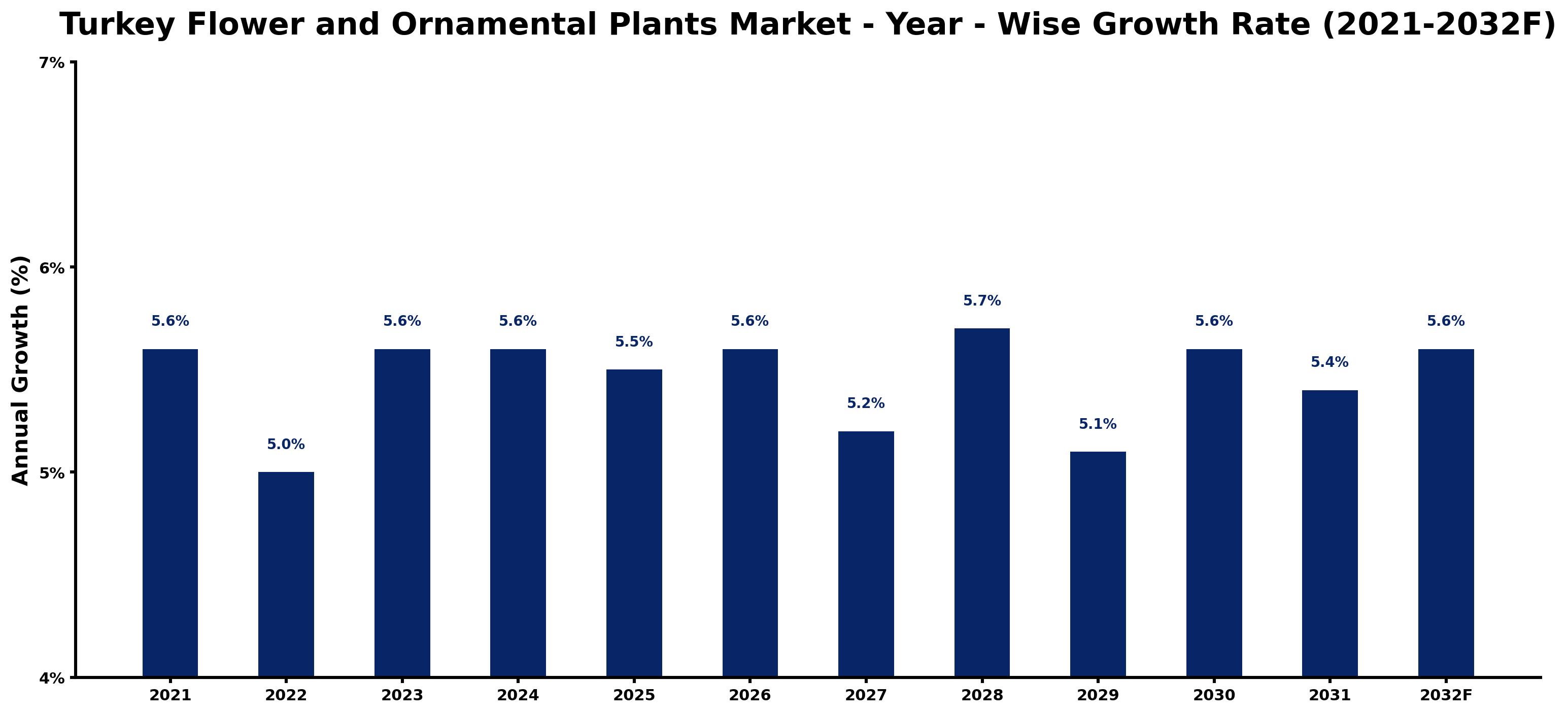
The table below presents the year wise growth rates along with the key drivers influencing the market
| Year | Growth Rate | Major Drivers |
| 2021 | 5.6% | Post-lockdown retail projects revealed an increased consumer interest in home gardening. |
| 2022 | 5.0% | Urbanization trends highlighted the demand for vertical gardens in metropolitan areas. |
| 2023 | 5.6% | Eco-friendly practices gained traction, encouraging sustainable ornamental plant cultivation methods. |
| 2024 | 5.6% | Local festivals and events began celebrating native flower varieties, enhancing cultural appreciation. |
| 2025 | 5.5% | E-commerce platforms emerged, providing wider access to diverse ornamental plant selections. |
| 2026 | 5.6% | Collaboration between nurseries and interior designers created unique landscaping opportunities for clients. |
| 2027 | 5.2% | Increased awareness around mental health underscored the therapeutic benefits of indoor plants. |
| 2028 | 5.7% | Export potential grew as Turkish ornamental species gained popularity in European markets. |
| 2029 | 5.1% | Regional climate stability fostered resilient plant varieties, adapting to local environmental challenges. |
| 2030 | 5.6% | Educational initiatives focused on horticulture attracted youth to careers in the plant industry. |
| 2031 | 5.4% | The integration of technology in farming practices improved efficiency in production processes. |
| 2032 | 5.6% | A shift towards luxury living spaces emphasized the role of ornamental plants in design. |
Note - Market size estimations and growth projections presented in this report are based on 6Wresearch's advanced forecasting approach, validated with industry datasets as of June 2026.
Turkey Flower and Ornamental Plants Market Synopsis
The Turkey Flower and Ornamental Plants Market is projected to reach 5.6% and witness significant growth during the forecast period (2026-2032). This expansion is primarily driven by an increasing demand for home décor products, elevated disposable income levels, and a growing awareness of health and well-being among the Turkish population. This heightened consciousness has encouraged consumers to invest more in decorative plants and flowers, reflecting a significant shift in spending patterns. Moreover, supportive government initiatives, including subsidies for floriculture farms, are amplifying growth prospects in this sector, facilitating greater engagement in ornamental horticulture.
Turkey Flower and Ornamental Plants Market Growth Drivers
The growth of the Turkey Flower and Ornamental Plants Market can be attributed to several key drivers:
- The rise in disposable income among Turkish consumers has led to increased spending on aesthetic and decorative items, including flowers and ornamental plants, as people seek to enhance their living spaces.
- There is a growing trend for home gardening and indoor plants, encouraged by the need for better air quality and relaxation, prompting consumers to purchase more ornamental plants.
- Technological advancements in horticulture, particularly hydroponics and vertical farming, have empowered farmers to produce higher yields within limited spaces, enhancing overall production efficiency and reducing costs.
- Government incentives, including financial support for floriculture initiatives, are promoting cultivation practices that benefit local farmers and encourage the growth of the ornamental plant sector.
- Innovative packaging solutions have emerged, which help maintain the freshness of flowers and plants for extended periods. This development is contributing to increased sales and higher customer satisfaction.
Turkey Flower and Ornamental Plants Market Trends and Opportunities
The Turkey Flower and Ornamental Plants Market is witnessing a variety of trends and opportunities that are shaping its future:
- A notable shift toward online sales platforms has emerged, allowing consumers easier access to a diverse range of ornamental plants and flowers, thus expanding market reach.
- Increased awareness of sustainable practices is prompting consumers to seek out eco-friendly products, which could lead to growth in the demand for organic and pesticide-free plants.
- Vertical farming techniques are proliferating, offering innovative ways to grow plants year-round irrespective of external climatic conditions, thus enhancing year-round availability.
- The introduction of value-added services, such as personalized plant care consultations and subscription services, is providing opportunities for market players to differentiate their offerings.
- Collaborative efforts among local businesses and floricultural associations are fostering an environment for knowledge sharing and skill development, driving innovation in cultivation techniques.
Turkey Flower and Ornamental Plants Market Challenges and Restraints
Despite the promising growth trajectory, the Turkey Flower and Ornamental Plants Market faces certain challenges that could hinder its progress:
- Fluctuations in climate conditions can substantially impact horticultural output, affecting the supply chain and leading to inconsistencies in market availability.
- The competition from imported flowers and plants may suppress local growers' market share, necessitating innovative strategies to enhance product quality.
- Consumer preferences can shift rapidly, necessitating companies to remain agile and responsive to changing trends, which may require significant investment in market research.
- Economic downturns or fluctuations in the economy can reduce discretionary spending on ornamental plants, impacting overall sales in the sector.
- The need for skilled labor in handling advanced agricultural technologies poses a challenge, as there may be a skills gap that local companies need to address.
Turkey Flower and Ornamental Plants Market Government Investment and Initiatives
The Turkish government plays a crucial role in supporting the growth of the Flower and Ornamental Plants Market through various initiatives:
- Subsidies for floriculture farms aim to reduce production costs, making it easier for local farmers to engage in ornamental plant cultivation.
- Government-sponsored training programs enhance the skill set of agricultural labor, ensuring that workers are equipped to handle technological advancements in the sector.
- Investment in research and development initiatives focuses on enhancing plant varieties and cultivation practices to improve yield and quality.
- Policies promoting exports of ornamental plants are aimed at expanding the international market access for Turkish growers, thereby increasing revenue streams.
- Regulatory support ensures the compliance of floricultural practices with environmental standards, fostering sustainable growth in the sector.
Turkey Flower and Ornamental Plants Market Latest Developments (May 2025 - June 2026)
Recent developments in the Turkey Flower and Ornamental Plants Market from May 2025 to June 2026 indicate a dynamic industry landscape:
- The introduction of new hydroponic systems has gained traction, enabling farmers to enhance productivity and reduce water usage significantly.
- Several local vendors have embraced online trading platforms, streamlining sales processes and reaching broader markets.
- A heightened focus on biodegradable packaging solutions is emerging, as companies seek to align with sustainable business practices.
- Increased participation from educational institutions in research has led to innovative cultivation methods, contributing positively to market standards.
- Regional conservation projects have been initiated, promoting the preservation of native plant species while supporting local economies through ornamental plant sales.
Turkey Flower and Ornamental Plants Market - Key Attractiveness of the Report
- 10 Years of Market Numbers
- Historical Data Starting from 2022 to 2025
- Base Year: 2025
- Forecast Data until 2032
- Key Performance Indicators Impacting the Market
- Major Upcoming Developments and Projects
Key Highlights of the Report:
- Turkey Flower and Ornamental Plants Market Outlook
- Market Size of Turkey Flower and Ornamental Plants Market, 2025
- Forecast of Turkey Flower and Ornamental Plants Market, 2032F
- Historical Data and Forecast of Turkey Flower and Ornamental Plants Revenues & Volume for the Period 2022-2032F
- Turkey Flower and Ornamental Plants Market Trend Evolution
- Turkey Flower and Ornamental Plants Market Drivers and Challenges
- Turkey Flower and Ornamental Plants Price Trends
- Turkey Flower and Ornamental Plants Porter's Five Forces
- Turkey Flower and Ornamental Plants Industry Life Cycle
- Historical Data and Forecast of Turkey Flower and Ornamental Plants Market Revenues & Volume By Product Type for the Period 2022-2032F
- Historical Data and Forecast of Turkey Flower and Ornamental Plants Market Revenues & Volume By Potted Plants for the Period 2022-2032F
- Historical Data and Forecast of Turkey Flower and Ornamental Plants Market Revenues & Volume By Cut Flowers for the Period 2022-2032F
- Historical Data and Forecast of Turkey Flower and Ornamental Plants Market Revenues & Volume By Application for the Period 2022-2032F
- Historical Data and Forecast of Turkey Flower and Ornamental Plants Market Revenues & Volume By Home for the Period 2022-2032F
- Historical Data and Forecast of Turkey Flower and Ornamental Plants Market Revenues & Volume By Commercial for the Period 2022-2032F
- Turkey Flower and Ornamental Plants Import Export Trade Statistics
- Market Opportunity Assessment By Product Type
- Market Opportunity Assessment By Application
- Turkey Flower and Ornamental Plants Top Companies Market Share
- Turkey Flower and Ornamental Plants Competitive Benchmarking By Technical and Operational Parameters
- Turkey Flower and Ornamental Plants Company Profiles
- Turkey Flower and Ornamental Plants Key Strategic Recommendations






































