Turkey Sports Equipment Market Size, Share & Growth Rate
The Turkey Sports Equipment Market was estimated at USD 488 Million in 2025 and is projected to reach USD 691 Million by 2032, growing at a CAGR of 5.1% from 2026 to 2032. This robust growth trajectory is being fueled by a youthful demographic increasingly engaged in sports and fitness, combined with rising health consciousness and disposable incomes. Moreover, the digital transformation of retail, highlighted by the rise of online shopping, is further driving accessibility and consumer interest in sports-related products.
Turkey Sports Equipment Market Year-wise Growth Rate and Key Drivers
This graph highlights how the Turkey Sports Equipment Market has steadily grown over the years, supported by major growth factors.
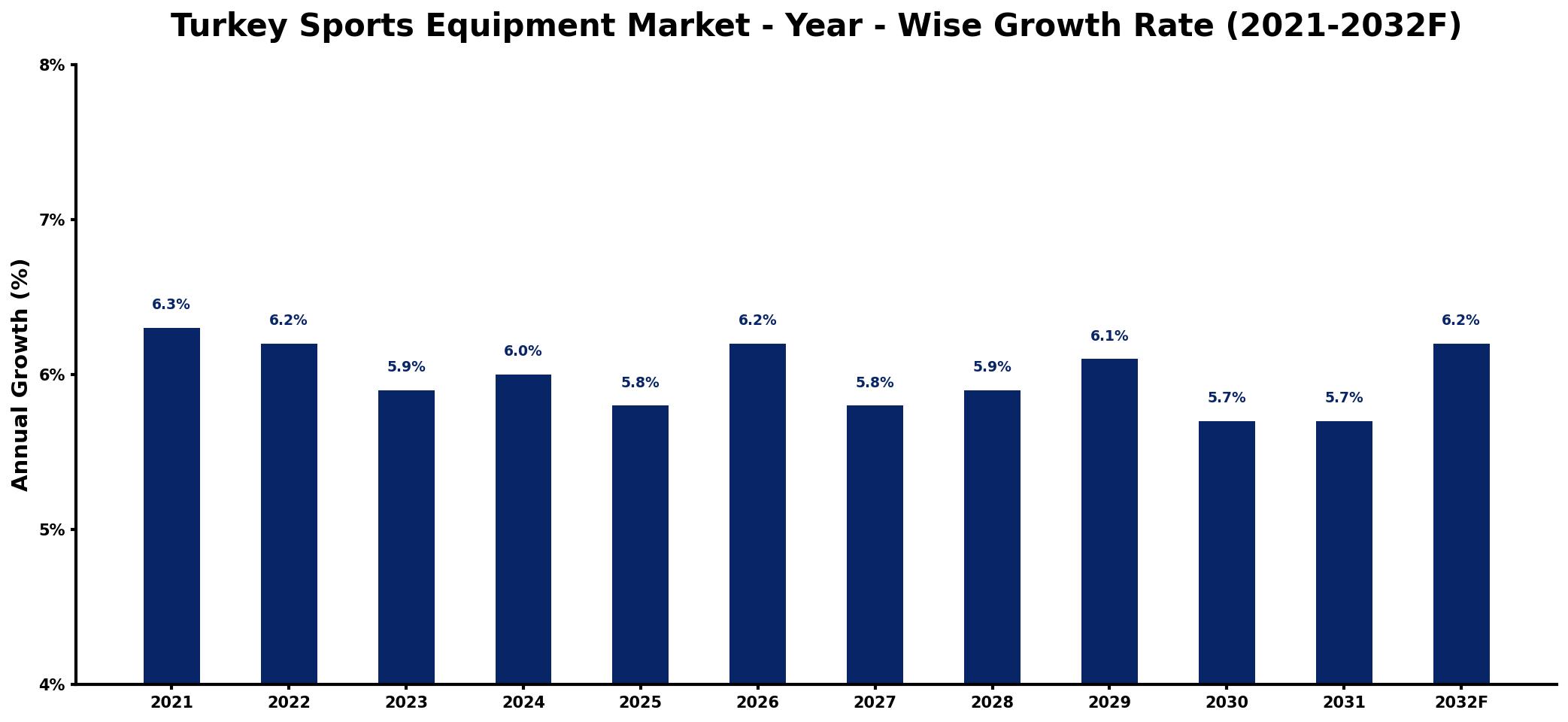
The table below presents the year‑wise growth rates along with the key drivers influencing the market
| Year | Growth Rate | Major Drivers |
| 2021 | 6.3% | Increase in fitness awareness |
| 2022 | 6.2% | Growth in outdoor activities |
| 2023 | 5.9% | Rise in health consciousness |
| 2024 | 6.0% | Expansion of youth programs |
| 2025 | 5.8% | enhanced product quality standards |
| 2026 | 6.2% | stronger distribution network expansion |
| 2027 | 5.8% | growing emerging market penetration |
| 2028 | 5.9% | increased capital investment inflows |
| 2029 | 6.1% | improved processing technologies adoption |
| 2030 | 5.7% | improved raw material availability |
| 2031 | 5.7% | growing regional consumption patterns |
| 2032 | 6.2% | strengthening underlying market demand |
Note: Market size estimations and growth projections presented in this report are based on 6Wresearch's proprietary forecasting methodology, utilizing the latest available industry data, government publications, and primary research inputs.
Turkey Sports Equipment Market Synopsis
The dominant force shaping the Turkey Sports Equipment Market is the growing trend towards health and wellness. As more individuals recognize the importance of physical activity, the demand for diverse sports and fitness equipment is surging, paving the way for a more active lifestyle. This trend is not just confined to traditional sports; activities such as outdoor hiking and home fitness are also gaining traction among various demographics.
Additionally, the market is witnessing a notable shift towards sustainable and eco-friendly products, reflecting evolving consumer values. Technological innovations, particularly in smart wearables and connected devices, are also making an impact, enhancing user experience and performance tracking. This fusion of wellness, sustainability, and technology is defining the current landscape of the Turkey sports equipment market.
Turkey Sports Equipment Market Key Takeaways
- The market is benefitting from increased health awareness and rising disposable incomes among consumers.
- Home fitness equipment and outdoor sports gear are among the fastest-growing segments.
- Technological innovations, particularly in smart wearables, are gaining popularity among consumers.
- There is a clear shift towards sustainable and eco-friendly sports equipment.
- Government initiatives are supporting growth through various policies and incentives aimed at the sports sector.
Evaluation of Restraints in Turkey Sports Equipment Market
Despite its promising growth prospects, the Turkey Sports Equipment Market faces several restraints. Intense competition from established global brands puts pressure on pricing and innovation. Additionally, economic fluctuations can affect consumer purchasing power, leading to potential shifts in spending habits. Furthermore, the rise of counterfeit products undermines brand trust and can adversely impact sales. As online shopping becomes increasingly prevalent, traditional retailers must adapt to maintain their market presence, navigating these challenges with agility and a focus on product quality.
Turkey Sports Equipment Market Trends
Current trends in the Turkey Sports Equipment Market reflect a significant shift towards holistic health and fitness solutions. Home gym equipment such as treadmills, weights, and multifunctional workout gear is experiencing heightened demand as more consumers seek to integrate fitness into their lifestyles. Additionally, outdoor recreation is on the rise, with activities like hiking and cycling driving the demand for specialized gear. There is also a burgeoning interest in eco-friendly products, as consumers increasingly prioritize sustainability in their purchasing decisions. Lastly, advancements in technology are fostering the growth of smart fitness devices that track performance and enhance user engagement.
Turkey Sports Equipment Market Opportunities
The Turkey Sports Equipment Market offers numerous investment opportunities across various segments. As health and fitness trends continue to gain momentum, the demand for high-quality athletic gear, including apparel, footwear, and accessories, is on the rise. There is also significant potential in home fitness equipment and innovative technologies that enhance fitness tracking. Collaborating with local sports clubs, gyms, and online platforms can facilitate effective market penetration and expansion. These factors create a fertile landscape for investors looking to capitalize on Turkey's evolving sports and fitness culture.
Government Initiatives in the Turkey Sports Equipment Market
The Turkish government has launched various initiatives to bolster the sports equipment market, including the National Sports Industry Development Program. This initiative aims to stimulate domestic production and promote exports of sports equipment. Additionally, the government offers financial incentives and tax breaks to manufacturers, encouraging innovation and investment within the sector. There are also regulations in place to ensure quality and safety standards, fostering a competitive environment that promotes market growth.
Future Insights of the Turkey Sports Equipment Market
Looking ahead to 2026-2032, the Turkey Sports Equipment Market is well-positioned for continued growth. A sustained increase in health awareness and a shift towards more active lifestyles will drive demand across both traditional and emerging sports segments. The popularity of athleisure and fitness trends, such as boutique studios and CrossFit, will further contribute to this demand. Innovations in materials and technology will not only improve product offerings but also attract consumers seeking enhanced performance. As these factors converge, the market presents substantial opportunities for both local and international players.
Turkey Sports Equipment Market Latest Developments (2025 - 2026)
Recent developments in the Turkey Sports Equipment Market indicate a marked shift towards the integration of technology in sports products. Manufacturers are increasingly incorporating smart features into equipment, enhancing user engagement and performance tracking. Moreover, partnerships between brands and fitness influencers are becoming a strategy to reach wider audiences, capitalizing on the growing trend of online fitness communities. Additionally, the trend towards sustainable practices continues to gain traction, with brands focusing on eco-friendly materials and production processes to attract environmentally conscious consumers.
Turkey Sports Equipment Market - Key Attractiveness of the Report
- 10 Years of Market Numbers
- Historical Data Starting from 2022 to 2025
- Base Year: 2025
- Forecast Data until 2032
- Key Performance Indicators Impacting the Market
- Major Upcoming Developments and Projects
Key Highlights of the Report:
- Turkey Sports Equipment Market Outlook
- Market Size of Turkey Sports Equipment Market, 2025
- Forecast of Turkey Sports Equipment Market, 2032
- Historical Data and Forecast of Turkey Sports Equipment Revenues & Volume for the Period 2022-2032F
- Turkey Sports Equipment Market Trend Evolution
- Turkey Sports Equipment Market Drivers and Challenges
- Turkey Sports Equipment Price Trends
- Turkey Sports Equipment Porter's Five Forces
- Turkey Sports Equipment Industry Life Cycle
- Historical Data and Forecast of Turkey Sports Equipment Market Revenues & Volume By Product for the Period 2022-2032F
- Historical Data and Forecast of Turkey Sports Equipment Market Revenues & Volume By Ball over net games for the Period 2022-2032F
- Historical Data and Forecast of Turkey Sports Equipment Market Revenues & Volume By Ball games for the Period 2022-2032F
- Historical Data and Forecast of Turkey Sports Equipment Market Revenues & Volume By Fitness/Strength equipment for the Period 2022-2032F
- Historical Data and Forecast of Turkey Sports Equipment Market Revenues & Volume By Athletic training equipment for the Period 2022-2032F
- Historical Data and Forecast of Turkey Sports Equipment Market Revenues & Volume By Others for the Period 2022-2032F
- Historical Data and Forecast of Turkey Sports Equipment Market Revenues & Volume By Distribution Channel for the Period 2022-2032F
- Historical Data and Forecast of Turkey Sports Equipment Market Revenues & Volume By Online retail for the Period 2022-2032F
- Historical Data and Forecast of Turkey Sports Equipment Market Revenues & Volume By Specialty & sports shops for the Period 2022-2032F
- Historical Data and Forecast of Turkey Sports Equipment Market Revenues & Volume By Department & discount stores for the Period 2022-2032F
- Turkey Sports Equipment Import Export Trade Statistics
- Market Opportunity Assessment By Product
- Market Opportunity Assessment By Distribution Channel
- Turkey Sports Equipment Top Companies Market Share
- Turkey Sports Equipment Competitive Benchmarking By Technical and Operational Parameters
- Turkey Sports Equipment Company Profiles
- Turkey Sports Equipment Key Strategic Recommendations






































