Turkey Vitamin K Market Size, Share & Growth Rate
The Turkey Vitamin K Market was estimated at USD 217 Million in 2025 and is projected to reach USD 284 Million by 2032, growing at a CAGR of 3.9% from 2026 to 2032. This growth trajectory is driven by a notable increase in health awareness among Turkish consumers, who are actively seeking vitamin K for its crucial benefits in blood clotting and bone health. The aging population, coupled with a surge in dietary supplement consumption, propels the demand further, as individuals are increasingly adopting preventive healthcare measures.
Turkey Vitamin K Market Growth Rate Analysis (2021-2032)
The Turkey Vitamin K market has exhibited stable growth, with annual increases ranging from 4.4% to 4.8% between 2021 and 2032. This trend reflects a rising consumer awareness about the health benefits of Vitamin K, particularly concerning bone health and blood coagulation. Notably, 2023 saw a growth spurt at 4.8%, likely driven by increased investments in health supplements and a shift in consumer preferences towards preventive healthcare. Fluctuations, such as the slight decline to 4.4% in 2024, can be attributed to global supply chain disruptions impacting ingredient availability. However, sustained investment in health technologies and infrastructure supports a resilient market, ensuring continued demand through to 2032.
Turkey Vitamin K Market Year-wise Growth Rate and Key Drivers
This graph highlights how the Turkey Vitamin K Market has steadily grown over the past five years, supported by major growth factors.
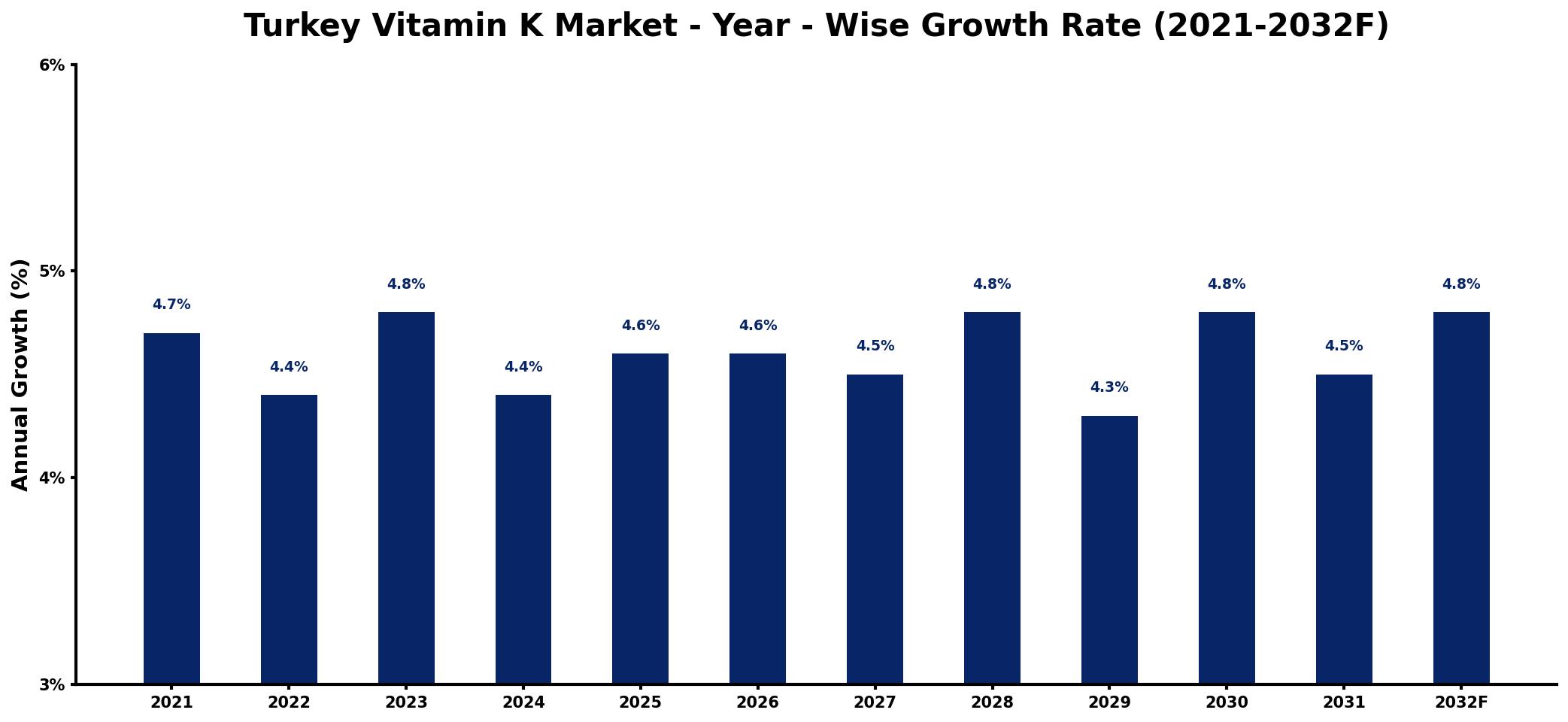
The table below presents the year‑wise growth rates along with the key drivers influencing the market
| Year | Growth Rate | Major Drivers |
| 2021 | 4.7% | Rising health consciousness among consumers |
| 2022 | 4.4% | Increased investment in healthcare sectors |
| 2023 | 4.8% | Growing popularity of dietary supplements |
| 2024 | 4.4% | Expansion of distribution channels online |
| 2025 | 4.6% | Emerging research on health benefits |
| 2026 | 4.6% | Strengthening partnerships with retailers |
| 2027 | 4.5% | Surge in wellness tourism activities |
| 2028 | 4.8% | Enhanced product innovation and development |
| 2029 | 4.3% | Growing trend of personalized nutrition |
| 2030 | 4.8% | Increased awareness of preventive healthcare |
| 2031 | 4.5% | Rising demand for organic products |
| 2032 | 4.8% | Expansion into emerging markets |
Note: Market size estimations and growth projections presented in this report are based on 6Wresearch's proprietary forecasting methodology, utilizing the latest available industry data, government publications, and primary research inputs.
Turkey Vitamin K Market Synopsis
In Turkey, there is a distinct trend toward the incorporation of vitamin K into fortified foods, reflecting a shift in dietary habits as consumers prioritize nutrition. The rising prevalence of vitamin deficiencies, particularly among the elderly and health-conscious demographics, is significantly boosting the demand for vitamin K supplements.
As the focus on bone health increases, healthcare professionals are increasingly advocating for vitamin K as an essential nutrient, further driving consumer interest. This growing awareness is catalyzing innovations in product formulations and marketing strategies targeted at various consumer segments.
Turkey Vitamin K Market Key Takeaways
- Increased health consciousness among consumers is fueling demand for vitamin K products.
- The aging population in Turkey is a significant driver of the vitamin K supplement market.
- Government health policies aimed at addressing vitamin deficiencies support market growth.
- Competition from alternative vitamin sources impacts market dynamics.
- Emerging trends include the integration of vitamin K into fortified foods and supplements.
Evaluation of Restraints in Turkey Vitamin K Market
Despite the robust growth prospects, the Turkey Vitamin K market faces several limitations. A critical challenge lies in ensuring the consistent quality and reliable supply of raw materials necessary for production. Regulatory hurdles can complicate the path to market entry for new products, as strict testing for safety and efficacy is mandatory. Additionally, the presence of various dietary sources of vitamin K may overshadow the supplement market, influencing consumer preferences and choices.
Turkey Vitamin K Market Trends
Current trends in the Turkey Vitamin K market indicate a growing preference for natural sources and organically sourced supplements. The rise of e-commerce is also reshaping how consumers access vitamin K products, providing convenience and a wider range of options. Furthermore, research into the additional health benefits of vitamin K, particularly concerning cardiovascular health and its role in other bodily functions, is driving interest and innovation in this segment.
Turkey Vitamin K Market Opportunities
Significant growth and investment opportunities exist in the development of specialized vitamin K supplements targeting specific demographics, such as women and the elderly. There is also potential in creating educational campaigns about the importance of vitamin K, which could stimulate demand. Additionally, partnerships with health professionals and fitness centers for product endorsements could enhance market penetration and brand visibility.
Government Initiatives in the Turkey Vitamin K Market
The Turkish government has implemented health policies aimed at addressing nutritional deficiencies within the population, which positively influences the vitamin K market. Initiatives encouraging the fortification of staple foods and the promotion of dietary supplements are essential for enhancing public health and driving market growth. Regulatory frameworks ensuring the safety and efficacy of dietary supplements play a crucial role in fostering consumer trust and market sustainability.
Future Insights of the Turkey Vitamin K Market
Looking ahead to the period from 2026 to 2032, the Turkey Vitamin K market is poised for significant growth. As consumer awareness around health and nutrition continues to rise, the demand for vitamin K products is expected to increase steadily. Innovations in product formulation and marketing, alongside supportive government policies, will be critical in shaping the market landscape. Additionally, the integration of advanced technology in product development may lead to more effective and targeted vitamin K supplements, further enhancing market attractiveness.
Turkey Vitamin K Market Latest Developments (2025 - 2026)
Recent developments in the Turkey Vitamin K market indicate a surge in product launches focusing on enhanced bioavailability and formulations tailored to specific health concerns. Manufacturers are also exploring collaborations with health practitioners to promote awareness and encourage the use of vitamin K supplements. Furthermore, industry players are adapting to consumer preferences by offering vegan and organic options, responding to the increasing demand for clean-label products.
Turkey Vitamin K Market - Key Attractiveness of the Report
- 10 Years of Market Numbers
- Historical Data Starting from 2022 to 2025
- Base Year: 2025
- Forecast Data until 2032
- Key Performance Indicators Impacting the Market
- Major Upcoming Developments and Projects
Key Highlights of the Report:
- Turkey Vitamin K Market Outlook
- Market Size of Turkey Vitamin K Market, 2025
- Forecast of Turkey Vitamin K Market, 2032
- Historical Data and Forecast of Turkey Vitamin K Revenues & Volume for the Period 2022-2032F
- Turkey Vitamin K Market Trend Evolution
- Turkey Vitamin K Market Drivers and Challenges
- Turkey Vitamin K Price Trends
- Turkey Vitamin K Porter's Five Forces
- Turkey Vitamin K Industry Life Cycle
- Historical Data and Forecast of Turkey Vitamin K Market Revenues & Volume By Type for the Period 2022-2032F
- Historical Data and Forecast of Turkey Vitamin K Market Revenues & Volume By Vitamin K1 for the Period 2022-2032F
- Historical Data and Forecast of Turkey Vitamin K Market Revenues & Volume By Vitamin K2 for the Period 2022-2032F
- Historical Data and Forecast of Turkey Vitamin K Market Revenues & Volume By Application for the Period 2022-2032F
- Historical Data and Forecast of Turkey Vitamin K Market Revenues & Volume By Osteoporosis for the Period 2022-2032F
- Historical Data and Forecast of Turkey Vitamin K Market Revenues & Volume By Vitamin-K Dependent Clotting Factor Deficiency for the Period 2022-2032F
- Historical Data and Forecast of Turkey Vitamin K Market Revenues & Volume By Prothrombin Deficiency for the Period 2022-2032F
- Historical Data and Forecast of Turkey Vitamin K Market Revenues & Volume By Vitamin K Deficiency Bleeding for the Period 2022-2032F
- Historical Data and Forecast of Turkey Vitamin K Market Revenues & Volume By Dermal Applications for the Period 2022-2032F
- Historical Data and Forecast of Turkey Vitamin K Market Revenues & Volume By Route of Administration for the Period 2022-2032F
- Historical Data and Forecast of Turkey Vitamin K Market Revenues & Volume By Oral for the Period 2022-2032F
- Historical Data and Forecast of Turkey Vitamin K Market Revenues & Volume By Parenteral for the Period 2022-2032F
- Historical Data and Forecast of Turkey Vitamin K Market Revenues & Volume By Topical for the Period 2022-2032F
- Turkey Vitamin K Import Export Trade Statistics
- Market Opportunity Assessment By Type
- Market Opportunity Assessment By Application
- Market Opportunity Assessment By Route of Administration
- Turkey Vitamin K Top Companies Market Share
- Turkey Vitamin K Competitive Benchmarking By Technical and Operational Parameters
- Turkey Vitamin K Company Profiles
- Turkey Vitamin K Key Strategic Recommendations






































