Ukraine Sports Nutrition Market Size, Share & Growth Rate
The Ukraine Sports Nutrition Market was estimated at USD 1136 Million in 2025 and is projected to reach USD 1626 Million by 2032, growing at a CAGR of 5.3% from 2026 to 2032. This trajectory is largely propelled by a growing health-conscious populace that is increasingly engaging in fitness activities, alongside a rising demand for innovative and natural sports nutrition products. The expansion of online retail channels further supports market growth, providing easy access to a diverse range of offerings.
Ukraine Sports Nutrition Market Year-wise Growth Rate and Key Drivers
This graph highlights how the Ukraine Sports Nutrition Market has steadily grown over the years, supported by major growth factors.
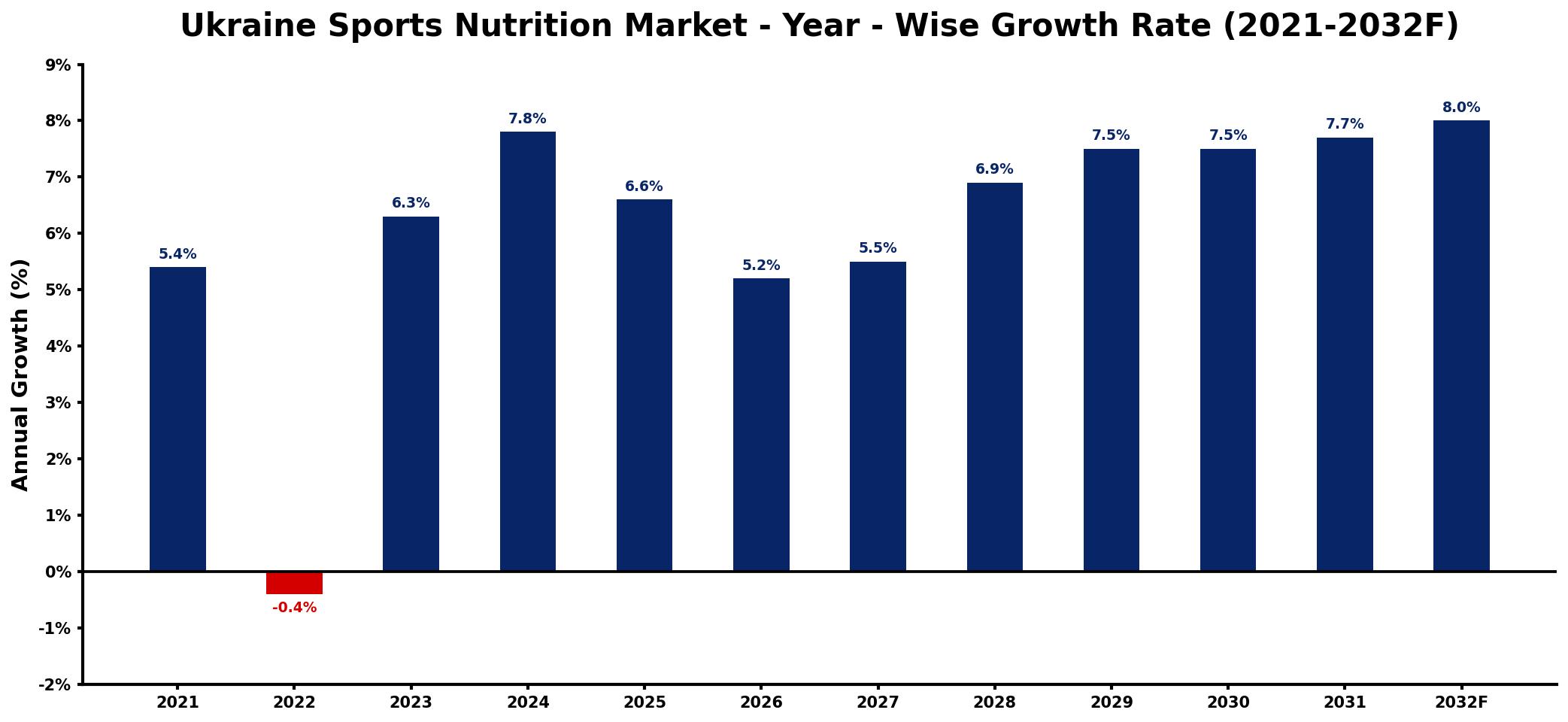
The table below presents the year‑wise growth rates along with the key drivers influencing the market
| Year | Growth Rate | Major Drivers |
| 2021 | 5.4% | Increased consumer health awareness |
| 2022 | -0.4% | Market saturation in product offerings |
| 2023 | 6.3% | Rising fitness facility memberships |
| 2024 | 7.8% | Growing e-commerce distribution channels |
| 2025 | 6.6% | Expansion of local manufacturing facilities |
| 2026 | 5.2% | Surge in online fitness communities |
| 2027 | 5.5% | Increased investment in wellness programs |
| 2028 | 6.9% | Emergence of innovative product formulations |
| 2029 | 7.5% | Higher demand for plant-based alternatives |
| 2030 | 7.5% | Strengthened partnerships with gyms |
| 2031 | 7.7% | Enhanced marketing through social media |
| 2032 | 8.0% | Wider acceptance of personalized products |
Note: Market size estimations and growth projections presented in this report are based on 6Wresearch's proprietary forecasting methodology, utilizing the latest available industry data, government publications, and primary research inputs.
Ukraine Sports Nutrition Market Synopsis
The Ukraine Sports Nutrition Market is currently experiencing momentum due to increased consumer awareness around health and fitness. As individuals adopt more active lifestyles, there is a marked shift towards products such as protein supplements, energy bars, and functional drinks, catering to an evolving demographic that values wellness.
Looking ahead, this market is positioned for sustained growth as innovations in product formulation and distribution channels continue to develop. An increasing focus on personalized nutrition is shaping consumer choices, reflecting a deeper understanding of health needs and preferences. This evolution indicates a robust future for sports nutrition in Ukraine.
Ukraine Sports Nutrition Market Key Takeaways
- The market is poised for steady growth, reflecting a shift in consumer behavior towards healthier lifestyles.
- There is a significant demand for natural and organic sports nutrition products.
- E-commerce is transforming the distribution landscape, enhancing product accessibility.
- Personalized nutrition trends are driving the development of tailored products.
- Government regulations are focused on maintaining product safety and consumer trust.
Evaluation of Restraints in Ukraine Sports Nutrition Market
Despite the promising growth, the Ukraine Sports Nutrition Market faces notable challenges. Limited consumer education regarding the benefits of sports nutrition products hampers market expansion, as many potential users remain unaware of their advantages. Additionally, the market suffers from a lack of stringent regulation, which can lead to the presence of counterfeit products, undermining consumer trust. Compounded by issues surrounding distribution and logistics, particularly in rural areas, these factors may restrict the availability and affordability of quality sports nutrition options.
Ukraine Sports Nutrition Market Trends
Key trends shaping the Ukraine Sports Nutrition Market include a growing preference for plant-based protein sources and organic ingredients. Consumers are increasingly gravitating towards products that align with their health philosophies. Functional drinks and on-the-go snacks are becoming essential components of daily nutrition, reflecting busy lifestyles that demand convenience without compromising health. Furthermore, digital marketing efforts are crucial as brands seek to engage with consumers through personalized and targeted campaigns.
Ukraine Sports Nutrition Market Opportunities
The Ukraine sports nutrition market is ripe with investment opportunities, especially in the realms of product innovation and distribution. As consumer interest in fitness rises, there is potential for new brands to enter the market with specialized offerings, such as plant-based supplements and organic protein bars. Collaborations with local gyms and health clubs can enhance brand visibility and consumer trust. Moreover, leveraging the growing trend of e-commerce will allow businesses to tap into a broader audience, catering to the increasing number of online shoppers interested in health products.
Government Initiatives in the Ukraine Sports Nutrition Market
Government policies in Ukraine are centered on ensuring the safety and quality of sports nutrition products. The State Health Inspectorate is responsible for regulating these products, ensuring compliance with health standards. Additionally, guidelines from the Ministry of Health govern labeling and advertising to prevent misleading claims. Such measures are crucial for fostering consumer confidence and protecting public health, while also encouraging market growth through improved product standards.
Future Insights of the Ukraine Sports Nutrition Market
The future of the Ukraine Sports Nutrition Market appears optimistic, with the increasing health and fitness consciousness among the population acting as a significant driver. As disposable incomes rise and fitness becomes a core part of lifestyle, demand for protein supplements, energy bars, and functional drinks will continue to grow. Influences from social media and fitness influencers are likely to further encourage this trend. The market is expected to benefit from continuous product innovations, positioning it well for growth through 2032 and beyond.
Ukraine Sports Nutrition Market Latest Developments (2025 - 2026)
Recent developments in the Ukraine Sports Nutrition Market indicate a shift towards cleaner, more transparent labeling as consumers demand accountability from brands. Innovations in product formulations are increasingly incorporating superfoods and adaptogens, resonating with the health-centric ethos of todays consumers. Furthermore, the expansion of online platforms has allowed new entrants to establish a foothold in the market, driving competition and variety in product offerings.
Ukraine Sports Nutrition Market - Key Attractiveness of the Report
- 10 Years of Market Numbers
- Historical Data Starting from 2022 to 2025
- Base Year: 2025
- Forecast Data until 2032
- Key Performance Indicators Impacting the Market
- Major Upcoming Developments and Projects
Key Highlights of the Report:
- Ukraine Sports Nutrition Market Outlook
- Market Size of Ukraine Sports Nutrition Market, 2025
- Forecast of Ukraine Sports Nutrition Market, 2032
- Historical Data and Forecast of Ukraine Sports Nutrition Revenues & Volume for the Period 2022-2032F
- Ukraine Sports Nutrition Market Trend Evolution
- Ukraine Sports Nutrition Market Drivers and Challenges
- Ukraine Sports Nutrition Price Trends
- Ukraine Sports Nutrition Porter's Five Forces
- Ukraine Sports Nutrition Industry Life Cycle
- Historical Data and Forecast of Ukraine Sports Nutrition Market Revenues & Volume By Type for the Period 2022-2032F
- Historical Data and Forecast of Ukraine Sports Nutrition Market Revenues & Volume By Sports Food for the Period 2022-2032F
- Historical Data and Forecast of Ukraine Sports Nutrition Market Revenues & Volume By Sports Drinks for the Period 2022-2032F
- Historical Data and Forecast of Ukraine Sports Nutrition Market Revenues & Volume By Sports Supplements for the Period 2022-2032F
- Historical Data and Forecast of Ukraine Sports Nutrition Market Revenues & Volume By Distribution Channel for the Period 2022-2032F
- Historical Data and Forecast of Ukraine Sports Nutrition Market Revenues & Volume By Supermarkets/Hypermarkets for the Period 2022-2032F
- Historical Data and Forecast of Ukraine Sports Nutrition Market Revenues & Volume By Specialty Stores for the Period 2022-2032F
- Historical Data and Forecast of Ukraine Sports Nutrition Market Revenues & Volume By Convenience Stores for the Period 2022-2032F
- Historical Data and Forecast of Ukraine Sports Nutrition Market Revenues & Volume By Online Stores for the Period 2022-2032F
- Historical Data and Forecast of Ukraine Sports Nutrition Market Revenues & Volume By Other Distribution Channels for the Period 2022-2032F
- Ukraine Sports Nutrition Import Export Trade Statistics
- Market Opportunity Assessment By Type
- Market Opportunity Assessment By Distribution Channel
- Ukraine Sports Nutrition Top Companies Market Share
- Ukraine Sports Nutrition Competitive Benchmarking By Technical and Operational Parameters
- Ukraine Sports Nutrition Company Profiles
- Ukraine Sports Nutrition Key Strategic Recommendations






































