United Arab Emirates (UAE) Dill Seed Oil Market Size, Share & Growth Rate
The United Arab Emirates (UAE) Dill Seed Oil Market was estimated at USD 1446 Million in 2025 and is projected to reach USD 2106 Million by 2032, growing at a CAGR of 5.5% from 2026 to 2032. This impressive growth trajectory is largely fueled by a rising consumer interest in natural and traditional remedies, reflecting a cultural inclination toward herbal practices. Furthermore, the demand for dill seed oil in the culinary sector enhances its appeal, as it is increasingly sought after as a distinctive flavoring agent in both local and international cuisines.
United Arab Emirates (UAE) Dill Seed Oil Market Year-wise Growth Rate and Key Drivers
This graph highlights how the United Arab Emirates (UAE) Dill Seed Oil Market has steadily grown over the years, supported by major growth factors.
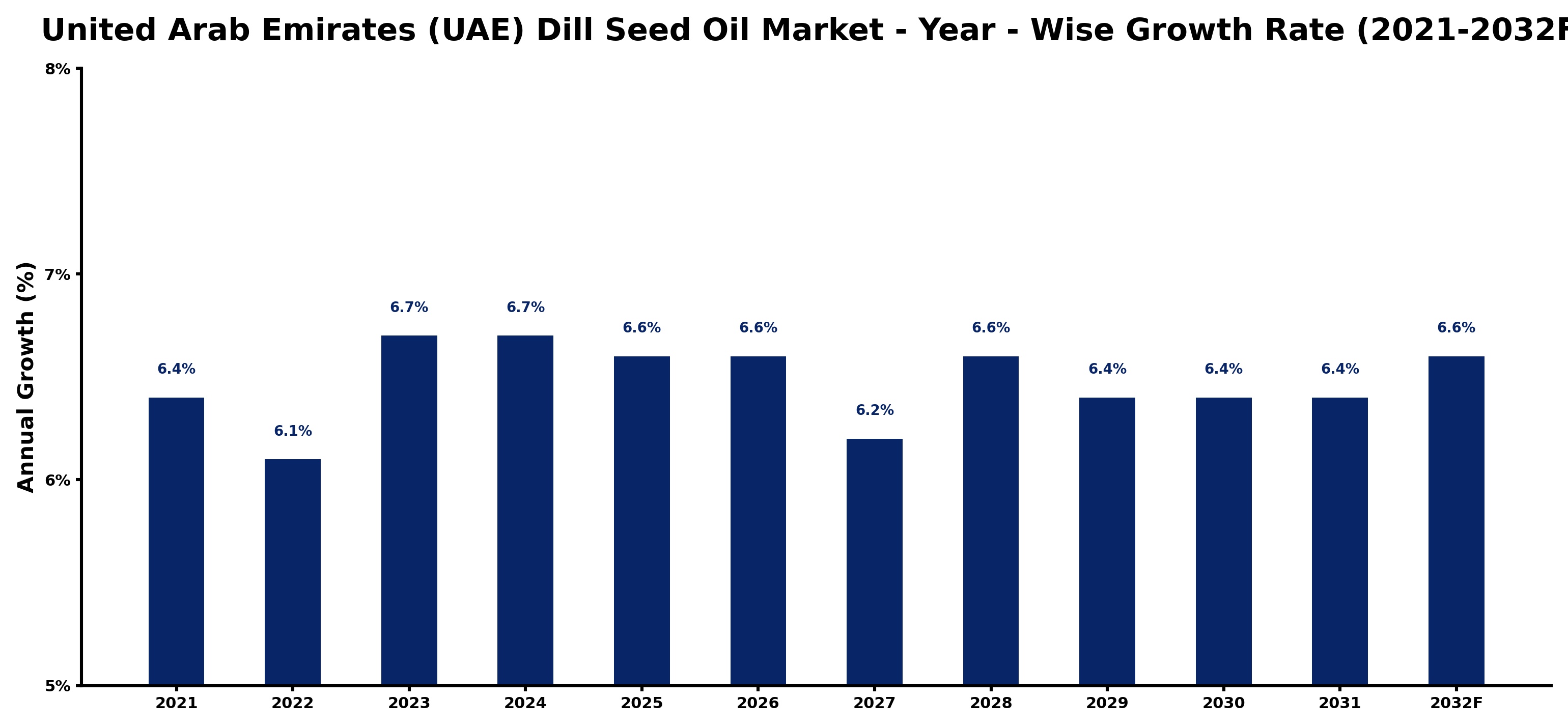
The table below presents the year‑wise growth rates along with the key drivers influencing the market
| Year | Growth Rate | Major Drivers |
| 2021 | 6.4% | Expansion of manufacturing activities |
| 2022 | 6.1% | Growing urbanization and commercial development |
| 2023 | 6.7% | Growing renewable energy integration projects |
| 2024 | 6.7% | Expansion of transportation and logistics networks |
| 2025 | 6.6% | Expansion of commercial construction activities |
| 2026 | 6.6% | Expansion of transportation and logistics networks |
| 2027 | 6.2% | Growing renewable energy integration projects |
| 2028 | 6.6% | Increasing smart city development projects |
| 2029 | 6.4% | Expansion of commercial construction activities |
| 2030 | 6.4% | Increasing smart city development projects |
| 2031 | 6.4% | Expansion of manufacturing activities |
| 2032 | 6.6% | Rapid growth in telecom and data center sectors |
Note - Market size estimations and growth projections presented in this report are based on 6Wresearch's advanced forecasting approach, validated with industry datasets as of June 2026.
United Arab Emirates (UAE) Dill Seed Oil Market Synopsis
The UAE dill seed oil market is currently experiencing a phase of dynamic expansion, closely linked to the nation's rich culinary traditions and a burgeoning interest in health and wellness products. Dill seed oil, known for its unique aromatic properties, is being integrated into various segments including food, beverage, and natural remedies, showcasing its versatility.
Moreover, the cultural appreciation for herbal medicine significantly influences the market landscape, as consumers increasingly turn to dill seed oil for its perceived therapeutic benefits. This fusion of tradition and innovation is paving the way for dill seed oil to carve out a more prominent space within the UAE's growing essential oils market.
United Arab Emirates (UAE) Dill Seed Oil Market Key Takeaways
- The market reflects a blend of traditional and modern applications, capturing consumer interest in both culinary and therapeutic uses.
- Dill seed oil is gaining recognition in the UAE food and beverage industry for its flavor-enhancing properties.
- The increasing trend towards natural ingredients in personal care and wellness products is bolstering market growth.
- Strategic collaborations among manufacturers and food producers are essential for market penetration and expansion.
- Ongoing shifts in consumer behavior, influenced by the pandemic, have fostered heightened interest in home cooking and ingredient experimentation.
Evaluation of Restraints in United Arab Emirates (UAE) Dill Seed Oil Market
The UAE dill seed oil market encounters specific constraints that can impact its growth. Chief among these is the intense competition from an array of alternative essential oils and flavoring agents. This competitive landscape requires dill seed oil to differentiate itself through its unique flavor profile and health benefits. Additionally, maintaining high standards of authenticity and purity is paramount for consumer trust; any quality discrepancies can deter potential buyers and affect brand reputation. As such, suppliers must focus on strict quality control measures to align with consumer expectations and regulatory standards.
United Arab Emirates (UAE) Dill Seed Oil Market Trends
In recent years, trends in the UAE dill seed oil market have highlighted an increasing preference for organic and sustainably sourced products. As consumers become more environmentally conscious, they are actively seeking essential oils that reflect these values. The demand for natural flavoring agents in food products is also on the rise, driven by growing awareness of health and wellness. Furthermore, there is a noticeable shift towards integrating essential oils into personal care products, as consumers seek holistic solutions for both health and beauty.
United Arab Emirates (UAE) Dill Seed Oil Market Opportunities
Significant opportunities exist within the UAE dill seed oil market, particularly in developing strategic partnerships with manufacturers in the food and beverage sector. By collaborating with local chefs and culinary influencers, dill seed oil can enhance its visibility and appeal in gastronomy. Additionally, the increasing consumer interest in natural remedies presents a ripe avenue for expansion into herbal health products. Investing in marketing campaigns that educate consumers about the benefits of dill seed oil can also drive demand and foster brand loyalty.
Government Initiatives in the United Arab Emirates (UAE) Dill Seed Oil Market
The UAE government has been proactive in promoting the use of natural and traditional products, including essential oils like dill seed oil. Various initiatives aimed at supporting the herbal and natural remedies sector are underway, reflecting the national agenda of diversification and innovation in the economy. Public spending on health and wellness programs also indirectly encourages the growth of the dill seed oil market, as it fosters a greater appreciation for natural products among consumers.
Future Insights of the United Arab Emirates (UAE) Dill Seed Oil Market
Looking ahead to the period from 2026 to 2032, the UAE dill seed oil market is poised for sustained growth as consumer awareness around the benefits of natural ingredients continues to rise. The integration of dill seed oil in emerging sectors such as organic foods and natural cosmetics is expected to flourish. Furthermore, as international trade stabilizes post-pandemic, supply chain efficiencies will enhance availability and affordability, making dill seed oil a staple ingredient across various applications in the UAE.
United Arab Emirates (UAE) Dill Seed Oil Market Latest Developments (May 2025 - June 2026)
Recent developments in the UAE dill seed oil market have showcased a surge in innovation, with companies exploring new extraction methods that enhance the purity and quality of the oil. Additionally, there is growing interest in the inclusion of dill seed oil in health supplements and functional foods, reflecting a broader trend towards wellness. As more local and regional players enter the market, competition is expected to intensify, prompting existing businesses to refine their product offerings and marketing strategies.
United Arab Emirates (UAE) Dill Seed Oil Market - Key Attractiveness of the Report
- 10 Years of Market Numbers
- Historical Data Starting from 2022 to 2025
- Base Year: 2025
- Forecast Data until 2032
- Key Performance Indicators Impacting the Market
- Major Upcoming Developments and Projects
Key Highlights of the Report:
- United Arab Emirates (UAE) Dill Seed Oil Market Outlook
- Market Size of United Arab Emirates (UAE) Dill Seed Oil Market, 2025
- Forecast of United Arab Emirates (UAE) Dill Seed Oil Market, 2032
- Historical Data and Forecast of United Arab Emirates (UAE) Dill Seed Oil Revenues & Volume for the Period 2022-2032F
- United Arab Emirates (UAE) Dill Seed Oil Market Trend Evolution
- United Arab Emirates (UAE) Dill Seed Oil Market Drivers and Challenges
- United Arab Emirates (UAE) Dill Seed Oil Price Trends
- United Arab Emirates (UAE) Dill Seed Oil Porter's Five Forces
- United Arab Emirates (UAE) Dill Seed Oil Industry Life Cycle
- Historical Data and Forecast of United Arab Emirates (UAE) Dill Seed Oil Market Revenues & Volume By Type for the Period 2022-2032F
- Historical Data and Forecast of United Arab Emirates (UAE) Dill Seed Oil Market Revenues & Volume By Anethum Graveolens Seed Oil for the Period 2022-2032F
- Historical Data and Forecast of United Arab Emirates (UAE) Dill Seed Oil Market Revenues & Volume By Anethum Sowa Seed Oil for the Period 2022-2032F
- Historical Data and Forecast of United Arab Emirates (UAE) Dill Seed Oil Market Revenues & Volume By Application for the Period 2022-2032F
- Historical Data and Forecast of United Arab Emirates (UAE) Dill Seed Oil Market Revenues & Volume By Flavor for the Period 2022-2032F
- Historical Data and Forecast of United Arab Emirates (UAE) Dill Seed Oil Market Revenues & Volume By Fragrance for the Period 2022-2032F
- Historical Data and Forecast of United Arab Emirates (UAE) Dill Seed Oil Market Revenues & Volume By Pharmaceutical for the Period 2022-2032F
- Historical Data and Forecast of United Arab Emirates (UAE) Dill Seed Oil Market Revenues & Volume By Skincare for the Period 2022-2032F
- Historical Data and Forecast of United Arab Emirates (UAE) Dill Seed Oil Market Revenues & Volume By Aromatherapy for the Period 2022-2032F
- United Arab Emirates (UAE) Dill Seed Oil Import Export Trade Statistics
- Market Opportunity Assessment By Type
- Market Opportunity Assessment By Application
- United Arab Emirates (UAE) Dill Seed Oil Top Companies Market Share
- United Arab Emirates (UAE) Dill Seed Oil Competitive Benchmarking By Technical and Operational Parameters
- United Arab Emirates (UAE) Dill Seed Oil Company Profiles
- United Arab Emirates (UAE) Dill Seed Oil Key Strategic Recommendations






































