United Arab Emirates (UAE) Energy Security Market Size & Growth Rate (2026-2032)
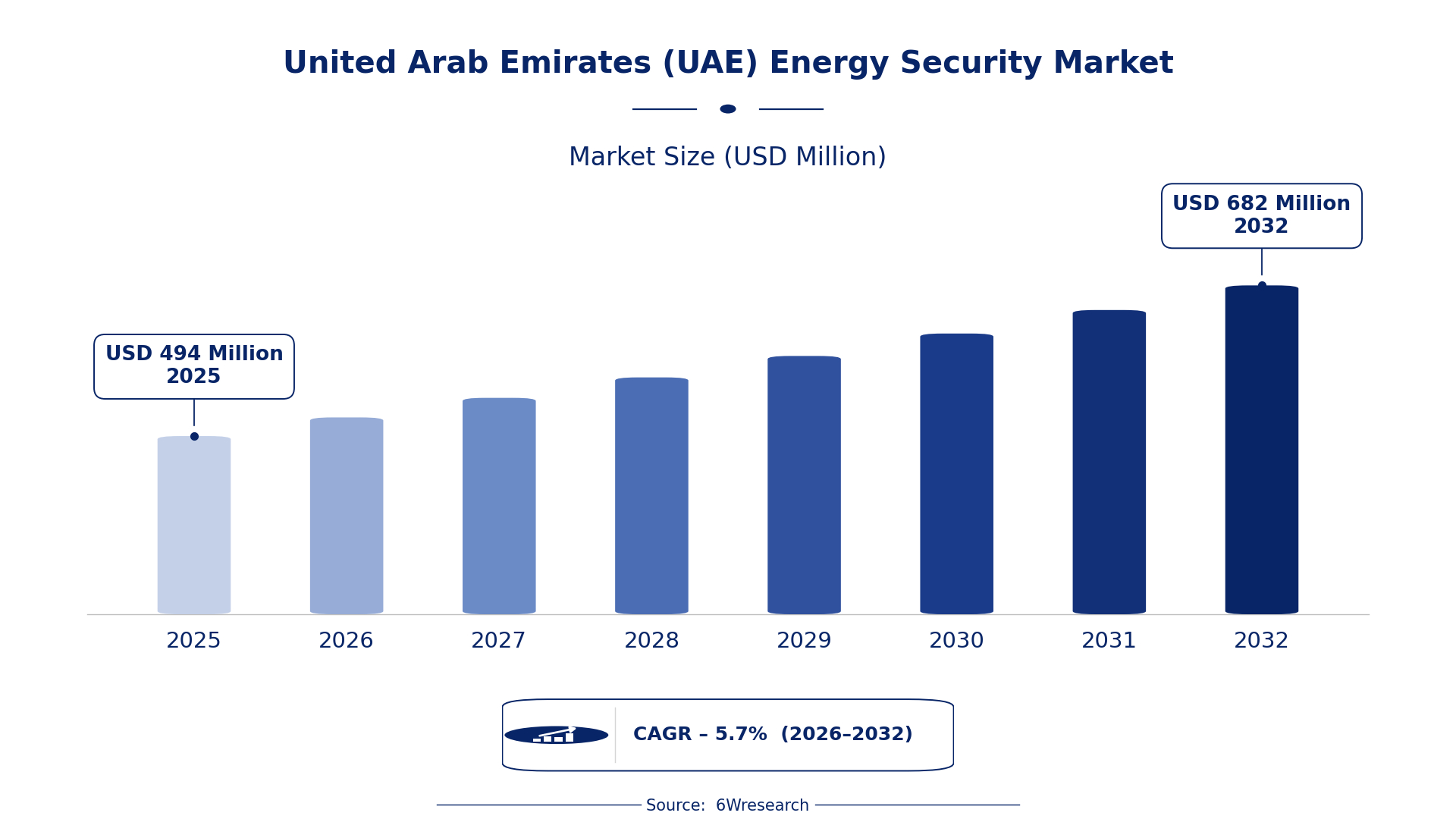
The United Arab Emirates (UAE) Energy Security Market was estimated at USD 494 Million in 2025 and is projected to reach USD 682 Million by 2032, growing at a CAGR of 5.7% from 2026 to 2032.
United Arab Emirates (UAE) Energy Security Market Synopsis
The energy security landscape in the UAE has witnessed a surge in momentum due to increasing geopolitical tensions and the ongoing digitalization of energy infrastructures. As the country continues to expand its role as a major energy player globally, a robust focus on protecting its energy assets has become non-negotiable.
Looking ahead, the UAE is transitioning towards a more diversified energy portfolio, which not only enhances sustainability but also complicates security considerations. The investments in cutting-edge security technologies highlight a clear recognition of the pressing need to safeguard critical energy infrastructures in the face of emerging threats.
United Arab Emirates (UAE) Energy Security Market Year-wise Growth Rate and Key Drivers
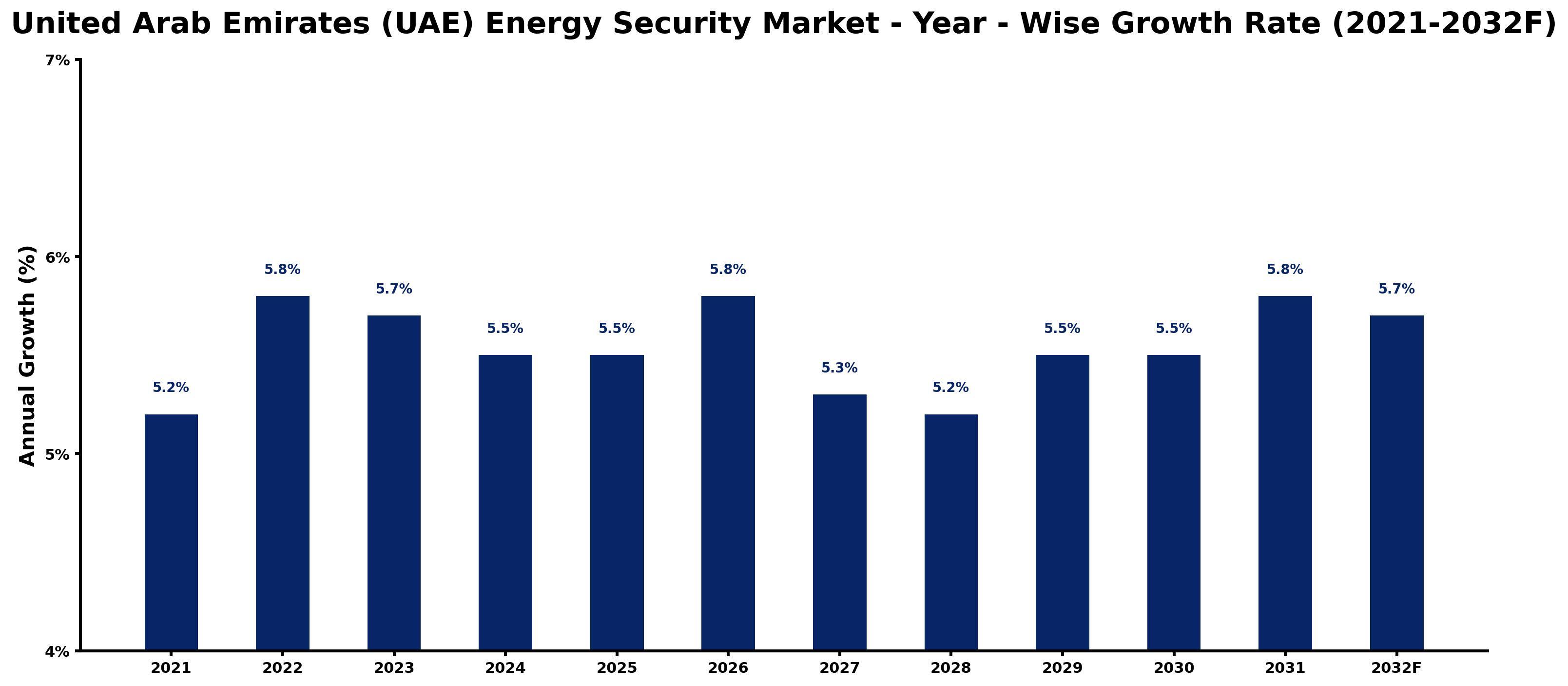
This graph illustrates the annual growth rates of the United Arab Emirates (UAE) Energy Security Market from 2021 to 2032, highlighting a steady upward trajectory and projected expansion over the forecast period.
The table below presents the year‑wise growth rates along with the key drivers influencing the market
| Year | Growth Rate | Major Drivers |
| 2021 | 5.2% | UAE Energy Strategy 2050 focusing on sustainability. |
| 2022 | 5.8% | Investment in nuclear energy expansion by Emirates Nuclear Energy. |
| 2023 | 5.7% | Increased demand for renewable energy solutions in Dubai. |
| 2024 | 5.5% | Abu Dhabi's initiatives for energy diversification and security. |
| 2025 | 5.5% | Growing public-private partnerships in clean energy projects. |
| 2026 | 5.8% | UAE's hosting of COP28 promoting energy transition investments. |
| 2027 | 5.3% | Horizon 2023 plan enhancing energy efficiency technologies. |
| 2028 | 5.2% | Increased solar power capacity from Mohammed bin Rashid Solar Park. |
| 2029 | 5.5% | Government regulations mandating cleaner energy sources in industries. |
| 2030 | 5.5% | Adoption of energy storage technologies for grid stability. |
| 2031 | 5.8% | Rising capacity of offshore energy infrastructure investments. |
| 2032 | 5.7% | Focus on hydrogen production for energy security strategies. |
Note: Market size estimations and growth projections presented in this report are based on 6Wresearch's proprietary forecasting methodology, utilizing the latest available industry data, government publications, and primary research inputs.
United Arab Emirates (UAE) Energy Security Market Key Takeaways
Below are some of the specific key takeaways from the market, including:
- The UAE's energy sector remains vulnerable to geopolitical tensions and cyber threats, emphasizing the urgency of energy security measures.
- Investment in cybersecurity and physical protection systems is accelerating to mitigate potential risks to energy infrastructures.
- The diversification of energy sources, particularly towards renewables, creates new security challenges requiring innovative solutions.
- Public sector priorities heavily influence the direction of investments in energy security technologies.
- Resilience against supply chain disruptions has become a focal point for stakeholders in the energy sector.
Evaluation of Restraints in United Arab Emirates (UAE) Energy Security Market
Despite the strong growth trajectory, the UAE energy security market faces significant restraints. The critical nature of energy infrastructure inherently poses risks, particularly as the sector becomes increasingly digitized. Protecting vital assets against both physical and cyber threats demands continuous monitoring and a comprehensive approach. The challenge intensifies with the need to balance operational efficiency and stringent security protocols, particularly during times of geopolitical instability. Industry stakeholders must find ways to adapt to these complexities, ensuring that security measures do not hinder operational effectiveness.
United Arab Emirates (UAE) Energy Security Market Trends
A key trend shaping the UAE energy security market is the integration of advanced technologies, such as artificial intelligence and machine learning, into security operations. These technologies enable predictive analytics and real-time threat assessment, significantly enhancing the resilience of energy infrastructures. Additionally, there is a pronounced shift towards collaborative efforts between public and private sectors to enhance security protocols and share critical information. This focus on collaboration reflects an understanding that no single entity can effectively manage the multifaceted threats facing the energy sector today.
United Arab Emirates (UAE) Energy Security Market Opportunities
The path forward is ripe with opportunities for stakeholders in the UAE energy security market. Investment in renewable energy sources is generating demand for innovative security solutions tailored to new technologies. The government's commitment to sustainability also opens avenues for companies offering integrated security systems designed for hybrid energy infrastructures. on top of that, the rising importance of cybersecurity solutions creates a niche for firms specializing in protecting data and critical energy assets from emerging digital threats. These trends suggest that forward-thinking investments will not only safeguard existing infrastructures but also drive future growth in the sector.
Government Initiatives in the United Arab Emirates (UAE) Energy Security Market
Government policies are critically shaping the UAE energy security market, aligning with national objectives to bolster energy resilience amidst regional challenges. The emphasis on safeguarding energy assets reflects a proactive approach to regulatory frameworks and public-sector investments aimed at enhancing security standards. A coordinated effort from various governmental bodies is evident, ensuring that energy security remains at the forefront of national priorities.
- A national cybersecurity initiative launched in late 2023 aimed to protect critical energy infrastructure from increasing cyber threats.
- Currently ongoing is the establishment of a centralized energy security command center designed to monitor and respond to threats in real-time.
- A regulatory framework expected to roll out in 2026 will mandate enhanced security protocols across all energy facilities.
- A public-private partnership program initiated in early 2024 focuses on improving resilience and response strategies against natural and man-made disasters.
- Plans for a comprehensive energy security audit set for mid-2025 aim to assess vulnerabilities and enhance the protection of energy assets across the country.
Future Insights of the United Arab Emirates (UAE) Energy Security Market
As we look toward 2026-2032, the UAE energy security market is expected to expand significantly. With ongoing investments in infrastructure resilience and cybersecurity, stakeholders will adapt to an increasingly complex threat environment. The integration of renewable energy sources into the national grid will necessitate the development of specialized security measures tailored to these technologies. on top of that, public and private collaborations will likely foster innovation and accelerate the adoption of cutting-edge security solutions. The overall trajectory points toward a more secure and sustainable energy future for the UAE.
United Arab Emirates (UAE) Energy Security Market Latest Developments
Recent developments in the UAE energy security market indicate a strong push toward enhanced security measures and innovative technologies. Over the past year, stakeholders have been actively refining strategies and solutions to address evolving threats. This proactive stance reflects a broader commitment to maintaining the integrity and reliability of the country's energy systems.
- A major technology vendor completed the rollout of a state-of-the-art security management system in Q2 2024, improving response times to potential threats.
- In mid-2024, a leading regional operator initiated a comprehensive cybersecurity training program for energy sector employees aimed at increasing awareness and skills to combat cyber threats.
- A planned national exercise is set to take place in late 2025 to test the effectiveness of emergency response plans across key energy facilities.
- A collaborative pilot project started in early 2024 focuses on integrating renewable energy security solutions with existing infrastructure protection mechanisms.
- An upcoming initiative is expected to launch in early 2026, aimed at implementing advanced surveillance technologies across major oil and gas facilities.
United Arab Emirates (UAE) Energy Security Market - Key Attractiveness of the Report
- 10 Years of Market Numbers
- Historical Data Starting from 2022 to 2025
- Base Year: 2025
- Forecast Data until 2032
- Key Performance Indicators Impacting the Market
- Major Upcoming Developments and Projects
Key Highlights of the Report:
- United Arab Emirates (UAE) Energy Security Market Outlook
- Market Size of United Arab Emirates (UAE) Energy Security Market, 2025
- Forecast of United Arab Emirates (UAE) Energy Security Market, 2032
- Historical Data and Forecast of United Arab Emirates (UAE) Energy Security Revenues & Volume for the Period 2022-2032F
- United Arab Emirates (UAE) Energy Security Market Trend Evolution
- United Arab Emirates (UAE) Energy Security Market Drivers and Challenges
- United Arab Emirates (UAE) Energy Security Price Trends
- United Arab Emirates (UAE) Energy Security Porter's Five Forces
- United Arab Emirates (UAE) Energy Security Industry Life Cycle
- Historical Data and Forecast of United Arab Emirates (UAE) Energy Security Market Revenues & Volume By Power Plants for the Period 2022-2032F
- Historical Data and Forecast of United Arab Emirates (UAE) Energy Security Market Revenues & Volume By Nuclear for the Period 2022-2032F
- Historical Data and Forecast of United Arab Emirates (UAE) Energy Security Market Revenues & Volume By Thermal for the Period 2022-2032F
- Historical Data and Forecast of United Arab Emirates (UAE) Energy Security Market Revenues & Volume By Hydro for the Period 2022-2032F
- Historical Data and Forecast of United Arab Emirates (UAE) Energy Security Market Revenues & Volume By Oil for the Period 2022-2032F
- Historical Data and Forecast of United Arab Emirates (UAE) Energy Security Market Revenues & Volume By Gas for the Period 2022-2032F
- Historical Data and Forecast of United Arab Emirates (UAE) Energy Security Market Revenues & Volume By Renewable Energy for the Period 2022-2032F
- Historical Data and Forecast of United Arab Emirates (UAE) Energy Security Market Revenues & Volume By Technologies for the Period 2022-2032F
- Historical Data and Forecast of United Arab Emirates (UAE) Energy Security Market Revenues & Volume By Physical for the Period 2022-2032F
- Historical Data and Forecast of United Arab Emirates (UAE) Energy Security Market Revenues & Volume By Network Security for the Period 2022-2032F
- United Arab Emirates (UAE) Energy Security Import Export Trade Statistics
- Market Opportunity Assessment By Power Plants
- Market Opportunity Assessment By Technologies
- United Arab Emirates (UAE) Energy Security Top Companies Market Share
- United Arab Emirates (UAE) Energy Security Competitive Benchmarking By Technical and Operational Parameters
- United Arab Emirates (UAE) Energy Security Company Profiles
- United Arab Emirates (UAE) Energy Security Key Strategic Recommendations






































