United Arab Emirates (UAE) Frozen Fruit & Vegetables Market Summary
The united arab emirates (uae) frozen fruit & vegetables market was estimated at USD 265 Million in 2025 and is projected to reach USD 347 Million by 2032, growing at a CAGR of 4.8% from 2026 to 2032.
United Arab Emirates (UAE) Frozen Fruit & Vegetables Market Year-wise Growth Rate and Key Drivers
This graph highlights how the United Arab Emirates (UAE) Frozen Fruit & Vegetables Market has steadily grown over the past five years, supported by major growth factors.
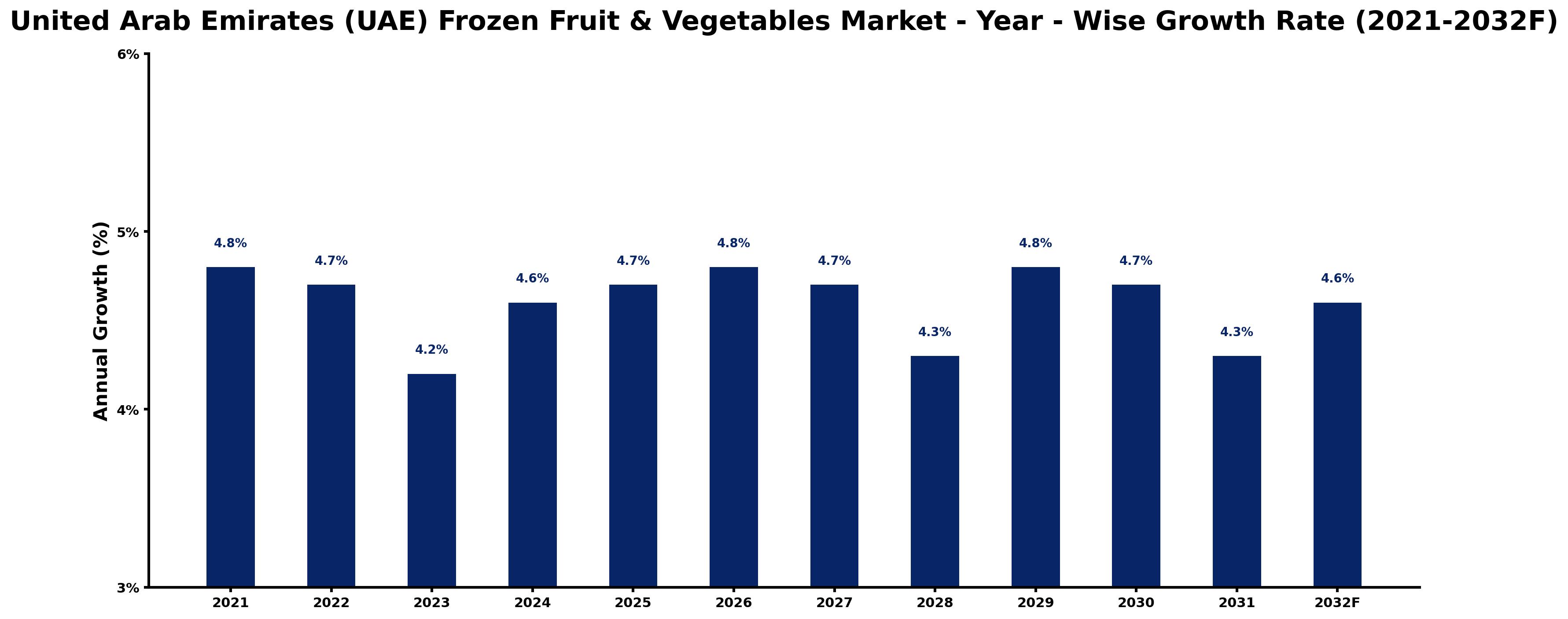
The table below presents the year wise growth rates along with the key drivers influencing the market
| Year | Growth Rate | Major Drivers |
| 2021 | 4.8% | Consumer shift towards healthy eating habits boosts frozen food popularity. |
| 2022 | 4.7% | E-commerce platforms expand significantly, enhancing product accessibility for consumers. |
| 2023 | 4.2% | Local production facilities emerge, reducing dependency on imported frozen goods. |
| 2024 | 4.6% | Culinary trends favoring convenience foods attract a younger demographic. |
| 2025 | 4.7% | Sustainable packaging initiatives gain traction, appealing to environmentally conscious buyers. |
| 2026 | 4.8% | Innovative product lines cater to diverse dietary preferences, including veganism. |
| 2027 | 4.7% | Increased household cooking frequency influences demand for frozen ingredients. |
| 2028 | 4.3% | Partnerships with retailers enhance visibility of frozen produce in-store. |
| 2029 | 4.8% | Health and wellness campaigns emphasize benefits of frozen fruits and vegetables. |
| 2030 | 4.7% | Urbanization accelerates, driving the need for convenient meal solutions. |
| 2031 | 4.3% | Technological advancements in freezing techniques improve product quality and longevity. |
| 2032 | 4.6% | Export potential increases as regional markets recognize UAE's frozen offerings. |
Note - Market size estimations and growth projections presented in this report are based on 6Wresearch's advanced forecasting approach, validated with industry datasets as of June 2026.
United Arab Emirates (UAE) Frozen Fruit & Vegetables Market Synopsis
The United Arab Emirates (UAE) Frozen Fruit Vegetables Market is projected to reach 4.8% and witness significant growth during the forecast period (2026-2032). This expansion is driven by a combination of evolving consumer preferences, lifestyle changes, and the increasing demand for convenient, nutritious food options. The market encompasses the importation, distribution, and consumption of frozen fruits and vegetables, which are gaining popularity due to their ability to preserve nutritional values while providing year-round availability.
United Arab Emirates (UAE) Frozen Fruit & Vegetables Market Growth Drivers
Several factors are driving the growth of the United Arab Emirates (UAE) Frozen Fruit & Vegetables Market. Firstly, the changing dietary preferences of consumers are a significant influence. As awareness of health and wellness increases, consumers are more inclined to include fruits and vegetables in their diets. Additionally:
- Frozen produce offers a convenient solution for busy lifestyles, allowing consumers to prepare nutritious meals quickly.
- The preservation of taste and nutrients in frozen options caters particularly well to health-conscious individuals.
- Increased product offerings, including organic and specialty frozen items, expand consumer choices and attract diverse market segments.
- Promotional campaigns and education on the benefits of frozen fruits and vegetables enhance consumer acceptance and trust in these products.
- The rising prevalence of e-commerce platforms facilitates easier access to frozen food, further driving the market's growth.
United Arab Emirates (UAE) Frozen Fruit & Vegetables Market Challenges and Restraints
Despite the positive growth trajectory, the United Arab Emirates (UAE) Frozen Fruit & Vegetables Market is confronted with several challenges. A major hurdle is the consumer perception that fresh produce is superior to frozen options. This perception can hinder market growth as some individuals may resist switching to frozen products. Additionally:
- Logistical challenges associated with maintaining the cold chain during transportation can impact product quality and availability.
- Concerns regarding the sustainability of sourcing frozen fruits and vegetables may affect purchasing decisions among environmentally conscious consumers.
- Price volatility in the global market for fruits and vegetables can lead to fluctuations in the costs of frozen products.
- Regulatory standards and quality control measures may impose operational constraints on suppliers, influencing product availability.
- As the market grows, competition from both local and international suppliers could lead to price wars that might affect profitability.
United Arab Emirates (UAE) Frozen Fruit & Vegetables Market Government Investment and Initiatives
The government of the United Arab Emirates has recognized the importance of enhancing food security and the role of frozen fruit and vegetable products in achieving this goal. Several initiatives and investments are being undertaken to support the growth of the United Arab Emirates (UAE) Frozen Fruit & Vegetables Market. Key actions include:
- Implementation of policies aimed at increasing food production and minimizing dependence on imports, which can enhance the local frozen food industry.
- Investment in infrastructure to improve logistics and cold storage capabilities, ensuring quality maintenance throughout the supply chain.
- Support for innovation in food preservation and processing technologies to enhance the quality and appeal of frozen products.
- Encouragement of partnerships between private sector entities and government agencies to foster growth and research in the frozen food segment.
- Promotion of health awareness campaigns emphasizing the benefits of incorporating frozen fruits and vegetables into daily diets.
United Arab Emirates (UAE) Frozen Fruit & Vegetables Market Latest Developments (May 2025 - June 2026)
The period from May 2025 to June 2026 has been pivotal for the United Arab Emirates (UAE) Frozen Fruit & Vegetables Market as several developments unfolded that shaped its trajectory. The market has seen an uptick in new product launches, particularly within the organic segment, catering to the growing demand for healthier options. Additionally:
- Enhanced cold chain logistics have been implemented, significantly improving product availability and freshness.
- Collaborations between local suppliers and international frozen food companies have emerged, expanding product diversity in the market.
- Consumer education initiatives regarding the health benefits of frozen foods have gained traction, leading to increased acceptance and sales.
- Market players have adopted sustainable practices in sourcing and packaging, aligning with global trends towards environmental responsibility.
- Technological advancements in freezing and storage methods have allowed for better retention of flavors and textures in frozen fruits and vegetables.
United Arab Emirates (UAE) Frozen Fruit & Vegetables Market - Key Attractiveness of the Report
- 10 Years of Market Numbers
- Historical Data Starting from 2022 to 2025
- Base Year: 2025
- Forecast Data until 2032
- Key Performance Indicators Impacting the Market
- Major Upcoming Developments and Projects
Key Highlights of the Report:
- United Arab Emirates (UAE) Frozen Fruit & Vegetables Market Outlook
- Market Size of United Arab Emirates (UAE) Frozen Fruit & Vegetables Market, 2025
- Forecast of United Arab Emirates (UAE) Frozen Fruit & Vegetables Market, 2032
- Historical Data and Forecast of United Arab Emirates (UAE) Frozen Fruit & Vegetables Revenues & Volume for the Period 2022-2032F
- United Arab Emirates (UAE) Frozen Fruit & Vegetables Market Trend Evolution
- United Arab Emirates (UAE) Frozen Fruit & Vegetables Market Drivers and Challenges
- United Arab Emirates (UAE) Frozen Fruit & Vegetables Price Trends
- United Arab Emirates (UAE) Frozen Fruit & Vegetables Porter's Five Forces
- United Arab Emirates (UAE) Frozen Fruit & Vegetables Industry Life Cycle
- Historical Data and Forecast of United Arab Emirates (UAE) Frozen Fruit & Vegetables Market Revenues & Volume By Product Type for the Period 2022-2032F
- Historical Data and Forecast of United Arab Emirates (UAE) Frozen Fruit & Vegetables Market Revenues & Volume By Frozen Vegetables for the Period 2022-2032F
- Historical Data and Forecast of United Arab Emirates (UAE) Frozen Fruit & Vegetables Market Revenues & Volume By Frozen Fruits for the Period 2022-2032F
- Historical Data and Forecast of United Arab Emirates (UAE) Frozen Fruit & Vegetables Market Revenues & Volume By Applications for the Period 2022-2032F
- Historical Data and Forecast of United Arab Emirates (UAE) Frozen Fruit & Vegetables Market Revenues & Volume By Fruits for the Period 2022-2032F
- Historical Data and Forecast of United Arab Emirates (UAE) Frozen Fruit & Vegetables Market Revenues & Volume By Vegetables for the Period 2022-2032F
- Historical Data and Forecast of United Arab Emirates (UAE) Frozen Fruit & Vegetables Market Revenues & Volume By Distribution Channel for the Period 2022-2032F
- Historical Data and Forecast of United Arab Emirates (UAE) Frozen Fruit & Vegetables Market Revenues & Volume By Hypermarkets/Supermarkets for the Period 2022-2032F
- Historical Data and Forecast of United Arab Emirates (UAE) Frozen Fruit & Vegetables Market Revenues & Volume By Convenience Stores for the Period 2022-2032F
- Historical Data and Forecast of United Arab Emirates (UAE) Frozen Fruit & Vegetables Market Revenues & Volume By E-commerce for the Period 2022-2032F
- United Arab Emirates (UAE) Frozen Fruit & Vegetables Import Export Trade Statistics
- Market Opportunity Assessment By Product Type
- Market Opportunity Assessment By Applications
- Market Opportunity Assessment By Distribution Channel
- United Arab Emirates (UAE) Frozen Fruit & Vegetables Top Companies Market Share
- United Arab Emirates (UAE) Frozen Fruit & Vegetables Competitive Benchmarking By Technical and Operational Parameters
- United Arab Emirates (UAE) Frozen Fruit & Vegetables Company Profiles
- United Arab Emirates (UAE) Frozen Fruit & Vegetables Key Strategic Recommendations






































