United Kingdom (UK) Beef Market: Import Trend Analysis
The United Kingdom import trend for beef in 2024 showed a growth rate of 12.6%, with a compound annual growth rate (CAGR) of 10.14% from 2020 to 2024. This increase can be attributed to shifting consumer preferences towards high-quality meat products, as well as favorable trade policies that facilitated imports.
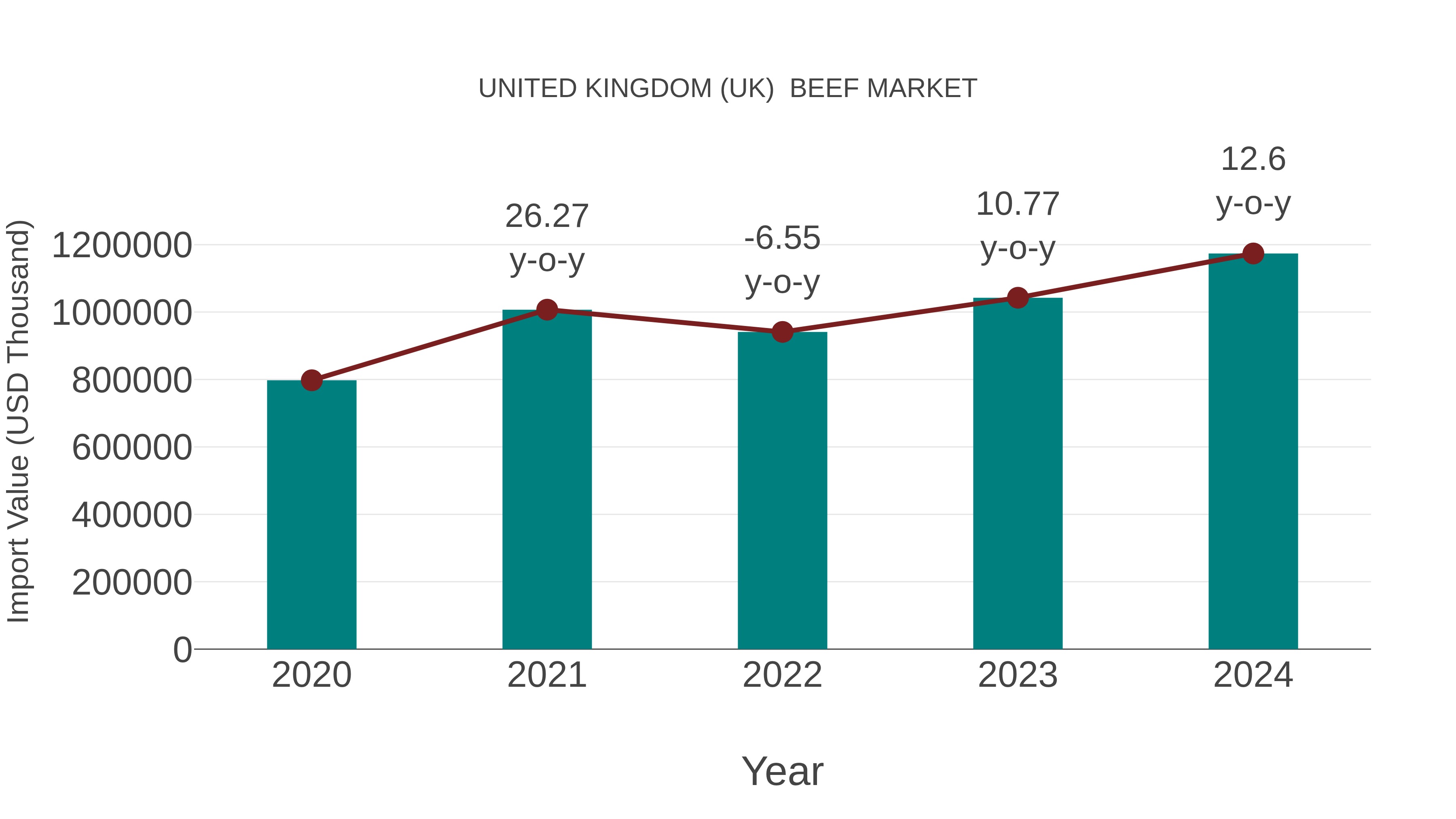
United Kingdom (UK) Export Potential Assessment For Beef Market (Values in USD Thousand)
United Kingdom (UK) Beef Market Overview
The United Kingdom beef market is a significant sector within the country`s agriculture and food industry. It is characterized by a strong demand for high-quality beef products from both domestic consumers and international markets. The market is dominated by traditional beef farming practices, with a focus on breeds such as Aberdeen Angus and Hereford. However, there is also a growing trend towards sustainable and ethical beef production methods, with an increasing number of consumers seeking out grass-fed and organic beef options. The UK beef market faces challenges such as fluctuating prices due to factors like weather conditions and global trade dynamics. Despite these challenges, the market continues to innovate, with a focus on product differentiation and quality assurance to meet the diverse needs of consumers.
United Kingdom (UK) Beef Market Trends
In the United Kingdom, the beef market is currently experiencing several key trends. Consumers are increasingly seeking higher quality and ethically sourced beef products, leading to a growing demand for grass-fed and organic options. There is also a rising interest in sustainable farming practices and animal welfare, prompting many consumers to choose products from farms with strong environmental and ethical credentials. Additionally, there is a shift towards more convenient and ready-to-eat beef products, as busy lifestyles drive the need for quick and easy meal solutions. Health consciousness is another significant trend, with a focus on leaner cuts of beef and products that are free from additives and preservatives. Overall, these trends indicate a growing preference for premium, sustainable, and healthier beef options in the UK market.
United Kingdom (UK) Beef Market Challenges
In the United Kingdom Beef Market, one of the main challenges is the increasing consumer demand for more sustainable and ethically sourced beef products. This has put pressure on beef producers to adopt environmentally friendly practices and ensure the welfare of their animals. Additionally, competition from alternative protein sources, such as plant-based meat substitutes, has led to a shift in consumer preferences and increased market competition. Brexit-related uncertainties, such as trade disruptions and potential changes in import/export regulations, have also posed challenges for the UK beef industry. Moreover, fluctuating feed costs, disease outbreaks, and stringent regulations on food safety and animal welfare further complicate the operating environment for beef producers in the UK. Adaptation to these challenges through innovation, diversification, and sustainable practices will be crucial for the long-term success of the UK beef market.
United Kingdom (UK) Beef Market Investment Opportunities
In the United Kingdom beef market, there are several investment opportunities available for savvy investors. One potential opportunity lies in sustainable and organic beef production, as consumer demand for ethically and environmentally friendly meat products is on the rise. Investing in technology and automation systems for beef farming operations can also enhance efficiency and reduce costs, leading to higher profitability. Additionally, there is potential for investment in value-added beef products, such as ready-to-eat meals or specialty cuts, to cater to changing consumer preferences and dietary trends. Partnering with local farmers or cooperatives to support and promote British beef production can also be a rewarding investment strategy, tapping into the growing trend of supporting local and domestic food sources. Overall, the UK beef market offers diverse investment avenues for those looking to capitalize on evolving consumer preferences and market trends.
United Kingdom (UK) Beef Market Government Policy
The UK beef market is heavily regulated by government policies aimed at ensuring food safety, animal welfare, and environmental sustainability. The Common Agricultural Policy (CAP) provides subsidies to beef farmers to support production and maintain rural landscapes. The UK government also enforces strict regulations on cattle identification, traceability, and health to prevent the spread of diseases such as BSE (mad cow disease). In recent years, there has been a push towards more sustainable and environmentally friendly practices in the beef industry, with policies promoting grass-fed and organic production methods. Furthermore, Brexit has brought about changes in trade agreements and tariffs affecting the import and export of beef products, leading to uncertainties in the market. Overall, government policies play a crucial role in shaping the dynamics of the UK beef market.
United Kingdom (UK) Beef Market Future Outlook
The future outlook for the United Kingdom (UK) beef market is expected to be influenced by various factors such as changing consumer preferences, sustainability concerns, and technological advancements. While the demand for high-quality, locally sourced beef is likely to remain strong, there is also a growing interest in alternative protein sources and plant-based products, which could impact consumption patterns. Additionally, the industry is facing challenges related to environmental sustainability and animal welfare, leading to increased scrutiny and potential regulations. However, advancements in technology, such as precision farming and blockchain traceability, are expected to enhance efficiency and transparency within the supply chain. Overall, the UK beef market is projected to continue evolving to meet changing consumer demands and address sustainability issues in the coming years.
Key Highlights of the Report:
- United Kingdom (UK) Beef Market Outlook
- Market Size of United Kingdom (UK) Beef Market, 2025
- Forecast of United Kingdom (UK) Beef Market, 2032
- Historical Data and Forecast of United Kingdom (UK) Beef Revenues & Volume for the Period 2022 - 2032F
- United Kingdom (UK) Beef Market Trend Evolution
- United Kingdom (UK) Beef Market Drivers and Challenges
- United Kingdom (UK) Beef Price Trends
- United Kingdom (UK) Beef Porter's Five Forces
- United Kingdom (UK) Beef Industry Life Cycle
- Historical Data and Forecast of United Kingdom (UK) Beef Market Revenues & Volume By Beef Cut for the Period 2022 - 2032F
- Historical Data and Forecast of United Kingdom (UK) Beef Market Revenues & Volume By Brisket for the Period 2022 - 2032F
- Historical Data and Forecast of United Kingdom (UK) Beef Market Revenues & Volume By Shank for the Period 2022 - 2032F
- Historical Data and Forecast of United Kingdom (UK) Beef Market Revenues & Volume By Loin for the Period 2022 - 2032F
- Historical Data and Forecast of United Kingdom (UK) Beef Market Revenues & Volume By Others for the Period 2022 - 2032F
- Historical Data and Forecast of United Kingdom (UK) Beef Market Revenues & Volume By Beef Slaughter Method for the Period 2022 - 2032F
- Historical Data and Forecast of United Kingdom (UK) Beef Market Revenues & Volume By Kosher for the Period 2022 - 2032F
- Historical Data and Forecast of United Kingdom (UK) Beef Market Revenues & Volume By Halal for the Period 2022 - 2032F
- Historical Data and Forecast of United Kingdom (UK) Beef Market Revenues & Volume By Others for the Period 2022 - 2032F
- United Kingdom (UK) Beef Import Export Trade Statistics
- Market Opportunity Assessment By Beef Cut
- Market Opportunity Assessment By Beef Slaughter Method
- United Kingdom (UK) Beef Top Companies Market Share
- United Kingdom (UK) Beef Competitive Benchmarking By Technical and Operational Parameters
- United Kingdom (UK) Beef Company Profiles
- United Kingdom (UK) Beef Key Strategic Recommendations






































