United Kingdom (UK) Desiccated Coconut Market: Import Trend Analysis
The United Kingdom import trend for desiccated coconut in 2024 showed a significant growth rate of 35.86% compared to the previous year, with a compound annual growth rate (CAGR) of 1.3% from 2020 to 2024. This surge in imports can be attributed to shifting consumer preferences towards healthier food options, driving demand for desiccated coconut in various industries.
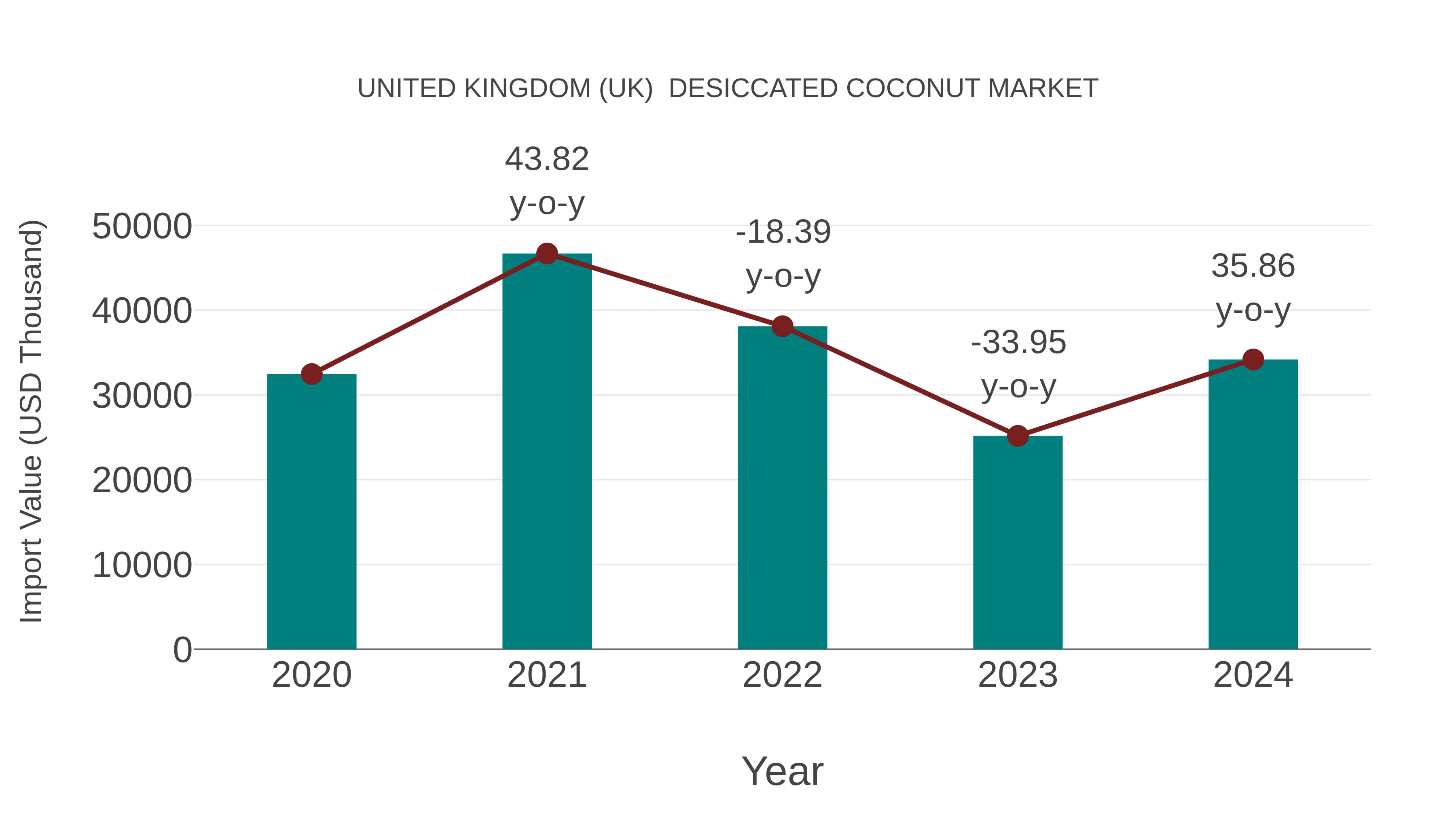
United Kingdom (UK) Export Potential Assessment For Desiccated Coconut Market (Values in USD Thousand)
United Kingdom (UK) Desiccated Coconut Market Overview
The United Kingdom desiccated coconut market is experiencing steady growth driven by the rising consumer demand for healthy and natural ingredients in various food products. With an increasing focus on wellness and clean eating, desiccated coconut is gaining popularity as a versatile ingredient used in baking, cooking, snacking, and as a topping in various dishes. The market is characterized by a diverse range of product offerings, including organic, toasted, sweetened, and unsweetened desiccated coconut options, catering to different consumer preferences. Key players in the market are focusing on product innovation, packaging, and marketing strategies to attract a wider consumer base. Additionally, the growing trend of plant-based diets and the rising awareness of the health benefits of coconut-based products are further driving the demand for desiccated coconut in the UK market.
United Kingdom (UK) Desiccated Coconut Market Trends
In the United Kingdom, the desiccated coconut market is experiencing a growing demand due to the increasing popularity of plant-based diets and healthy snacking options. Consumers are increasingly seeking out coconut-based products for their nutritional benefits, including being rich in fiber and healthy fats. Market trends also show a preference for organic and sustainably sourced desiccated coconut products, driven by the rising awareness of environmental and ethical considerations among UK consumers. Manufacturers are responding to these trends by introducing innovative coconut-based products such as coconut chips, coconut flour, and coconut milk alternatives. Additionally, the food industry is witnessing a surge in the use of desiccated coconut in a wide range of products, including baked goods, cereals, snacks, and desserts, further driving the market growth in the UK.
United Kingdom (UK) Desiccated Coconut Market Challenges
In the United Kingdom (UK) Desiccated Coconut Market, some challenges that are commonly faced include fluctuating raw material prices, increasing competition from alternative ingredients, and shifting consumer preferences towards healthier and organic products. The volatility in raw material prices, influenced by factors such as weather conditions, global demand, and supply chain disruptions, can impact the profitability of desiccated coconut manufacturers. Additionally, the market faces competition from substitutes like fresh coconut, coconut flour, and other dried fruits, which can offer similar textures and flavors. Moreover, as consumers become more health-conscious, there is a growing demand for organic and sustainably sourced desiccated coconut products, requiring manufacturers to adapt their sourcing and production practices to meet these changing preferences. Overall, navigating these challenges requires market players to stay agile, innovate, and differentiate their offerings to remain competitive in the UK desiccated coconut market.
United Kingdom (UK) Desiccated Coconut Market Investment Opportunities
In the United Kingdom`s desiccated coconut market, there are several investment opportunities for savvy investors. The rising consumer interest in healthy and natural food products has fueled the demand for desiccated coconut as a versatile ingredient in various food and beverage applications. Investing in companies that specialize in sourcing, processing, and distributing high-quality desiccated coconut can be lucrative, especially with the growing popularity of plant-based diets and clean label products. Additionally, there is an opportunity to explore innovative product development within the desiccated coconut market, such as creating organic or flavored variations to cater to evolving consumer preferences. With the UK`s strong food industry and increasing demand for natural ingredients, investing in the desiccated coconut market presents promising growth prospects for investors looking to capitalize on this trend.
United Kingdom (UK) Desiccated Coconut Market Government Policy
In the United Kingdom (UK), the government has implemented various policies that impact the Desiccated Coconut Market. These policies include regulations on food safety and quality standards enforced by the Food Standards Agency (FSA) to ensure that desiccated coconut products meet the necessary health and safety requirements. Additionally, the UK government has trade policies that influence import and export activities of desiccated coconut, including tariffs and quotas. Furthermore, sustainability and environmental policies play a role in shaping the market, with initiatives promoting sustainable sourcing practices and reducing carbon emissions in the production and transportation of desiccated coconut products. Overall, government policies in the UK aim to support a competitive and sustainable desiccated coconut market while safeguarding consumer interests and environmental concerns.
United Kingdom (UK) Desiccated Coconut Market Future Outlook
The future outlook for the United Kingdom (UK) Desiccated Coconut Market appears positive, driven by increasing consumer demand for healthier and versatile food ingredients. The market is expected to witness steady growth due to rising awareness about the health benefits of desiccated coconut, such as its high fiber content and natural sweetness. Additionally, the growing popularity of coconut-based products in the food and beverage industry is likely to further boost market growth. Manufacturers are also focusing on product innovation and expanding their product portfolios to cater to changing consumer preferences, which will contribute to the market expansion. Overall, the UK Desiccated Coconut Market is anticipated to experience a promising trajectory in the coming years.
Key Highlights of the Report:
- United Kingdom (UK) Desiccated Coconut Market Outlook
- Market Size of United Kingdom (UK) Desiccated Coconut Market, 2025
- Forecast of United Kingdom (UK) Desiccated Coconut Market, 2032
- Historical Data and Forecast of United Kingdom (UK) Desiccated Coconut Revenues & Volume for the Period 2022 - 2032F
- United Kingdom (UK) Desiccated Coconut Market Trend Evolution
- United Kingdom (UK) Desiccated Coconut Market Drivers and Challenges
- United Kingdom (UK) Desiccated Coconut Price Trends
- United Kingdom (UK) Desiccated Coconut Porter's Five Forces
- United Kingdom (UK) Desiccated Coconut Industry Life Cycle
- Historical Data and Forecast of United Kingdom (UK) Desiccated Coconut Market Revenues & Volume By Cut Type for the Period 2022 - 2032F
- Historical Data and Forecast of United Kingdom (UK) Desiccated Coconut Market Revenues & Volume By Regular cut for the Period 2022 - 2032F
- Historical Data and Forecast of United Kingdom (UK) Desiccated Coconut Market Revenues & Volume By Fancy cut for the Period 2022 - 2032F
- Historical Data and Forecast of United Kingdom (UK) Desiccated Coconut Market Revenues & Volume By Fat Content for the Period 2022 - 2032F
- Historical Data and Forecast of United Kingdom (UK) Desiccated Coconut Market Revenues & Volume By High fat content for the Period 2022 - 2032F
- Historical Data and Forecast of United Kingdom (UK) Desiccated Coconut Market Revenues & Volume By Low fat content for the Period 2022 - 2032F
- Historical Data and Forecast of United Kingdom (UK) Desiccated Coconut Market Revenues & Volume By Distribution Channel for the Period 2022 - 2032F
- Historical Data and Forecast of United Kingdom (UK) Desiccated Coconut Market Revenues & Volume By Supermarket for the Period 2022 - 2032F
- Historical Data and Forecast of United Kingdom (UK) Desiccated Coconut Market Revenues & Volume By Specialty stores for the Period 2022 - 2032F
- Historical Data and Forecast of United Kingdom (UK) Desiccated Coconut Market Revenues & Volume By Online sales for the Period 2022 - 2032F
- Historical Data and Forecast of United Kingdom (UK) Desiccated Coconut Market Revenues & Volume By Retail stores for the Period 2022 - 2032F
- United Kingdom (UK) Desiccated Coconut Import Export Trade Statistics
- Market Opportunity Assessment By Cut Type
- Market Opportunity Assessment By Fat Content
- Market Opportunity Assessment By Distribution Channel
- United Kingdom (UK) Desiccated Coconut Top Companies Market Share
- United Kingdom (UK) Desiccated Coconut Competitive Benchmarking By Technical and Operational Parameters
- United Kingdom (UK) Desiccated Coconut Company Profiles
- United Kingdom (UK) Desiccated Coconut Key Strategic Recommendations






































