United Kingdom (UK) Nylon Market: Import Trend Analysis
In 2024, the United Kingdom import trend for the nylon market experienced a decline, with a growth rate of -13.71% compared to the previous year. However, the compound annual growth rate (CAGR) for the period 2020-2024 stood at 3.53%. This dip in import momentum could be attributed to shifts in consumer demand, evolving trade policies, or market adjustments post-pandemic.
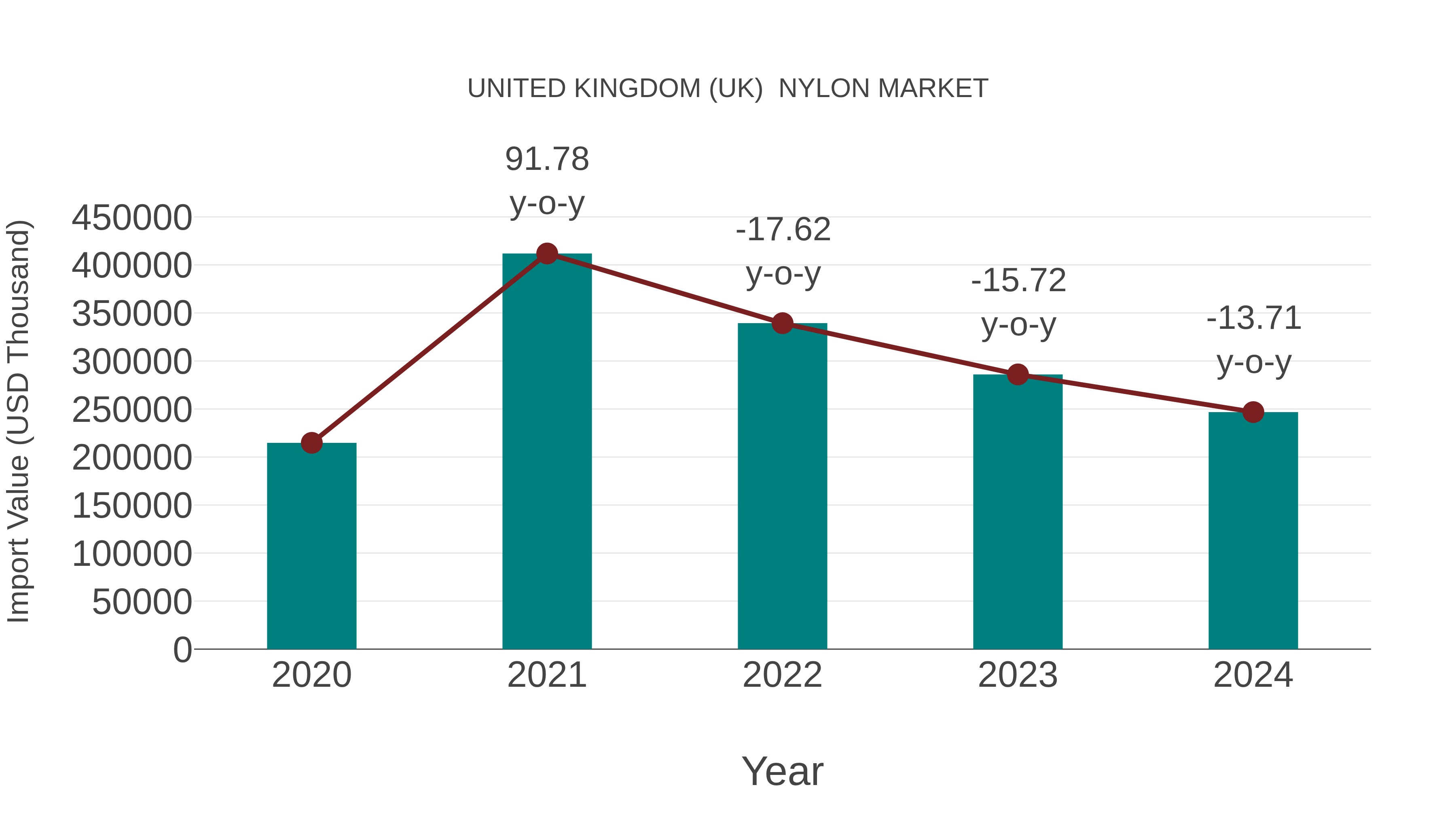
United Kingdom (UK) Nylon Market Overview
The United Kingdom (UK) Nylon Market is a significant segment within the country`s synthetic fibers industry. Nylon, a versatile and durable synthetic polymer, is widely used in textile manufacturing, automotive applications, and industrial products. The UK Nylon Market is driven by the demand for high-quality nylon fibers in clothing, carpets, and technical textiles. Key players in the market include manufacturers such as Invista, Solvay, and DuPont, who offer a range of nylon products catering to different industries. The market is influenced by factors such as changing consumer preferences, technological advancements in nylon production, and sustainable practices. With a focus on innovation and sustainability, the UK Nylon Market is poised for growth, particularly in applications requiring high-performance synthetic fibers.
United Kingdom (UK) Nylon Market Trends
In the United Kingdom (UK) Nylon Market, there is a growing trend towards sustainability and eco-consciousness. Consumers are increasingly seeking out nylon products that are made from recycled materials or are easily recyclable at the end of their lifecycle. This shift is driven by environmental concerns and the desire to reduce plastic waste. Manufacturers and brands in the UK are responding to this trend by developing innovative sustainable nylon materials, such as nylon yarns made from recycled fishing nets or other post-consumer waste. Additionally, there is a focus on transparency and traceability in the supply chain to ensure ethical sourcing practices. Overall, the UK Nylon Market is moving towards a more sustainable future in response to changing consumer preferences and global environmental challenges.
United Kingdom (UK) Nylon Market Challenges
In the United Kingdom (UK) Nylon Market, key challenges include fluctuating raw material prices, increasing competition from alternative materials, and regulations related to environmental sustainability. The volatility of raw material prices can impact production costs and profitability for nylon manufacturers. Additionally, the market faces competition from alternative materials such as polyester and polypropylene, which offer similar properties at potentially lower costs. Furthermore, there is a growing emphasis on sustainability and environmental regulations, which require nylon manufacturers to adhere to strict guidelines on waste management and emissions. Adapting to these challenges by investing in innovation, sustainable practices, and efficient supply chain management will be crucial for companies operating in the UK Nylon Market to remain competitive and meet evolving consumer demands.
United Kingdom (UK) Nylon Market Investment Opportunities
Investment opportunities in the United Kingdom`s Nylon Market include expanding manufacturing capabilities to meet the increasing demand for nylon products in various industries such as automotive, textiles, and packaging. Investing in research and development to innovate and create new applications for nylon materials can also be lucrative. Additionally, there is potential for investment in sustainable nylon production methods to align with growing environmental consciousness among consumers. Partnering with key players in the supply chain to ensure a reliable source of raw materials and efficient distribution channels can further enhance investment prospects in the UK Nylon Market. Overall, with the versatility and widespread use of nylon in multiple sectors, strategic investments in production, innovation, sustainability, and partnerships can yield significant returns in the UK market.
United Kingdom (UK) Nylon Market Government Policy
The United Kingdom (UK) Nylon Market is influenced by various government policies, including regulations on environmental sustainability, trade agreements, and industry standards. The UK government emphasizes reducing the environmental impact of nylon production through measures such as carbon emissions targets and waste management regulations. Trade agreements with other countries can also affect the nylon market by influencing tariffs and import/export restrictions. Additionally, industry standards set by government bodies ensure product quality and safety within the market. Overall, government policies play a pivotal role in shaping the UK Nylon Market by promoting sustainability, regulating trade, and ensuring compliance with industry standards.
United Kingdom (UK) Nylon Market Future Outlook
The future outlook for the United Kingdom (UK) Nylon Market appears to be positive, driven by factors such as the increasing demand for nylon in various industries including automotive, textiles, and packaging. The growing awareness about the benefits of nylon, such as its durability, lightweight nature, and resistance to chemicals, is likely to fuel market growth. Additionally, advancements in nylon production technologies and the focus on sustainable practices within the industry are expected to further boost market expansion. However, challenges such as fluctuating raw material prices and increasing competition from alternative materials may impact the market to some extent. Overall, the UK Nylon Market is poised for steady growth in the coming years, supported by evolving consumer preferences and industry innovations.
Key Highlights of the Report:
- United Kingdom (UK) Nylon Market Outlook
- Market Size of United Kingdom (UK) Nylon Market, 2025
- Forecast of United Kingdom (UK) Nylon Market, 2032
- Historical Data and Forecast of United Kingdom (UK) Nylon Revenues & Volume for the Period 2022 - 2032F
- United Kingdom (UK) Nylon Market Trend Evolution
- United Kingdom (UK) Nylon Market Drivers and Challenges
- United Kingdom (UK) Nylon Price Trends
- United Kingdom (UK) Nylon Porter's Five Forces
- United Kingdom (UK) Nylon Industry Life Cycle
- Historical Data and Forecast of United Kingdom (UK) Nylon Market Revenues & Volume By Product for the Period 2022 - 2032F
- Historical Data and Forecast of United Kingdom (UK) Nylon Market Revenues & Volume By Nylon 6 for the Period 2022 - 2032F
- Historical Data and Forecast of United Kingdom (UK) Nylon Market Revenues & Volume By Nylon 66 for the Period 2022 - 2032F
- Historical Data and Forecast of United Kingdom (UK) Nylon Market Revenues & Volume By Application for the Period 2022 - 2032F
- Historical Data and Forecast of United Kingdom (UK) Nylon Market Revenues & Volume By Automobile for the Period 2022 - 2032F
- Historical Data and Forecast of United Kingdom (UK) Nylon Market Revenues & Volume By Electrical & Electronics for the Period 2022 - 2032F
- Historical Data and Forecast of United Kingdom (UK) Nylon Market Revenues & Volume By Engineering Plastics for the Period 2022 - 2032F
- Historical Data and Forecast of United Kingdom (UK) Nylon Market Revenues & Volume By Textiles for the Period 2022 - 2032F
- Historical Data and Forecast of United Kingdom (UK) Nylon Market Revenues & Volume By Others for the Period 2022 - 2032F
- United Kingdom (UK) Nylon Import Export Trade Statistics
- Market Opportunity Assessment By Product
- Market Opportunity Assessment By Application
- United Kingdom (UK) Nylon Top Companies Market Share
- United Kingdom (UK) Nylon Competitive Benchmarking By Technical and Operational Parameters
- United Kingdom (UK) Nylon Company Profiles
- United Kingdom (UK) Nylon Key Strategic Recommendations






































