United States Fruit Market Year-wise Growth Rate (2021-2031F)
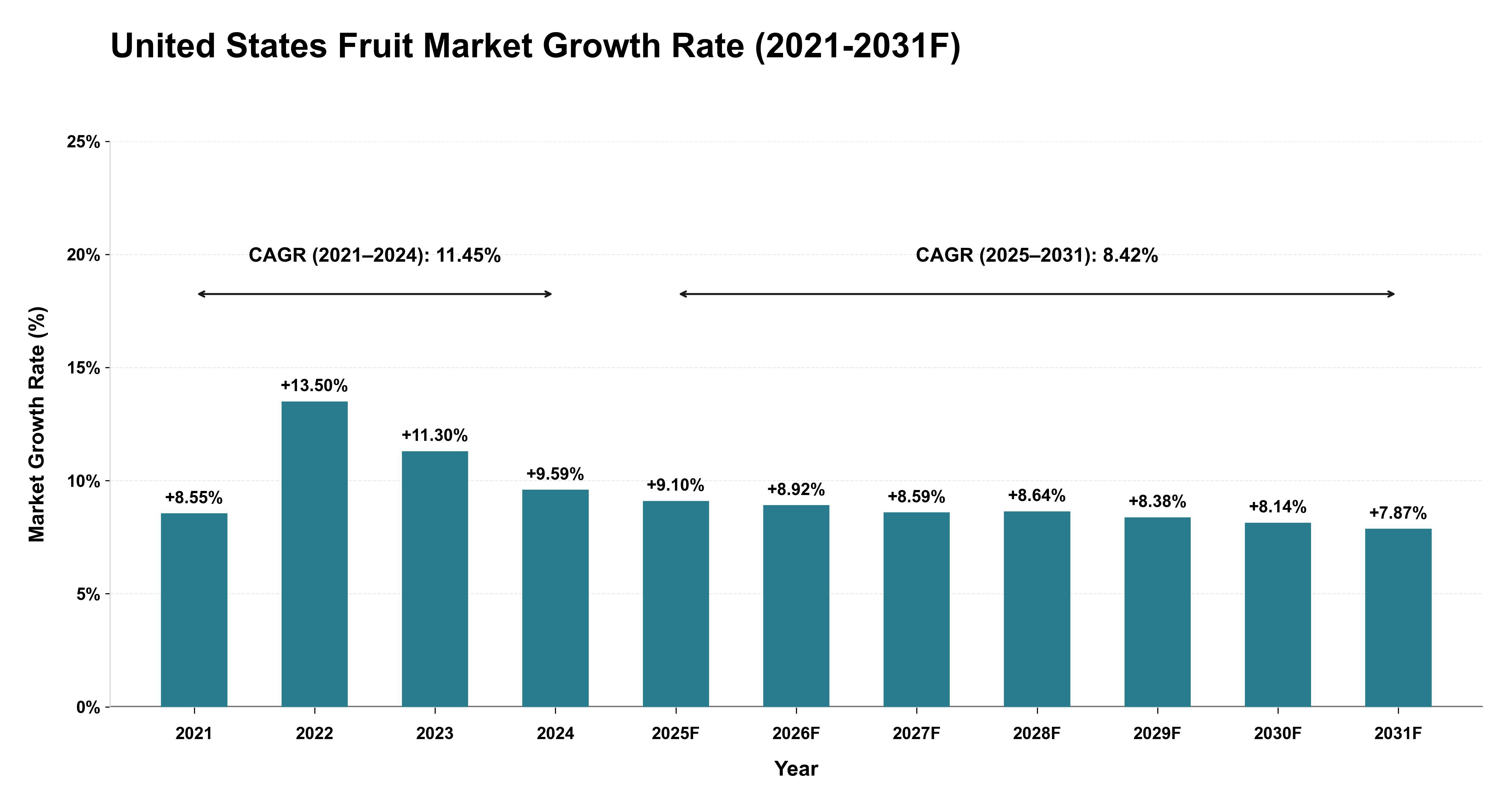
The United States Fruit Market witnessed a robust historical growth trend from 2021 to 2024, with a CAGR of 11.45%. This period saw accelerated demand driven by health-conscious consumer trends, technological advancements in farming practices, and increased focus on sustainability throughout the supply chain. However, starting in 2025, the market trajectory began to stabilize, reflecting a shift towards more moderate growth rates. The forecasted CAGR of 8.42% for the period 2025-2031 indicates a gradual deceleration in market expansion, influenced by factors such as evolving consumer preferences, regulatory changes impacting agricultural practices, and potential supply chain disruptions. Despite this moderation, the United States Fruit Market remains resilient, adapting to changing dynamics while continuing to offer diverse and innovative products to consumers.
United States (US) Fruit Market Overview
The United States fruit market is a thriving industry driven by a diverse range of products including apples, oranges, bananas, berries, and melons. With consumer preferences shifting towards healthier eating habits, there is a growing demand for organic and locally sourced fruits. Major trends in the market include the rise of convenience products such as pre-cut fruits and fruit cups, as well as the increasing popularity of exotic and specialty fruits. The market is highly competitive with key players focusing on product innovation, packaging, and marketing strategies to attract consumers. Factors such as seasonality, weather conditions, and transportation costs also influence pricing and availability. Overall, the US fruit market continues to expand, offering a wide variety of options to meet the evolving needs and preferences of consumers.
United States (US) Fruit Market Trends
The US fruit market is currently experiencing a shift towards healthier and more convenient options. Consumers are increasingly seeking out fresh, organic, and locally sourced fruits due to a growing emphasis on health and sustainability. There is also a rising demand for exotic and unique fruits, driven by a desire for new flavor experiences. Convenience is a key factor influencing purchasing decisions, leading to a rise in pre-cut and packaged fruit options. Additionally, the popularity of plant-based diets is fueling the demand for fruits as snacks, ingredients, and substitutes for traditional desserts. E-commerce and online grocery shopping are playing a significant role in the market as consumers look for convenient ways to purchase fruits. Overall, the US fruit market is evolving to meet the changing preferences and lifestyles of consumers.
United States (US) Fruit Market Challenges
In the US fruit market, there are several challenges that industry players face. One major challenge is the seasonality of fruit production, which can lead to fluctuations in supply and pricing throughout the year. Additionally, transportation and distribution costs can impact the affordability and availability of fruits, especially for regions that are far from major growing areas. Quality control and food safety regulations also pose challenges for fruit producers and distributors to ensure their products meet stringent standards. Competition from imported fruits and changing consumer preferences towards organic and locally sourced options further add complexity to the market landscape. Overall, navigating these challenges requires strategic planning, efficient supply chain management, and a deep understanding of consumer trends to remain competitive in the US fruit market.
United States (US) Fruit Market Investment Opportunities
The United States fruit market presents various investment opportunities for savvy investors. One option is to invest in emerging trends such as organic and locally sourced fruits, as consumer demand for healthier and more sustainable food options continues to rise. Another potential opportunity lies in technology and innovation within the fruit industry, including advancements in packaging, storage, and transportation to improve supply chain efficiency. Additionally, investing in vertical farming or indoor agriculture for fruit production could be a promising avenue for growth, especially in urban areas where access to fresh fruits is limited. Overall, the US fruit market offers diverse opportunities for investors looking to capitalize on evolving consumer preferences and technological advancements within the industry.
United States (US) Fruit Market Government Policy
The US government regulates the fruit market through various policies aimed at ensuring food safety, fair trade practices, and market competitiveness. The Department of Agriculture (USDA) sets standards for fruit quality and safety, conducts inspections, and provides market data to support informed decision-making. The Food and Drug Administration (FDA) oversees the safety of imported fruits and enforces labeling requirements. Trade policies, such as tariffs and import quotas, impact the availability and pricing of fruits in the US market. Additionally, agricultural subsidies and support programs influence domestic fruit production and exports. Overall, government policies play a significant role in shaping the dynamics of the US fruit market, balancing consumer protection, industry interests, and international trade relations.
United States (US) Fruit Market Future Outlook
The future outlook for the United States fruit market is positive, driven by several key factors. Increasing consumer awareness of health benefits associated with fruit consumption, coupled with a growing trend towards healthier eating habits, is expected to drive demand for fresh fruits. Additionally, the rise of e-commerce platforms and online grocery shopping is likely to make fruits more accessible to a larger consumer base. Technological advancements in agriculture, such as precision farming and sustainable farming practices, are also expected to improve fruit quality and availability. However, challenges such as climate change, water scarcity, and labor shortages may impact production and supply chains. Overall, the US fruit market is poised for growth, with opportunities for innovation and sustainability driving the industry forward.
Key Highlights of the Report:
- United States (US) Fruit Market Outlook
- Market Size of United States (US) Fruit Market, 2024
- Forecast of United States (US) Fruit Market, 2026
- Historical Data and Forecast of United States (US) Fruit Revenues & Volume for the Period 2021 - 2031
- United States (US) Fruit Market Trend Evolution
- United States (US) Fruit Market Drivers and Challenges
- United States (US) Fruit Price Trends
- United States (US) Fruit Porter's Five Forces
- United States (US) Fruit Industry Life Cycle
- Historical Data and Forecast of United States (US) Fruit Market Revenues & Volume By Applications for the Period 2021 - 2031
- Historical Data and Forecast of United States (US) Fruit Market Revenues & Volume By Supermarkets and Hypermarkets for the Period 2021 - 2031
- Historical Data and Forecast of United States (US) Fruit Market Revenues & Volume By Specialty Stores for the Period 2021 - 2031
- Historical Data and Forecast of United States (US) Fruit Market Revenues & Volume By Online for the Period 2021 - 2031
- Historical Data and Forecast of United States (US) Fruit Market Revenues & Volume By Type for the Period 2021 - 2031
- Historical Data and Forecast of United States (US) Fruit Market Revenues & Volume By Fresh for the Period 2021 - 2031
- Historical Data and Forecast of United States (US) Fruit Market Revenues & Volume By Dried for the Period 2021 - 2031
- Historical Data and Forecast of United States (US) Fruit Market Revenues & Volume By Frozen for the Period 2021 - 2031
- Historical Data and Forecast of United States (US) Fruit Market Revenues & Volume By Others for the Period 2021 - 2031
- United States (US) Fruit Import Export Trade Statistics
- Market Opportunity Assessment By Applications
- Market Opportunity Assessment By Type
- United States (US) Fruit Top Companies Market Share
- United States (US) Fruit Competitive Benchmarking By Technical and Operational Parameters
- United States (US) Fruit Company Profiles
- United States (US) Fruit Key Strategic Recommendations






































