United States Motorcycle Market Growth Rate Analysis (2025 - 2031)
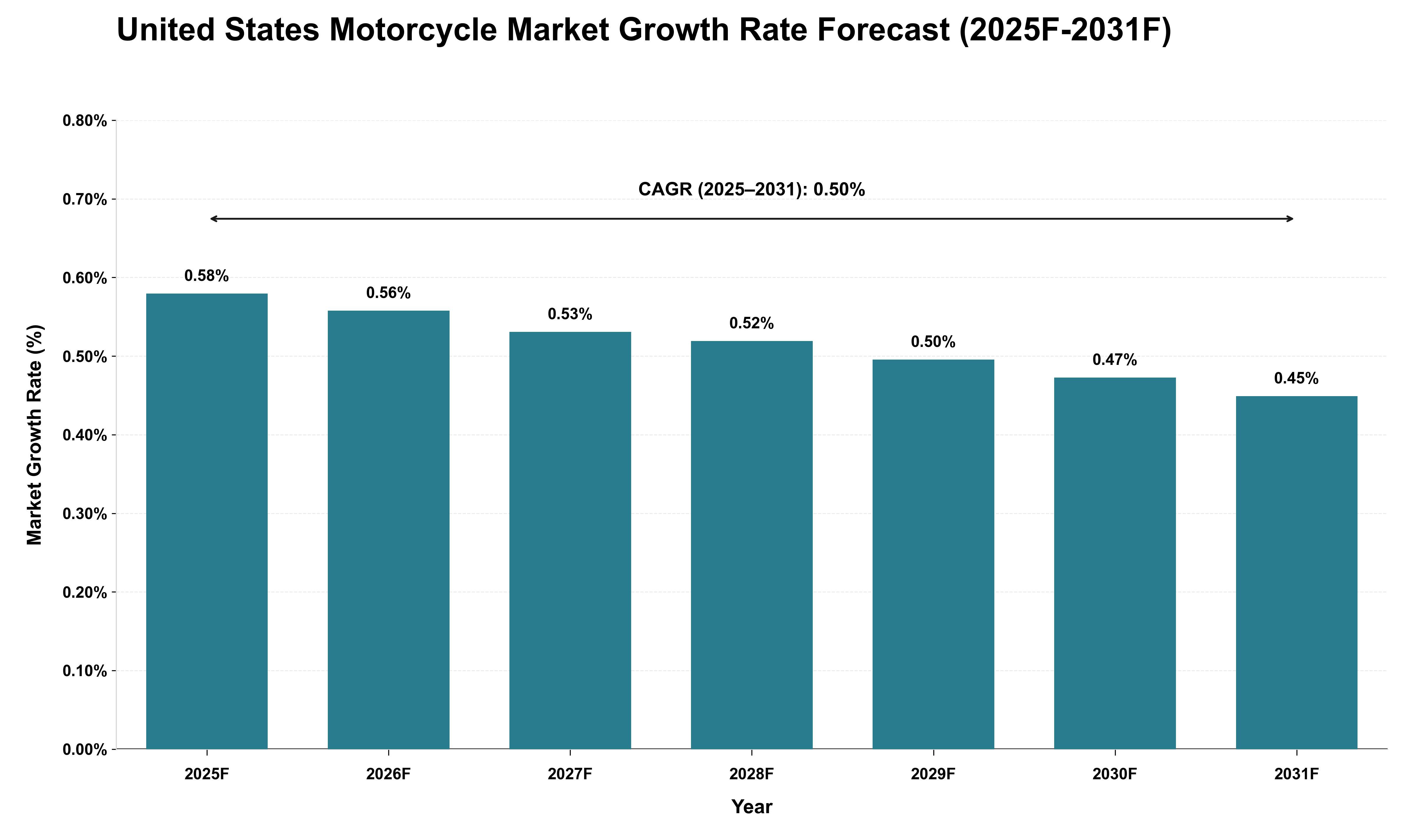
The outlook for the United States motorcycle market will be shaped by evolving regulatory frameworks and trade policies that influence both domestic production and import dynamics. As the forecasted CAGR of 0.50% suggests, growth will likely remain modest, reflecting a combination of increasing environmental regulations and potential tariffs on imported motorcycles, which could affect pricing structures and consumer demand. The annual growth rates indicate a gradual decline from 0.58% in 2025 to 0.45% by 2031, signaling that while there may be initial resilience in consumer spending on recreational vehicles, external pressures such as supply chain disruptions and fluctuating raw material costs will play a significant role in shaping market conditions. Additionally, cyclical trends in discretionary spending will further impact sales as economic conditions evolve, particularly during periods of inflation or economic uncertainty.
Key Highlights of the Report:
- United States (US) Motorcycle Market Outlook
- Market Size of United States (US) Motorcycle Market, 2025
- Forecast of United States (US) Motorcycle Market, 2032
- Historical Data and Forecast of United States (US) Motorcycle Revenues & Volume for the Period 2022 - 2032F
- United States (US) Motorcycle Market Trend Evolution
- United States (US) Motorcycle Market Drivers and Challenges
- United States (US) Motorcycle Price Trends
- United States (US) Motorcycle Porter's Five Forces
- United States (US) Motorcycle Industry Life Cycle
- Historical Data and Forecast of United States (US) Motorcycle Market Revenues & Volume By Type for the Period 2022 - 2032F
- Historical Data and Forecast of United States (US) Motorcycle Market Revenues & Volume By Adventure for the Period 2022 - 2032F
- Historical Data and Forecast of United States (US) Motorcycle Market Revenues & Volume By Cruiser for the Period 2022 - 2032F
- Historical Data and Forecast of United States (US) Motorcycle Market Revenues & Volume By Mopeds for the Period 2022 - 2032F
- Historical Data and Forecast of United States (US) Motorcycle Market Revenues & Volume By Sports for the Period 2022 - 2032F
- Historical Data and Forecast of United States (US) Motorcycle Market Revenues & Volume By Standard for the Period 2022 - 2032F
- Historical Data and Forecast of United States (US) Motorcycle Market Revenues & Volume By Touring for the Period 2022 - 2032F
- Historical Data and Forecast of United States (US) Motorcycle Market Revenues & Volume By Engine Capacity for the Period 2022 - 2032F
- Historical Data and Forecast of United States (US) Motorcycle Market Revenues & Volume By 151-300 CC for the Period 2022 - 2032F
- Historical Data and Forecast of United States (US) Motorcycle Market Revenues & Volume By 301-500 CC for the Period 2022 - 2032F
- Historical Data and Forecast of United States (US) Motorcycle Market Revenues & Volume By 501-800 CC for the Period 2022 - 2032F
- Historical Data and Forecast of United States (US) Motorcycle Market Revenues & Volume By 801-1000 CC for the Period 2022 - 2032F
- Historical Data and Forecast of United States (US) Motorcycle Market Revenues & Volume By 1001-1600 CC for the Period 2022 - 2032F
- Historical Data and Forecast of United States (US) Motorcycle Market Revenues & Volume By Above 1600 CC for the Period 2022 - 2032F
- United States (US) Motorcycle Import Export Trade Statistics
- Market Opportunity Assessment By Type
- Market Opportunity Assessment By Engine Capacity
- United States (US) Motorcycle Top Companies Market Share
- United States (US) Motorcycle Competitive Benchmarking By Technical and Operational Parameters
- United States (US) Motorcycle Company Profiles
- United States (US) Motorcycle Key Strategic Recommendations






































