United States Pet Food Market Year-wise Growth Rate (2021-2031F)
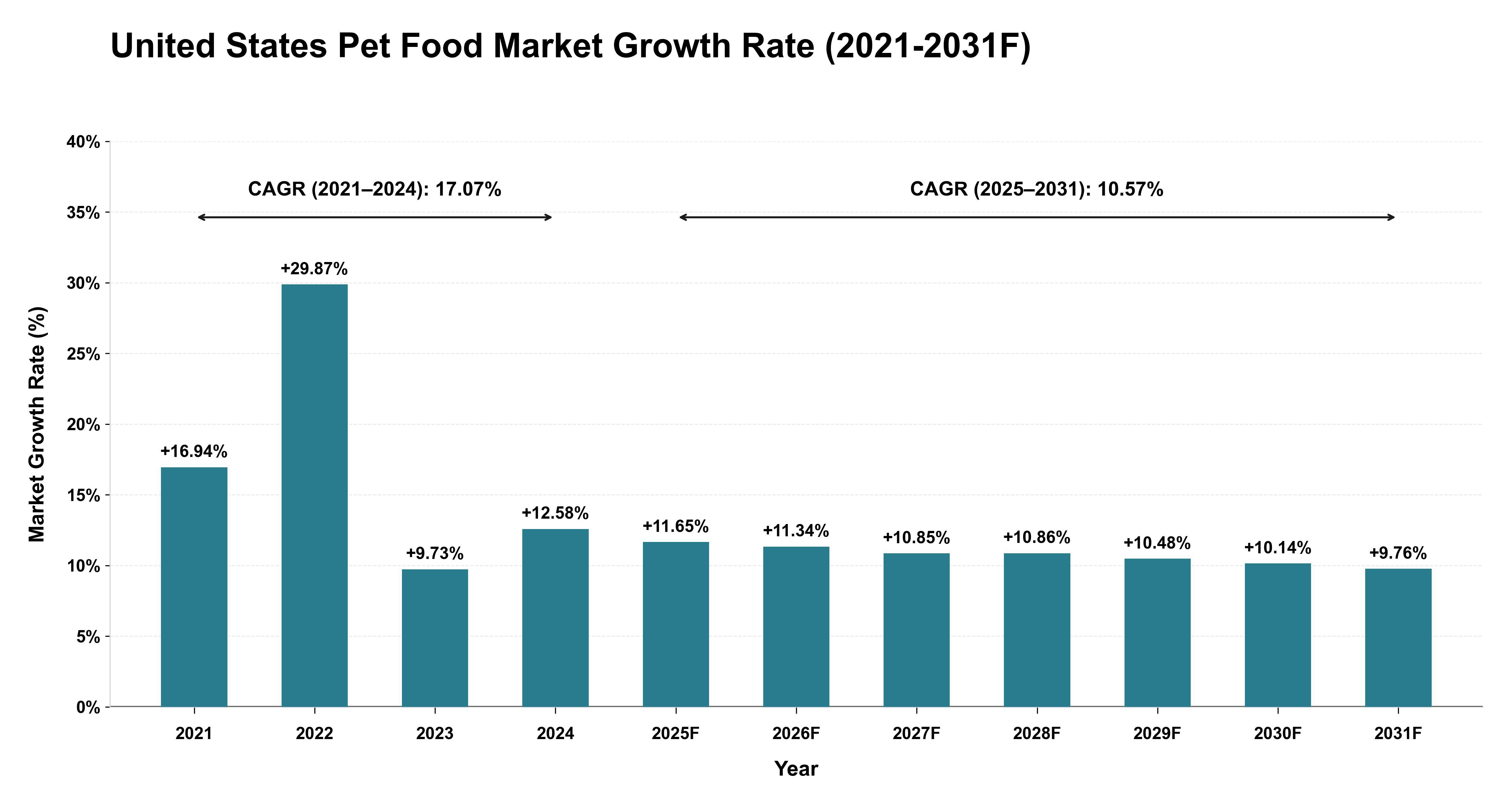
The United States Pet Food Market experienced robust growth from 2021 to 2024, with a notable CAGR of 17.07%. This surge was primarily driven by a combination of factors such as increasing pet ownership trends, growing awareness of pet health and nutrition, and a shift towards premium and specialized pet food products. The years 2021 and 2022 saw particularly significant accelerations in growth at 16.94% and 29.87% respectively, indicating heightened consumer demand and willingness to spend on high-quality pet food options. Looking ahead to the forecast period of 2025-2031, although the CAGR is expected to moderate to 10.57%, the market is projected to maintain steady growth rates around this level. This forecast signifies a more mature market phase characterized by stable demand dynamics, continued product innovation, and sustained consumer interest in premium pet food offerings.
United States (US) Pet Food Market Synopsis
The United States pet food market is a thriving industry driven by the increasing number of pet owners and the growing trend of humanization of pets. The market offers a wide variety of products including dry food, wet food, treats, and supplements, catering to the specific dietary needs of pets. Premium and natural pet food products are gaining popularity among consumers, who are increasingly concerned about the health and well-being of their pets. E-commerce channels are playing a significant role in the distribution of pet food, providing convenience to consumers for purchasing products online. The market is highly competitive, with key players focusing on product innovation, marketing strategies, and partnerships to gain a competitive edge. Overall, the US pet food market is expected to continue its growth trajectory in the coming years, driven by the strong bond between pet owners and their furry companions.
United States (US) Pet Food Market Trends
In the United States Pet Food Market, there are several notable trends emerging. One major trend is the increasing demand for natural and organic pet food products as pet owners become more conscious of the ingredients and quality of food they are feeding their pets. Another trend is the rise of personalized and customized pet food options, with companies offering tailored meal plans based on factors like pet`s age, size, and dietary restrictions. Additionally, there is a growing interest in alternative protein sources such as insect-based or plant-based proteins in pet food products. E-commerce is also playing a significant role in the market, with more consumers opting to purchase pet food online for convenience and a wider range of options. Overall, these trends indicate a shift towards premium, health-conscious, and personalized pet food choices in the US market.
United States (US) Pet Food Market Challenges
In the US Pet Food Market, challenges include increasing competition among manufacturers leading to price wars, the rising cost of raw materials impacting product pricing and profit margins, evolving consumer preferences towards natural and organic ingredients, regulatory changes and scrutiny regarding product safety and labeling, and the growing trend of pet owners seeking customized or specialized diets for their pets. Additionally, concerns over sustainability, ethical sourcing, and environmental impact are becoming more prominent, influencing consumer purchasing decisions. Keeping up with these dynamic market trends and maintaining brand loyalty amidst fierce competition while ensuring compliance with regulations pose significant challenges for companies operating in the US pet food industry.
United States (US) Pet Food Market Investment Opportunities
The US Pet Food Market presents attractive investment opportunities due to the increasing humanization of pets, leading to a growing demand for premium and organic pet food products. With a strong focus on pet health and wellness, there is a trend towards natural ingredients, grain-free options, and specialized diets such as raw or freeze-dried foods. Additionally, the rise of e-commerce platforms and subscription services has made it easier for pet owners to access a wide variety of pet food products. Investing in innovative pet food brands that cater to these evolving consumer preferences, as well as companies that offer personalized and convenient shopping experiences, could yield significant returns in this growing market.
Jordan Agar Market Government Policies
Government policies related to the US Pet Food Market primarily focus on ensuring the safety and quality of pet food products. The Food and Drug Administration (FDA) regulates pet food through the Federal Food, Drug, and Cosmetic Act, which requires proper labeling, ingredient listings, and adherence to manufacturing standards. The FDA also monitors for potential contaminants and issues recalls when necessary to protect pet and human health. Additionally, the US Department of Agriculture (USDA) oversees the inspection of meat-based pet food products to ensure compliance with food safety standards. The pet food industry is also subject to various state regulations regarding product registration, labeling, and advertising practices to promote transparency and consumer trust in the market.
United States (US) Pet Food Market Future Outlook
The United States Pet Food Market is expected to continue experiencing steady growth in the coming years, driven by the increasing pet ownership rates, humanization of pets, and growing demand for premium and natural pet food products. Consumers are becoming more conscious of their pets` dietary needs and are willing to spend more on high-quality pet food options. The trend towards e-commerce and online retailing is also likely to play a significant role in the market`s growth, providing convenience and a wider range of product choices for pet owners. With a focus on health and wellness, sustainable practices, and innovative product offerings, the US Pet Food Market is poised for continued expansion and innovation in the foreseeable future.
Key Highlights of the Report:
- United States (US) Pet Food Market Outlook
- Market Size of United States (US) Pet Food Market, 2021
- Forecast of United States (US) Pet Food Market, 2031
- Historical Data and Forecast of United States (US) Pet Food Revenues & Volume for the Period 2018 - 2031
- United States (US) Pet Food Market Trend Evolution
- United States (US) Pet Food Market Drivers and Challenges
- United States (US) Pet Food Price Trends
- United States (US) Pet Food Porter's Five Forces
- United States (US) Pet Food Industry Life Cycle
- Historical Data and Forecast of United States (US) Pet Food Market Revenues & Volume By Type for the Period 2018 - 2031
- Historical Data and Forecast of United States (US) Pet Food Market Revenues & Volume By Dry Food for the Period 2018 - 2031
- Historical Data and Forecast of United States (US) Pet Food Market Revenues & Volume By Wet Food for the Period 2018 - 2031
- Historical Data and Forecast of United States (US) Pet Food Market Revenues & Volume By Snacks/Treats for the Period 2018 - 2031
- Historical Data and Forecast of United States (US) Pet Food Market Revenues & Volume By Animal for the Period 2018 - 2031
- Historical Data and Forecast of United States (US) Pet Food Market Revenues & Volume By Dog for the Period 2018 - 2031
- Historical Data and Forecast of United States (US) Pet Food Market Revenues & Volume By Cat for the Period 2018 - 2031
- Historical Data and Forecast of United States (US) Pet Food Market Revenues & Volume By Others for the Period 2018 - 2031
- United States (US) Pet Food Import Export Trade Statistics
- Market Opportunity Assessment By Type
- Market Opportunity Assessment By Animal
- United States (US) Pet Food Top Companies Market Share
- United States (US) Pet Food Competitive Benchmarking By Technical and Operational Parameters
- United States (US) Pet Food Company Profiles
- United States (US) Pet Food Key Strategic Recommendations






































