Venezuela Bath Salt Market Size, Share & Growth Rate
The Venezuela Bath Salt Market was estimated at USD 429 Million in 2025 and is projected to reach USD 583 Million by 2032, growing at a CAGR of 4.5% from 2026 to 2032. This growth is largely fueled by the increasing consumer awareness around health and wellness, prompting a shift towards natural and organic products. The rise in self-care routines among Venezuelans, especially in urban areas, is further driving the demand for bath salts that offer therapeutic benefits.
Venezuela Bath Salt Market Year-wise Growth Rate and Key Drivers
This graph highlights how the Venezuela Bath Salt Market has steadily grown over the years, supported by major growth factors.
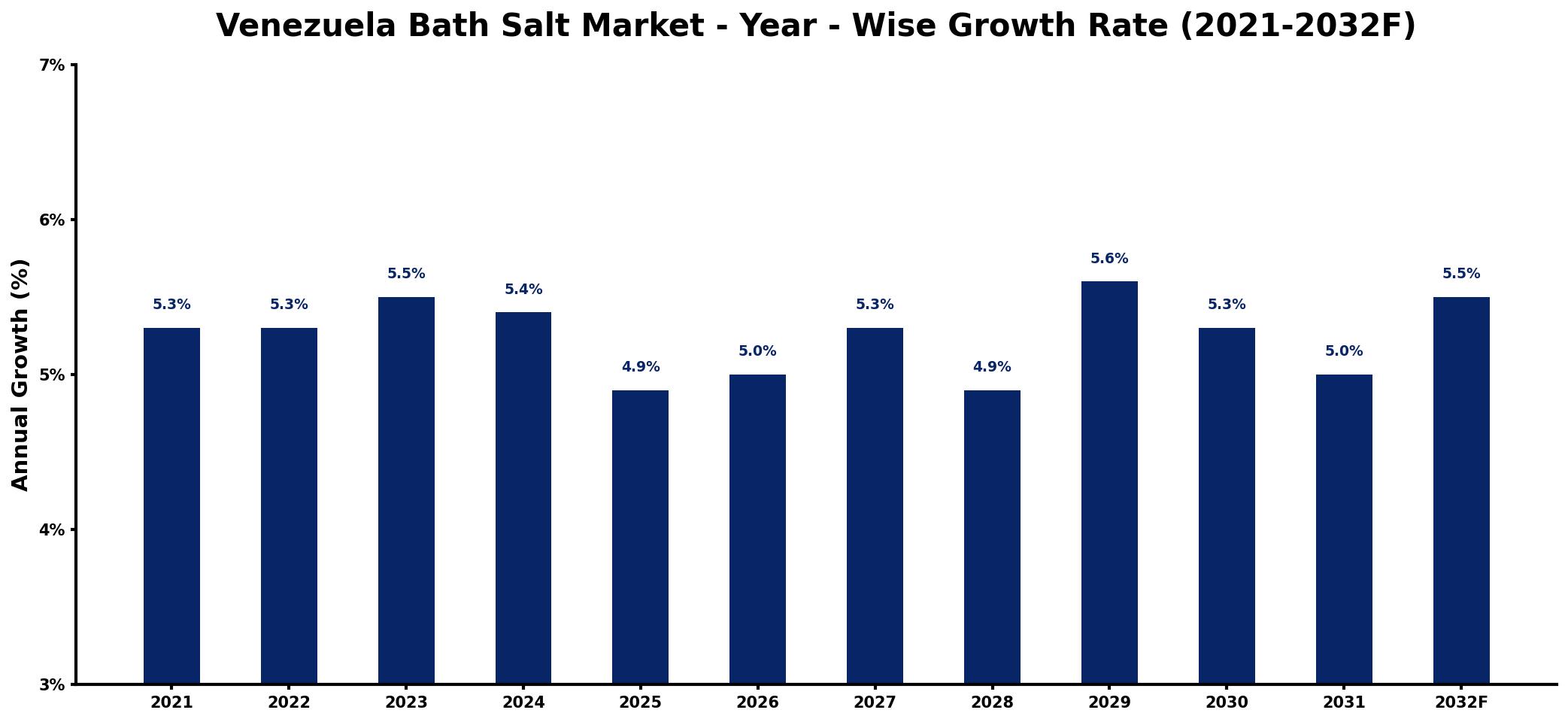
The table below presents the year‑wise growth rates along with the key drivers influencing the market
| Year | Growth Rate | Major Drivers |
| 2021 | 5.3% | Increased wellness trend among consumers |
| 2022 | 5.3% | Rising disposable income levels |
| 2023 | 5.5% | Growing popularity of spa treatments |
| 2024 | 5.4% | Expansion of retail distribution channels |
| 2025 | 4.9% | Increased focus on self-care products |
| 2026 | 5.0% | Surge in online shopping adoption |
| 2027 | 5.3% | Rising interest in natural ingredients |
| 2028 | 4.9% | Growth in luxury wellness tourism |
| 2029 | 5.6% | Increased consumer health consciousness |
| 2030 | 5.3% | rising end-use demand growth |
| 2031 | 5.0% | Rising demand for relaxation solutions |
| 2032 | 5.5% | Increased marketing efforts by brands |
Note: Market size estimations and growth projections presented in this report are based on 6Wresearch's proprietary forecasting methodology, utilizing the latest available industry data, government publications, and primary research inputs.
Venezuela Bath Salt Market Synopsis
In recent years, the Venezuela bath salt market has experienced a gradual increase in demand, attributed to rising consumer interest in health-conscious products. However, as the economy faces ongoing challenges, the market's future trajectory may hinge on innovation and adaptability.
While the growth of e-commerce is creating new distribution opportunities, factors such as currency devaluation and economic instability pose significant hurdles. Despite these challenges, the demand for unique, high-quality bath salt products continues to offer a glimmer of hope for market expansion.
Venezuela Bath Salt Market Key Takeaways
- Significant consumer shift towards natural and organic bath salts enhances market growth opportunities.
- Online sales channels are becoming increasingly important for product accessibility.
- Investment in luxury and therapeutic bath salt variations can capture niche market segments.
- Economic instability poses risks but also motivates innovation in product offerings.
- Government regulations ensure safety standards, potentially elevating consumer trust in products.
Evaluation of Restraints in Venezuela Bath Salt Market
The Venezuela Bath Salt Market faces significant constraints primarily due to economic instability, which severely impacts consumer purchasing power. High inflation rates and a volatile currency complicate pricing strategies, making it difficult for manufacturers to maintain product affordability. Additionally, trade restrictions and sanctions limit access to essential raw materials, hampering production capabilities. These factors create a challenging business environment where consistent supply and product availability become critical concerns for both manufacturers and consumers.
Venezuela Bath Salt Market Trends
The current trend within the Venezuela Bath Salt Market is characterized by a marked preference for organic and natural ingredients. Consumers are increasingly aware of the health benefits associated with bath salts, driving demand for products that promise stress relief, relaxation, and skin nourishment. Additionally, innovative packaging and unique fragrance blends are emerging as key differentiators in this competitive landscape, offering consumers an elevated bathing experience that caters to their self-care rituals.
Venezuela Bath Salt Market Opportunities
Investors have a wealth of opportunities in the Venezuela Bath Salt Market, particularly as consumer preferences shift towards luxury self-care products. High-quality, locally sourced bath salts are in demand, allowing brands to carve out distinctive niches within the market. Collaborations with local spas and wellness centers can amplify visibility, while an emphasis on therapeutic blends tailored to specific needs can attract a loyal customer base. By focusing on innovation and sustainability, companies can effectively differentiate themselves and cater to the evolving desires of health-conscious consumers.
Government Initiatives in the Venezuela Bath Salt Market
The Venezuelan government has instituted policies aimed at regulating the bath salt market, emphasizing the importance of consumer safety and product quality. These regulations include stringent quality standards governing manufacturing processes and ingredient sourcing. Import restrictions and licensing requirements are also enforced to monitor the flow of bath salt products into the country. By promoting transparent labeling practices, these initiatives help safeguard consumer interests and foster a competitive environment within the market.
Future Insights of the Venezuela Bath Salt Market
Looking ahead, the Venezuela Bath Salt Market's outlook is cautious yet full of potential. While economic uncertainties threaten to limit overall growth, the persistent demand for luxury and organic products remains a bright spot. Companies that can adeptly navigate the shifting economic landscape and provide innovative solutions tailored to affluent consumers are likely to find success. As the market matures, a focus on unique product offerings and sustainable practices may serve to differentiate brands and sustain demand even amidst economic challenges.
Venezuela Bath Salt Market Latest Developments (2025 - 2026)
In the recent months, the Venezuela Bath Salt Market has seen an uptick in interest towards locally produced organic products. This movement has prompted various retailers to enhance their online presence, making it easier for consumers to access a diverse range of bath salts. Innovative marketing campaigns targeting self-care enthusiasts have gained traction, underscoring the emotional and psychological benefits of using bath salts for relaxation and wellness. The industry is observing a steady push towards eco-friendly packaging solutions, resonating with the growing environmental consciousness among consumers.
Venezuela Bath Salt Market - Key Attractiveness of the Report
- 10 Years of Market Numbers
- Historical Data Starting from 2022 to 2025
- Base Year: 2025
- Forecast Data until 2032
- Key Performance Indicators Impacting the Market
- Major Upcoming Developments and Projects
Key Highlights of the Report:
- Venezuela Bath Salt Market Outlook
- Market Size of Venezuela Bath Salt Market, 2025
- Forecast of Venezuela Bath Salt Market, 2032
- Historical Data and Forecast of Venezuela Bath Salt Revenues & Volume for the Period 2022-2032F
- Venezuela Bath Salt Market Trend Evolution
- Venezuela Bath Salt Market Drivers and Challenges
- Venezuela Bath Salt Price Trends
- Venezuela Bath Salt Porter's Five Forces
- Venezuela Bath Salt Industry Life Cycle
- Historical Data and Forecast of Venezuela Bath Salt Market Revenues & Volume By Type for the Period 2022-2032F
- Historical Data and Forecast of Venezuela Bath Salt Market Revenues & Volume By Atlantic Salt for the Period 2022-2032F
- Historical Data and Forecast of Venezuela Bath Salt Market Revenues & Volume By Crystal Salt for the Period 2022-2032F
- Historical Data and Forecast of Venezuela Bath Salt Market Revenues & Volume By Dead Sea Salt for the Period 2022-2032F
- Historical Data and Forecast of Venezuela Bath Salt Market Revenues & Volume By Epsom Salt for the Period 2022-2032F
- Historical Data and Forecast of Venezuela Bath Salt Market Revenues & Volume By Others for the Period 2022-2032F
- Historical Data and Forecast of Venezuela Bath Salt Market Revenues & Volume By Form for the Period 2022-2032F
- Historical Data and Forecast of Venezuela Bath Salt Market Revenues & Volume By Granular for the Period 2022-2032F
- Historical Data and Forecast of Venezuela Bath Salt Market Revenues & Volume By Powder for the Period 2022-2032F
- Historical Data and Forecast of Venezuela Bath Salt Market Revenues & Volume By Coarse for the Period 2022-2032F
- Historical Data and Forecast of Venezuela Bath Salt Market Revenues & Volume By Others for the Period 2022-2032F
- Historical Data and Forecast of Venezuela Bath Salt Market Revenues & Volume By Distribution Channel for the Period 2022-2032F
- Historical Data and Forecast of Venezuela Bath Salt Market Revenues & Volume By Store Based for the Period 2022-2032F
- Historical Data and Forecast of Venezuela Bath Salt Market Revenues & Volume By Non Store Based for the Period 2022-2032F
- Venezuela Bath Salt Import Export Trade Statistics
- Market Opportunity Assessment By Type
- Market Opportunity Assessment By Form
- Market Opportunity Assessment By Distribution Channel
- Venezuela Bath Salt Top Companies Market Share
- Venezuela Bath Salt Competitive Benchmarking By Technical and Operational Parameters
- Venezuela Bath Salt Company Profiles
- Venezuela Bath Salt Key Strategic Recommendations






































