Venezuela Cookware Market Summary
The venezuela cookware market was estimated at USD 460 Million in 2025 and is projected to reach USD 646 Million by 2032, growing at a CAGR of 5.5% from 2026 to 2032.
Venezuela Cookware Market Year-wise Growth Rate and Key Drivers
This graph highlights how the Venezuela Cookware Market has steadily grown over the past five years, supported by major growth factors.
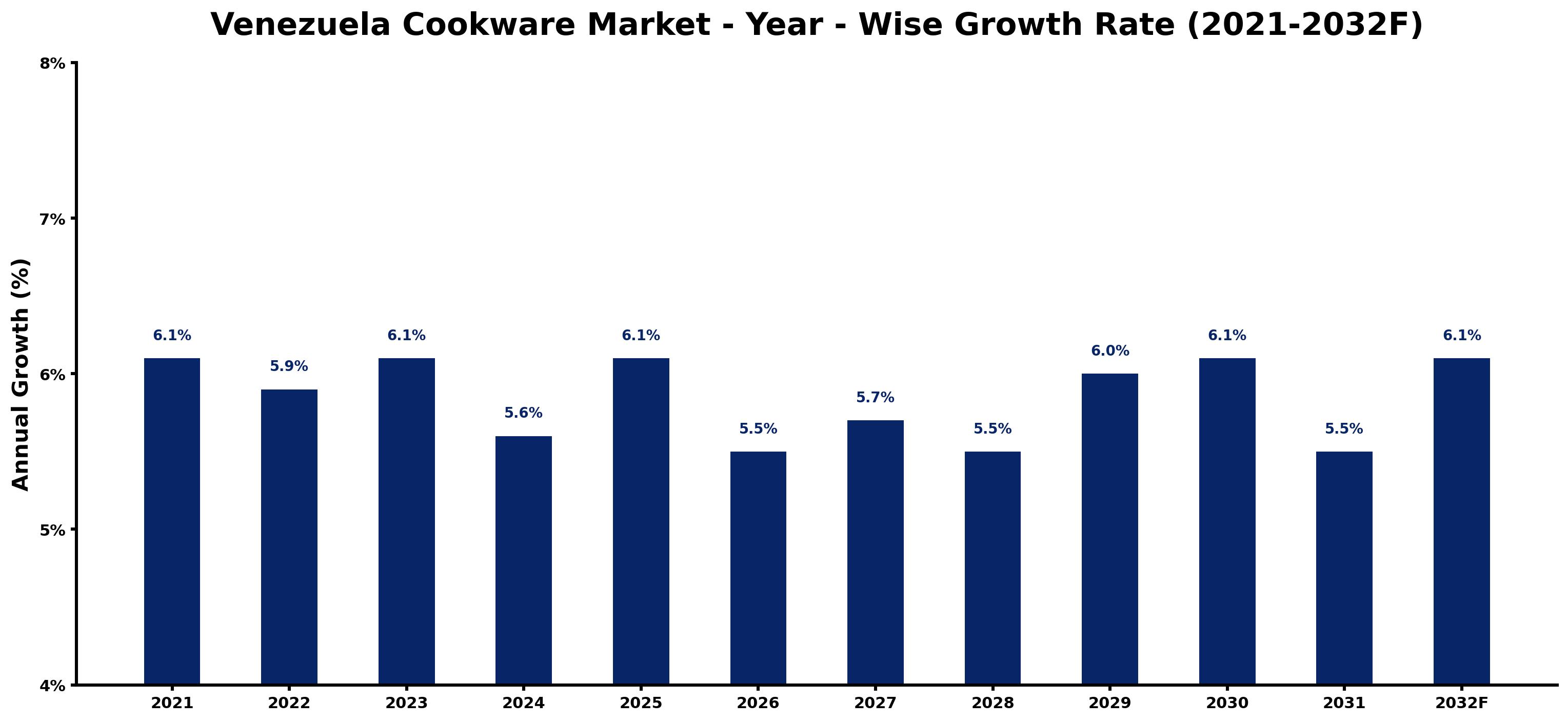
The table below presents the year wise growth rates along with the key drivers influencing the market
| Year | Growth Rate | Major Drivers |
| 2021 | 6.1% | Economic challenges have forced consumers to prioritize durable and cost-effective cookware options. |
| 2022 | 5.9% | Shifts in consumer preferences highlight a growing interest in eco-friendly cookware materials. |
| 2023 | 6.1% | Local artisans are increasingly recognized for crafting unique, high-quality cookware designs. |
| 2024 | 5.6% | Emerging online platforms provide access to a wider range of cookware brands and products. |
| 2025 | 6.1% | Culinary influencers leverage social media to promote innovative cooking techniques and tools. |
| 2026 | 5.5% | Market participants are enhancing product offerings with multifunctional cookware solutions. |
| 2027 | 5.7% | Venezuelan households are opting for cookware that reduces energy consumption during meal preparation. |
| 2028 | 5.5% | Urbanization trends are leading to smaller kitchens, increasing demand for space-efficient cookware. |
| 2029 | 6.0% | Increased investment in local manufacturing enhances product availability and affordability for consumers. |
| 2030 | 6.1% | Collaborations between chefs and cookware brands introduce premium collections targeting enthusiasts. |
| 2031 | 5.5% | The growth of health-conscious cooking encourages consumers to invest in specialized cookware. |
| 2032 | 6.1% | Sustainability-focused brands gain traction, appealing to environmentally aware consumers in Venezuela. |
Note - Market size estimations and growth projections presented in this report are based on 6Wresearch's advanced forecasting approach, validated with industry datasets as of June 2026.
Venezuela Cookware Market Synopsis
The Venezuela Cookware Market is projected to reach 5.5% and witness significant growth during the forecast period (2026-2032). The market is characterized by a wide assortment of products, including pots, pans, cookware sets, and various kitchen accessories. The demand for traditional materials such as aluminum, stainless steel, and cast iron remains strong, although there is an observable shift towards innovative designs and non-stick coatings. Domestic manufacturers offer competitive alternatives to international brands, thereby catering to a diverse demographic influenced by varying economic factors.
Venezuela Cookware Market Trends and Opportunities
The Venezuela Cookware Market is currently undergoing significant changes. Consumers are increasingly prioritizing durable and versatile cookware options, which has led to a heightened interest in non-stick and easy-to-clean materials such as ceramic and titanium. Additionally, there is a rising preference for environmentally-friendly cookware, with more consumers opting for products made from sustainable materials like cast iron and stainless steel. The following trends are shaping the market landscape:
- Innovation in Design: Technological advancements have led to ergonomic designs and induction-compatible cookware, appealing to consumers seeking convenient cooking solutions.
- Demand for Versatility: There is a notable trend towards cookware sets that offer various sizes and functionalities to accommodate diverse cooking needs, reflecting a shift to more efficient kitchen tools.
- Sustainability Focus: The growing awareness of environmental issues has prompted a demand for eco-friendly cookware options, influencing purchasing decisions among conscious consumers.
- Accessibility of E-commerce: The rise of digital platforms for marketing and sales is beginning to reshape the traditional retail landscape, making it easier for consumers to access a variety of cookware products.
- Resilience in Quality: Despite economic challenges, consumers remain focused on quality and durability, driving a preference for cookware that provides value for money.
Venezuela Cookware Market Challenges and Restraints
The Venezuela Cookware Market faces a myriad of challenges that could hinder growth during the forecast period. Economic instability, marked by high inflation rates and devaluation of currency, limits consumer purchasing power and reduces overall product demand. The following challenges pose significant risks for market development:
- Currency Fluctuations: The volatility in currency values directly impacts pricing, making it difficult for manufacturers to maintain competitive pricing strategies.
- Political Unrest: Ongoing political instability has created unpredictable business conditions, complicating operations for cookware companies.
- Supply Chain Disruptions: Limited access to raw materials due to import restrictions hampers production capabilities and compromises the availability of finished products.
- Rising Production Costs: Increased costs associated with manufacturing and sourcing materials have placed additional pressure on local producers, further straining the market.
- Quality Maintenance: The challenge of maintaining quality standards amidst economic turmoil acts as a barrier to competitiveness for local cookware firms.
Venezuela Cookware Market Investment Opportunities
Amidst the challenges, there are investment opportunities that can be leveraged in the Venezuela Cookware Market. Key potential areas for investment include:
- Durable Product Development: Introducing high-quality cookware products that meet the growing demand for modern and efficient kitchen tools can capture market interest.
- Eco-friendly Options: Investing in sustainable cookware solutions can attract environmentally-conscious consumers who prioritize greener alternatives in their purchases.
- Digital Marketing Strategies: Leveraging digital platforms for sales and promotions presents a lucrative opportunity to reach a wider audience as e-commerce gains popularity.
- Innovative Product Features: Emphasizing innovation in product design and materials can differentiate offerings in a competitive landscape.
- Strategic Partnerships: Collaborating with local retailers or online platforms may enhance distribution capabilities and streamline access to target markets.
Venezuela Cookware Market Government Investment and Initiatives
Government policies significantly influence the Venezuela Cookware Market. Current regulations include import restrictions, price controls, and currency exchange regulations that impact market dynamics. Key factors include:
- Import Regulations: Strict import rules limit the availability of international cookware brands, which can lead to reduced competition and a narrower selection for consumers.
- Price Controls: Government-imposed price controls have direct implications for production costs and final retail prices, affecting both producers and consumers.
- Currency Exchange Limitations: Regulations surrounding currency exchange make it challenging for businesses to obtain foreign currency for importing raw materials or finished goods.
- Public Spending: Government investment in local industries could provide necessary support to domestic manufacturers, promoting resilience in the cookware sector.
- Development Plans: Potential initiatives aimed at boosting local production capabilities and infrastructure may serve to enhance the overall competitiveness of the cookware market.
Venezuela Cookware Market Latest Developments (May 2025 - June 2026)
Recent developments in the Venezuela Cookware Market from May 2025 to June 2026 indicate a continued emphasis on innovation and adaptation to evolving consumer preferences. Manufacturers are focusing on enhancing the durability and functionality of their products to meet diverse cooking needs. The sustainability trend is also gaining traction, with more brands exploring eco-friendly materials. Additionally, the increasing penetration of e-commerce platforms has begun to reshape consumer shopping behavior, leading to a greater variety of choices available to Venezuelan consumers. Companies are navigating the ongoing economic challenges by prioritizing quality and value in their product offerings, reflecting an adaptive strategy in a turbulent market environment.
Venezuela Cookware Market - Key Attractiveness of the Report
- 10 Years of Market Numbers
- Historical Data Starting from 2022 to 2025
- Base Year: 2025
- Forecast Data until 2032
- Key Performance Indicators Impacting the Market
- Major Upcoming Developments and Projects
Key Highlights of the Report:
- Venezuela Cookware Market Outlook
- Market Size of Venezuela Cookware Market, 2025
- Forecast of Venezuela Cookware Market, 2032F
- Historical Data and Forecast of Venezuela Cookware Revenues & Volume for the Period 2022-2032F
- Venezuela Cookware Market Trend Evolution
- Venezuela Cookware Market Drivers and Challenges
- Venezuela Cookware Price Trends
- Venezuela Cookware Porter's Five Forces
- Venezuela Cookware Industry Life Cycle
- Historical Data and Forecast of Venezuela Cookware Market Revenues & Volume By Material Type for the Period 2022-2032F
- Historical Data and Forecast of Venezuela Cookware Market Revenues & Volume By Aluminium for the Period 2022-2032F
- Historical Data and Forecast of Venezuela Cookware Market Revenues & Volume By Stainless Steel for the Period 2022-2032F
- Historical Data and Forecast of Venezuela Cookware Market Revenues & Volume By Others for the Period 2022-2032F
- Historical Data and Forecast of Venezuela Cookware Market Revenues & Volume By Distribution Channels for the Period 2022-2032F
- Historical Data and Forecast of Venezuela Cookware Market Revenues & Volume By Offline for the Period 2022-2032F
- Historical Data and Forecast of Venezuela Cookware Market Revenues & Volume By Online for the Period 2022-2032F
- Venezuela Cookware Import Export Trade Statistics
- Market Opportunity Assessment By Material Type
- Market Opportunity Assessment By Distribution Channels
- Venezuela Cookware Top Companies Market Share
- Venezuela Cookware Competitive Benchmarking By Technical and Operational Parameters
- Venezuela Cookware Company Profiles
- Venezuela Cookware Key Strategic Recommendations






































