Malaysia Cookware Market Size Growth Rate
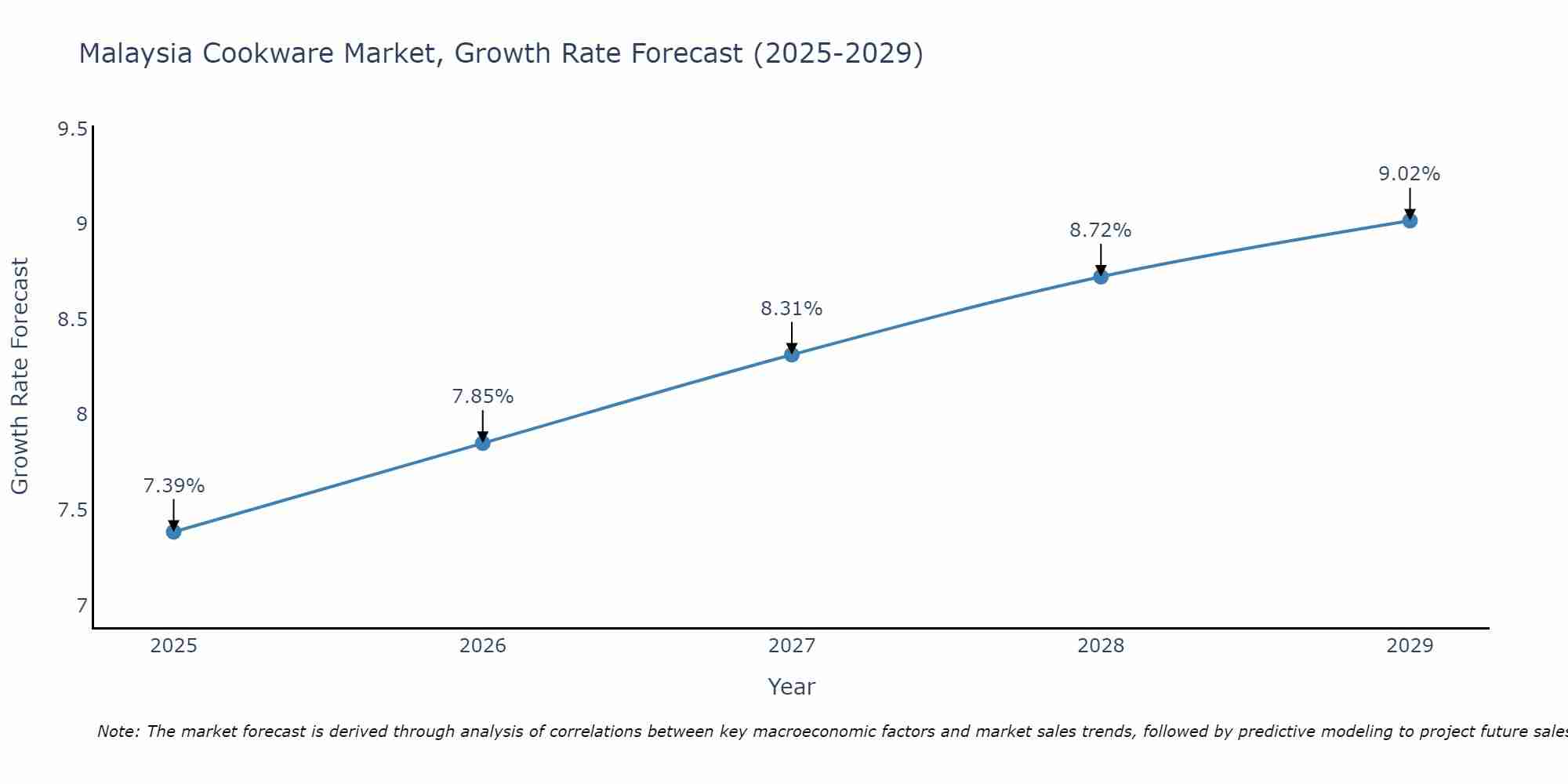
The Malaysia Cookware Market is likely to experience consistent growth rate gains over the period 2025 to 2029. From 7.39% in 2025, the growth rate steadily ascends to 9.02% in 2029.
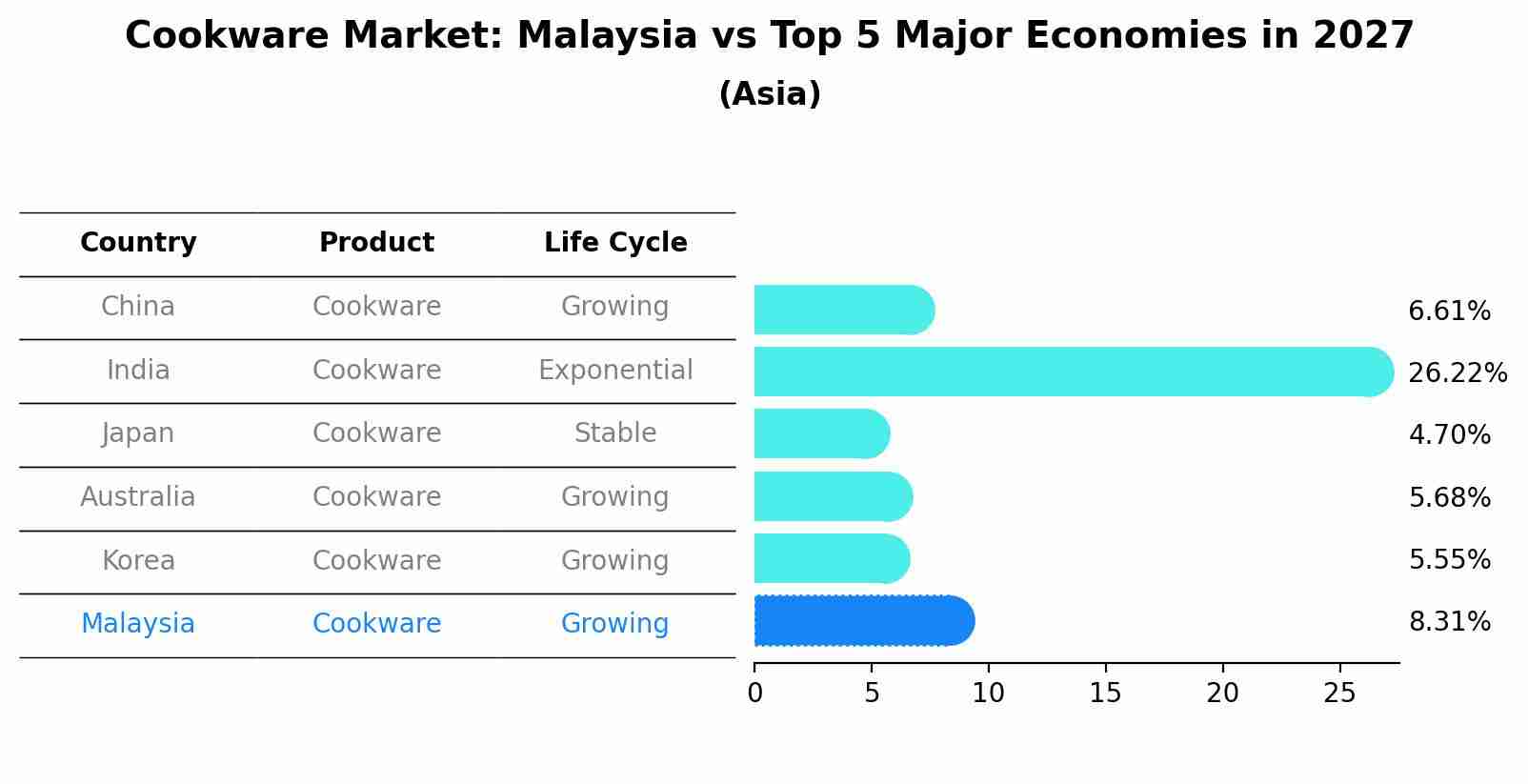
Cookware Market: Malaysia vs Top 5 Major Economies in 2027 (Asia)
By 2027, Malaysia's Cookware market is forecasted to achieve a growing growth rate of 8.31%, with China leading the Asia region, followed by India, Japan, Australia and South Korea.
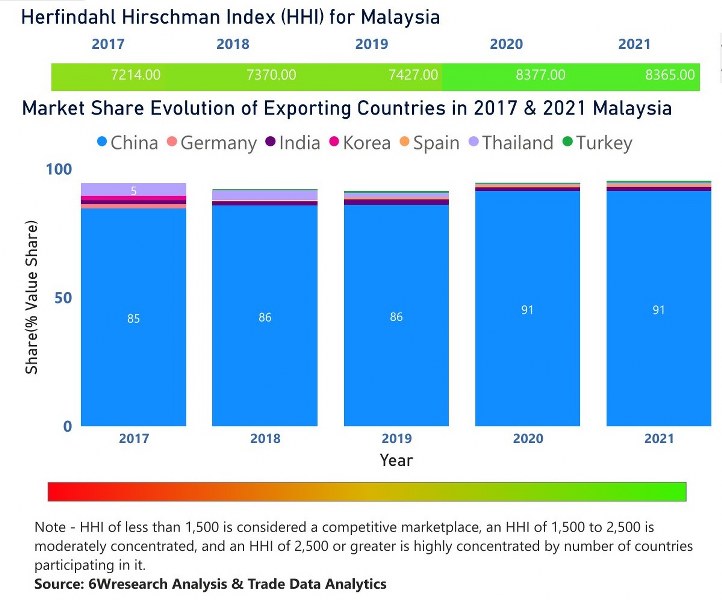
Malaysia Cookware Market | Country-Wise Share and Competition Analysis
In the year 2021, China was the largest exporter in terms of value, followed by India. It has registered a growth of 16.58% over the previous year. While India registered a growth of 57.14% as compare to the previous year. In the year 2017 China was the largest exporter followed by Thailand. In term of Herfindahl Index, which measures the competitiveness of countries exporting, Malaysia has the Herfindahl index of 7214 in 2017 which signifies high concentration also in 2021 it registered a Herfindahl index of 8365 which signifies high concentration in the market.
![Malaysia Cookware Market | Country-Wise Share and Competition Analysis]() Malaysia Cookware Market - Export Market Opportunities
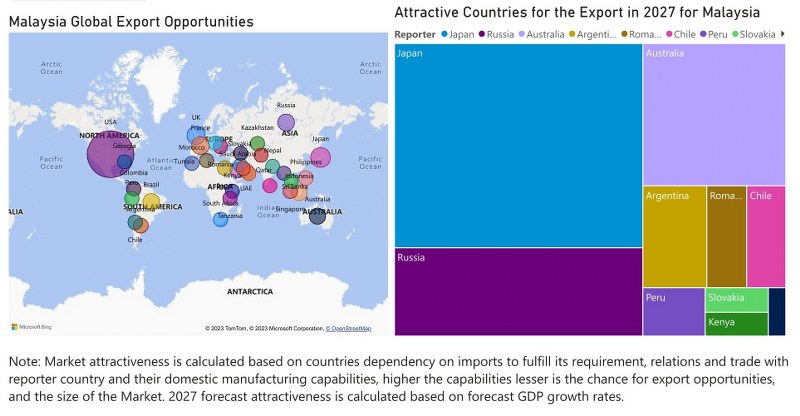
Malaysia Cookware Market - Export Market Opportunities
Key Highlights of the Report:
- Malaysia Cookware Market Outlook
- Market Size of Malaysia Cookware Market, 2019
- Forecast of Malaysia Cookware Market, 2026
- Historical Data and Forecast of Malaysia Cookware Revenues & Volume for the Period 2016 - 2026
- Malaysia Cookware Market Trend Evolution
- Malaysia Cookware Market Drivers and Challenges
- Malaysia Cookware Price Trends
- Malaysia Cookware Porter's Five Forces
- Malaysia Cookware Industry Life Cycle
- Historical Data and Forecast of Malaysia Cookware Market Revenues & Volume By Material Type for the Period 2016 - 2026
- Historical Data and Forecast of Malaysia Cookware Market Revenues & Volume By Aluminium for the Period 2016 - 2026
- Historical Data and Forecast of Malaysia Cookware Market Revenues & Volume By Stainless Steel for the Period 2016 - 2026
- Historical Data and Forecast of Malaysia Cookware Market Revenues & Volume By Others for the Period 2016 - 2026
- Historical Data and Forecast of Malaysia Cookware Market Revenues & Volume By Distribution Channels for the Period 2016 - 2026
- Historical Data and Forecast of Malaysia Cookware Market Revenues & Volume By Offline for the Period 2016 - 2026
- Historical Data and Forecast of Malaysia Cookware Market Revenues & Volume By Online for the Period 2016 - 2026
- Malaysia Cookware Import Export Trade Statistics
- Market Opportunity Assessment By Material Type
- Market Opportunity Assessment By Distribution Channels
- Malaysia Cookware Top Companies Market Share
- Malaysia Cookware Competitive Benchmarking By Technical and Operational Parameters
- Malaysia Cookware Company Profiles
- Malaysia Cookware Key Strategic Recommendations






































