Vietnam Bicycle Market Size Growth Rate
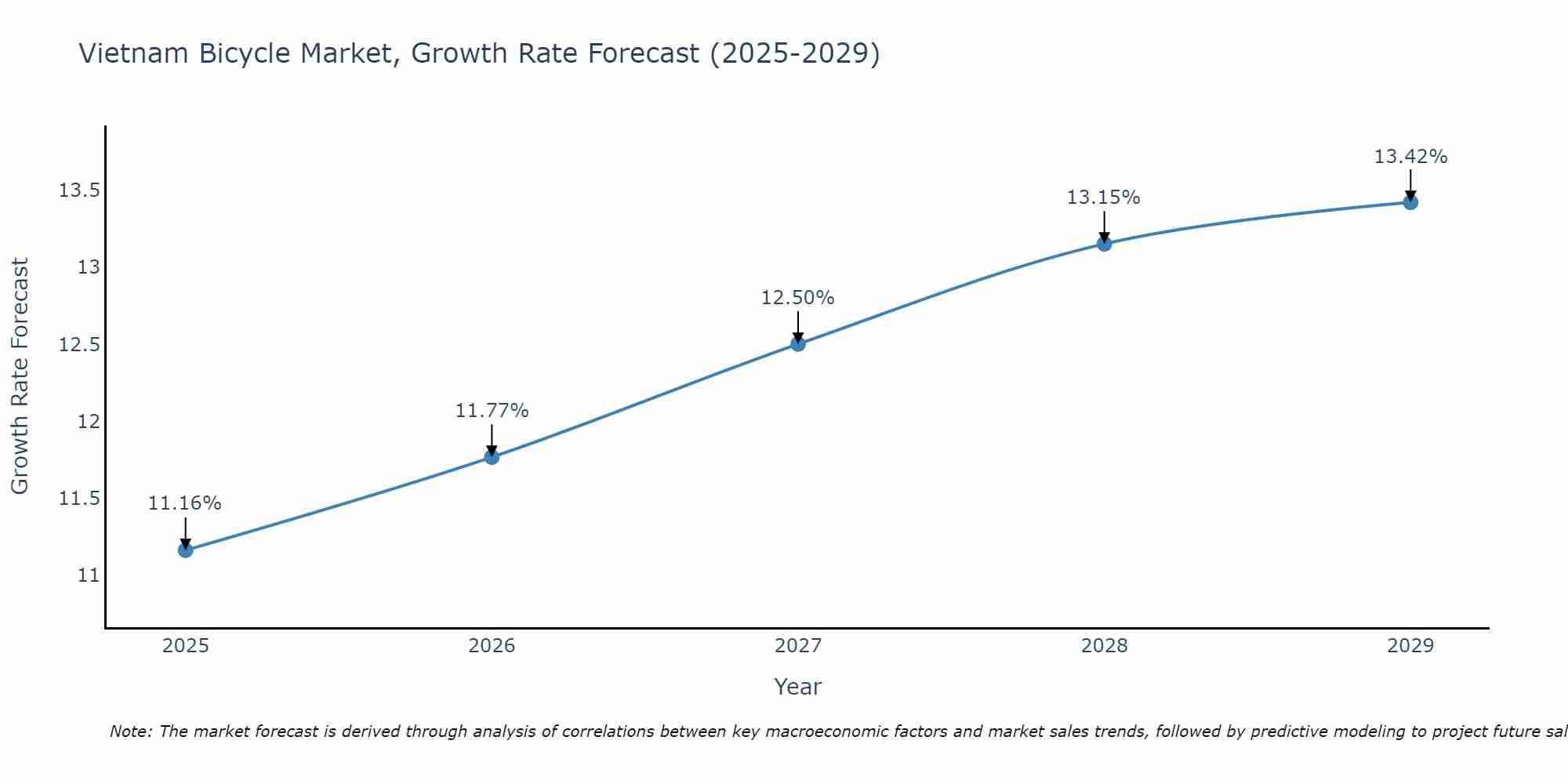
The Vietnam Bicycle Market is likely to experience consistent growth rate gains over the period 2025 to 2029. From 11.16% in 2025, the growth rate steadily ascends to 13.42% in 2029.
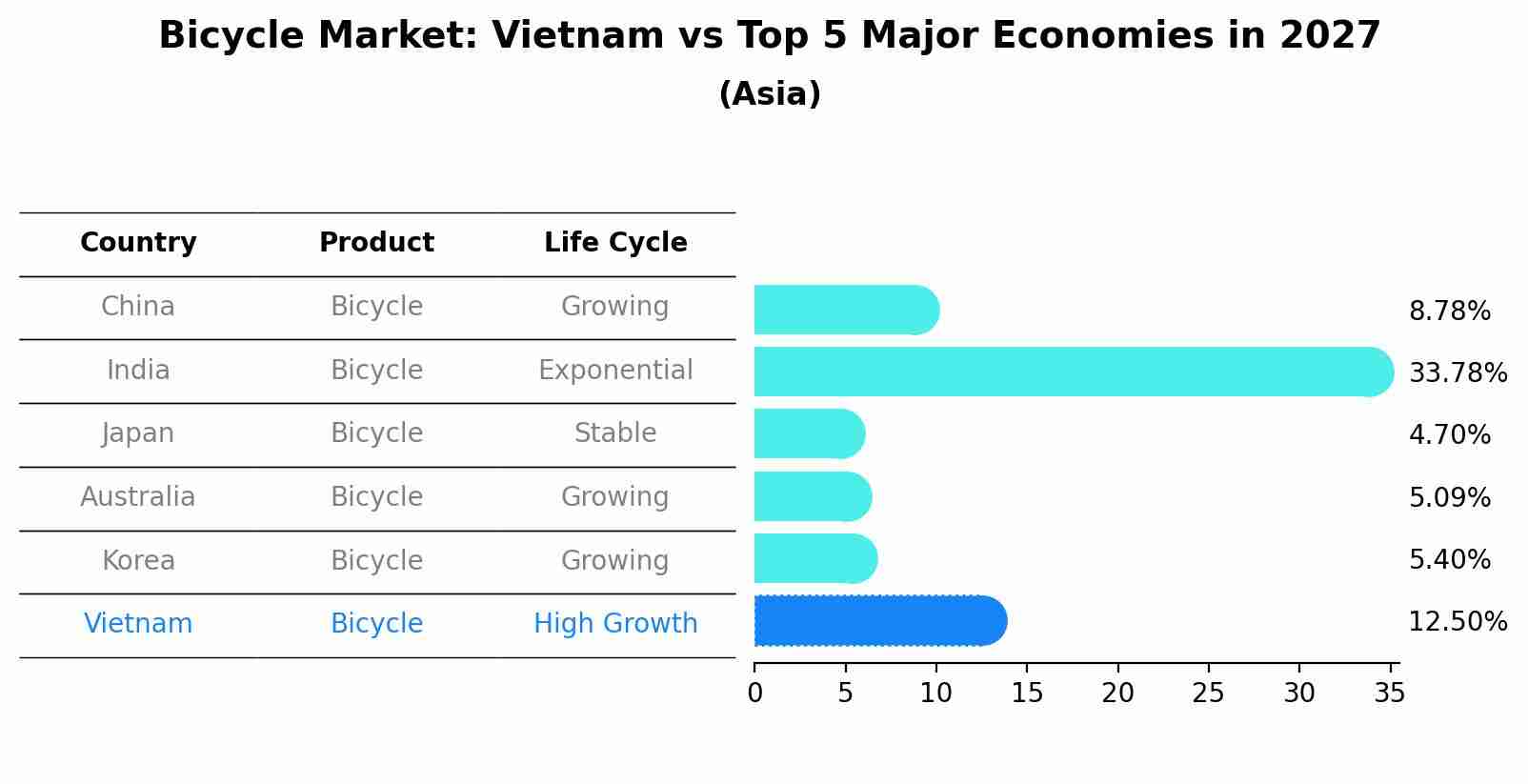
Bicycle Market: Vietnam vs Top 5 Major Economies in 2027 (Asia)
By 2027, the Bicycle market in Vietnam is anticipated to reach a growth rate of 12.50%, as part of an increasingly competitive Asia region, where China remains at the forefront, supported by India, Japan, Australia and South Korea, driving innovations and market adoption across sectors.
Vietnam Bicycle Market Synopsis
The Vietnam bicycle market is witnessing growth due to a combination of factors, including increasing health awareness, environmental concerns, and the need for affordable transportation options. Bicycles are becoming a popular choice for commuting, exercise, and recreational activities. The market includes a wide range of bicycles, from traditional manual bikes to electric bicycles (e-bikes) that have gained popularity in recent years. Local manufacturers and international brands compete in this market, offering diverse product options. Government initiatives to promote cycling infrastructure and bike-sharing programs are further boosting the adoption of bicycles in urban areas. As Vietnam continues to urbanize and tackle traffic congestion, the bicycle market is poised for continued expansion.
Drivers of the Market
The Vietnam Bicycle market is growing steadily due to a shift towards eco-friendly and healthier transportation options. Rising concerns about environmental pollution and the desire for a more active lifestyle have prompted many Vietnamese to embrace cycling. Government initiatives to promote cycling as a means of reducing traffic congestion and air pollution have also contributed to the market`s expansion. Moreover, the affordability of bicycles compared to motorized vehicles makes them an attractive choice for a significant portion of the population.
Challenges of the Market
The bicycle market in Vietnam faces challenges associated with urbanization and changing transportation trends. As cities expand and motorized vehicles become more popular, the demand for bicycles may decrease. Traffic congestion and inadequate cycling infrastructure can deter bicycle adoption. Quality control and safety standards for bicycles also need to be enforced to ensure consumer safety.
COVID-19 Impact on the Market
The COVID-19 pandemic boosted the bicycle market in Vietnam. With lockdowns and people seeking outdoor activities to maintain social distancing, there was a surge in bicycle sales. Commuters turned to bicycles as a safer mode of transportation, and families embraced cycling for leisure and exercise. Bicycle shops reported increased demand, leading to supply shortages at times. The market witnessed growth during the pandemic, and this trend may continue as people prioritize health and eco-friendly transportation options.
Key Players in the Market
In Vietnam bicycle market, one of the dominant players is Thong Nhat Bicycle Corporation. They manufacture and distribute a wide range of bicycles, including mountain bikes, city bikes, and children`s bikes. Another notable player is Samco Bicycle, known for its innovative designs and focus on quality.
Key Highlights of the Report:
- Vietnam Bicycle Market Outlook
- Market Size of Vietnam Bicycle Market, 2024
- Forecast of Vietnam Bicycle Market, 2031
- Historical Data and Forecast of Vietnam Bicycle Revenues & Volume for the Period 2021-2031
- Vietnam Bicycle Market Trend Evolution
- Vietnam Bicycle Market Drivers and Challenges
- Vietnam Bicycle Price Trends
- Vietnam Bicycle Porter's Five Forces
- Vietnam Bicycle Industry Life Cycle
- Historical Data and Forecast of Vietnam Bicycle Market Revenues & Volume By Product for the Period 2021-2031
- Historical Data and Forecast of Vietnam Bicycle Market Revenues & Volume By Mountain Bikes for the Period 2021-2031
- Historical Data and Forecast of Vietnam Bicycle Market Revenues & Volume By Hybrid Bikes for the Period 2021-2031
- Historical Data and Forecast of Vietnam Bicycle Market Revenues & Volume By Road Bikes for the Period 2021-2031
- Historical Data and Forecast of Vietnam Bicycle Market Revenues & Volume By Cargo Bikes for the Period 2021-2031
- Historical Data and Forecast of Vietnam Bicycle Market Revenues & Volume By Others for the Period 2021-2031
- Historical Data and Forecast of Vietnam Bicycle Market Revenues & Volume By Technology for the Period 2021-2031
- Historical Data and Forecast of Vietnam Bicycle Market Revenues & Volume By Electric for the Period 2021-2031
- Historical Data and Forecast of Vietnam Bicycle Market Revenues & Volume By Conventional for the Period 2021-2031
- Historical Data and Forecast of Vietnam Bicycle Market Revenues & Volume By End-user for the Period 2021-2031
- Historical Data and Forecast of Vietnam Bicycle Market Revenues & Volume By Men for the Period 2021-2031
- Historical Data and Forecast of Vietnam Bicycle Market Revenues & Volume By Women for the Period 2021-2031
- Historical Data and Forecast of Vietnam Bicycle Market Revenues & Volume By Kids for the Period 2021-2031
- Historical Data and Forecast of Vietnam Bicycle Market Revenues & Volume By Distribution Channel for the Period 2021-2031
- Historical Data and Forecast of Vietnam Bicycle Market Revenues & Volume By Online for the Period 2021-2031
- Historical Data and Forecast of Vietnam Bicycle Market Revenues & Volume By Offline for the Period 2021-2031
- Vietnam Bicycle Import Export Trade Statistics
- Market Opportunity Assessment By Product
- Market Opportunity Assessment By Technology
- Market Opportunity Assessment By End-user
- Market Opportunity Assessment By Distribution Channel
- Vietnam Bicycle Top Companies Market Share
- Vietnam Bicycle Competitive Benchmarking By Technical and Operational Parameters
- Vietnam Bicycle Company Profiles
- Vietnam Bicycle Key Strategic Recommendations






































