Vietnam Electric Switches Market Summary
The vietnam electric switches market was estimated at USD 283 Million in 2025 and is projected to reach USD 400 Million by 2032, growing at a CAGR of 8.0% from 2026 to 2032.
Vietnam Electric Switches Market Year-wise Growth Rate and Key Drivers
This graph highlights how the Vietnam Electric Switches Market has steadily grown over the past five years, supported by major growth factors.
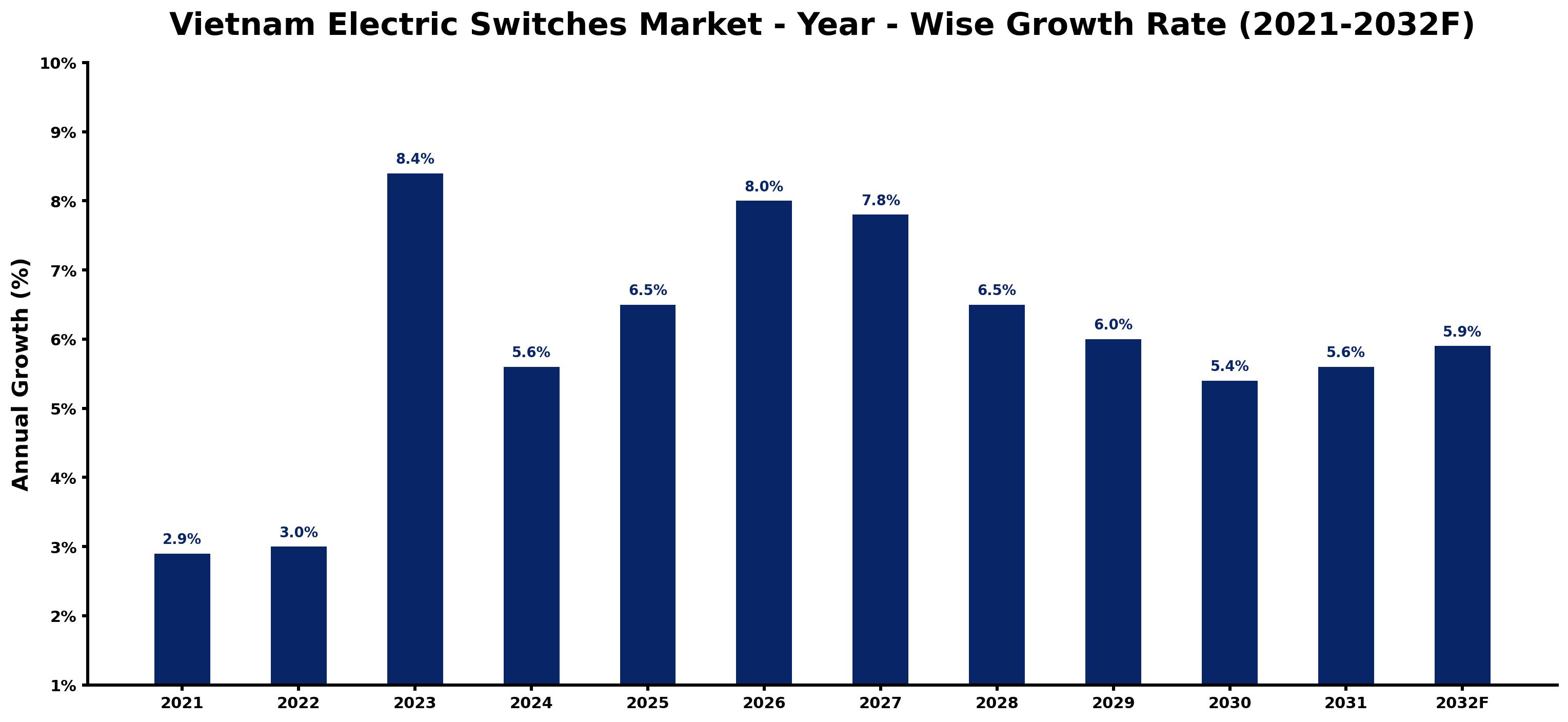
The table below presents the year wise growth rates along with the key drivers influencing the market
| Year | Growth Rate | Major Drivers |
| 2021 | 2.9% | Urbanization trends continue to elevate the demand for modern electrical infrastructure. |
| 2022 | 3.0% | Investment in residential and commercial projects spurs the need for electrical switches. |
| 2023 | 8.4% | Manufacturing relocations to Vietnam increase the necessity for reliable electrical systems. |
| 2024 | 5.6% | Smart home technology adoption boosts interest in innovative switch solutions. |
| 2025 | 6.5% | Growing middle-class income leads to higher spending on electrical installations. |
| 2026 | 8.0% | Expansion of rural electrification projects enhances the market for basic switch products. |
| 2027 | 7.8% | Corporate responsibility initiatives focus on energy-efficient electrical solutions in buildings. |
| 2028 | 6.5% | Technological advancements promote the integration of IoT capabilities in electrical switches. |
| 2029 | 6.0% | Expansion of e-commerce platforms facilitates greater access to varied switch options. |
| 2030 | 5.4% | Shift toward sustainable building practices drives demand for eco-friendly electrical products. |
| 2031 | 5.6% | Increased foreign investments bring new technologies and competitive pricing to the market. |
| 2032 | 5.9% | Robust infrastructure projects continue to create opportunities for switch manufacturers. |
Note - Market size estimations and growth projections presented in this report are based on 6Wresearch's advanced forecasting approach, validated with industry datasets as of June 2026.
Vietnam Electric Switches Market Synopsis
The Vietnam Electric Switches Market is projected to reach 8.0% and witness significant growth during the forecast period (2026-2032). This market encompasses a variety of electric switches essential for controlling the electrical current across residential, commercial, and industrial applications. The types of switches included are traditional switches, smart switches, push buttons, rocker switches, and dimmer switches. Each of these components plays a vital role in ensuring the efficiency and effectiveness of electrical systems within various settings.
Vietnam Electric Switches Market Growth Drivers
The electrification efforts in urban areas of Vietnam, coupled with rapid infrastructural development, are key drivers of the Vietnam Electric Switches Market. The ongoing construction boom, largely influenced by significant investments and an increasing population, has spurred an elevated demand for electrical switches. This can be recognized in several ways:
- Urbanization has led to an increasing number of residential and commercial development projects, thereby necessitating the installation of various electrical systems.
- The expansion of the real estate sector is also fostering demand as newer buildings require modern electric switch solutions to enhance functionality.
- Smart home technologies are becoming a staple in many new residences, resulting in enhanced demand for smart switches that offer advanced features and home automation capabilities.
- The government's commitment to energy efficiency has compelled manufacturers to focus on producing energy-efficient switches that reduce power consumption.
- Increased awareness among consumers regarding energy conservation methods has further propelled the move towards energy-efficient electric switches.
Vietnam Electric Switches Market Challenges and Restraints
Despite promising growth prospects, the Vietnam Electric Switches Market faces several challenges that may hinder progress. This includes a price-sensitive market where consumers often prioritize cost over quality, which poses a challenge for manufacturers offering advanced switch technologies. Additionally:
- The prevalence of counterfeit and low-quality switches can undermine the market, posing risks to both consumer safety and brand reputation.
- Lack of consistent electrical infrastructure in certain rural and less-developed regions limits the uptake of sophisticated switch technologies.
- Economic fluctuations, such as those experienced during the Covid-19 pandemic, can lead to unpredictable changes in construction activities and demand for electrical switches.
- Regulatory challenges and compliance requirements may also pose hurdles for new entrants aiming to establish their presence in the market.
- Consumer preference for established brands may limit market entry opportunities for innovative, lesser-known manufacturers.
Vietnam Electric Switches Market Government Investment and Initiatives
The Vietnamese government has been actively pursuing initiatives to enhance the electric infrastructure, which significantly impacts the Vietnam Electric Switches Market. Key government actions include:
- Strategic investments in energy-efficient technologies are being prioritized to promote sustainability and reduce energy costs at a national level.
- Public spending on infrastructure improvements includes electrical systems, thus boosting demand for electrical switches across various sectors.
- Incentives for manufacturers focusing on smart and energy-efficient switches are being introduced to promote innovation within the market.
- The government is supporting the development of smart city initiatives, which include advanced electrical solutions, further emphasizing the need for modern switch technologies.
- Collaborative efforts with international partners aim to boost the technological landscape of Vietnam, fostering growth in the electrical sector.
Vietnam Electric Switches Market Latest Developments (May 2025 - June 2026)
Recent developments within the Vietnam Electric Switches Market indicate a shift towards the integration of more sophisticated technology and energy-efficient solutions. The market has seen an uptick in the introduction of smart switches aimed at home automation, reflecting changing consumer preferences. Additionally:
- Increased collaboration between tech firms and traditional electrical manufacturers has led to innovative product offerings that cater to modern consumer needs.
- The ongoing construction boom has led to partnerships between developers and switch manufacturers to ensure the incorporation of advanced electrical solutions in new projects.
- Research into cost-effective and energy-efficient switch technologies is gaining traction, responding to consumer demand for sustainability.
- Training programs for electricians and installers are being emphasized to ensure proper installation and customer education regarding advanced switch technologies.
- Market surveillance efforts are being enhanced to combat the presence of counterfeit products, thus protecting consumer interests and ensuring brand integrity.
Vietnam Electric Switches Market - Key Attractiveness of the Report
- 10 Years of Market Numbers
- Historical Data Starting from 2022 to 2025
- Base Year: 2025
- Forecast Data until 2032
- Key Performance Indicators Impacting the Market
- Major Upcoming Developments and Projects
Key Highlights of the Report:
- Vietnam Electric Switches Market Outlook
- Market Size of Vietnam Electric Switches Market, 2025
- Forecast of Vietnam Electric Switches Market, 2032
- Historical Data and Forecast of Vietnam Electric Switches Revenues & Volume for the Period 2022-2032F
- Vietnam Electric Switches Market Trend Evolution
- Vietnam Electric Switches Market Drivers and Challenges
- Vietnam Electric Switches Price Trends
- Vietnam Electric Switches Porter's Five Forces
- Vietnam Electric Switches Industry Life Cycle
- Historical Data and Forecast of Vietnam Electric Switches Market Revenues & Volume By Type for the Period 2022-2032F
- Historical Data and Forecast of Vietnam Electric Switches Market Revenues & Volume By Traditional electrical switch for the Period 2022-2032F
- Historical Data and Forecast of Vietnam Electric Switches Market Revenues & Volume By Smart electrical switch? for the Period 2022-2032F
- Historical Data and Forecast of Vietnam Electric Switches Market Revenues & Volume By End-Users for the Period 2022-2032F
- Historical Data and Forecast of Vietnam Electric Switches Market Revenues & Volume By Commercial for the Period 2022-2032F
- Historical Data and Forecast of Vietnam Electric Switches Market Revenues & Volume By Residential for the Period 2022-2032F
- Historical Data and Forecast of Vietnam Electric Switches Market Revenues & Volume By Other for the Period 2022-2032F
- Vietnam Electric Switches Import Export Trade Statistics
- Market Opportunity Assessment By Type
- Market Opportunity Assessment By End-Users
- Vietnam Electric Switches Top Companies Market Share
- Vietnam Electric Switches Competitive Benchmarking By Technical and Operational Parameters
- Vietnam Electric Switches Company Profiles
- Vietnam Electric Switches Key Strategic Recommendations






































