Vietnam Milk Protein Market Size, Share & Growth Rate
The Vietnam Milk Protein Market was estimated at USD 848 Million in 2025 and is projected to reach USD 1207 Million by 2032, growing at a CAGR of 5.2% from 2026 to 2032. This impressive growth trajectory is fueled by rising consumer awareness regarding the nutritional benefits of milk proteins and a marked shift towards health-oriented diets. The increasing popularity of dairy products, protein supplements, and functional foods illustrates the market's robust expansion, complemented by innovations responding to global dietary trends.
Vietnam Milk Protein Market Year-wise Growth Rate and Key Drivers
This graph highlights how the Vietnam Milk Protein Market has steadily grown over the years, supported by major growth factors.
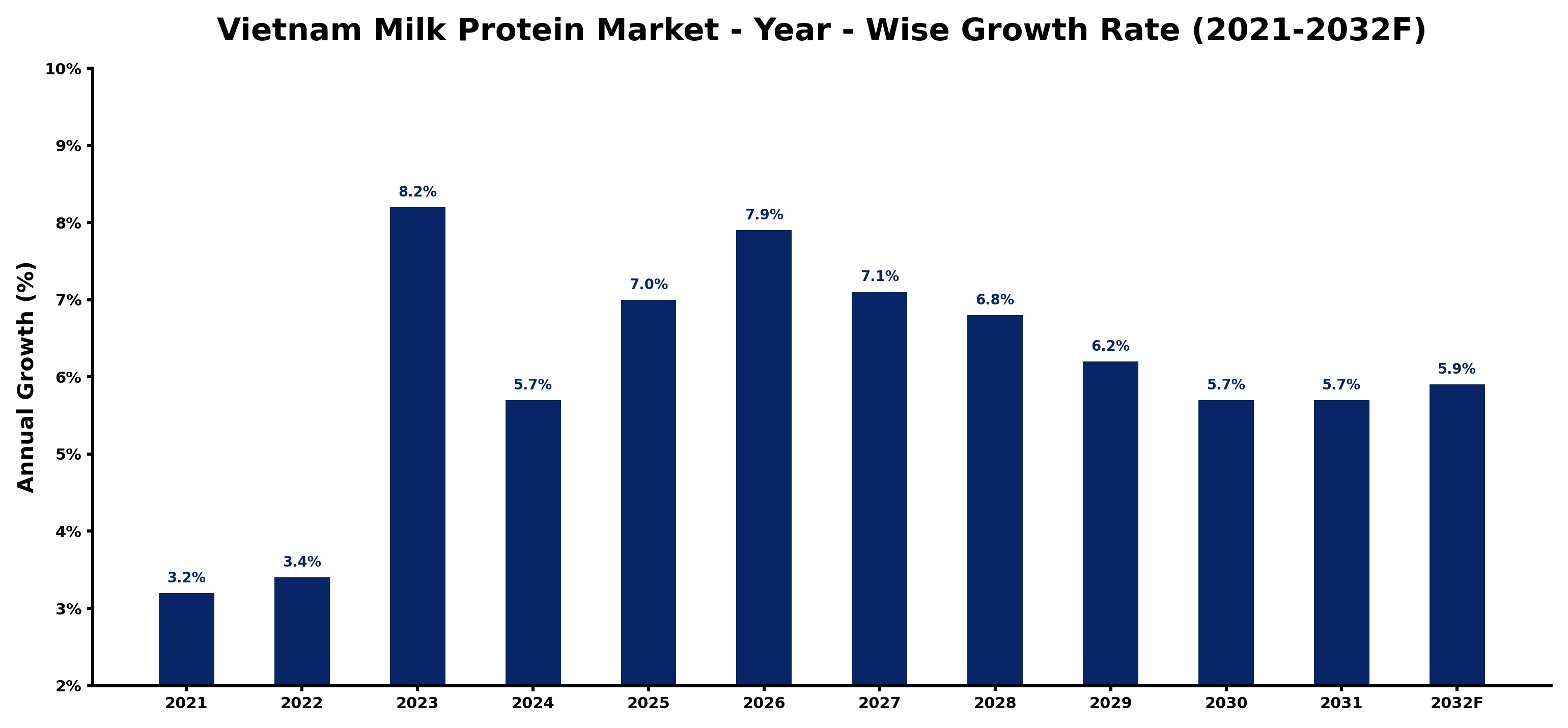
The table below presents the year‑wise growth rates along with the key drivers influencing the market
| Year | Growth Rate | Major Drivers |
| 2021 | 3.2% | Export demand surge drives milk protein processing capacity upgrades |
| 2022 | 3.4% | Improved dairy processing facilities enhanced milk protein export capabilities |
| 2023 | 8.2% | Technology integration streamlined production processes in dairy processing facilities |
| 2024 | 5.7% | Domestic dairy processing facilities expand to meet export demand |
| 2025 | 7.0% | Capacity enhancements at dairy facilities boosted milk protein export volumes |
| 2026 | 7.9% | Increased dairy processing capacity boosted milk protein export potential |
| 2027 | 7.1% | Production line upgrades optimize milk protein processing efficiency |
| 2028 | 6.8% | Export driven milk protein production facilities expand to meet demand |
| 2029 | 6.2% | Export driven dairy processing facilities enhance milk protein production efficiency |
| 2030 | 5.7% | Technology integration boosted precision in milk protein manufacturing processes |
| 2031 | 5.7% | Foreign investment in dairy processing facilities boosts protein output |
| 2032 | 5.9% | Increased dairy processing capacity fuels export driven milk protein production |
Note - Market size estimations and growth projections presented in this report are based on 6Wresearch's advanced forecasting approach, validated with industry datasets as of June 2026.
Vietnam Milk Protein Market Synopsis
The strongest force currently shaping the Vietnam Milk Protein market is the surge in health and wellness awareness among consumers. This heightened focus has led to an escalating demand for milk-based protein products, particularly in food and beverage applications.
As Vietnam's dairy industry develops, consumer preferences are evolving, creating a fertile ground for new product offerings. This dynamic environment encourages innovation in milk protein solutions, allowing companies to meet the diverse needs of health-conscious individuals.
Vietnam Milk Protein Market Key Takeaways
- The market is underpinned by increasing consumer awareness about the health benefits of milk proteins.
- Growth in the fitness and wellness sector is significantly influencing product demand.
- Consumer preferences are shifting towards dairy products enriched with proteins.
- Emerging competition from plant-based alternatives poses strategic challenges.
- Market recovery post-COVID-19 is anticipated to boost demand further, especially in functional foods.
Evaluation of Restraints in Vietnam Milk Protein Market
The Vietnam Milk Protein market encounters several restraints that could impact its growth trajectory. Quality control remains a pivotal concern; inconsistent product quality can undermine consumer trust and loyalty. Additionally, the complexities of the dairy supply chain pose logistical challenges, affecting efficiency and production timelines. Furthermore, the rising popularity of plant-based protein alternatives compels dairy players to adapt swiftly, potentially diverting attention from traditional milk protein offerings.
Vietnam Milk Protein Market Trends
Several current trends are shaping the Vietnam Milk Protein market. The increasing incorporation of milk proteins into functional foods is becoming common as manufacturers innovate to meet health-oriented consumer demands. Additionally, there's a notable shift toward premium dairy products, emphasizing higher quality and sustainability. The dairy sector is also seeing advancements in processing technologies, allowing for more efficient production methods and enhanced product varieties. This reflects a broader global shift toward health and wellness.
Vietnam Milk Protein Market Opportunities
Significant growth opportunities exist within the Vietnam Milk Protein market, particularly in product innovation and diversification. Companies can leverage the rising health and wellness trend by developing specialized protein supplements and fortified dairy products tailored for fitness enthusiasts. Furthermore, as consumer preferences continue to evolve, there is potential for market players to explore niche segments, such as organic milk proteins and dairy alternatives, ensuring they meet the demands of a broader audience.
Government Initiatives in the Vietnam Milk Protein Market
The Vietnamese government has implemented several initiatives aimed at enhancing the dairy industry, including support for local farmers and investments in modernizing dairy facilities. Programs promoting sustainable farming practices and quality assurance have also been introduced, which are crucial in boosting the overall standards of milk production. These efforts are aimed at not only increasing the quantity but also improving the quality of milk protein products available in the market.
Future Insights of the Vietnam Milk Protein Market
Looking ahead to 2026-2032, the Vietnam Milk Protein market is set to expand significantly, driven by increasing health consciousness and dietary protein demand. Companies will likely continue to innovate, creating diverse products that cater to the evolving preferences of consumers. The integration of technology in production processes and a focus on sustainability will also define market strategies. Furthermore, as global dietary patterns shift, opportunities for export and international partnerships may emerge, positioning Vietnam as a key player in the regional milk protein landscape.
Vietnam Milk Protein Market Latest Developments (May 2025 - June 2026)
In recent months, the Vietnam Milk Protein market has witnessed several noteworthy developments. Companies are increasingly focusing on enhancing their product lines with innovative protein solutions, responding to the rising demand from health-conscious consumers. Additionally, partnerships between local producers and international entities have started to emerge, aimed at improving supply chain efficiencies and expanding market reach. This collaborative approach is expected to bolster the overall competitiveness of Vietnam's dairy sector.
Vietnam Milk Protein Market - Key Attractiveness of the Report
- 10 Years of Market Numbers
- Historical Data Starting from 2022 to 2025
- Base Year: 2025
- Forecast Data until 2032
- Key Performance Indicators Impacting the Market
- Major Upcoming Developments and Projects
Key Highlights of the Report:
- Vietnam Milk Protein Market Outlook
- Market Size of Vietnam Milk Protein Market, 2025
- Forecast of Vietnam Milk Protein Market, 2032
- Historical Data and Forecast of Vietnam Milk Protein Revenues & Volume for the Period 2022-2032F
- Vietnam Milk Protein Market Trend Evolution
- Vietnam Milk Protein Market Drivers and Challenges
- Vietnam Milk Protein Price Trends
- Vietnam Milk Protein Porter's Five Forces
- Vietnam Milk Protein Industry Life Cycle
- Historical Data and Forecast of Vietnam Milk Protein Market Revenues & Volume By Type for the Period 2022-2032F
- Historical Data and Forecast of Vietnam Milk Protein Market Revenues & Volume By Whey Protein Isolates for the Period 2022-2032F
- Historical Data and Forecast of Vietnam Milk Protein Market Revenues & Volume By Whey Protein Concentrates for the Period 2022-2032F
- Historical Data and Forecast of Vietnam Milk Protein Market Revenues & Volume By Milk Protein Hydrolysates for the Period 2022-2032F
- Historical Data and Forecast of Vietnam Milk Protein Market Revenues & Volume By Milk Protein Isolates for the Period 2022-2032F
- Historical Data and Forecast of Vietnam Milk Protein Market Revenues & Volume By Milk Protein Concentrates for the Period 2022-2032F
- Historical Data and Forecast of Vietnam Milk Protein Market Revenues & Volume By Others for the Period 2022-2032F
- Historical Data and Forecast of Vietnam Milk Protein Market Revenues & Volume By Form for the Period 2022-2032F
- Historical Data and Forecast of Vietnam Milk Protein Market Revenues & Volume By Liquid for the Period 2022-2032F
- Historical Data and Forecast of Vietnam Milk Protein Market Revenues & Volume By Dry for the Period 2022-2032F
- Historical Data and Forecast of Vietnam Milk Protein Market Revenues & Volume By Applications for the Period 2022-2032F
- Historical Data and Forecast of Vietnam Milk Protein Market Revenues & Volume By Dairy Products for the Period 2022-2032F
- Historical Data and Forecast of Vietnam Milk Protein Market Revenues & Volume By Sports Nutrition for the Period 2022-2032F
- Historical Data and Forecast of Vietnam Milk Protein Market Revenues & Volume By Infant Formula for the Period 2022-2032F
- Historical Data and Forecast of Vietnam Milk Protein Market Revenues & Volume By Others for the Period 2022-2032F
- Vietnam Milk Protein Import Export Trade Statistics
- Market Opportunity Assessment By Type
- Market Opportunity Assessment By Form
- Market Opportunity Assessment By Applications
- Vietnam Milk Protein Top Companies Market Share
- Vietnam Milk Protein Competitive Benchmarking By Technical and Operational Parameters
- Vietnam Milk Protein Company Profiles
- Vietnam Milk Protein Key Strategic Recommendations






































